
Executive Summary:
The Chhattisgarh Budget 2026–27 is centred on infrastructure expansion, welfare support, and economic modernisation, with a strong emphasis on roads, education, agriculture, and technology-led growth. It also reflects continued attention to tribal and backward region development.
The state projects a GSDP of ₹ 7.10 lakh crore for 2026–27, up 12.4% over the 2025–26 BE. Revenue receipts are estimated at ₹ 1.43 lakh crore, while the budget continues to rely on a mix of own-tax revenues and Central transfers.
Revenue deficit is projected at 0.28% of GSDP, showing a sharp improvement from the revised estimate for 2025–26. This indicates some correction in the state’s revenue account, although the gap has not been fully eliminated and continuous long-term spending remains a feature.
Fiscal deficit is targeted at 2.88% of GSDP, which remains within the 3% FRBM ceiling. However, the reported fiscal deficit does not capture the state’s off-budget borrowings through Public Sector Undertakings and parastatal entities, which create additional repayment obligations
The state’s reliance on mining introduces revenue volatility, as collections remain sensitive to commodity price fluctuations and regulatory factors such as environmental clearances. This creates an inherent risk in the sustainability of non-tax revenue growth.
The Finance Minister, Shri O.P. Choudhary presented the Chhattisgarh Budget 2026-27 before the State Legislature. This is the 2nd budget presented by the current Bharatiya Janata Party (BJP) Government.
Notably, this marks the Silver Jubilee Budget of the State, and as a tribute to former Prime Minister Shri Atal Bihari Vajpayee, the Government has dedicated this year as Atal Nirman Varsh.
I. Financial Highlights
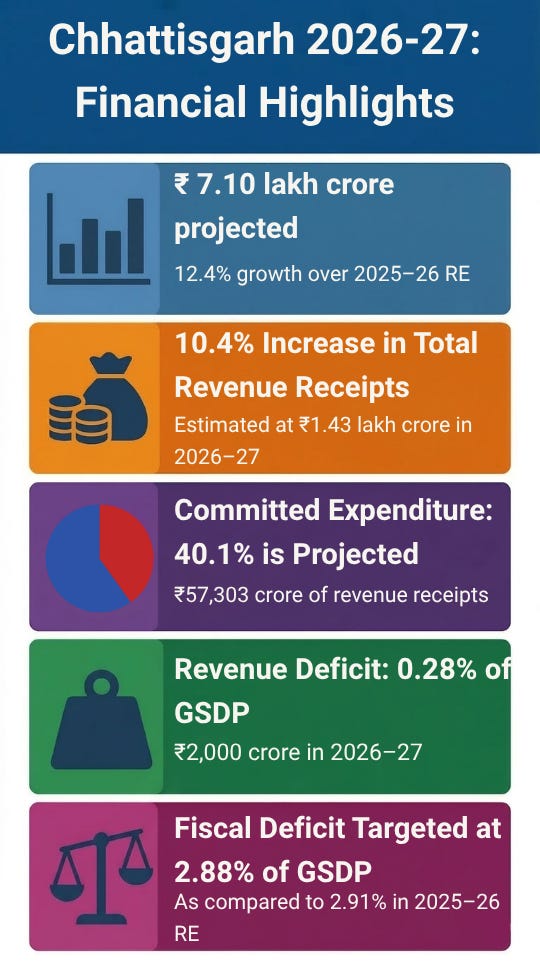
Gross State Domestic Product (GSDP): Chhattisgarh’s GSDP for 2026–27 (at current prices) is projected to be ₹ 7.10 lakh crore, amounting to a growth of about 12.4% over the budget estimates for 2025–26 (₹ 6.31 lakh crore).
NSDP Per Capita: In 2024–25, Chhattisgarh’s per capita NSDP (at current prices) is estimated to be ₹ 1,62,870, an increase of about 9.36% over 2023–24 (₹ 1,48,922). In 2023–24, per capita NSDP had grown by about 10.32% over 2022–23 (₹ 1,34,996).
Revenue Deficit: Revenue deficit in Chhattisgarh for 2026–27 is estimated to be about 0.28% of GSDP (₹ 2,000 crore), as compared to a revenue deficit of about 1.58% of GSDP (₹ 10,000 crore) at the revised estimate stage in 2025–26.
Fiscal Deficit (FD): FD for 2026–27 is targeted at 2.88% of GSDP (₹ 20,400 crore) As compared to an FD of 2.91% of GSDP (₹ 18,900 crore) in 2025–26 BE.
Expenditure: Expenditure (excluding debt repayment) for Chhattisgarh in 2026–27 is estimated to be ₹ 1.60 lakh crore, an increase of about 10.4% over the revised estimates of 2025–26 (₹ 1.45 lakh crore). In addition, debt repayment of ₹ 12,300 crore is estimated.
Receipts: Receipts (excluding borrowings) for Chhattisgarh for 2026–27 are estimated to be ₹ 1.43 lakh crore, an increase of about 10.42% as compared to the revised estimates of 2025–26 (₹ 1.3 lakh crore).
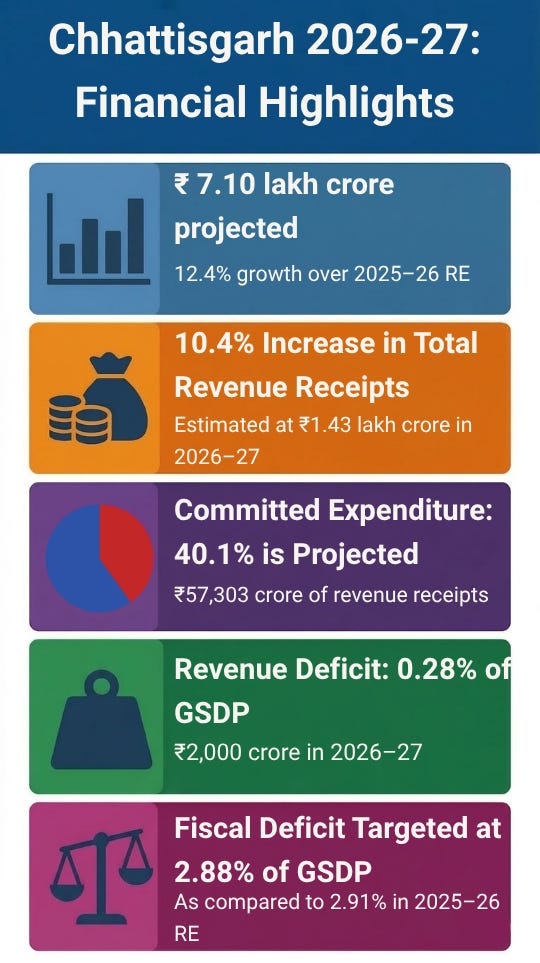
Image 1: Key Financial Highlights
II. Policy Highlights
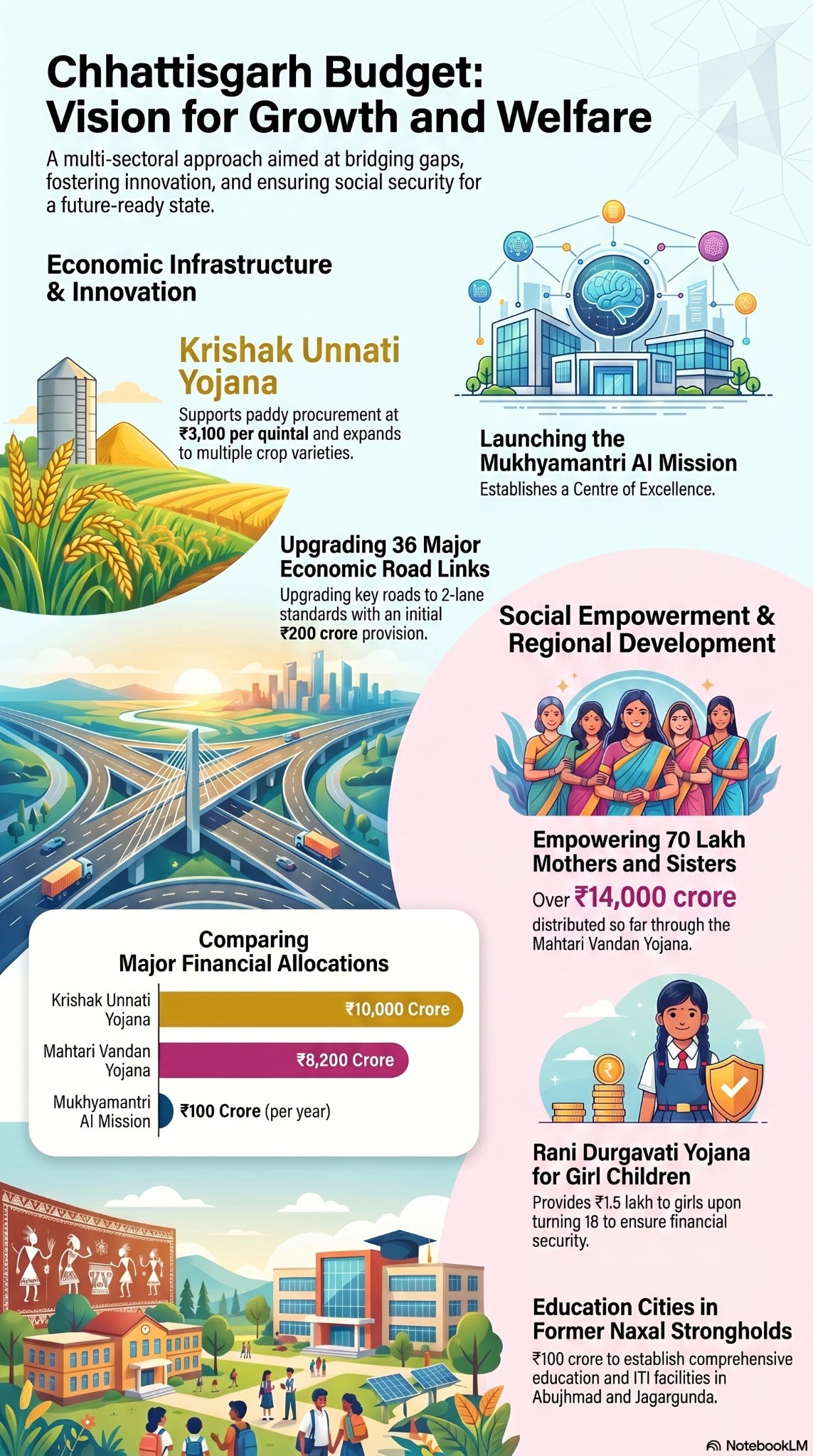
Mahtari Vandan Yojana: The scheme was introduced to empower women. In this scheme over 70 lakh mothers and sisters have received more than ₹ 14,000 crore in 24 installments so far. Further, a provision of ₹ 8,200 crore has been made in this budget.
Drutgami Sadak Sampark Yojana: A new scheme proposed in the budget with the primary objective of upgrading roads connecting economic centres of the state to at least a 2-lane standard. A total of 36 roads across Chhattisgarh are included in this scheme. An initial provision of ₹ 200 crore has been made to begin implementation of these road upgradation works.
Mukhyamantri AI Mission: A new mission launched with the objective of developing AI talent in Chhattisgarh, promoting AI-related startups, and advancing AI research and innovation across various sectors including manufacturing, IT, and blockchain. The mission will establish a Centre of Excellence, create an eco-system for pilot projects, and aims to position Chhattisgarh as a national and global AI hub. A minimum provision of ₹ 100 crore per year for the next five years has been committed for this mission.
Rani Durgavati Yojana: A new scheme launched to provide financial security to girl children at birth. Under this scheme, when a girl child turns 18 years of age, she will receive ₹ 1.5 lakh. The scheme aims to provide economic empowerment to young women at the threshold of adulthood. A provision of ₹ 15 crore has been made for this scheme in the budget for 2026–27.
Krishak Unnati Yojana: This flagship agricultural scheme ensures procurement of paddy from farmers at ₹ 3,100 per quintal at 21 quintals per acre. In the current budget, the scheme has been expanded to include pulses, oilseeds, maize, kodo-kutki, ragi, and cotton. A provision of ₹ 10,000 crore has been made for this scheme.
Education Cities in Abujhmad and Jagargunda: Two new Education Cities are proposed to be established in Abujhmad and Jagargunda, areas which were formerly Naxal strongholds, to provide quality education from primary to higher secondary level, along with ITI, pre-matric and post-matric hostels, and teacher residences. A provision of ₹ 100 crore has been made for both Education Cities.
Mukhyamantri Bus Seva Yojana: Districts such as Bastar and Sarguja are geographically large with sparse populations. To service this region, approximately 70 buses are being operated connecting remote areas such as Poorvi Bastar, Burakpal, Bheji, Pamed, Champa, Abira, Doobapaani, and Madakdol. A provision of ₹ 10 crore has been made for this scheme.
Bastar and Sarguja Olympics: To promote sports culture in the tribal hinterland and mainstream youth away from Naxalism, the government aims to organise Bastar Olympics and Sarguja Olympics. A provision of ₹ 5 crore each has been made for ensuring continuity of these events.
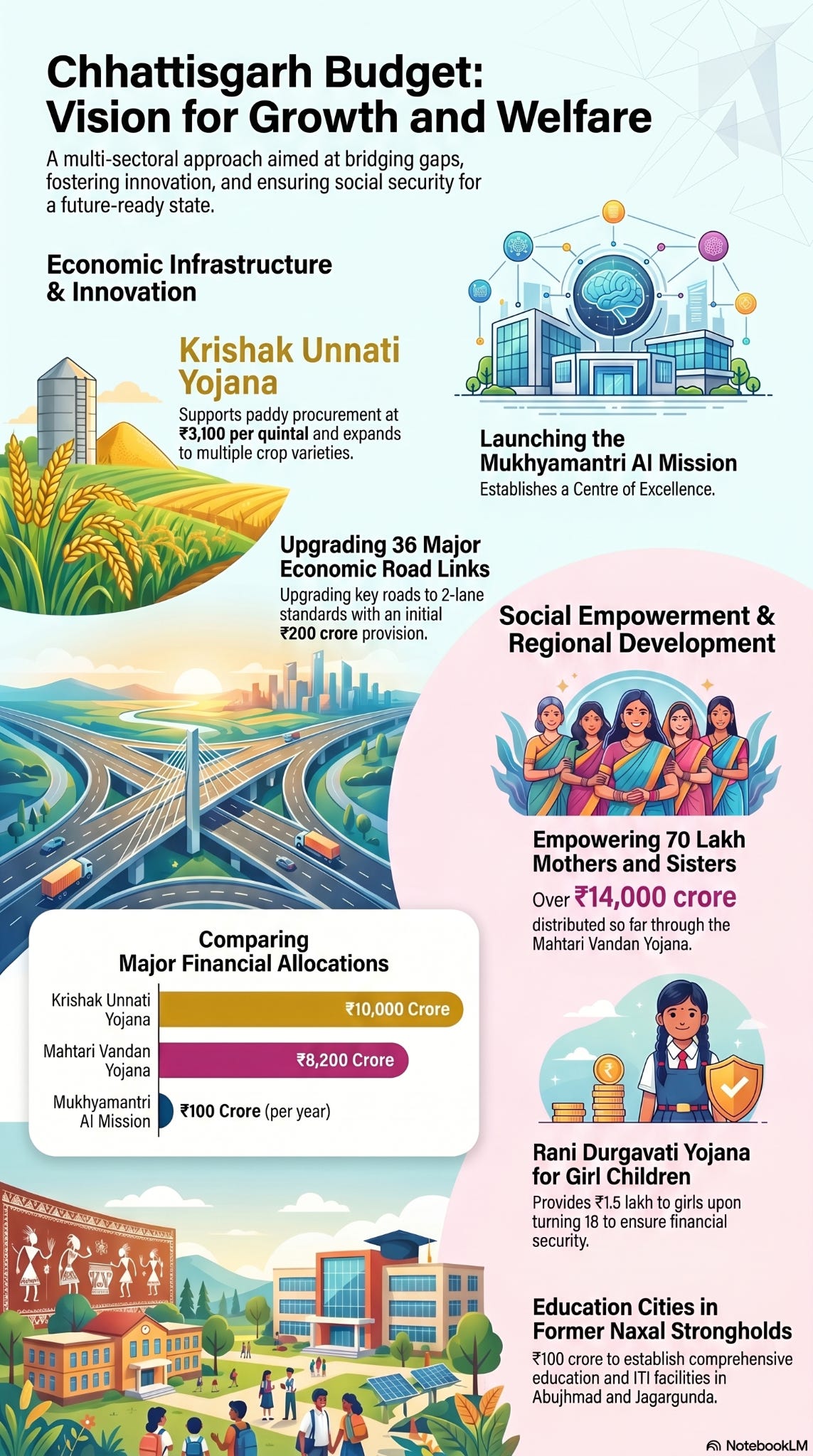
Image 2: Key Policy Highlights
III. Chhattisgarh’s Economy
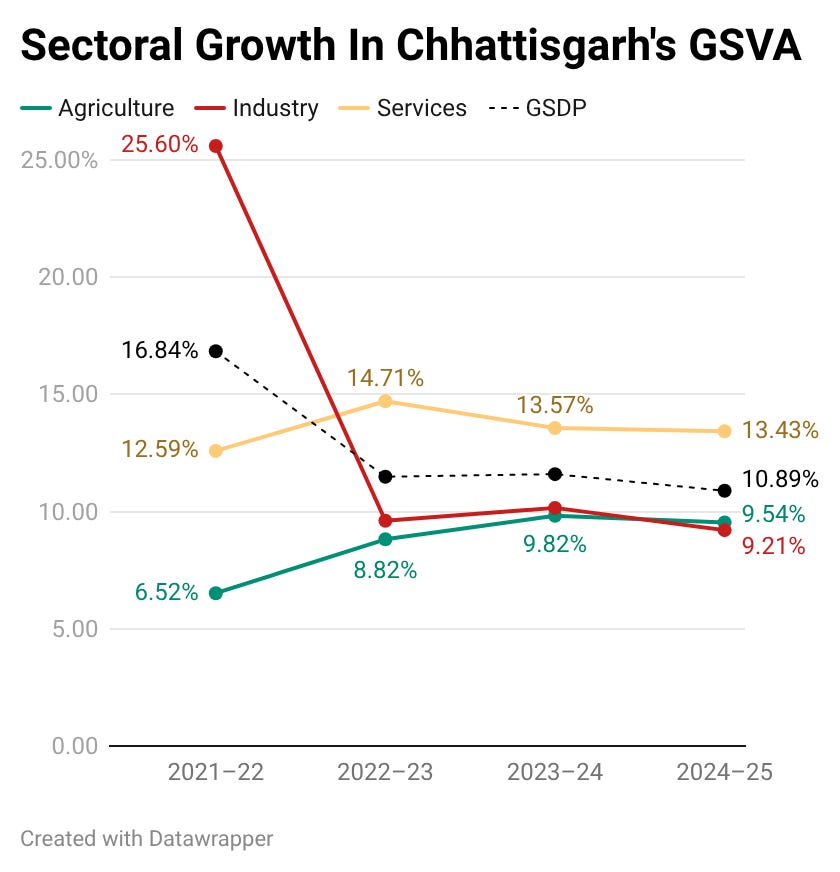
GSVA Contribution Of Sectors: In 2024–25, agriculture, industry, and services sectors are estimated to contribute 11.63%, 43.48%, and 36.45% of Chhattisgarh’s economy, respectively (at current prices).
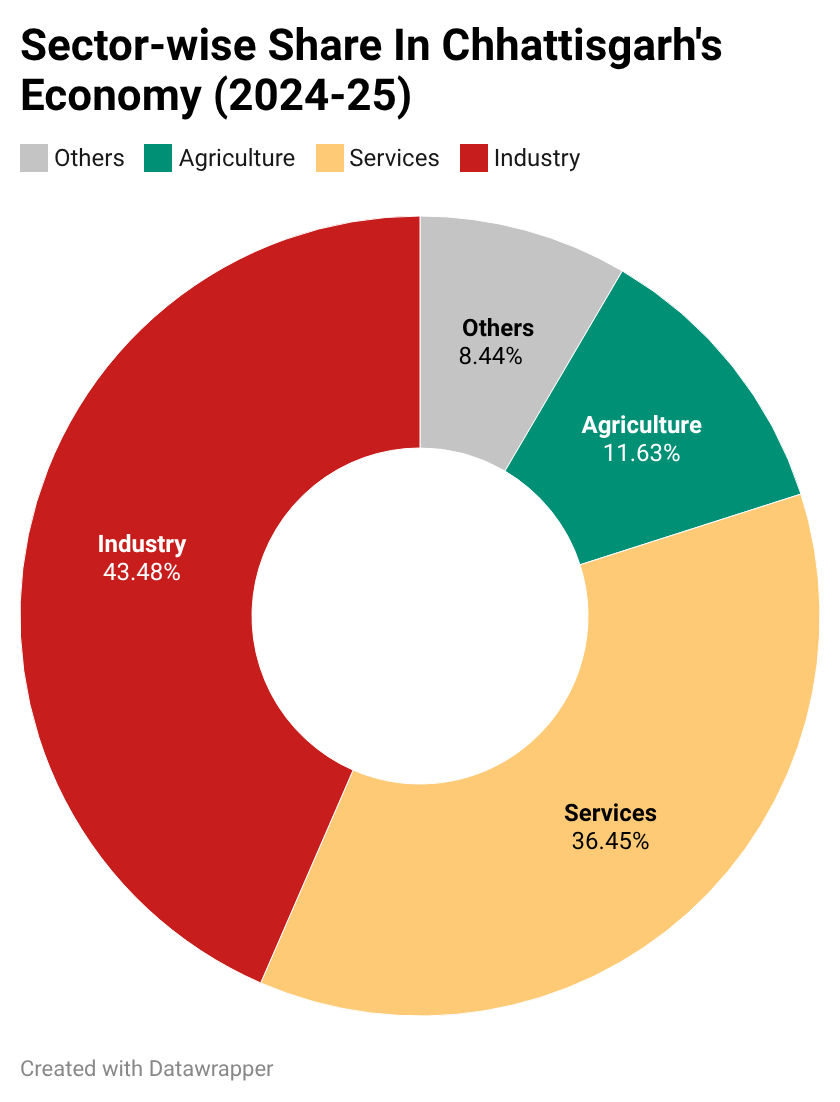
Image 3: Sector-wise Share In Chhattisgarh’s Economy (2024–25, at Current Prices) 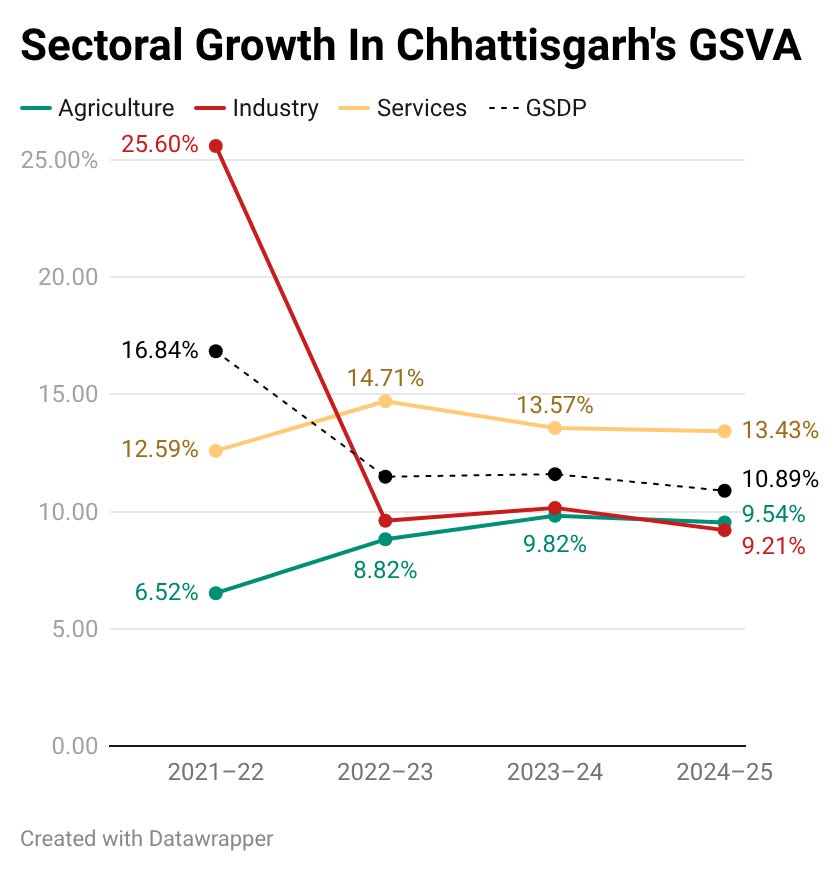
Image 4: Sectoral Growth In Chhattisgarh’s GSDP At Current Prices
IV. Expenditure
Revenue Expenditure: Revenue expenditure for Chhattisgarh for 2026–27 is proposed to be ₹ 1.45 lakh crore, an increase of about 3.9% over the 2025–26 RE (₹ 1.40 lakh crore). This includes the expenditure on salaries, pensions, interest, grants, and subsidies.
Committed Expenditure:
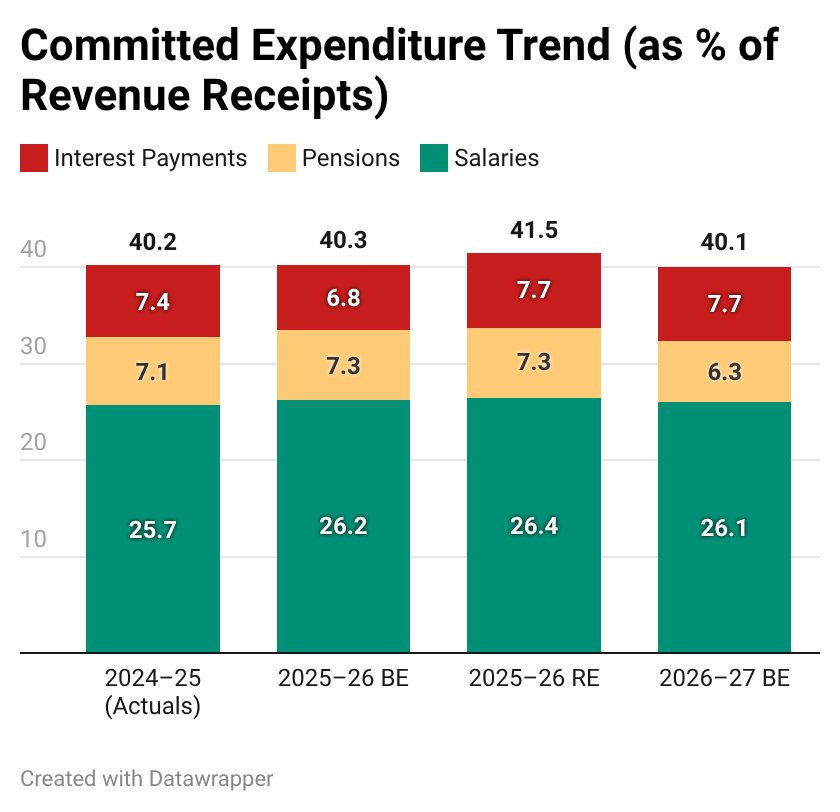
In 2026–27, Chhattisgarh is estimated to spend ₹ 57,303 crore on committed expenditure, which is about 40.1% of its estimated revenue receipts of ₹ 1.43 lakh crore. In 2024–25, as per actual figures, about 40.2% of revenue receipts were spent towards committed expenditure (₹ 48,369 crore out of revenue receipts of ₹ 1.20 lakh crore).
This comprises spending on salaries (₹ 37,303 crore), pensions (₹ 9,000 crore), and interest payments (₹ 11,000 crore).
Out of every rupee that comes in as revenue receipts, about 40.1 paise is estimated to be spent on committed expenditure in 2026–27, marginally lower than 40.2 paise in 2024–25 (actuals). The largest share of this expenditure is on salaries, followed by pensions and interest payments, which together absorb a significant portion of the state’s revenue resources.
This level of committed expenditure, while relatively moderate, still constrains the state’s fiscal flexibility and limits its ability to reorient spending towards capital investment. In NITI Aayog’s Fiscal Health Index (FHI), Chhattisgarh ranks 6th, indicating a relatively strong fiscal position among states, though committed expenditure continues to remain a structural consideration.
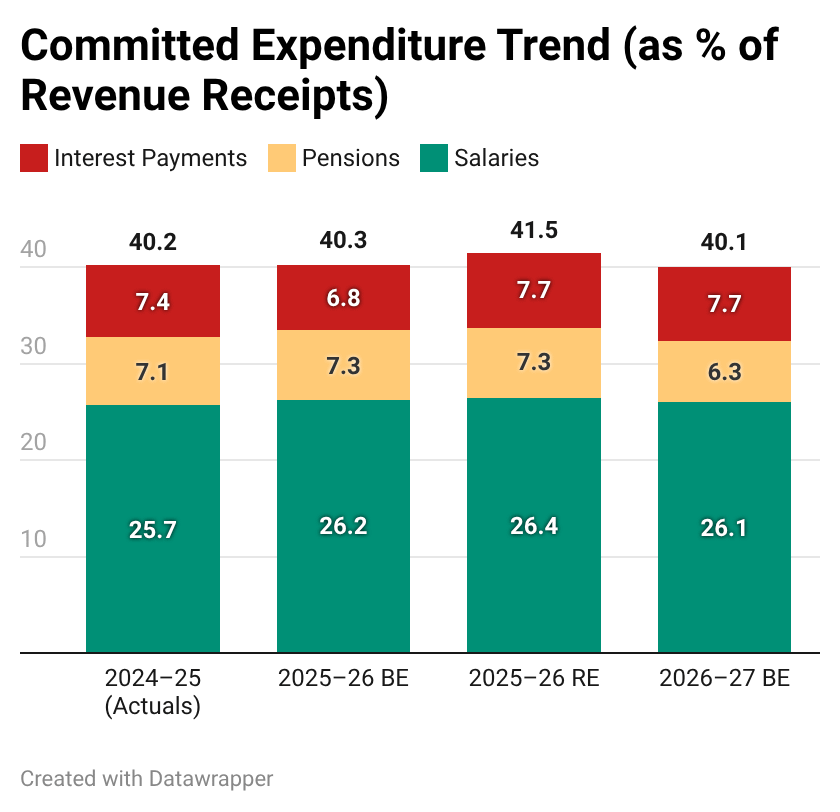
Image 5: Chhattisgarh’s Committed Expenditure Trend As % Of Revenue Receipts
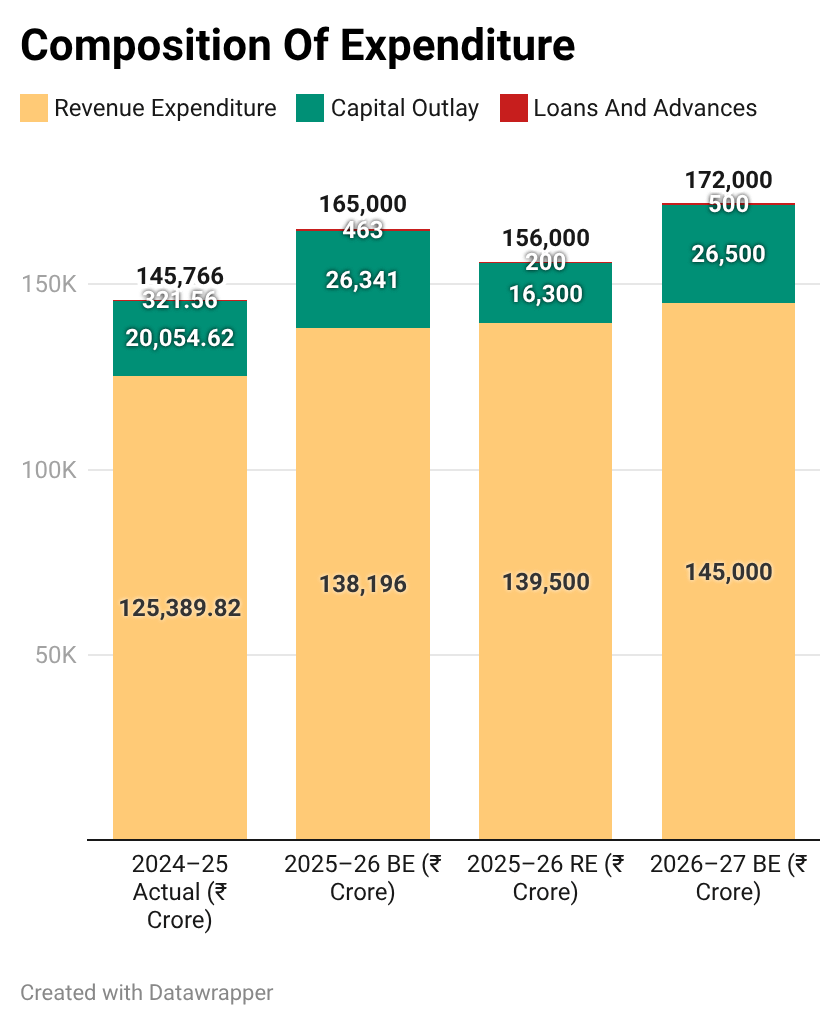
Capital Outlay: Capital outlay for Chhattisgarh for 2026–27 is proposed to be ₹ 26,500 crore, an increase of about 62.6% over the revised estimate of 2025–26 (₹ 16,300 crore).
In 2026–27, capital outlay in Chhattisgarh accounts for about 15.4% of the total expenditure (₹ 1.72 lakh crore) and 3.73% of the GSDP (₹ 7.10 lakh crore).
Compared to previous years, the proposed outlay reflects a steady increase in capital spending. Capital outlay was ₹ 20,054.62 crore in 2024–25 (actuals) and ₹ 15,418 crore in 2023–24, indicating a gradual increase over the last two years, with a sharper rise proposed in 2026–27.
The combination of a steadily rising capital outlay, which at 3.73% of GSDP is above the national average of 3.0%, and consistent year-on-year growth in absolute capital spending points to a strengthening of Chhattisgarh’s investment-led growth prospects over the medium term.
Loans And Advances: In 2026–27, loans and advances by Chhattisgarh are expected to be ₹ 500 crore, about 150% higher as compared to the revised estimate of 2025–26 (₹ 200 crore).
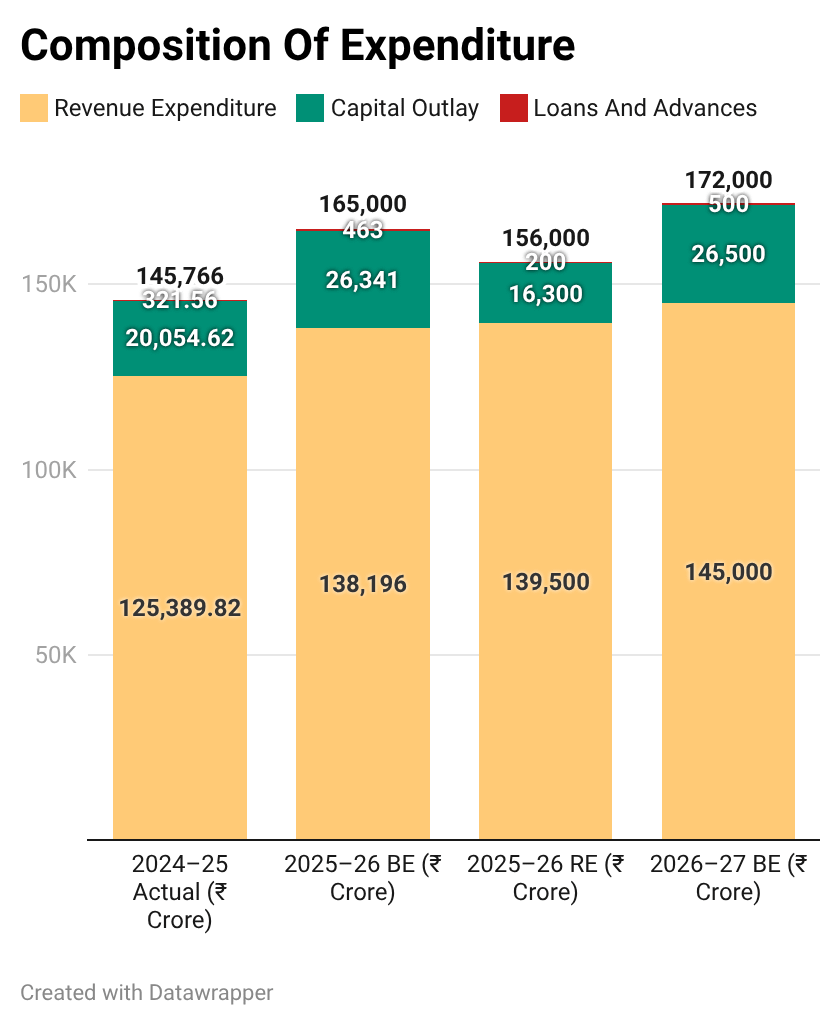
Image 6: Composition Of Chhattisgarh’s Expenditure (in ₹ crore)
V. Revenue Receipt
Total Revenue Receipts:
Total revenue receipts for Chhattisgarh for 2026–27 are estimated to be ₹ 1.43 lakh crore, an increase of about 10.42% over the revised estimate of 2025–26 (₹ 1.30 lakh crore). Of this, ₹ 77,000 crore (about 53.8%) will be raised by the state through its own resources, and ₹ 66,000 crore (about 46.2%) will come from the Centre.
Resources from the Centre: Resources from the Centre for Chhattisgarh consist of the state’s share in Central taxes (35.66% of revenue receipts) and grants-in-aid (10.49% of revenue receipts). This indicates a moderate reliance on transfers from the Centre, which continue to play a significant role in the state’s revenue composition.
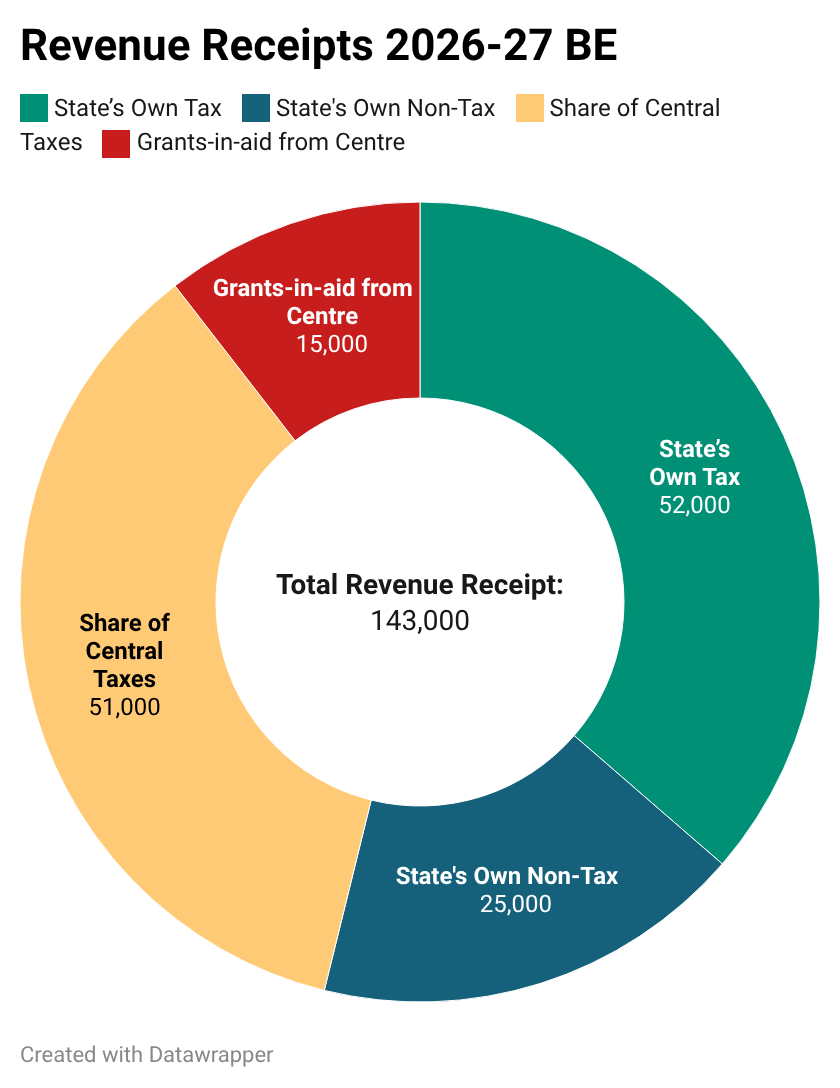
Image 7: Revenue Receipts (2026-27 BE) (in ₹ crore)
16th Finance Commission: In 2026–27, the state’s share in Central taxes is estimated at ₹ 51,000 crore, an increase of about 6.3% over the revised estimate of 2025–26 (₹ 48,000 crore). This moderate increase suggests a steady rise in tax devolution from the centre, which will support the state’s fiscal capacity but is unlikely to significantly alter its overall resource position, requiring continued reliance on its own revenue efforts alongside Central transfers.
Central Grants: Grants from the Centre for Chhattisgarh in 2026–27 are estimated at ₹ 15,000 crore, remaining unchanged compared to both the budget estimate and revised estimate of 2025–26. The 2024–25 actual grants (₹ 14,260.67 crore) represent an increase of about 28.6% over ₹ 11,092 crore in 2023–24. The projection for 2026–27 therefore indicates a stabilisation of Central grants after a phase of growth in recent years.
VI. Deficits and Debts
Revenue Deficit: Revenue deficit in Chhattisgarh for 2026–27 is estimated to be about 0.28% of GSDP (₹ 2,000 crore), as compared to a revenue deficit of about 1.58% of GSDP (₹ 10,000 crore) at the revised estimate stage in 2025–26.
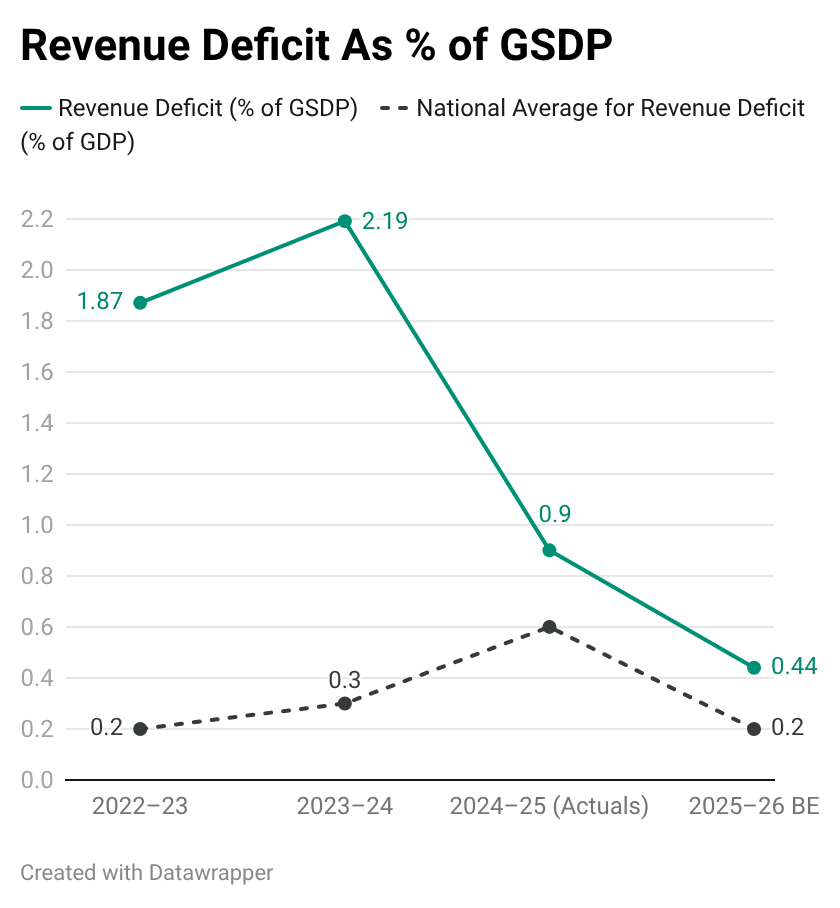
The state has recorded persistent revenue deficits in recent years, with the revenue deficit rising from about 1.87% of GSDP in 2022–23 to about 2.19% in 2023–24, before declining to about 0.90% in 2024–25 (actuals). This trend indicates some correction after a period of widening gap between revenue receipts and revenue expenditure.
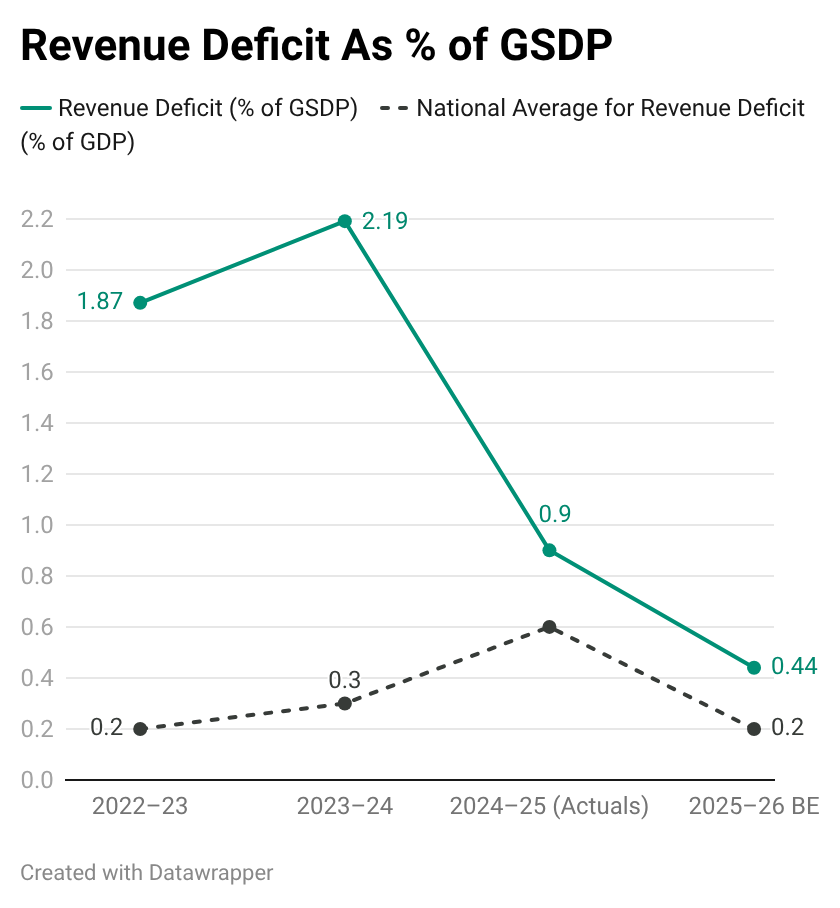
Image 8: Chhattisgarh’s Revenue Deficits As A % Of GSDP in Comparison to National Average Chhattisgarh’s fiscal trends are reflected in its position among the ‘Front Runner’ states in the Fiscal Health Index, alongside large states such as Gujarat, Maharashtra, Uttar Pradesh, and Karnataka. This indicates a relatively strong fiscal position, though continued vigilance is required to manage deficits and sustain this standing over the medium term.
Chhattisgarh’s revenue deficit levels, at about 0.44% of GSDP in 2025–26 (BE), are higher than the national average of around 0.2% of GDP as reported in the RBI State Finances, suggesting that the state’s fiscal position on the revenue account remains comparatively weaker than that of most states.
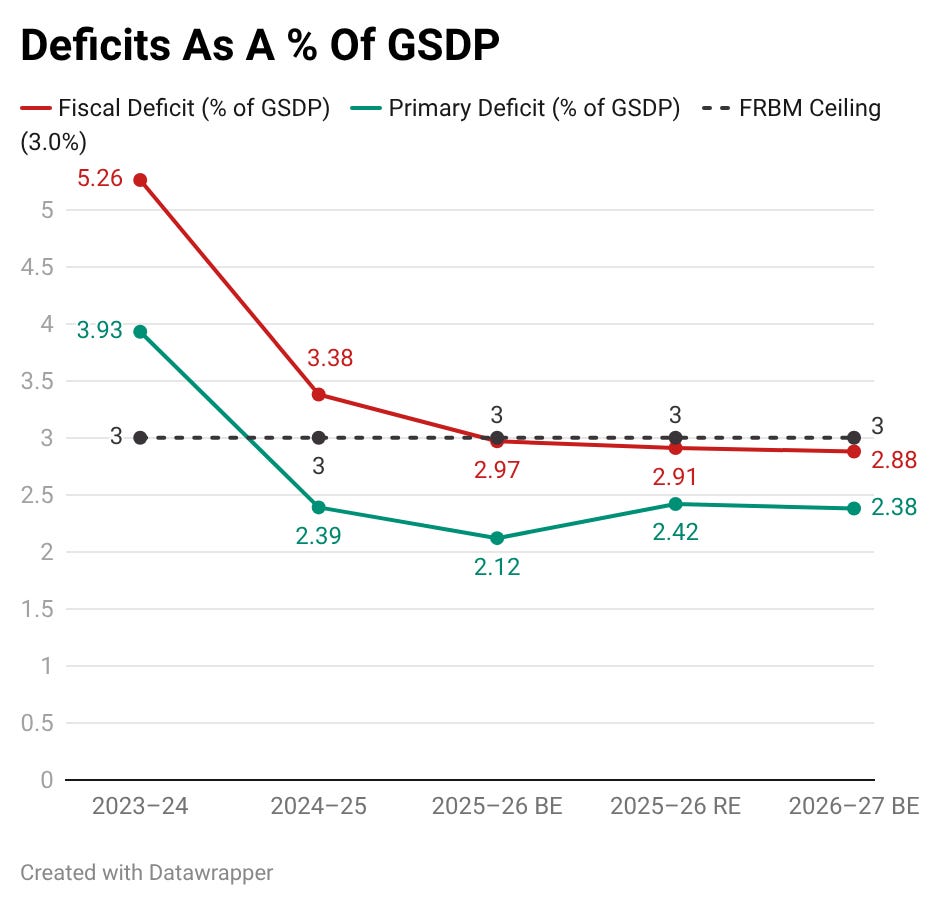
Fiscal Deficit (FD): Fiscal Deficit for Chhattisgarh in 2026–27 is targeted at about 2.88% of GSDP (₹ 20,400 crore). In 2025–26, as per the revised estimates, the fiscal deficit is expected to be about 2.91% of GSDP (₹ 25,400 crore).
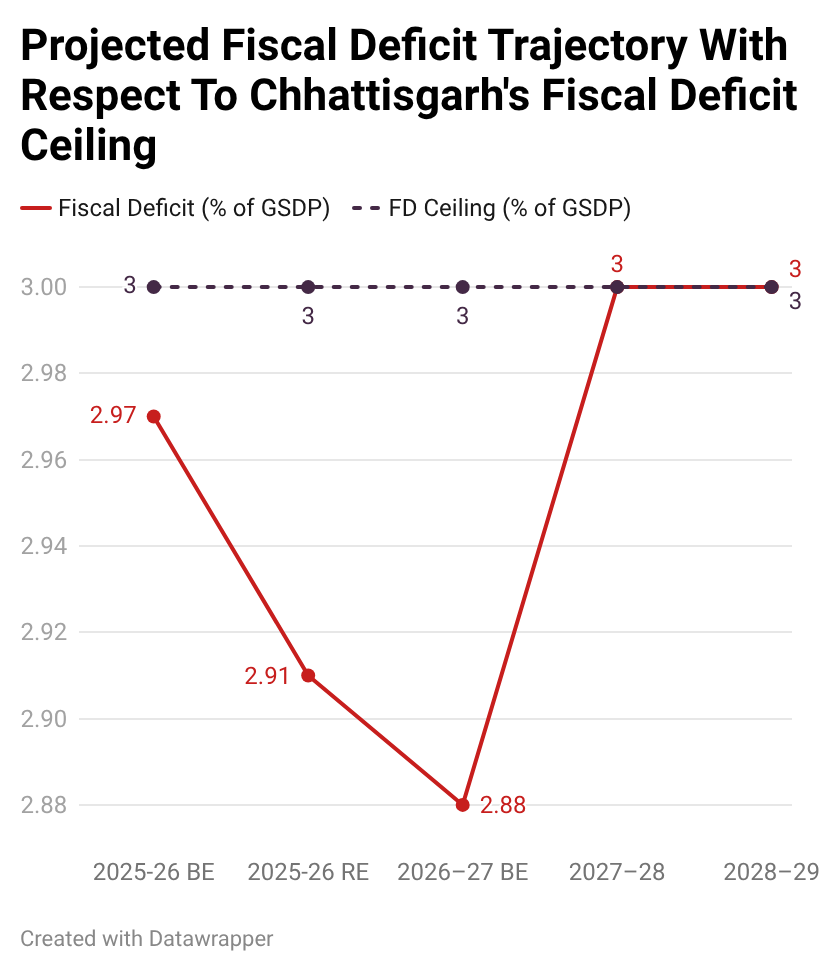
Under the Chhattisgarh Fiscal Responsibility and Budget Management Act, 2005, the state’s base borrowing ceiling is 3.0% of GSDP. Against this, the fiscal deficit for 2026–27 is estimated at 2.88% of GSDP and the revised estimate for 2025–26 is 2.91%, both of which remain within the prescribed ceiling, indicating adherence to fiscal discipline.
Looking ahead, the trajectory of the fiscal deficit for Chhattisgarh is projected as: 2.88% in 2026–27, 3.00% in 2027–28, and 3.00% in 2028–29. These estimates remain within the FRBM ceiling of 3%, indicating that the state is maintaining its fiscal deficit within prescribed limits over the medium term.
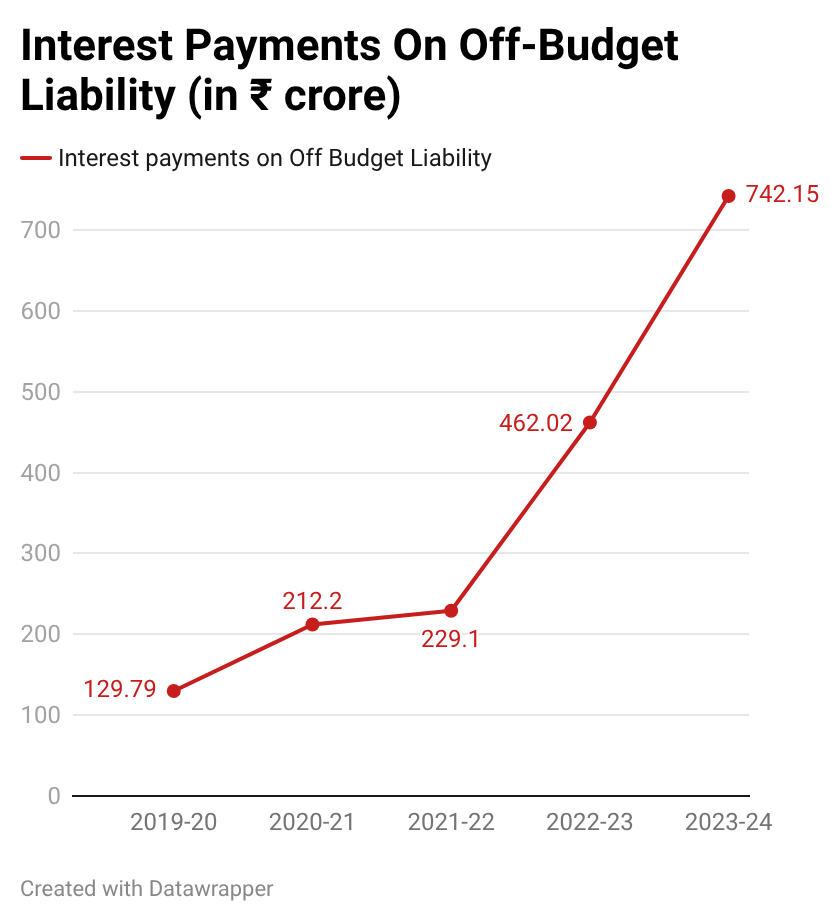
The state Government, through Public Sector Undertakings and parastatals, raised ₹ 7,292.94 crore (5.43% of total budgeted liabilities) as off-budget borrowings in 2023-24, which did not flow into the Consolidated Fund of the State but are required to be repaid and serviced through budget.
These off-budget borrowings are not reflected in the budget and do not contribute towards the FD. Therefore, the reported fiscal deficit does not fully capture the state’s effective fiscal burden. While such liabilities may not immediately flow through the Consolidated Fund, they create repayment and servicing obligations for the budget and weaken fiscal transparency.
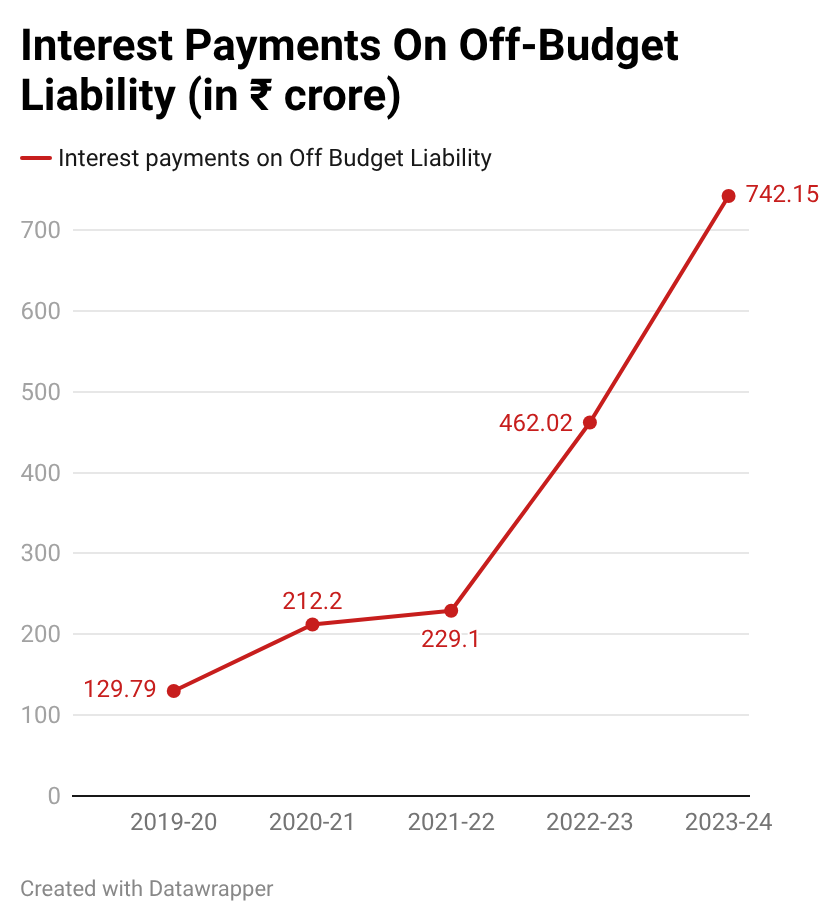
Image 9: Interest Payments On Off-Budget Liability (in ₹ crore)
Primary Deficit: Primary Deficit for Chhattisgarh in 2026–27 is targeted at about 2.38% of GSDP (₹ 16,900 crore). In 2025–26, as per the revised estimates, the primary deficit is expected to be about 2.44% of GSDP (₹ 15,400 crore).
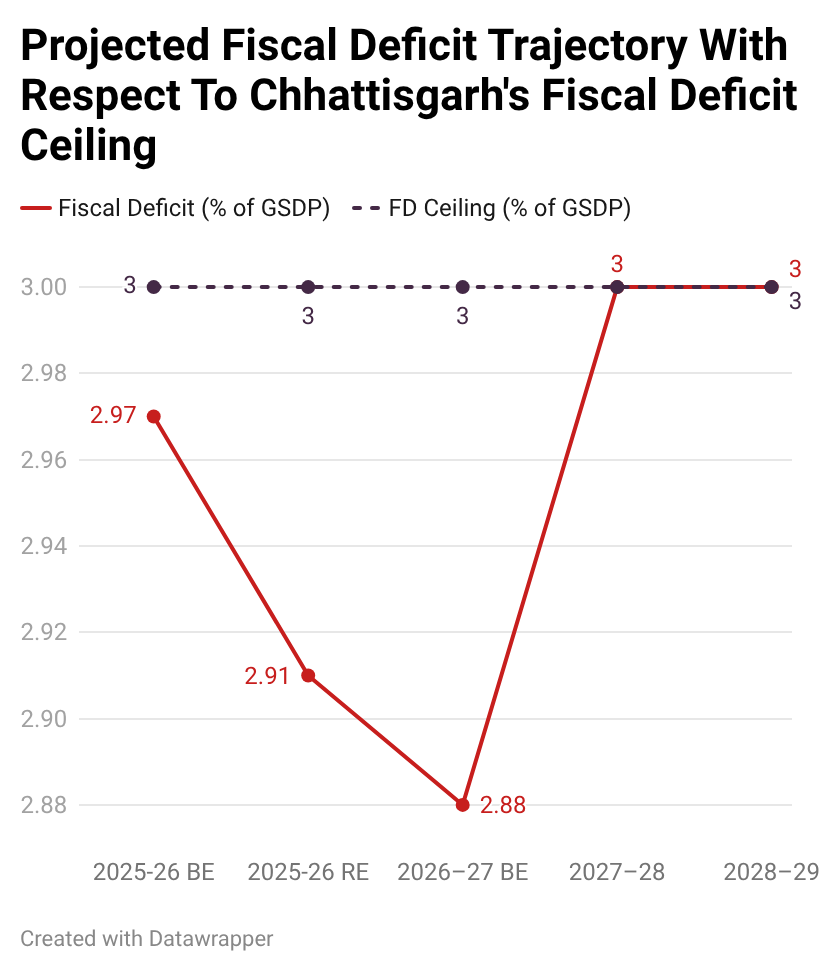
Image 10: Projected FD Trajectory With Respect To Chhattisgarh’s FD Ceiling 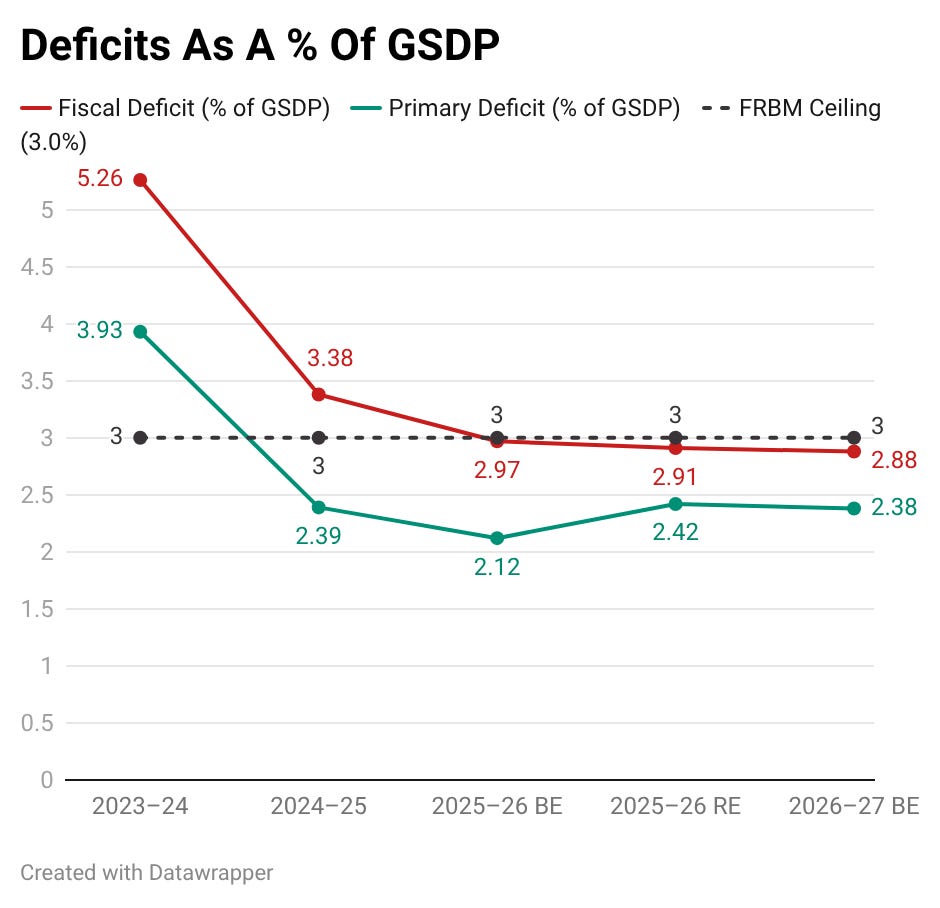
Image 11: Chhattisgarh’s Deficits As A % Of GSDP
VII. Expenditure On Subsidies And Transfers
Chhattisgarh’s 2026–27 budget is heavily skewed towards recurring support spending. The main identified heads alone total ₹ 42,900 crore: Krishak Unnati Yojana (₹ 10,000 crore), Mahatari Vandan Yojana (₹ 8,200 crore), Mukhyamantri Khadyaan Sahayata Yojana (₹ 6,500 crore), Energy Subsidy (₹ 6,700 crore), Paddy Procurement Facilitation (₹ 6,000 crore) and Subsidy for Electrical Pumps (₹ 5,500 crore). This is about 29.97% of projected revenue receipts and about 6.04% of GSDP.
That scale is well above the broader state benchmark. The 16th Finance Commission study shows subsidies and transfers across the 21 states rising to about 3% of GSDP in 2024–25, while Chhattisgarh is among the states above 4% of GSDP.
The burden is likely understated if one relies only on the State Finance Accounts classification. The 16th FC’s study points out that many items counted as subsidies in the study are not treated as subsidies in SFA, especially pension and subsistence allowance, electricity, and financial assistance. These three categories account for around 80% of the gap between the study estimate and SFA.\
Chhattisgarh fits the above pattern. In FY 2023-24, Rajiv Gandhi Farmer Justice Scheme (₹ 4,926 crore) was listed under financial assistance and Krishak Unnati (₹ 13,320 Crores) was listed under price support. This shows how a large welfare transfer can sit outside the narrow subsidy label even though it functions like recurring support expenditure.
Taken together, the classification gaps and the scale of identified schemes suggest that Chhattisgarh’s effective subsidy and transfer burden is both structurally high and likely understated in headline budget classifications, reinforcing the dominance of recurring support expenditure in its fiscal profile.
VIII. Non-Tax Revenue from Mining
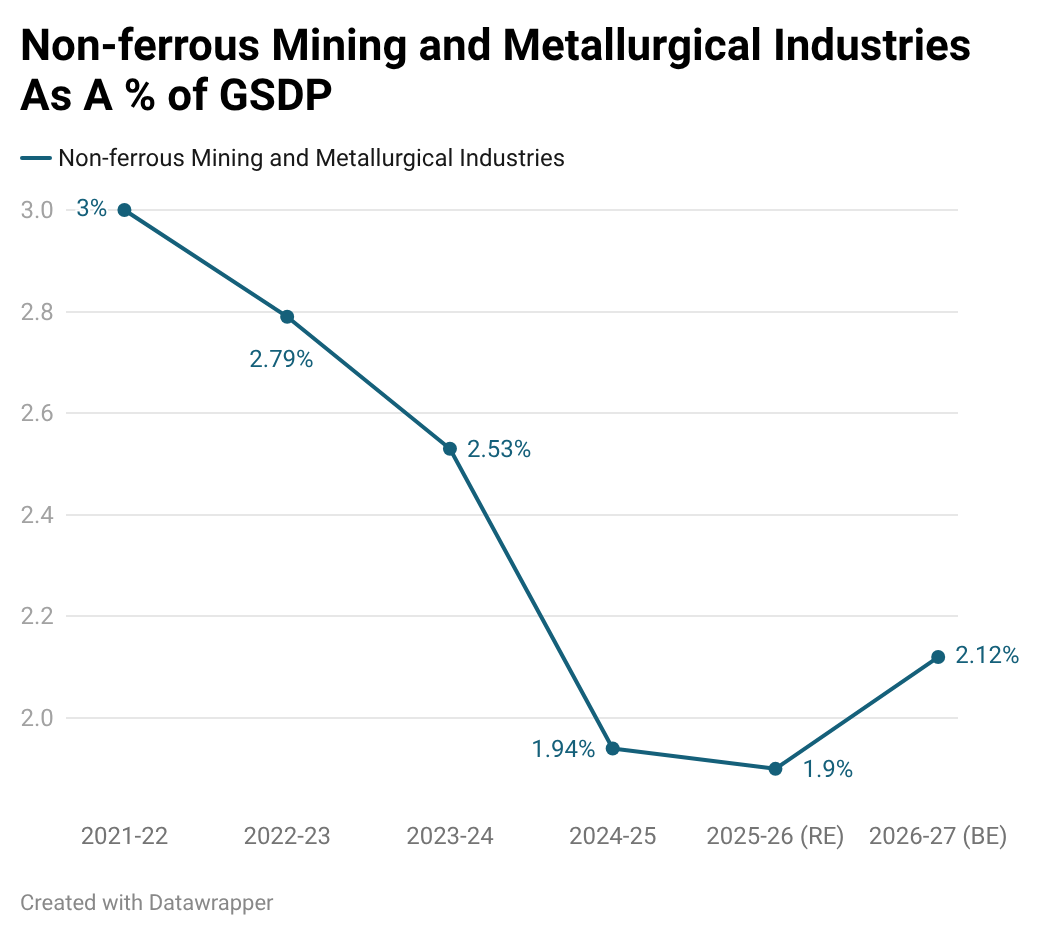
Chhattisgarh has budgeted ₹ 15,020.67 crore from Non-ferrous Mining and Metallurgical Industries in 2026–27, up from ₹ 12,016.54 crore in 2025–26 RE and ₹ 10,971.83 crore in 2024–25 actuals. This shows a strong upward revision in the State’s mining-linked receipts.
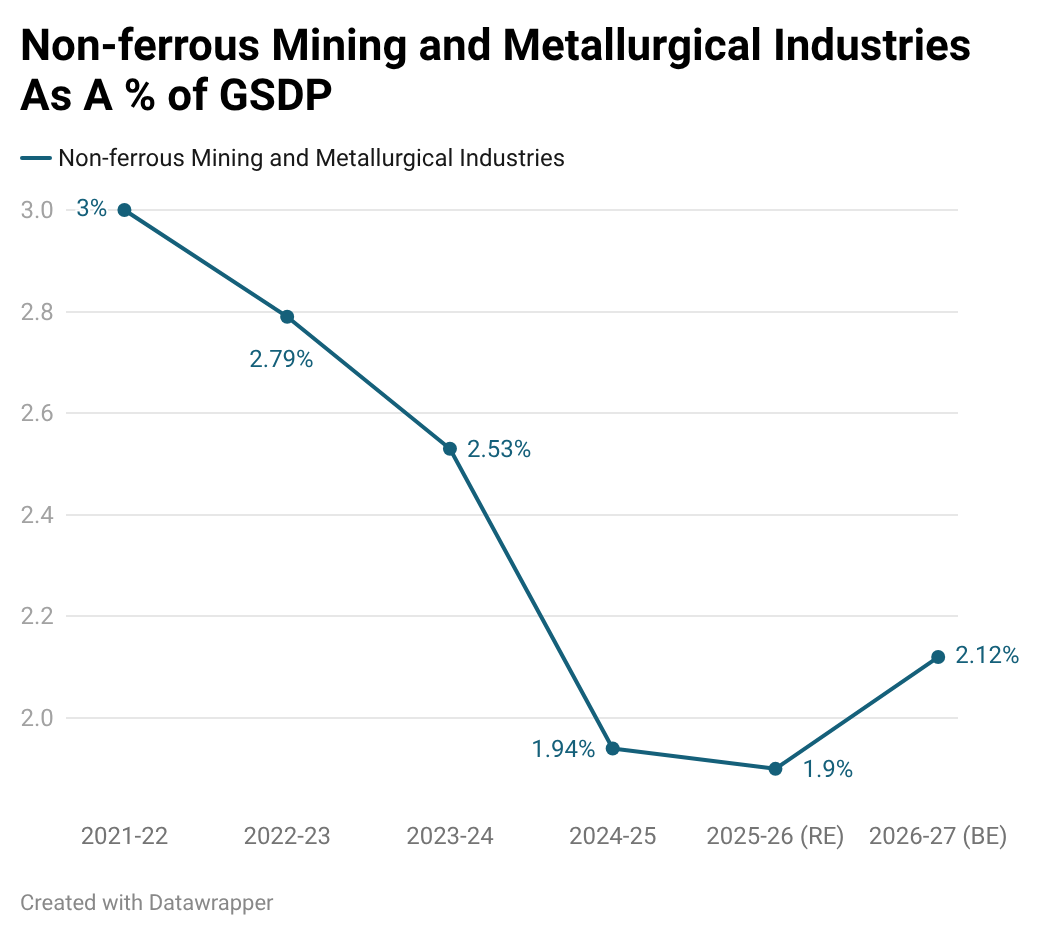
Image 12: Non-ferrous Mining and Metallurgical Industries as a % of GSDP Against total revenue receipts of ₹ 1,43,000 crore, mining alone accounts for about 10.5% of the State’s revenue base. This makes mining a major pillar of Chhattisgarh’s own non-tax revenue.
This can be attributed to lower average market value of iron ore and non-receipt of environmental clearances for minor mineral (sand) mines, highlighting the sensitivity of mining revenues to both market conditions and regulatory approvals.
This trend is consistent with the State’s revenue structure, where mining remains a key contributor to non-tax revenue. While it supports overall revenue growth, it also introduces variability linked to commodity cycles and administrative clearances.
Annexure I
Annexure II -
Annexure III -
Also, please consider subscribing to NFPRC Foundation’s focused centres covering latest economic, policy and administrative developments -
Centre for Law, Policy and Governance - Link
Centre for Accelerating India’s Growth - Link
Centre for Studies in Indian Social Systems - Link
NFPRC Foundation - Link