

Executive Summary:
India’s agricultural sector is presently exposed to a compound-risk scenario arising from the convergence of an emerging Super El Niño event, tightening global fertilizer markets, and elevated dependence on imported fertilizer inputs routed through geopolitically vulnerable maritime chokepoints.
The India Meteorological Department has forecasted “below normal” Southwest Monsoon conditions for 2026 alongside the emergence of El Niño conditions in the equatorial Pacific.
Historically, strong El Niño events have been associated with drought, weakened monsoon rainfall, lower agricultural output, and elevated food inflation in India.
Between 1950 and 1999, India’s food grain production declined in 12 out of 13 El Niño years, while warm ENSO-phase years have historically reduced kharif rice production by approximately 3.4 million tonnes.
India imported approximately 177 lakh metric tonnes (“LMT”) of fertilizers in 2023–24, with import dependence remaining particularly acute for phosphatic and potassic fertilizers.
Urea import prices rose from approximately $ 508 (₹ 48,901) per tonne in late 2025 to nearly $ 935–959 (₹ 90,006–92,313) per tonne by April 2026, significantly increasing subsidy and fiscal pressures.
Fertilizer shortages have increasingly generated localised unrest across agricultural states including Punjab, Madhya Pradesh, Haryana, and Rajasthan, while fertilizer smuggling across the Nepal border continues to impose additional enforcement burdens.
I. Introduction
India’s agricultural sector is entering a period of heightened vulnerability due to the simultaneous emergence of El Niño conditions, tightening global fertilizer markets, and growing geopolitical disruptions across critical supply chains. The India Meteorological Department has forecasted “below normal” Southwest Monsoon conditions for 2026 alongside the development of El Niño conditions in the equatorial Pacific. Historically, such events have been associated with weakened monsoon rainfall, lower agricultural output, and elevated food inflation.
India additionally remains significantly dependent on imported fertilizer inputs, exposing domestic agriculture to disruptions linked mainly to maritime chokepoints. The interaction between climatic stress and fertilizer insecurity therefore has implications for food inflation, subsidy expenditure, and rural stability.
II. El Niño And India’s Agricultural Vulnerability
Weakening Monsoons And Agricultural Exposure:
El Niño refers to the anomalous warming of sea surface temperatures (“SSTs”) in the central and eastern tropical Pacific Ocean, forming the warm phase of the El Niño–Southern Oscillation (“ENSO”) cycle.
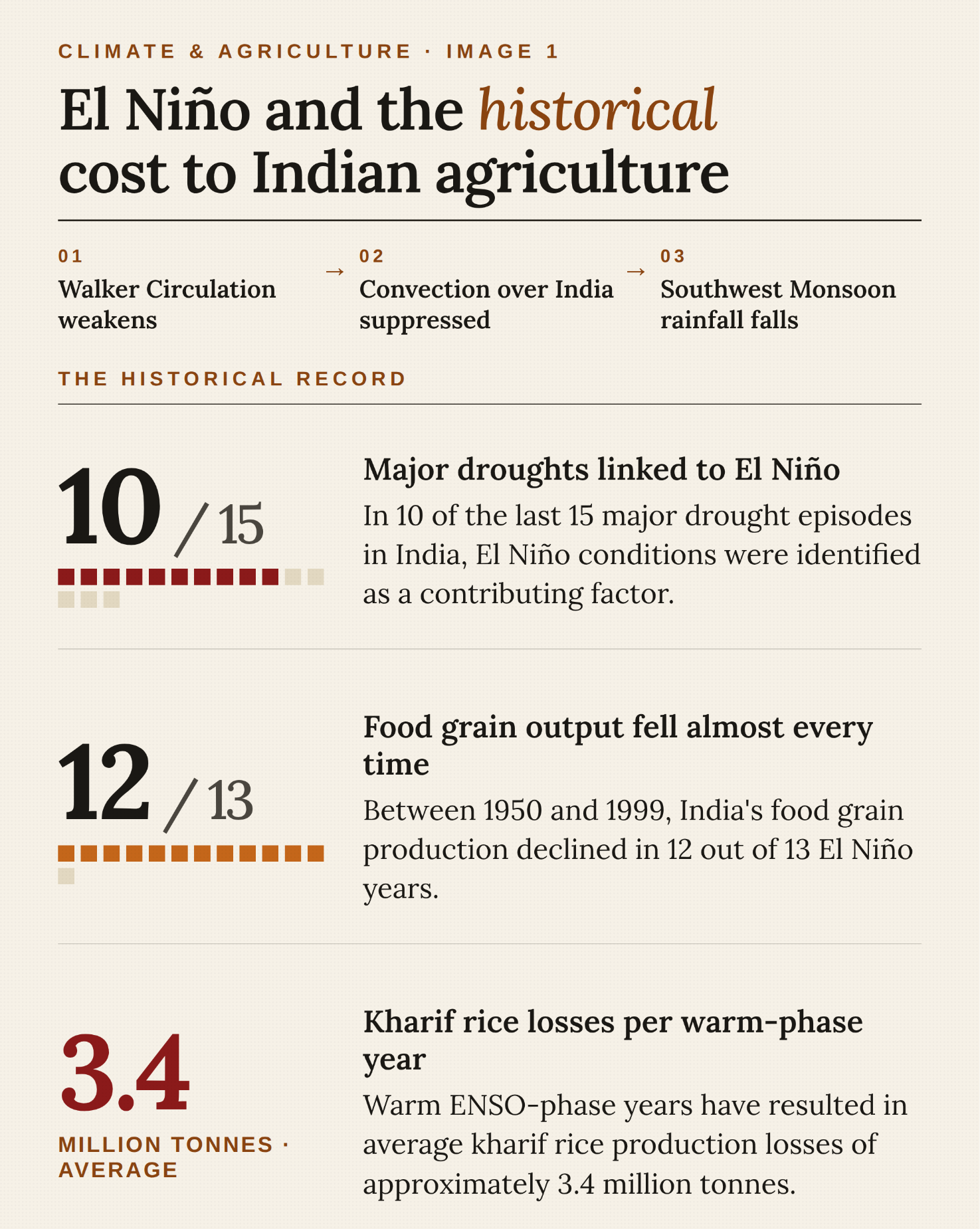
The phenomenon weakens the Walker Circulation and suppresses convective activity over the Indian subcontinent, thereby reducing the intensity of Southwest Monsoon rainfall.
Since Indian agriculture remains substantially monsoon-dependent, El Niño events have historically exerted significant adverse effects on agricultural productivity and rural incomes.
In 10 of the last 15 major drought episodes in India, El Niño conditions were identified as a contributing factor.
A Historical Pattern Of Crop Losses:
Between 1950 and 1999, India’s food grain production declined in 12 out of 13 El Niño years.
Warm ENSO-phase years have additionally resulted in average kharif rice production losses of approximately 3.4 million tonnes.
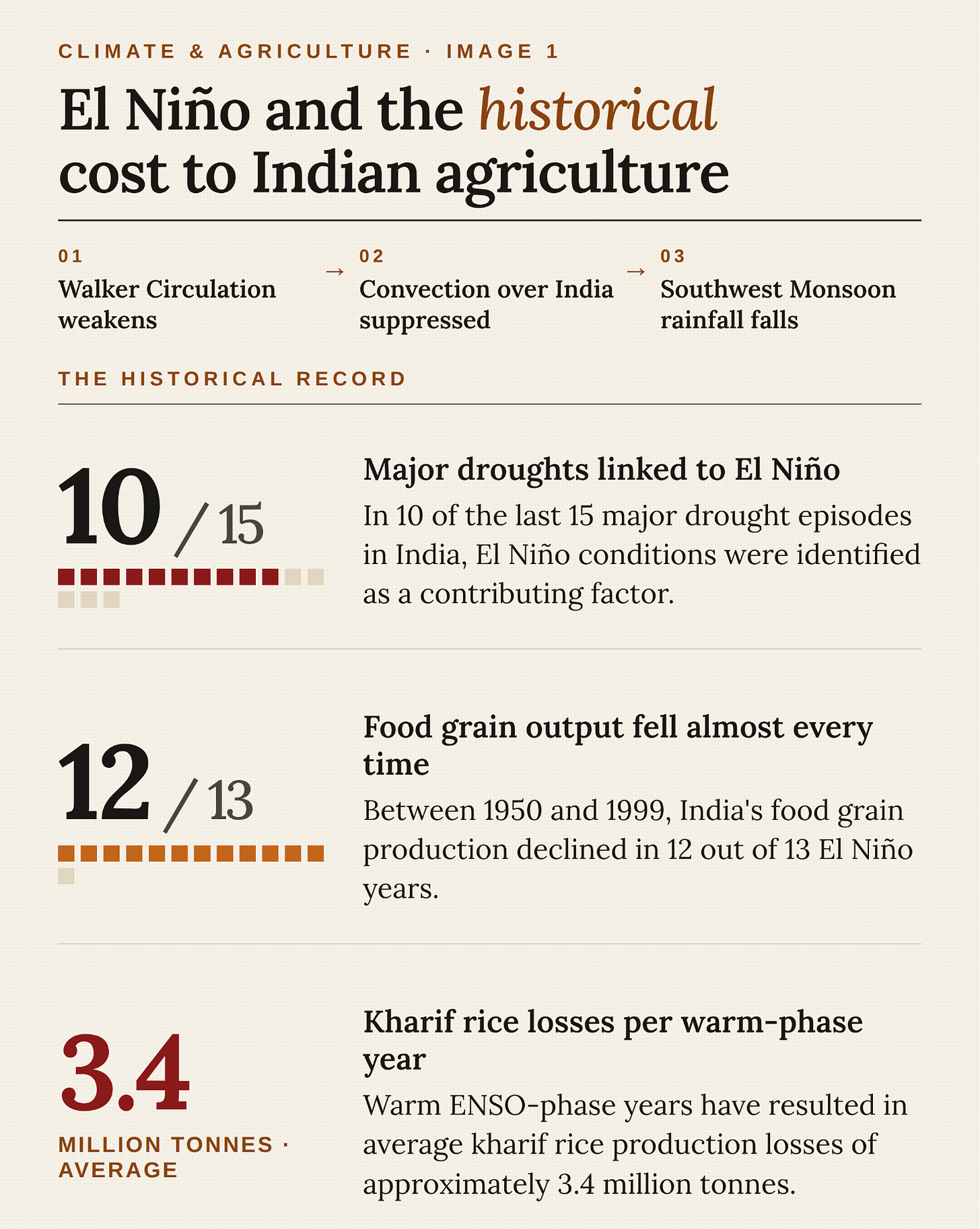
Image 1: Historical Relationship Between El Niño Events And Agricultural Output
From Climate Shock To Food Inflation:
The 2023–24 El Niño episode contributed to deficient rainfall conditions across several regions of India, adversely affecting both kharif and rabi output.
Food inflation consequently remained elevated for an extended period, with the Consumer Food Price Index (“CFPI”) averaging approximately 10.87% in October 2024.
Although food inflation moderated during early 2026 (i..e, from 3.87% in March 2026 to 4.20% in April 2026), the emergence of a stronger El Niño event during the 2026 monsoon season could reverse this trend.
Harvest Season Vulnerabilities:
Importantly, Super El Niño events tend to intensify during August and September, corresponding with critical harvesting periods for several kharif crops and increasing the likelihood of simultaneous production losses and inflationary pressures.
III. Domestic Fertilizer Dependence And Supply Vulnerabilities
Persistent Dependence On Imported Inputs:
India consumed approximately 601 lakh metric tonnes (“LMT”) of fertilizers during 2023–24, of which 177 LMT were imported.
External dependence remains particularly acute for phosphatic and potassic fertilizers.
Notably, India remains approximately 87% self-sufficient in urea and around 40% self-sufficient in Di-Ammonium Phosphate (“DAP”), while muriate of potash remains entirely import-dependent.
Concentrated Supply Chains And Strategic Exposure:
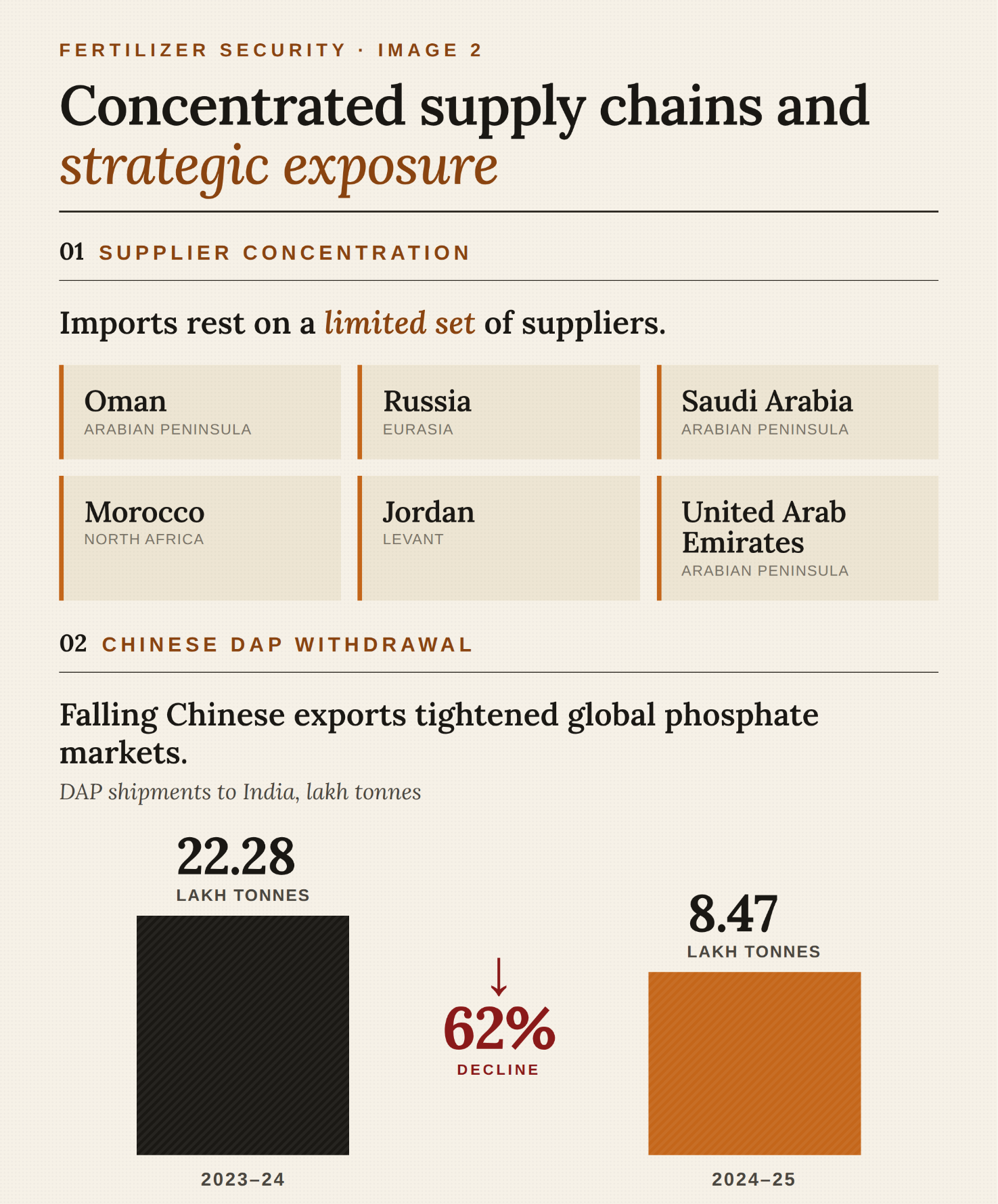
India’s fertilizer imports additionally remain concentrated among a limited number of suppliers including Oman, Russia, Saudi Arabia, Morocco, Jordan, and the United Arab Emirates.
Simultaneously, reductions in Chinese fertilizer exports have intensified supply constraints in global phosphatic markets. Chinese DAP exports to India declined sharply from approximately 22.28 lakh tonnes in 2023–24 to 8.47 lakh tonnes in 2024–25, representing a decline of ~ 62% year-on-year.
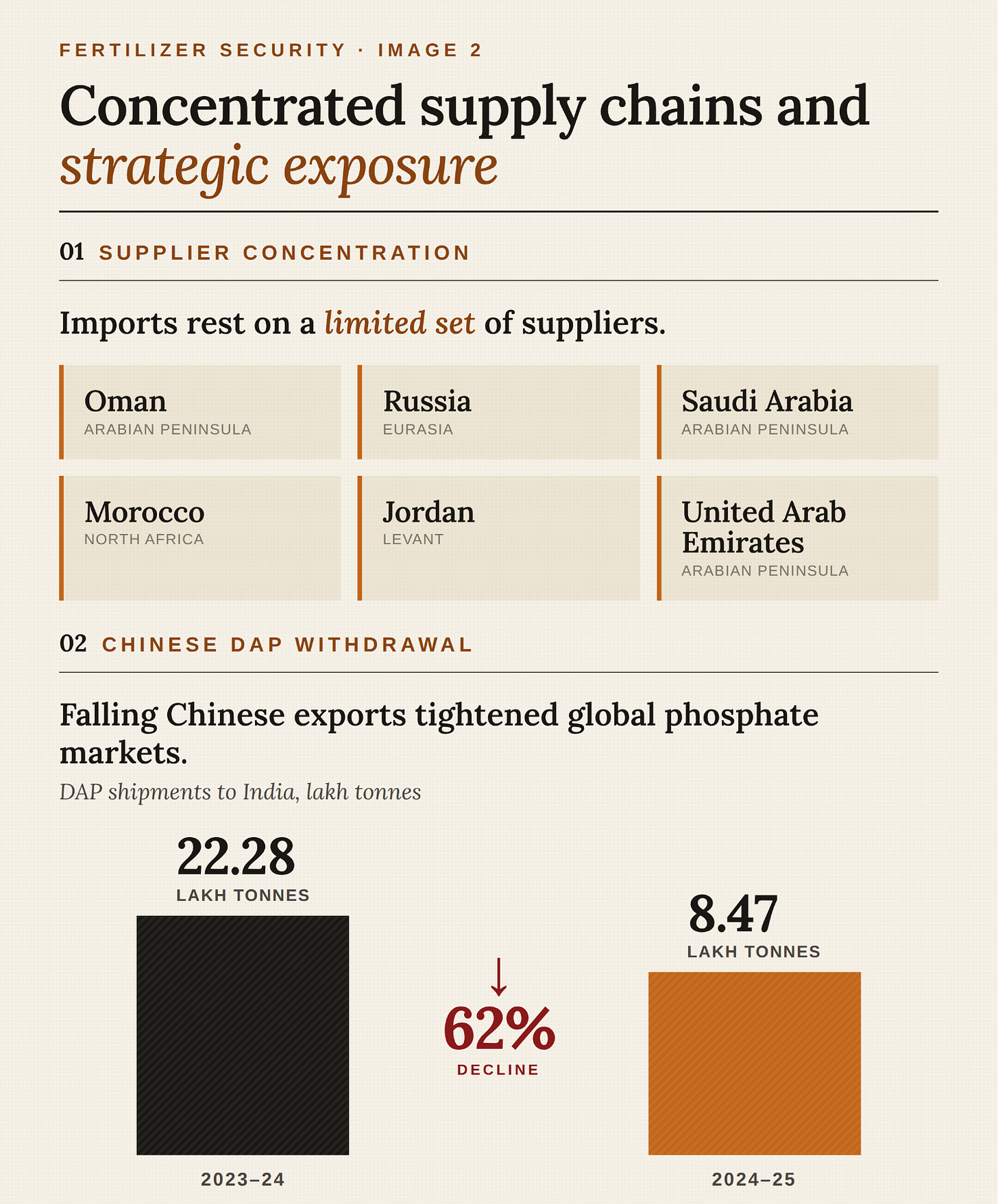
Image 2: India’s Fertilizer Import Dependence And Major Supply Sources Maritime Chokepoints And Supply Disruptions:
Approximately 54% of India’s fertilizer imports in 2024 transited through the Persian Gulf region, while nearly 80% of India’s ammonia consumption is estimated to originate from Gulf-based supply routed through the Strait of Hormuz.
Red Sea instability, Panama Canal disruptions, and geopolitical tensions in West Asia have simultaneously increased freight costs, shipment delays, and fertilizer prices.
Escalating Fertilizer Prices And Input Costs:
Indian urea import prices increased from approximately $ 508 (₹ 48,901) per tonne in late 2025 to nearly $ 935–959 (₹90,006–92,313) per tonne by April 2026, reflecting an increase of nearly 84–89%.
Climatic uncertainty and fertilizer insecurity reinforce each other because deficient rainfall conditions generally increase dependence on fertilizer-intensive productivity stabilisation measures, thereby amplifying demand pressures amid constrained global supply conditions.
IV. Fiscal Pressures And Domestic Stability Concerns
Rising Subsidy Burdens And Fiscal Stress:
India’s fertilizer subsidy expenditure increased from approximately ₹ 1.51 lakh crore in FY 2022–23 to ₹ 1.88 lakh crore in FY 2023–24.
For FY 2026–27, the Union Budget allocated approximately ₹ 1.71 lakh crore toward fertilizer subsidies. However, estimates suggest that actual expenditure requirements may increase to nearly ₹ 2.4 lakh crore, implying a potential overshoot of approximately ₹ 70,000 crore.
Expanding State Support Measures:
The Government has additionally expanded subsidy support under the Nutrient Based Subsidy (“NBS”) regime. For the Rabi 2025–26 season, the subsidy on DAP was increased from ₹ 21,911 to ₹ 29,805 per metric tonne.
Localised Unrest And Distribution Pressures:
Fertilizer shortages have increasingly generated localized unrest across agricultural states including Punjab, Madhya Pradesh, Haryana, and Rajasthan.
Punjab witnessed indefinite “chakka jam” protests linked to inadequate DAP availability, while similar road blockades and supply disruptions were reported in Madhya Pradesh.
Humanitarian And Law-And-Order Consequences:
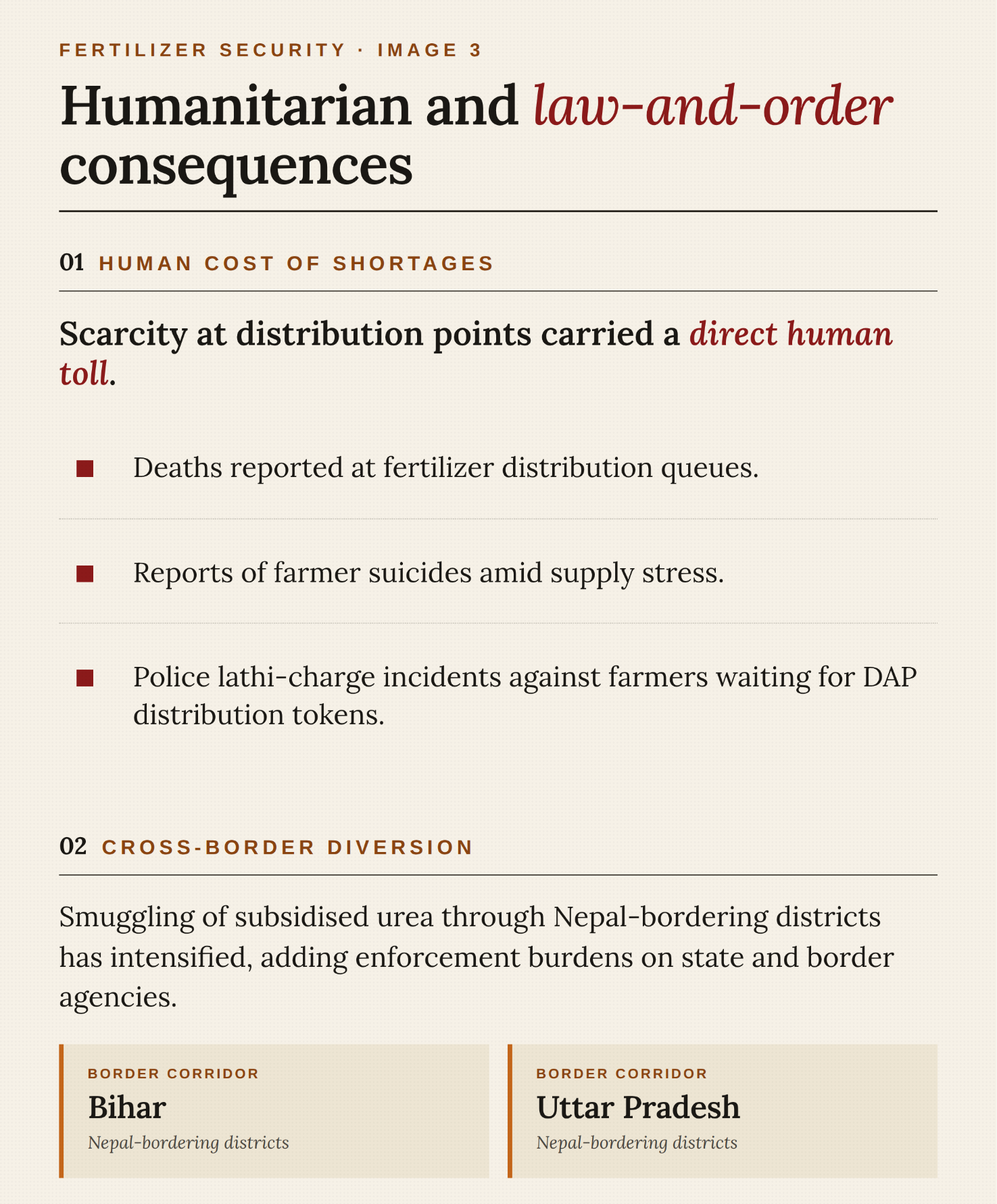
The shortages additionally contributed to deaths at fertilizer distribution queues, reports of farmer suicides, and police lathi-charge incidents against farmers waiting for DAP distribution tokens.
Cross-border smuggling of subsidised urea through Nepal-bordering districts in Bihar and Uttar Pradesh has simultaneously intensified, imposing additional enforcement burdens on state authorities and border agencies.
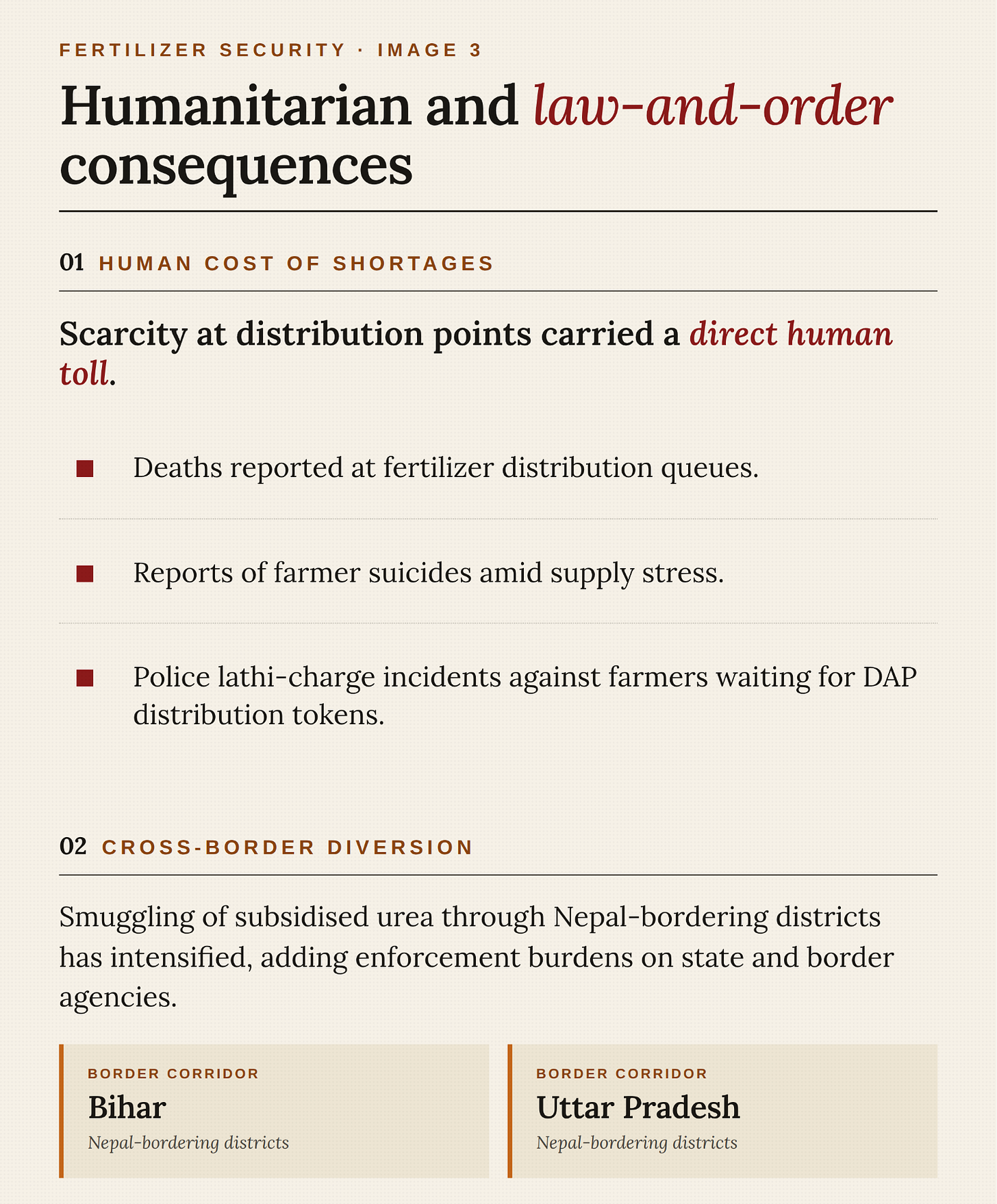
Image 3: Domestic Fertilizer Shortages And Associated Civil Unrest
V. Policy Considerations and Strategic Implications
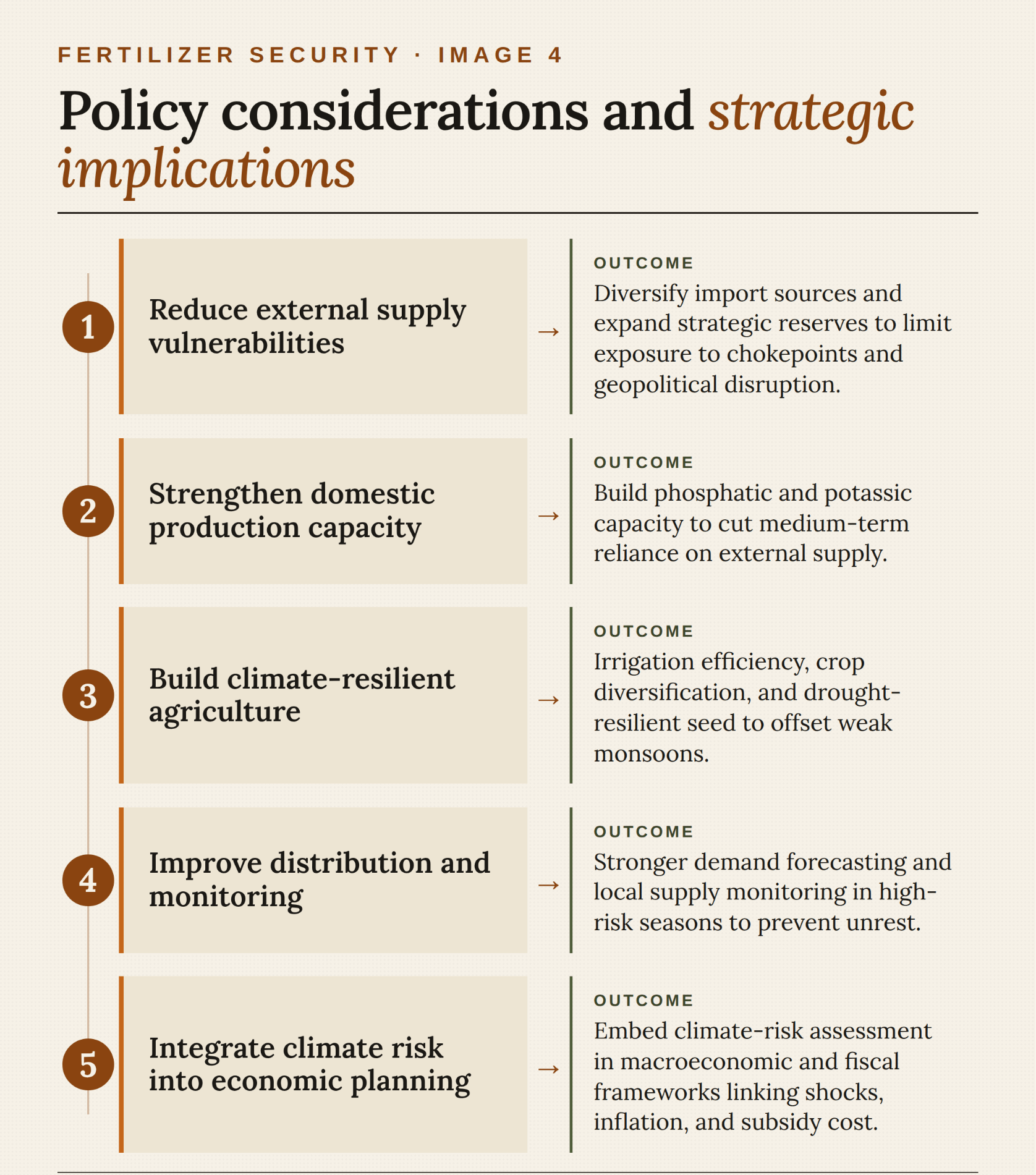
Reducing External Supply Vulnerabilities: Diversification of fertilizer import sources and expansion of strategic fertilizer reserves may reduce exposure to concentrated maritime chokepoints and geopolitical disruptions.
Strengthening Domestic Production Capacity: Improving domestic fertilizer production capacity, particularly for phosphatic and potassic inputs, could reduce vulnerability to external supply shocks over the medium term.
Building Climate-Resilient Agriculture: Strengthening climate-resilient agricultural practices, irrigation efficiency, crop diversification, and drought-resilient seed deployment may help mitigate the agricultural effects of weakened monsoon conditions.
Improving Distribution And Monitoring Mechanisms: The recurring emergence of fertilizer-linked civil unrest indicates the need for stronger distribution planning, demand forecasting, and local-level supply monitoring mechanisms during high-risk agricultural seasons.
Integrating Climate Risks Into Economic Planning: The interaction between climate shocks, food inflation, and subsidy expenditure underscores the importance of integrating climate-risk assessment more directly into macroeconomic and fiscal planning frameworks.
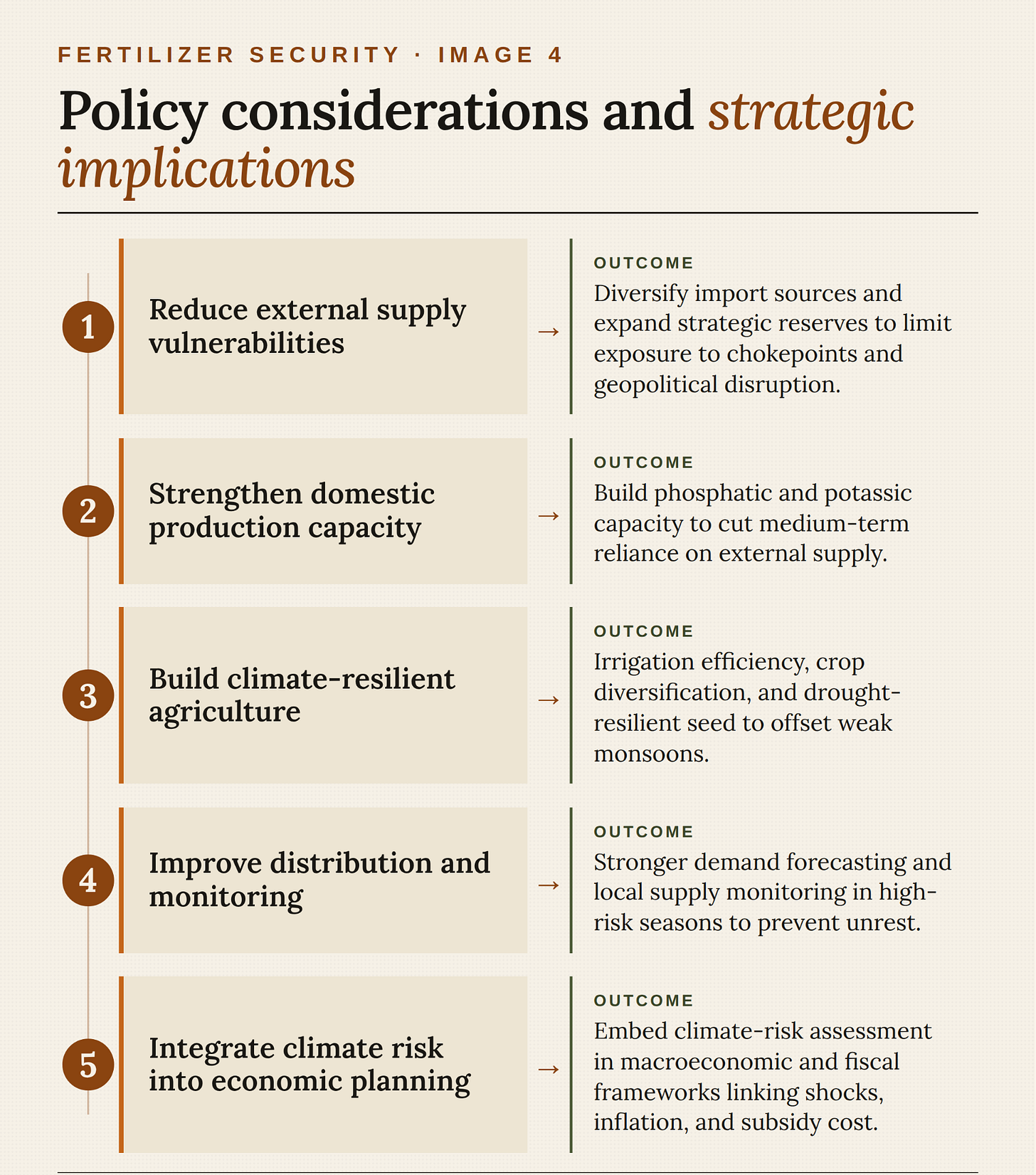
Image 4: Key Policy Considerations
Annexure - I
Global Supply Chain Disruptions And Their Impact On India’s Fertilizer Security
Panama Canal Disruptions And Freight Escalation: The 2023 El Niño event contributed to severe Panama Canal disruptions, forcing reductions in daily transit reservations and increasing freight costs by approximately 20–30%.
Red Sea Instability And Fertilizer Shipments: Red Sea disruptions following the outbreak of hostilities in West Asia significantly affected fertilizer shipments from the Middle East to India, particularly phosphatic fertilizers and muriate of potash.
Escalating International Fertilizer Prices: International DAP prices for India increased from approximately $ 454 (₹ 43,740) per tonne in June 2023 to nearly $ 800 (₹ 77,101) per tonne by mid-2025.
China’s Export Restrictions And Supply Tightening: Beginning in mid-2023, China substantially curtailed export approvals for DAP and urea shipments to India, significantly tightening fertilizer availability within global markets. As a result, India’s DAP imports from China fell from about 22.3 lakh tonnes in 2023–24 to around 8.47 lakh tonnes in 2024–25, while urea imports from China shrank from roughly 1.87 million tonnes to near 0.1 million tonnes over the same period.
Also, please consider subscribing to NFPRC Foundation’s focused centres covering latest economic, policy and administrative developments -
Centre for Law, Policy and Governance - Link
Centre for Accelerating India’s Growth - Link
Centre for Studies in Indian Social Systems - Link
NFPRC Foundation - Link