
I. Executive Summary
Gujarat’s 2026–27 Budget reflects a stable and investment-driven fiscal approach, combining sustained economic growth with continued emphasis on infrastructure and fiscal prudence.
The state projects robust economic expansion, with GSDP expected to grow by 11.4%, alongside rising income levels. Revenue receipts remain strong, supported by a high share of own resources, which accounts for 71.4% of total receipts, indicating low reliance central transfers.
Capital outlay is budgeted at 3.2% of GSDP, slightly above the national benchmark, and marking a 25% increase over 2025–26 RE. This indicates a sustained push towards infrastructure development and investment-led growth.
Fiscal discipline remains a defining feature, the state maintains a revenue surplus of 0.77% of GSDP, while the fiscal deficit is contained at 1.97%, and debt-to-GSDP ratio at 14.42% in 2025–26, well within the FRBM limit. The reduction in contingent liabilities further strengthens the state’s fiscal position.
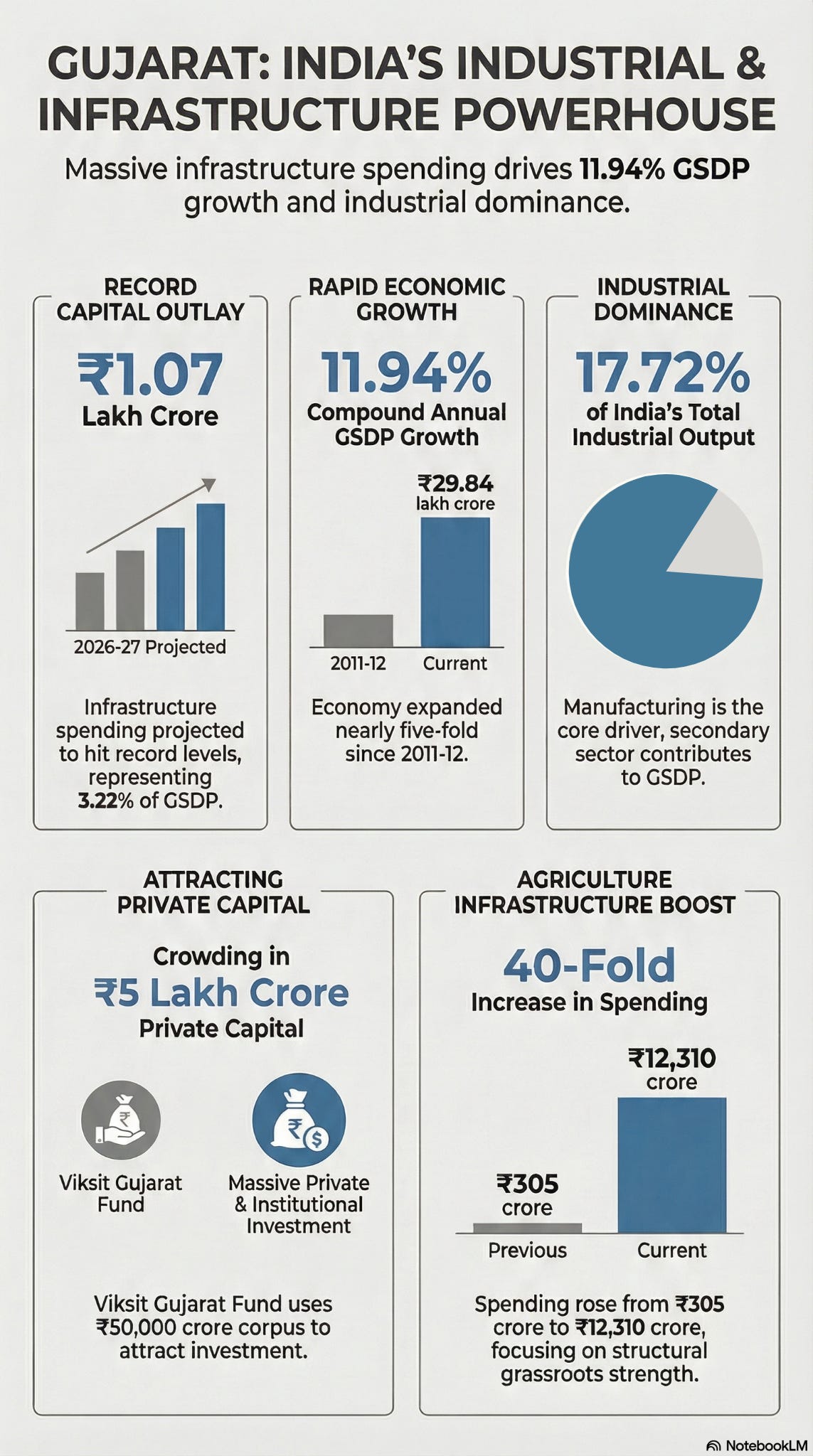
Gujarat’s infrastructure-led “Gujarat model”, marked by an 11.94% CAGR in GSDP since 2011–12, underpins a powerful industrial base and positions the state as one of India’s most dynamic, investment-driven growth engines.
The Finance Minister, Shri Kanubhai Desai, presented the Gujarat State Budget 2026-27 before the State Legislature on 18th February, 2026. This is the 5th consecutive budget presented by the current Finance Minister.
II. Financial Highlights
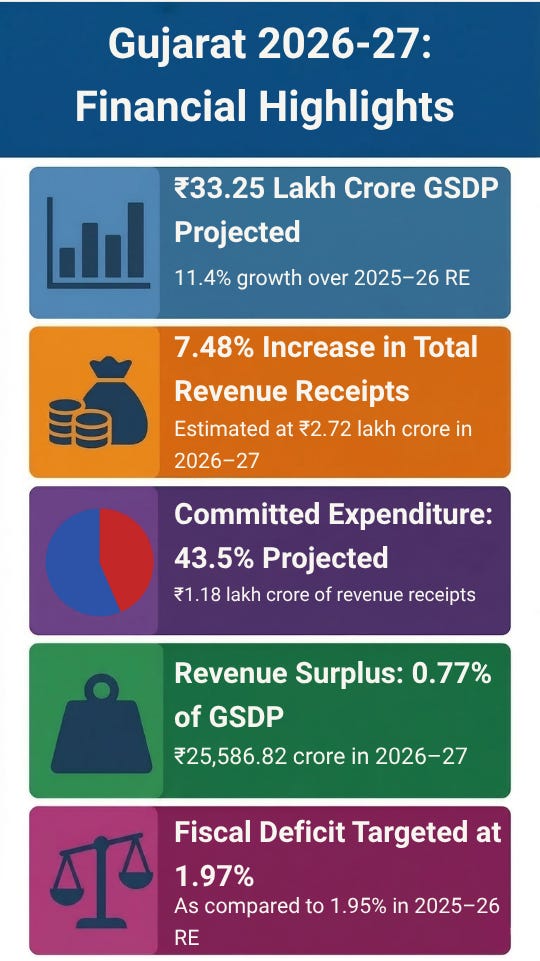
Gross State Domestic Product (GSDP): Gujarat’s GSDP for 2026–27 (at current prices) is projected to be ₹ 33.25 lakh crore, amounting to a growth of about 11.40% over the revised estimates (RE) for 2025–26 (₹ 29.84 lakh crore).
GSDP Per Capita: In 2024–25, Gujarat’s per capita GSDP (at current prices) is estimated (quick estimate) to be ₹ 3,71,016, an increase of 8.93% over 2023–24 (₹ 3,40,615). In 2023–24, per capita GSDP had grown by 10.71% over 2022–23 (₹ 3,07,650).
Revenue Surplus: Revenue surplus in 2026–27 is ₹ 25,586.82 crore estimated at 0.77% of GSDP, as compared to a surplus of ₹ 23,725.43 crore at 0.79% of GSDP in 2025–26.
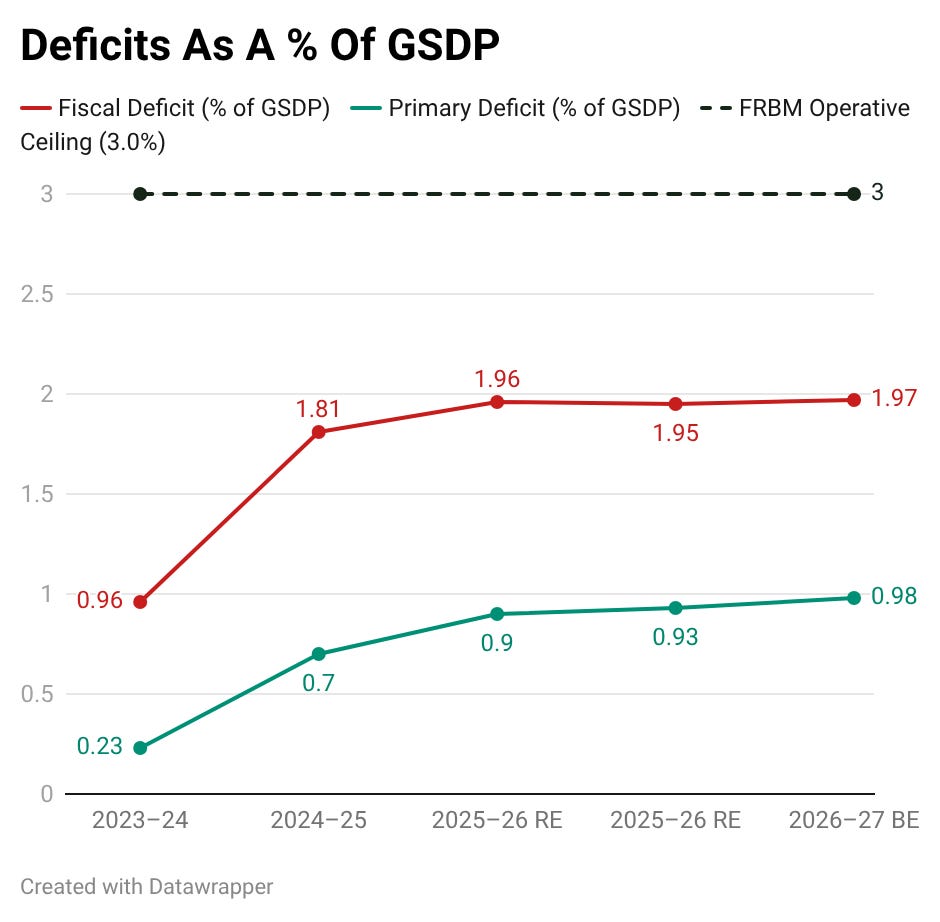
Fiscal Deficit (FD): FD for 2026–27 is targeted at 1.97% of GSDP (₹ 65,519.40 crore) as compared to an FD of 1.95% of GSDP (₹ 58,052.00 crore) in 2025–26 RE.
Expenditure: Expenditure (excluding debt repayment) in 2026–27 for Gujarat is estimated to be ₹ 3.60 lakh crore, an increase of about 13.12% over the revised estimates of 2025–26 (₹ 3.19 lakh crore). In addition, debt repayment of ₹ 43,251.99 crore is estimated.
Receipts: Receipts (excluding borrowings) for 2026–27 are estimated to be ₹ 2.95 lakh crore, an increase of about 13.11% as compared to the RE of 2025–26 (₹ 2.60 lakh crore).
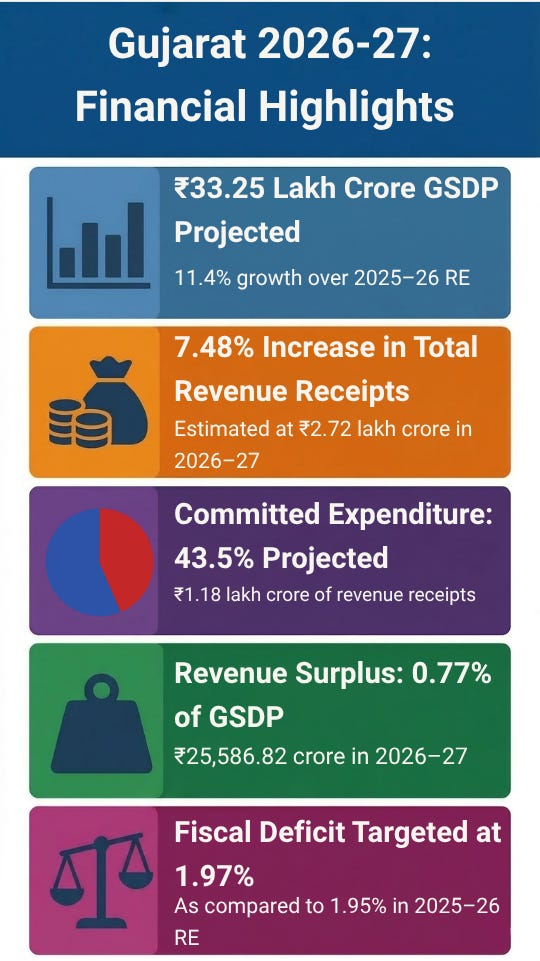
Image 1: Key Financial Highlights
III. Policy Highlights
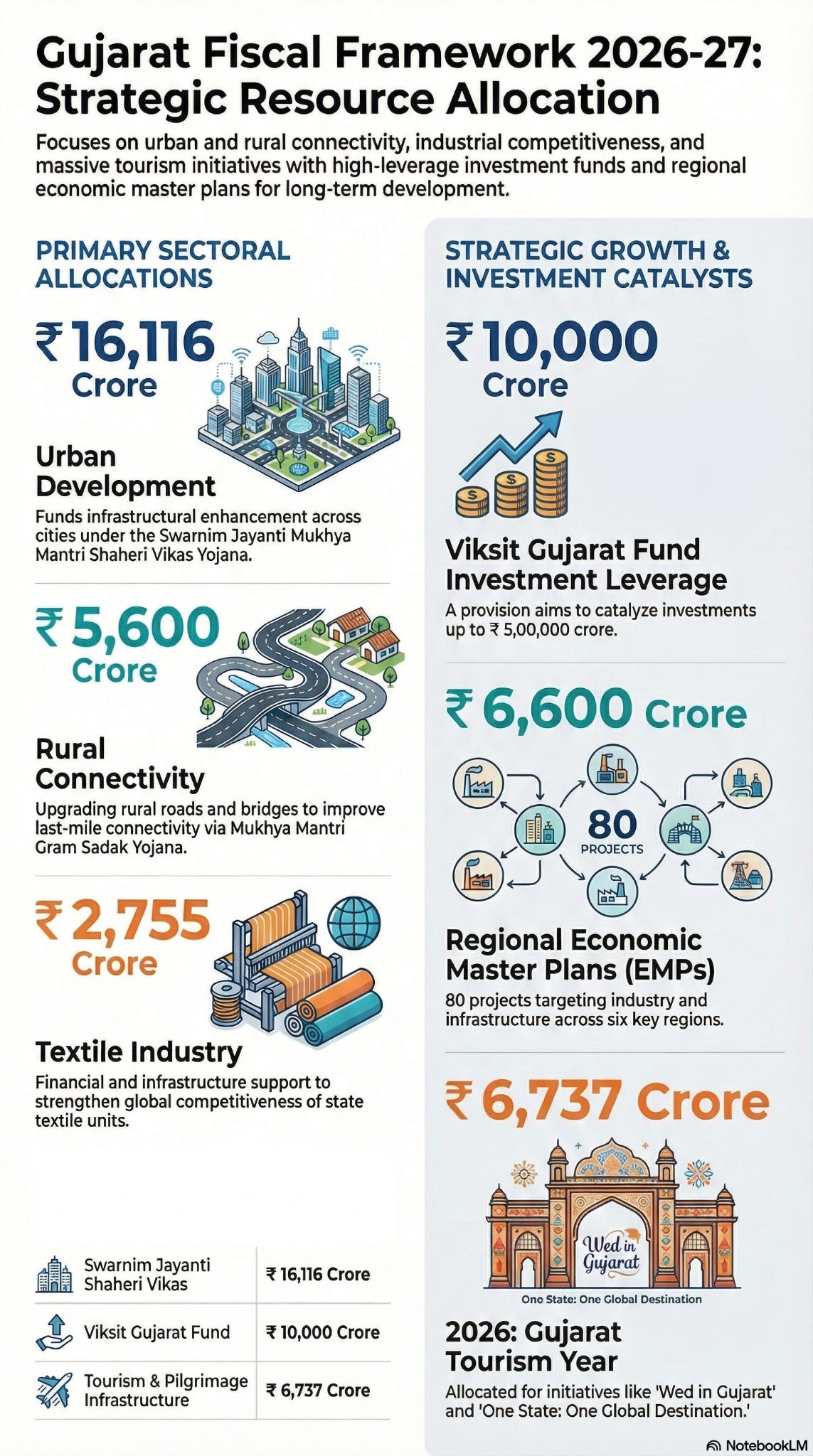
Swarnim Jayanti Mukhya Mantri Shaheri Vikas Yojana: This urban development scheme funds a range of projects aimed at enhancing infrastructural development in cities and towns across Gujarat. A provision of ₹ 16,116 crore has been made under this scheme for FY 2026-27.
Gujarat Textile Policy Support: The scheme strengthens the competitiveness of Gujarat’s textile industry at the global level through financial and infrastructure support to textile units across the state. A provision of ₹ 2,755 crore has been made for the development of the textile industry in FY 2026-27.
Tourism and Pilgrimage Infrastructure Development: The scheme focuses on holistic development of tourism and pilgrimage destinations, allied infrastructure and civil aviation facilities. A provision of ₹ 6,737 crore has been made for FY 2026-27. The year 2026 has been declared as ‘Gujarat Tourism Year’, with flagship initiatives including the ‘Somnath Swabhiman Parv’, the ‘One State: One Global Destination’ initiative and the launch of the ‘Wed in Gujarat’ campaign.
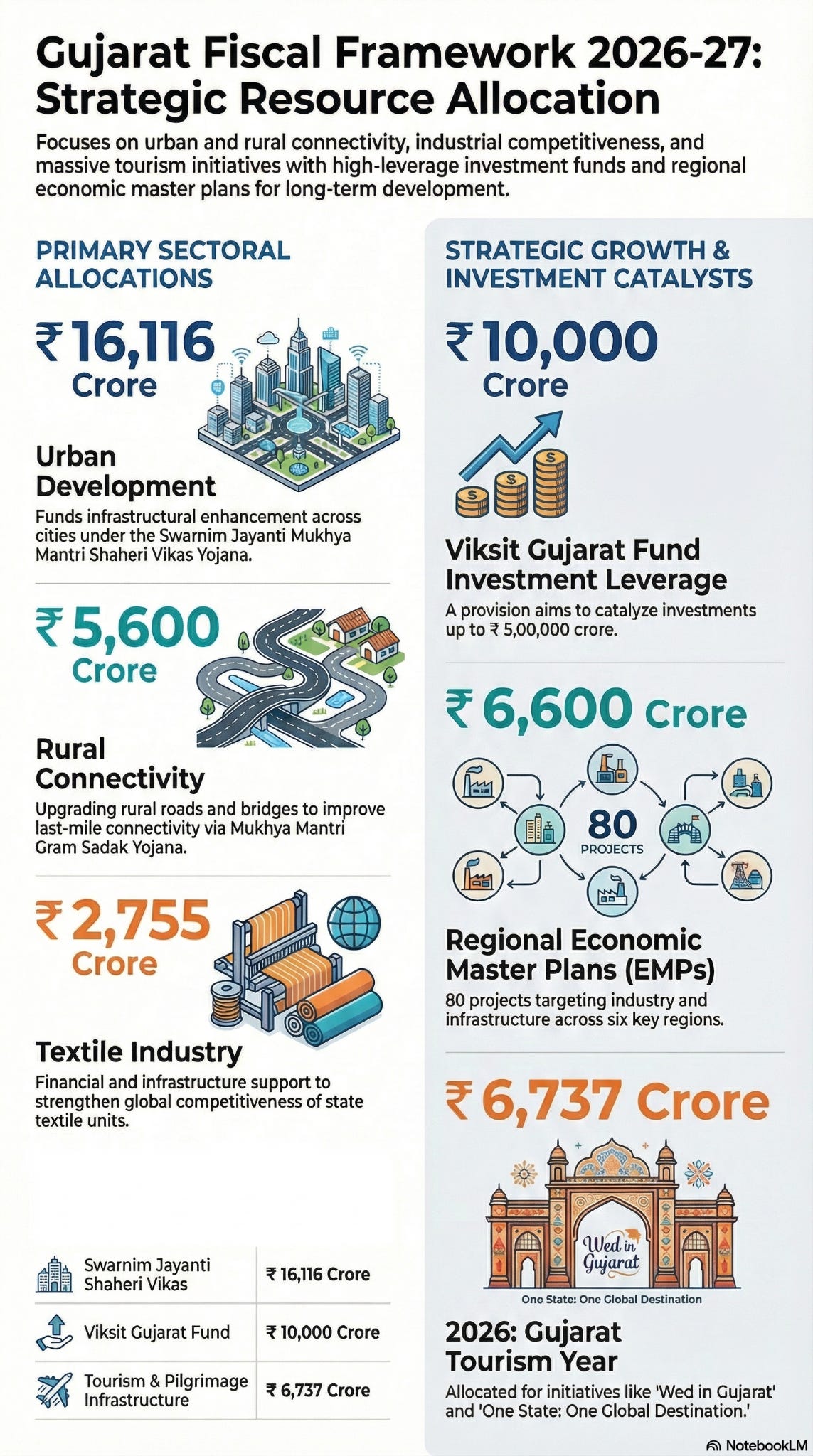
Image 2: Key Policy Highlights Mukhya Mantri Gram Sadak Yojana: The scheme focuses on upgrading and strengthening rural roads and bridges to significantly improve rural connectivity across the state. A provision of ₹ 5,600 crore has been allocated for FY 2026-27, aimed at improving last-mile connectivity for rural communities.
Viksit Gujarat Fund: Established to advance the vision of Viksit Gujarat@2047, the fund aims to catalyse large-scale investments in infrastructure and social sectors through innovative financing mechanisms. A provision of ₹ 10,000 crore has been proposed for FY 2026–27, of a ₹ 50,000 crore corpus over five years, with the fund expected to leverage investments of up to ₹ 5,00,000 crore.
Regional Economic Master Plan (EMP): The Government has identified six regions, North Gujarat, Central Gujarat, Saurashtra, Coastal Saurashtra, Kutchchh and Surat, to be developed as dedicated growth hubs, with Economic Master Plans (EMPs) prepared for each region. To operationalise these plans, 80 projects worth over ₹ 6,600 crore have been provisioned in FY 2026-27, covering industry, tourism, road network and other infrastructural facilities across the regions.
IV. Gujarat’s Economy
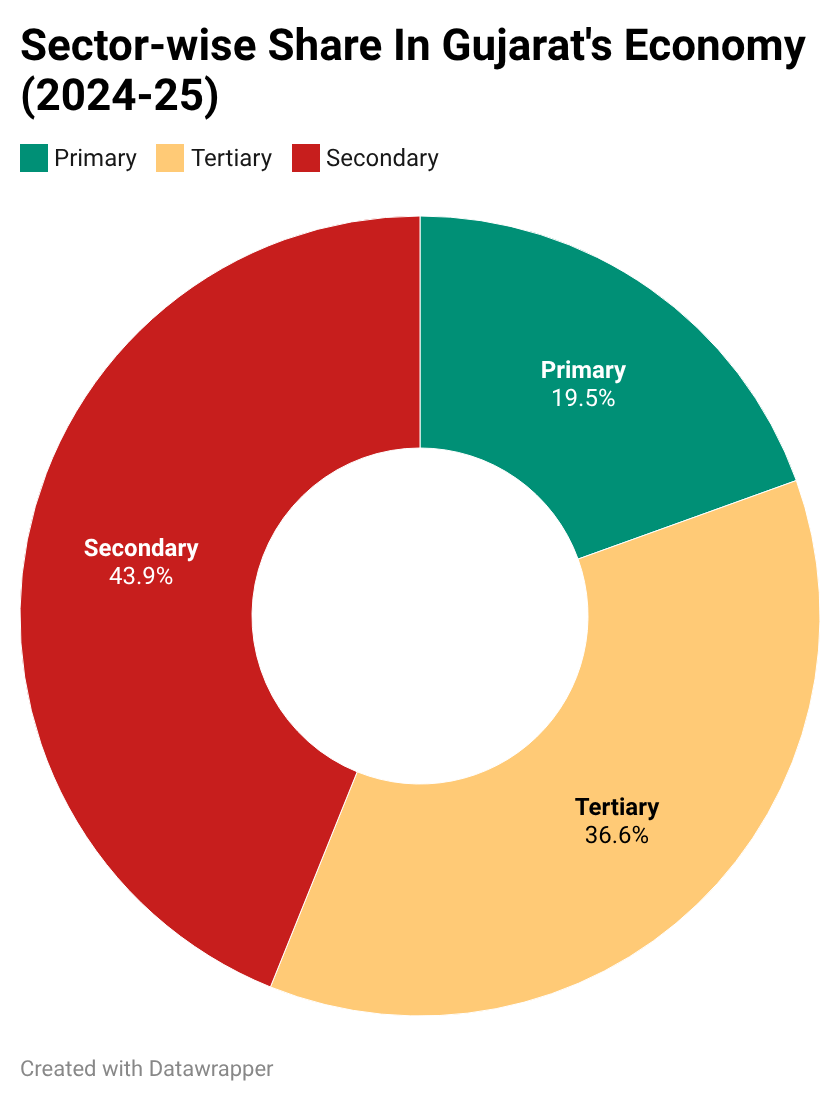
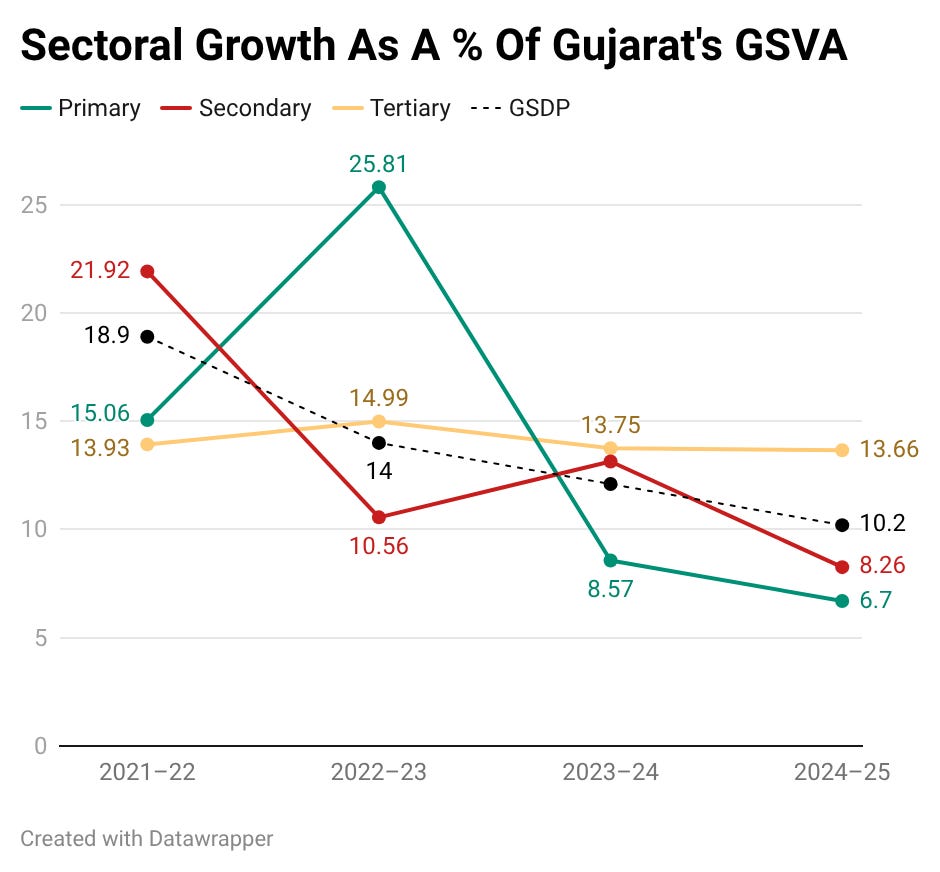
GSVA Contribution of Sectors: In 2024–25, primary, secondary, and tertiary sectors are estimated to contribute 19.5%, 43.9%, and 36.6% of Gujarat’s economy, respectively (at current prices).
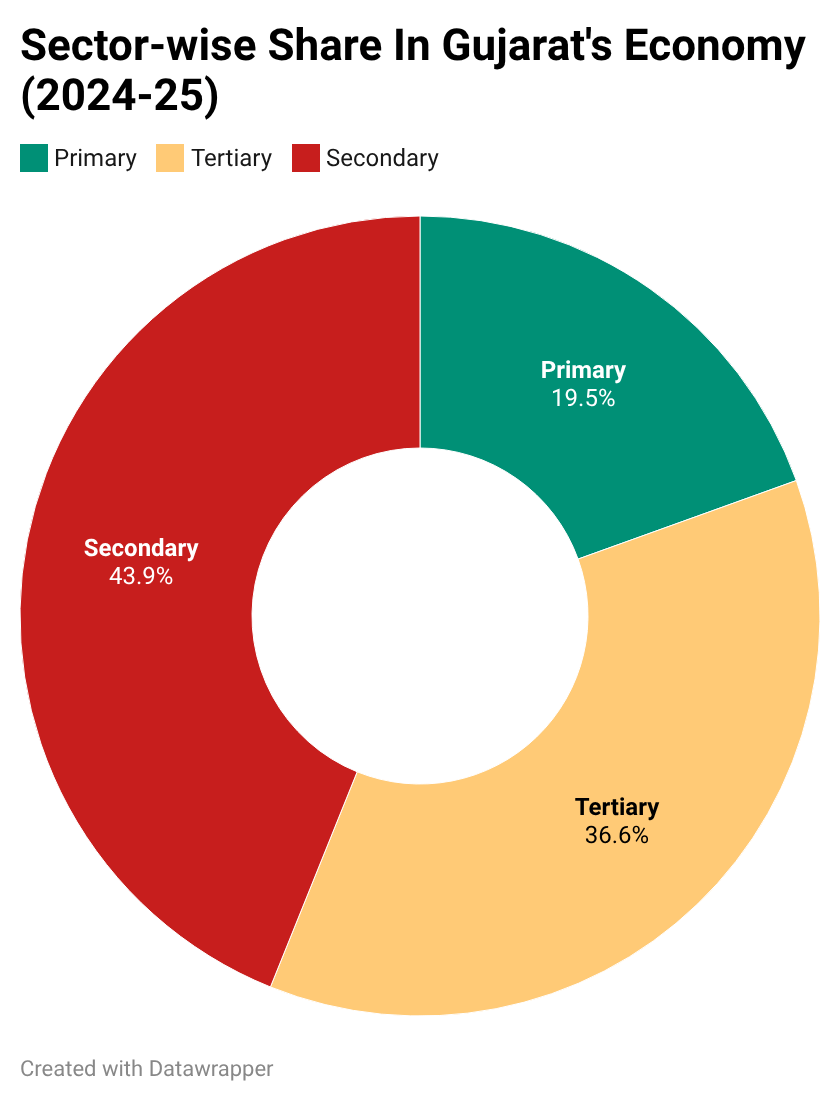
Image 3: Sector-wise Share In Gujarat’s Economy (2024–25, at Current Prices) 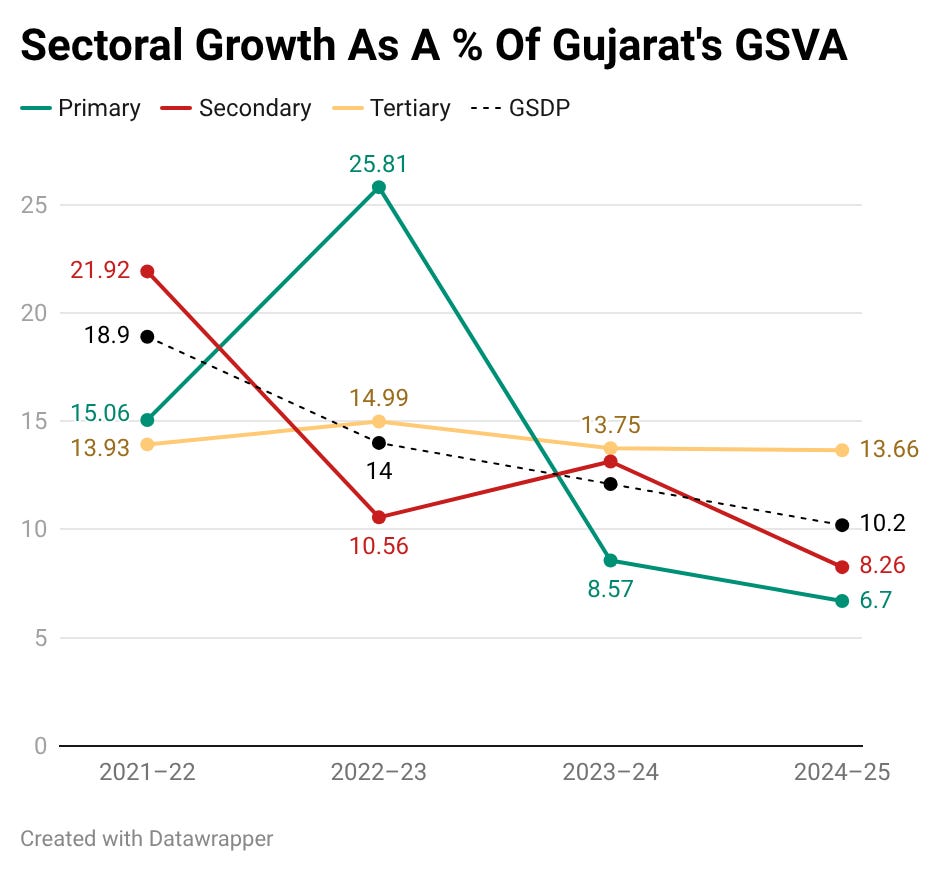
Image 4: Sectoral Growth In Gujarat’s GSVA At Current Prices (2011-12)
V. Expenditure
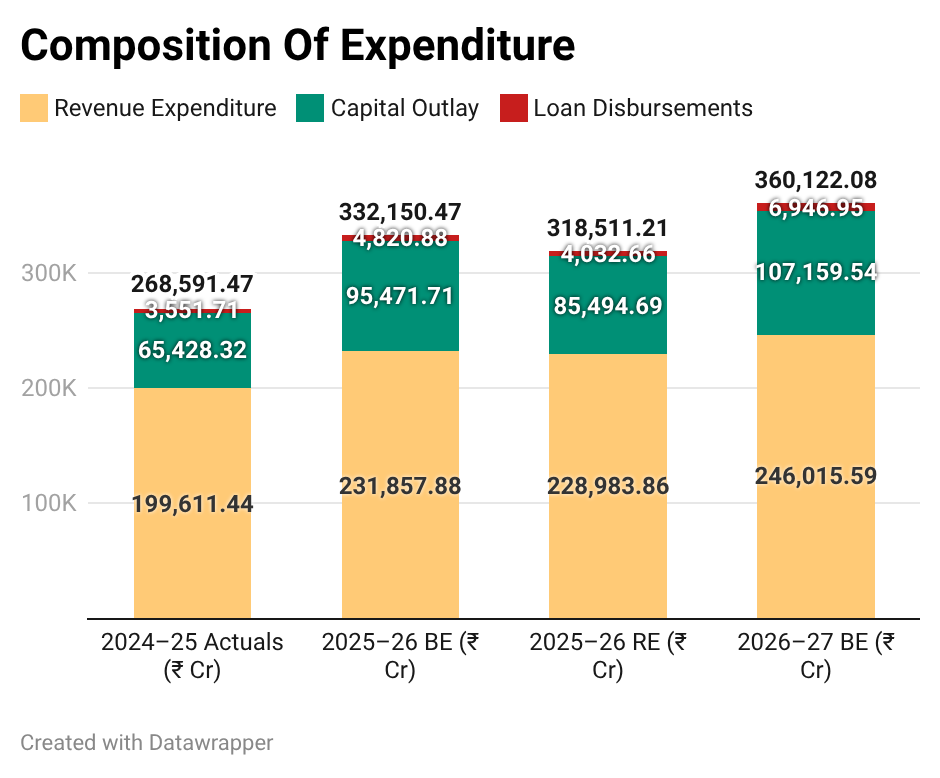
Revenue Expenditure: Revenue expenditure for 2026–27 is proposed to be ₹ 2.46 lakh crore, an increase of about 7.44% over the revised estimate of 2025–26 (₹ 2.29 lakh crore). This includes the expenditure on salaries, pensions, interest, grants, and subsidies.
Committed Expenditure:
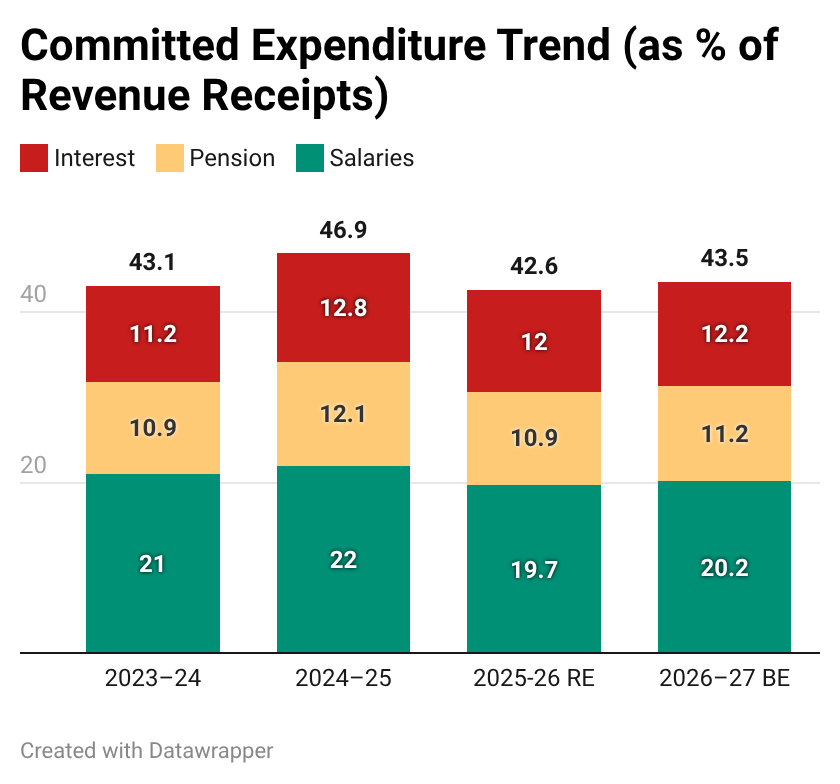
In 2026–27, Gujarat is estimated to spend ₹ 1.18 lakh crore on committed expenditure, which is 43.5% of its estimated revenue receipts of ₹ 2.72 lakh crore. In 2024–25, as per actual figures, 46.9% of revenue receipts (₹ 2.19 lakh crore) were spent towards committed expenditure (₹ 1.05 lakh crore).
This comprises spending on salaries (₹ 54,722.00 crore), pension (₹ 30,403.26 crore), and interest payments (₹ 33,018.84 crore). This level of committed expenditure constrains the state’s fiscal flexibility to reorient spending toward capital investment.
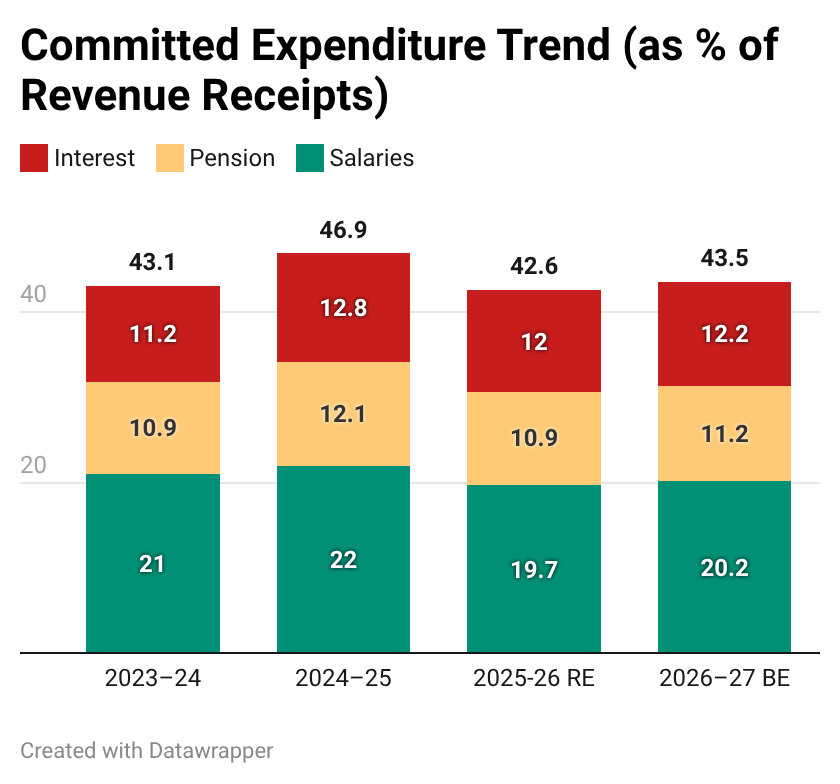
Image 5: Gujarat’s Committed Expenditure Trend As % Of Revenue Receipts Out of every rupee that comes in as revenue receipts, about 43.5 paise is estimated to be spent on committed expenditure in 2026–27, lower than 47.9 paise in 2024–25 (actuals). The largest share of this expenditure is on salaries, followed by pensions and interest payments, which together absorb a significant portion of the state’s revenue resources.
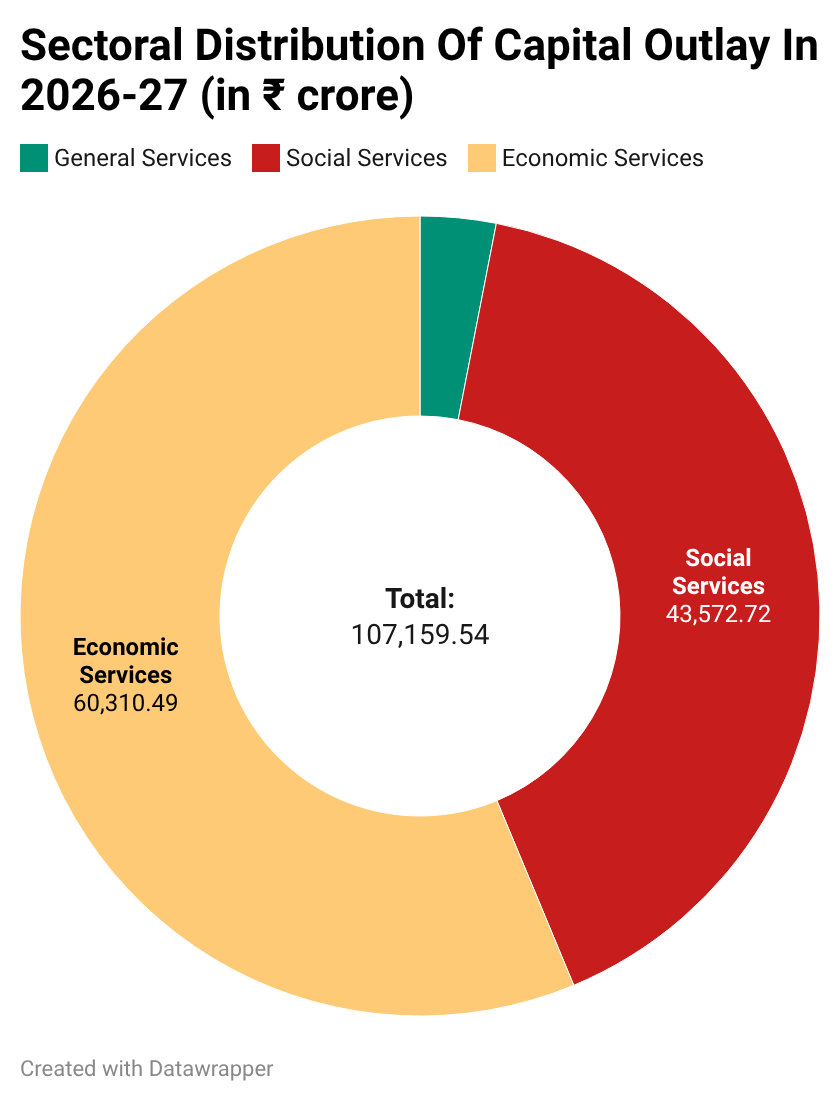
Capital Outlay: Capital outlay for 2026–27 is proposed to be ₹ 1.07 lakh crore, an increase of about 25.34% over the revised estimate of 2025–26 (₹ 85,494.69 crore).
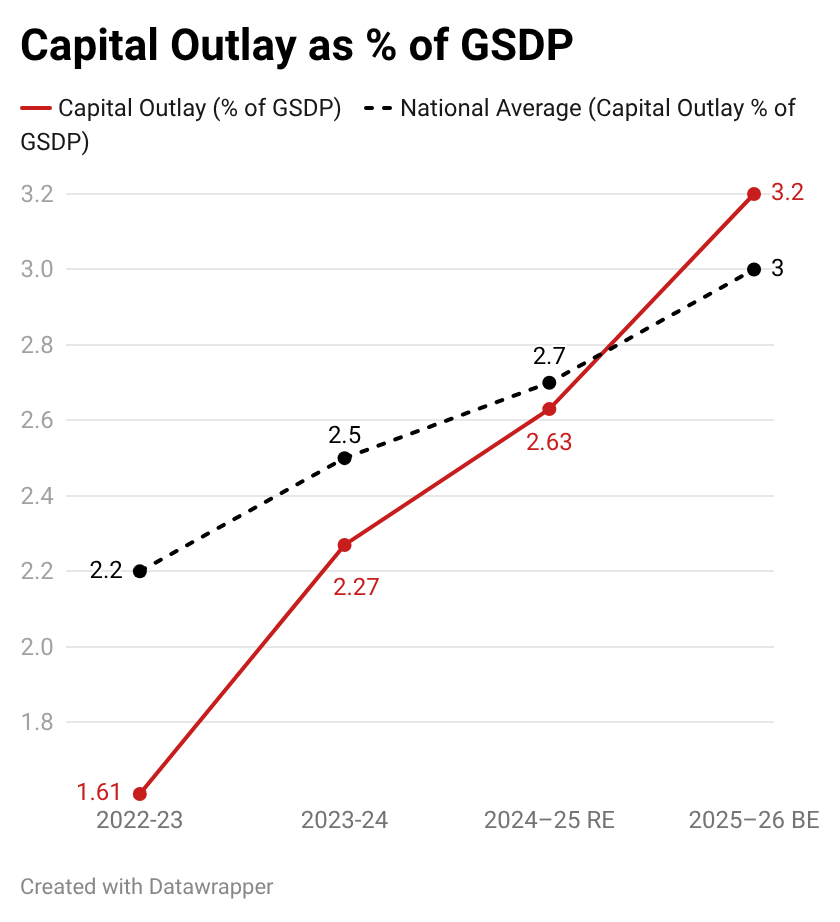
In 2026–27, capital outlay of ₹ 1.07 lakh crore accounts for about 29.76% of expenditure of ₹ 3.60 lakh crore and around 3.2% of the GSDP. This is higher than the national average capital outlay of about 3.0% of GDP in the 2025–26 Budget Estimates.
A discrepancy is observed in the reported capital outlay for 2026–27 and 2025-26 across budget documents. While the Budget at a Glance document has ₹ 1,14,106.50 crore and ₹ 89,527.86 respectively, the Annual Financial Statement reports a slightly lower figure of ₹ 1,07,159.54 crore and ₹ 85,494.69 crore respectively.
Compared to previous years, the proposed outlay reflects a significant step-up in capital spending. Capital outlay was ₹ 65,428.32 crore in 2024–25 (actuals) and ₹ 55,679.30 crore in 2023–24, indicating a steady increase over the last two years, with a sharper rise proposed in 2026–27.
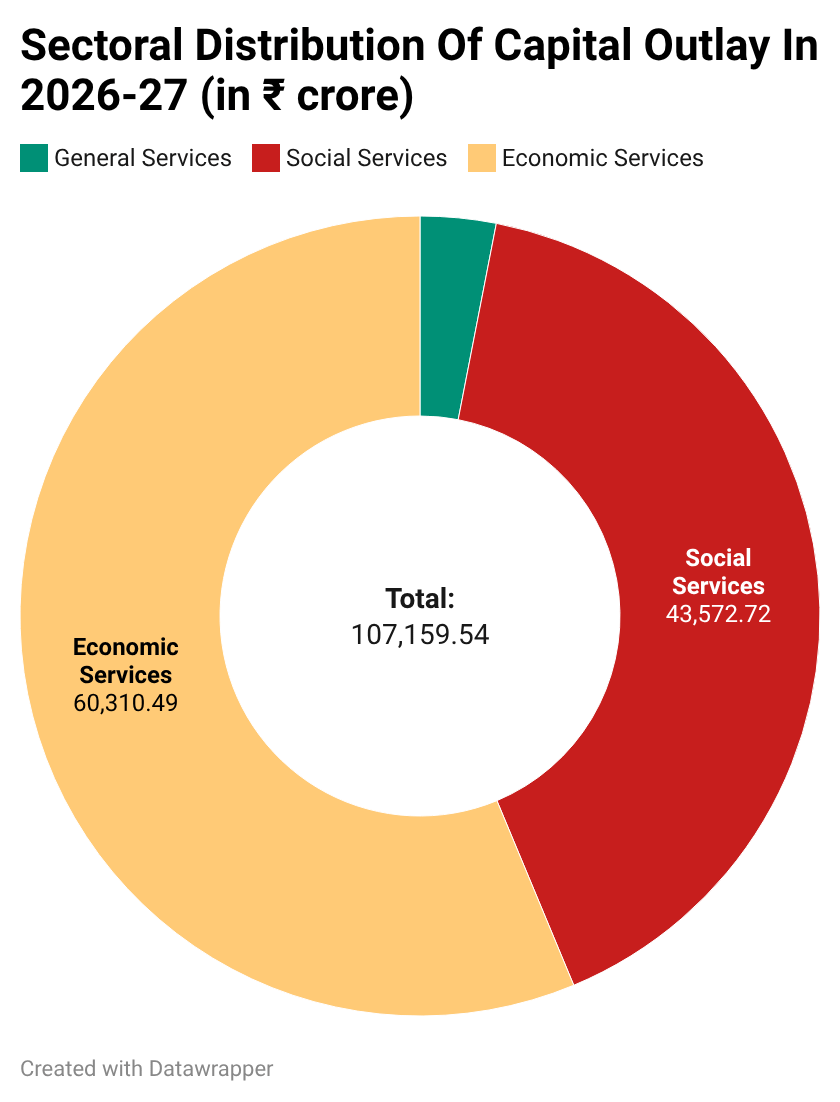
Image 6: Sectoral Distribution Of Capital Outlay In 2026-27 (in ₹ crore). The combination of a steadily rising capital outlay, which at 3.2% of GSDP remains slightly higher than the national average of 3.0% of GDP, and a consistent year-on-year growth in absolute capital spending points to a strengthening of Gujarat’s investment-led growth prospects over the medium term.
The sectoral distribution of capital outlay remains largely unchanged, with economic services continuing to dominate at 70.78% in 2025–26 (RE) and 71.28% in 2026–27 (BE), followed by social services at 26.26% and 26.36%, and general services at 2.96% and 2.36%, respectively.
The overall increase of about 25.34% in capital outlay is reflected across all sectors, indicating a proportionate expansion in spending while maintaining the existing allocation priorities, with a sustained focus on economic services.
Loans And Advances: In 2026–27, loans and advances by the state are expected to be ₹ 6,946.96 crore, about 72.26% higher as compared to the revised estimate of 2025–26 (₹ 4,032.67 crore).
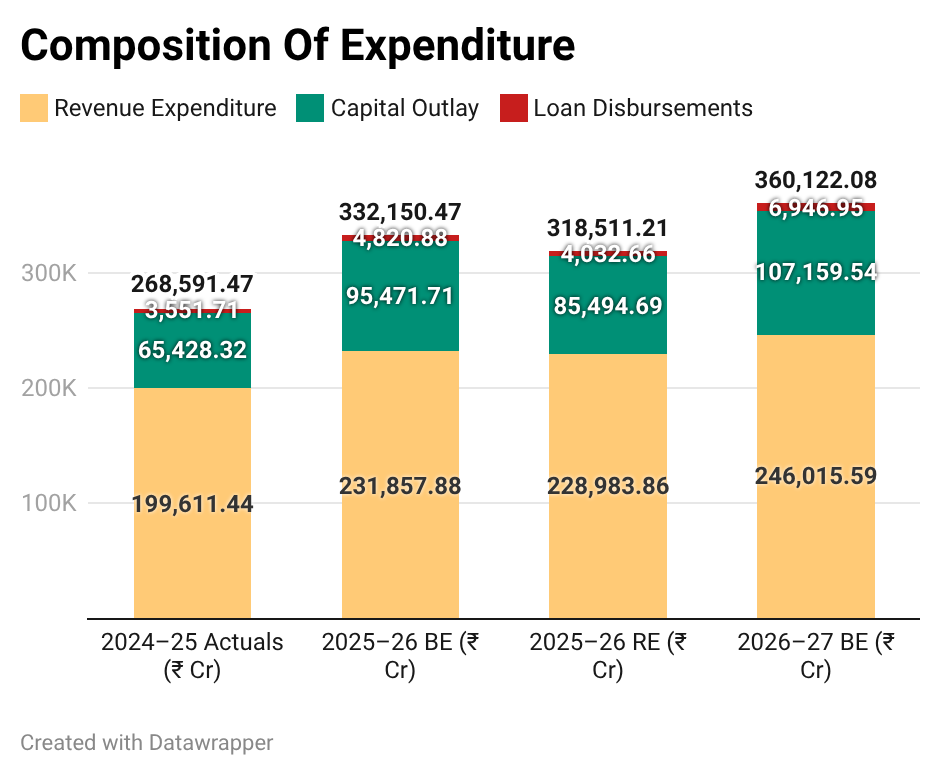
Image 7: Composition Of Gujarat’s Expenditure (in ₹ crore)
VI. Receipts
Total Revenue Receipts:
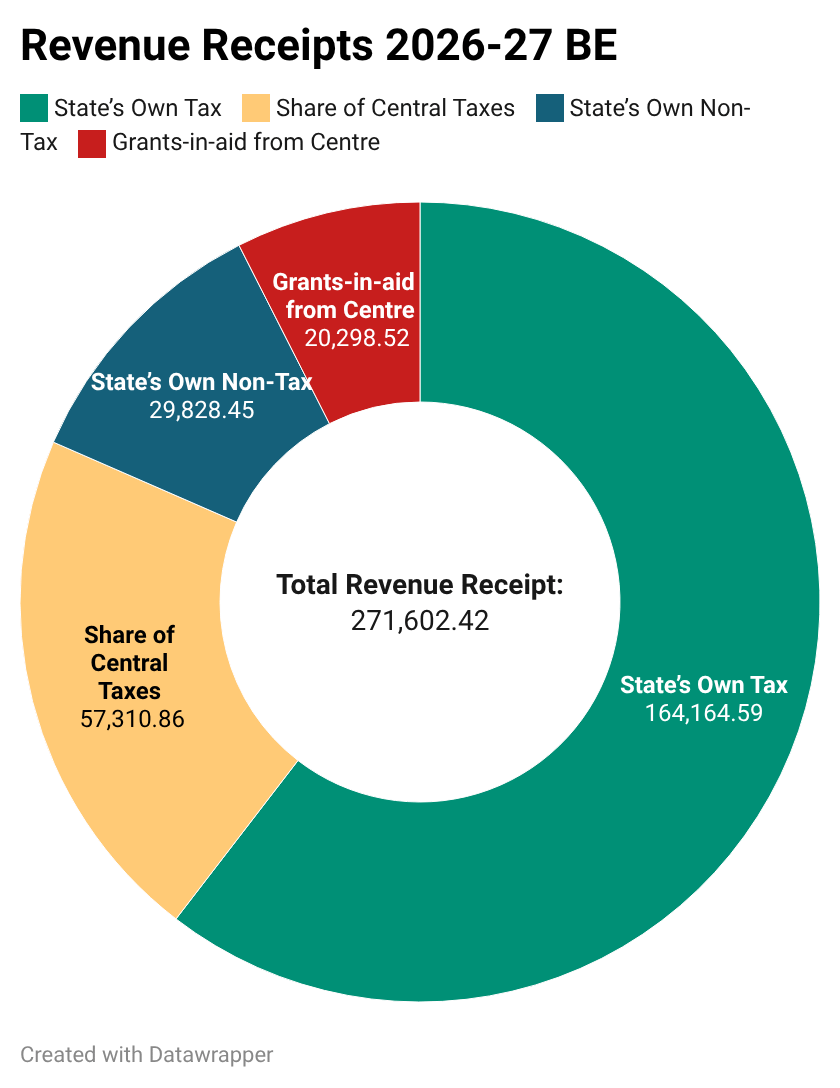
Total revenue receipts for 2026–27 are estimated to be ₹ 2.72 lakh crore, an increase of about 7.48% over the revised estimate of 2025–26 (₹ 2.53 lakh crore). Of this, ₹ 1.94 lakh crore (about 71.4%) will be raised by the state through its own resources, and ₹ 77,609.38 crore (about 28.6%) will come from the centre.
Resources from the centre account for about 28.6% of Gujarat’s revenue receipts in 2026–27, comprising the state’s share in central taxes (about 21.1%) and grants-in-aid (about 7.5%). The relatively lower dependence on central transfers indicates a stronger reliance on the state’s own revenue sources, helping reduce vulnerability to fluctuations in grants and enhancing revenue stability.
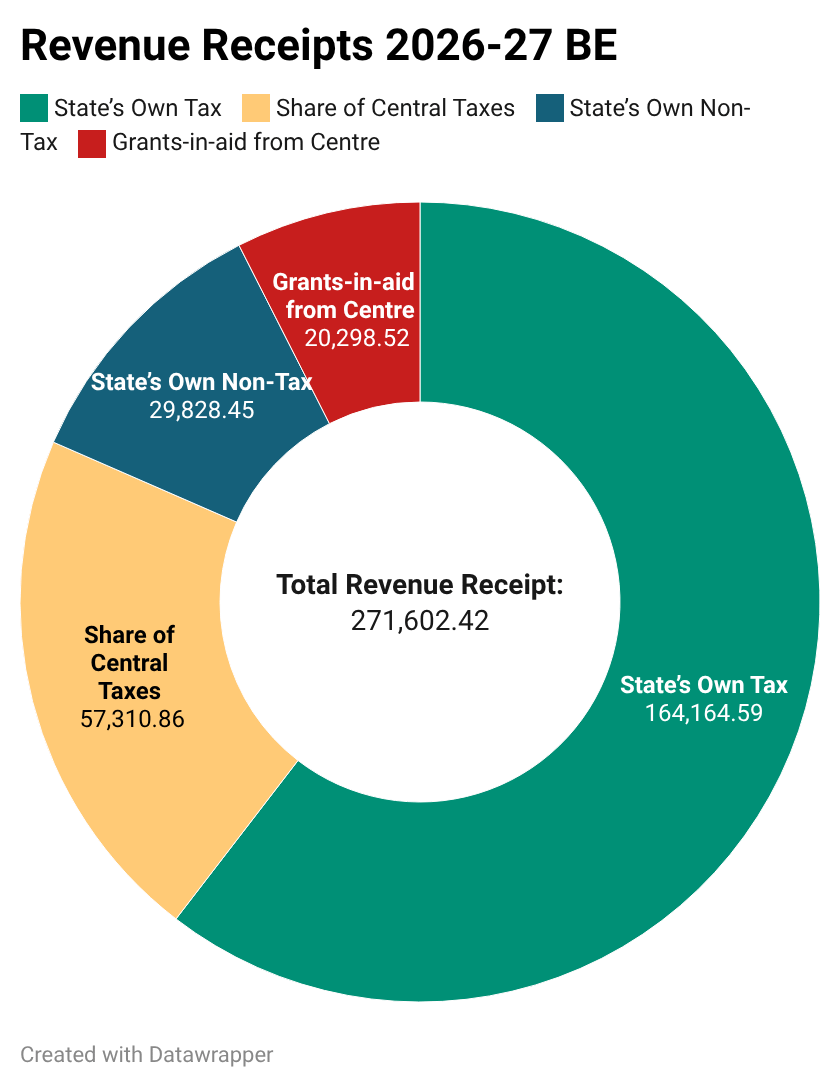
Image 8: Revenue Receipts (2026-27 BE) (in ₹ crore)
16th Finance Commission: In 2026–27, Gujarat’s share in central taxes is estimated at ₹ 57,310.86 crore, an increase of about 18.29% over the revised estimate of 2025–26 (₹ 48,447.54 crore). This increase in tax devolution from the centre enhances the state’s fiscal capacity and provides additional resources to support development expenditure and welfare programmes.
Central Grants: Grants from the centre in 2026–27 are estimated at ₹ 20,298.52 crore, a decline of about 7.88% from the revised estimates for 2025–26 (₹ 22,036.39 crore), and about 1.44% higher than the budget estimate of ₹ 20,010.79 crore.
The 2024–25 actual grants from the centre (₹ 14,127.04 crore) represent a decline of about 44.73% compared to ₹ 25,557.00 crore in 2023–24. The projected level for 2026–27 indicates a partial recovery from the dip in 2024–25, but remains below the peak levels observed in 2023–24, reflecting some moderation in central transfers.
Alongside this, the Finance Commission grants to Gujarat have declined sharply from ₹ 8,654.32 crore in 2025–26 (RE) to ₹ 4,042.09 crore in 2026–27 (BE). This reduction of 53.29% indicates a lower reliance on grants-in-aid, with the state increasingly depending on its own revenue sources and tax devolution to sustain its fiscal position.
State’s Own Tax Revenue: Gujarat’s total own tax revenue is estimated to be ₹ 1.64 lakh crore in 2026–27, an increase of about 5.99% over the revised estimate of 2025–26 (₹ 1.55 lakh crore). Own tax revenue as a percentage of GSDP is estimated at about 4.94% in 2026–27, compared to about 5.19% in 2025–26.
A discrepancy is observed in the reported state’s own tax revenue for 2026–27 across budget documents. While the Budget in brief document has 1,64,221.55 crore, the Annual Financial Statement and Budget at a glance reports a slightly lower figure of 1,64,164.59 crore.
Non-debt capital receipts: In 2026–27, Gujarat’s non-debt capital receipts are estimated at ₹ 23,000 crore, a sharp increase of 197% over the revised estimate of ₹ 7,750 crore in 2025–26. Of this, ₹ 20,000 crore is expected from disinvestment of state public sector undertakings, with the balance from recovery of loans and advances (₹ 3,001 crore).
However, this raises execution risks, as disinvestment targets have seen significant shortfalls in the past. In 2025–26, against a budget estimate of ₹ 19,700 crore, the revised estimate was scaled down to ₹ 5,000 crore, while no receipts were realised in 2024–25. This indicates a continued reliance on optimistic disinvestment assumptions, posing risks to the realisation of non-debt capital receipts.
VII. Deficits and Debt
Fiscal Deficit (FD): FD for 2026–27 is targeted at 1.97% of GSDP (₹ 65,519.40 crore) as compared to an FD of 1.95% of GSDP (₹ 58,052.00 crore) in 2025–26.
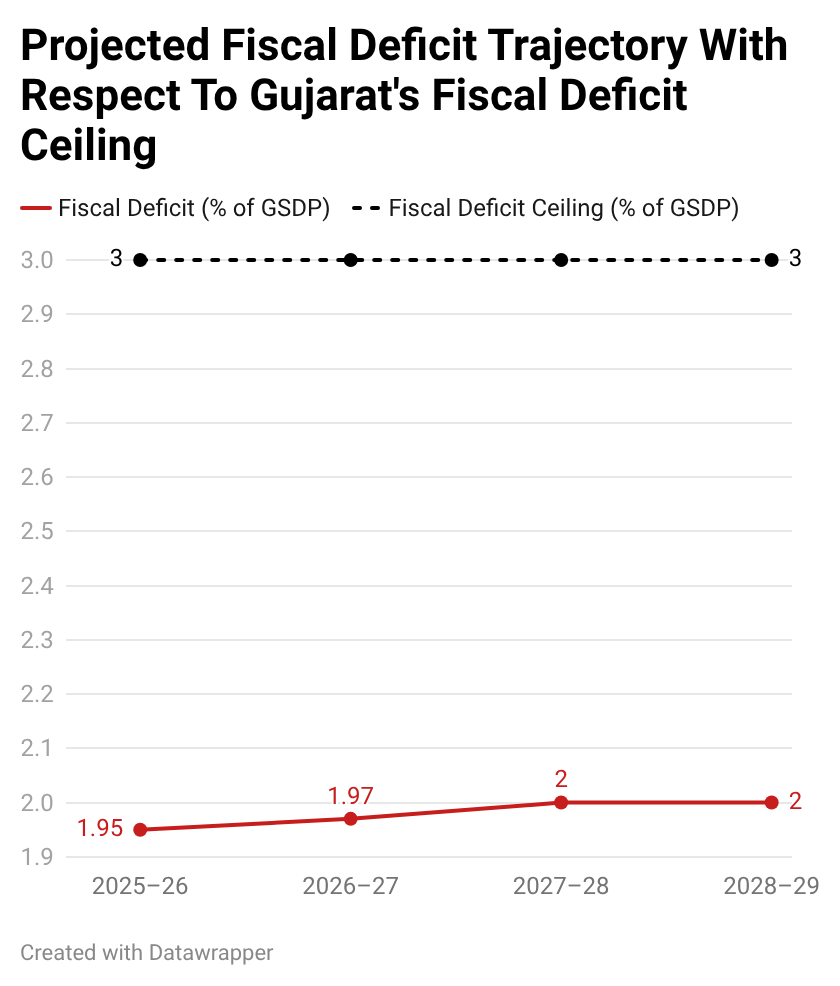
Under the Gujarat Fiscal Responsibility Act, 2005, The state’s base borrowing ceiling is 3.0% of GSDP. Against this, the fiscal deficit of 2025–26 revised estimate is 1.95%, which remains well within the ceiling by about 105 basis points (bps).
Looking ahead, the trajectory of the fiscal deficit is projected as: 1.97% in 2026–27, 2.00% in 2027–28, and 2.00% in 2028–29. These levels remain comfortably within the 3.0% borrowing ceiling, providing a reasonable buffer and indicating a prudent and sustainable fiscal path with adequate room to absorb potential revenue shocks.
The fiscal deficit remains well within the state’s borrowing ceiling, providing room for fiscal flexibility while maintaining a prudent and sustainable fiscal trajectory. In NITI Aayog’s Fiscal Health Index (FHI), Gujarat ranks 4th, indicating a relatively strong fiscal position among states, though the level of fiscal deficit remains a structural consideration.
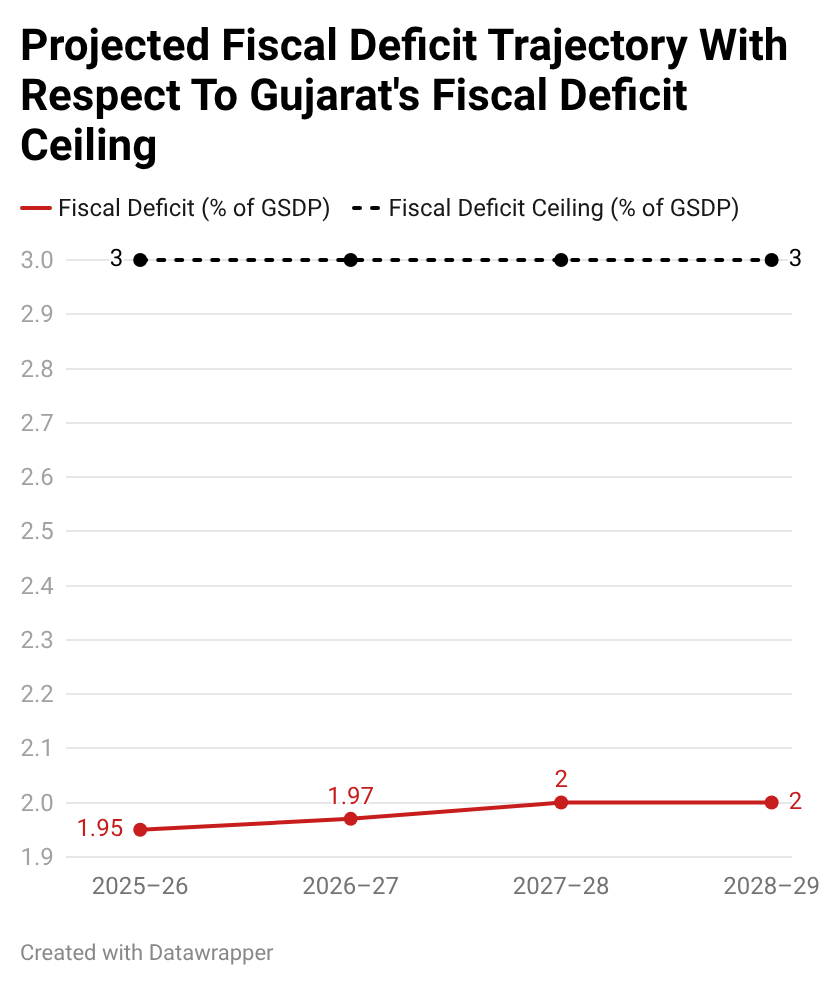
Image 9: Projected FD Trajectory With Respect To Gujarat’s FD Ceiling
Primary Deficit (PD): PD for 2026–27 is targeted at 0.98% of GSDP (₹ 32,500.56 crore). In 2025–26, as per the revised estimates, the primary deficit is expected to be 0.93% of GSDP (₹ 27,768.41 crore).
Table
Outstanding Debt: Outstanding debt for 2026–27 for Gujarat is estimated to be ₹ 4.87 lakh crore, an increase of about 13.19% as compared to the RE of 2025–26 (₹ 4.30 lakh crore).
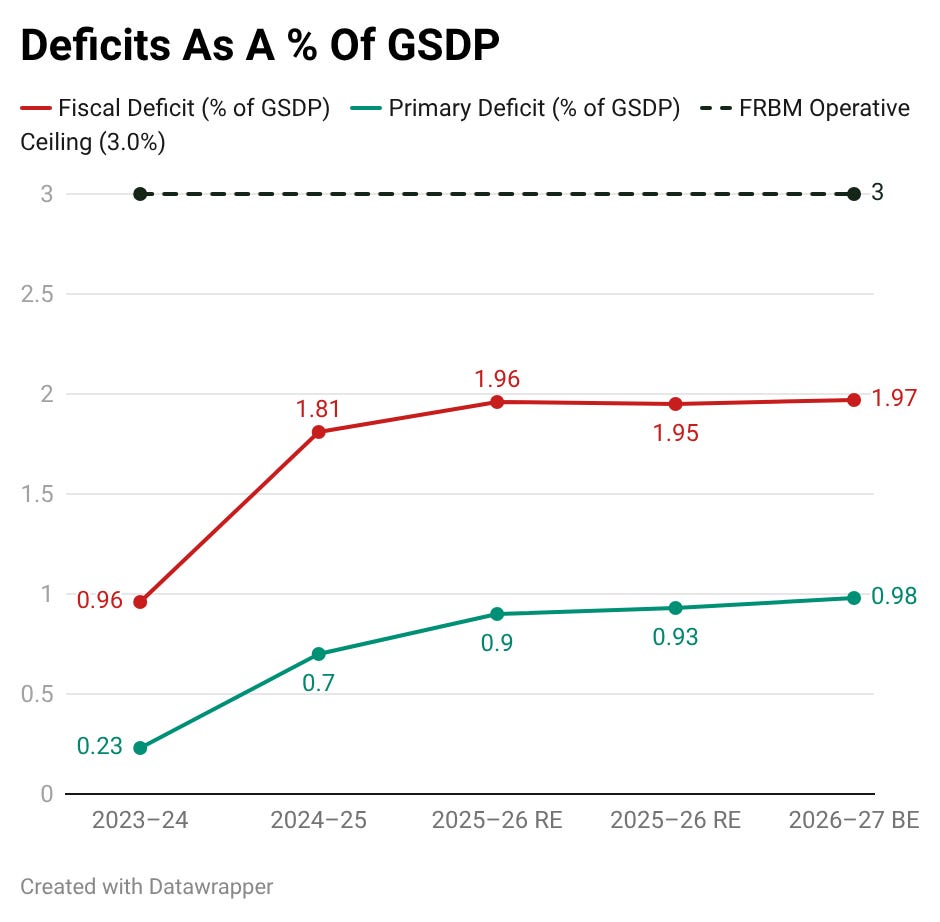
Image 10: Gujarat’s Deficits As A % Of GSDP
VIII. Revenue Surplus
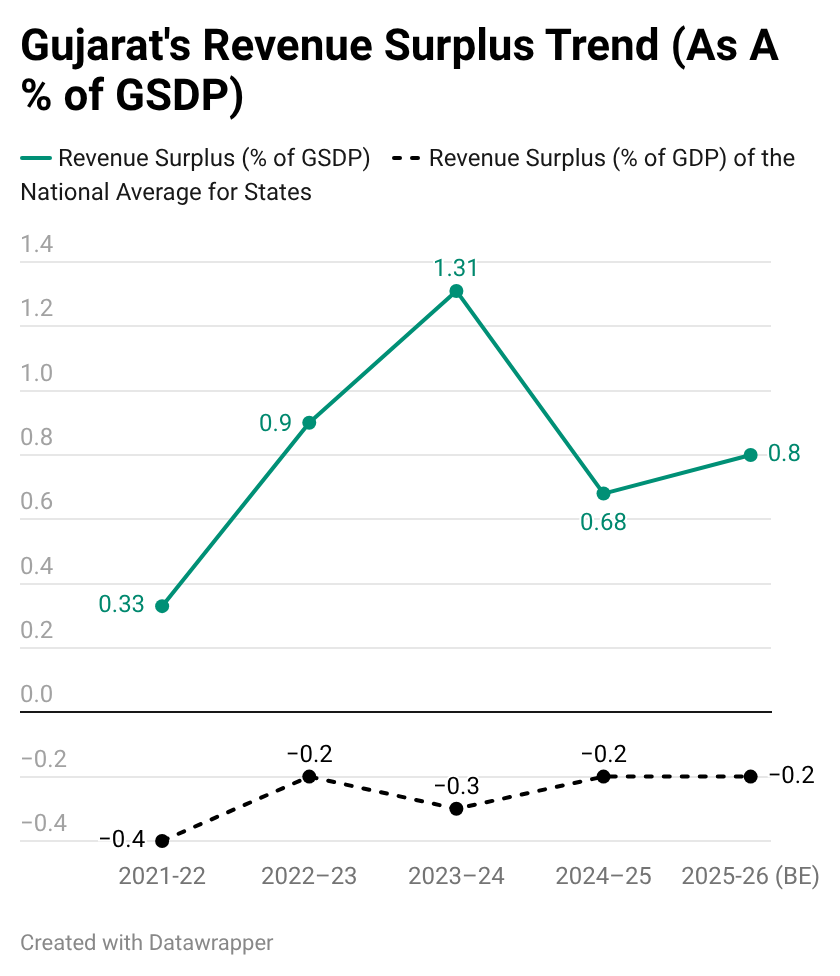
Revenue surplus in 2026–27 is estimated at 0.77% of GSDP (₹ 25,586.82 crore), as compared to a surplus of 0.79% of GSDP (₹ 23,725.43 crore) in 2025–26.
The state has maintained a consistent revenue surplus since 2011–12, with the sole exception of 2020–21 due to the COVID-19, after which the surplus was promptly restored. Within this broader trend, in the medium term the revenue surplus increased from 0.90% of GSDP in 2022–23 to 1.31% in 2023–24, and then declined to 0.68% in 2024–25, indicating some fluctuation in the state’s revenue position, with a peak in 2023–24 followed by moderation in 2024–25.
Gujarat’s fiscal trends are reflected in its continued position among the ‘front-runner’ states in the Fiscal Health Index, though with some moderation in its performance compared to the previous year. This indicates that while the state maintains a relatively strong fiscal position, emerging pressures such as a declining revenue surplus and fluctuations in recent years suggest the need for sustained fiscal discipline to preserve its standing.
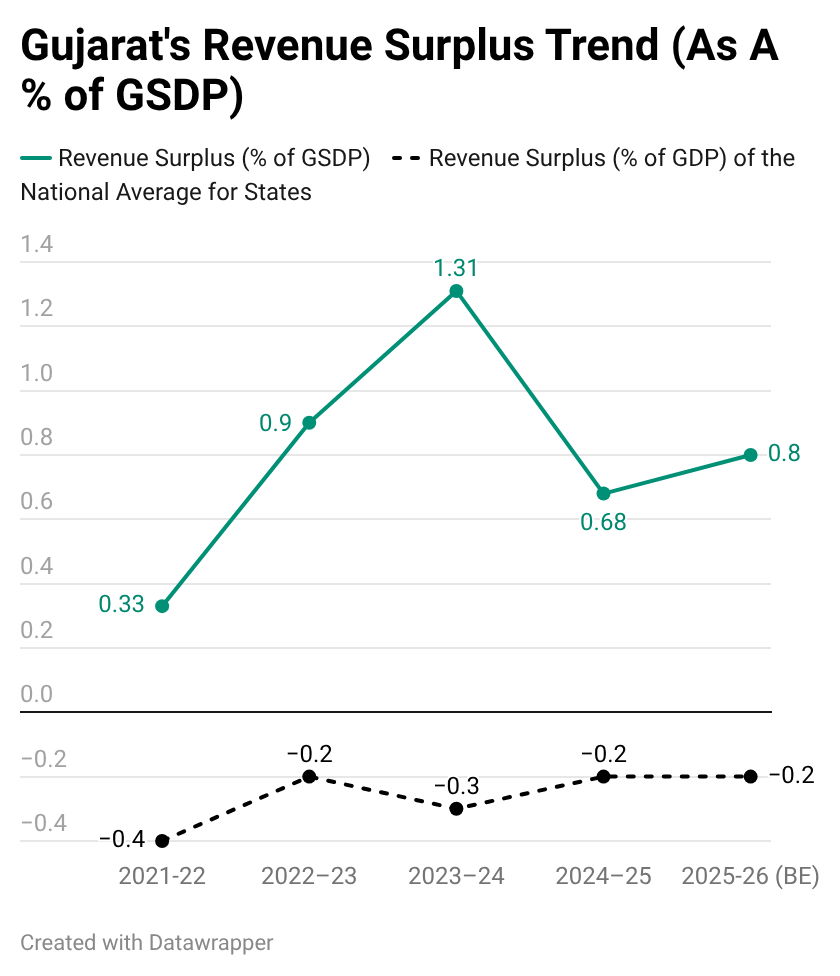
Image 11: Gujarat’s Revenue Surplus As A % Of GSDP Gujarat’s own tax revenue continues to be the key driver of its revenue position. In 2026–27, own tax revenue is estimated at ₹ 1.64 lakh crore, reflecting a growth of about 5.99% over the 2025–26 revised estimate of ₹ 1.55 lakh crore. State GST alone is budgeted at ₹ 80,127.15 crore (up about 8.13% over revised estimates) and accounts for about 48.8% of the state’s own tax revenue. This steady growth in own-source revenue indicates sustained revenue buoyancy and strengthens the state’s capacity to finance its expenditure with relatively lower dependence on external transfers.
IX. Outstanding Debt
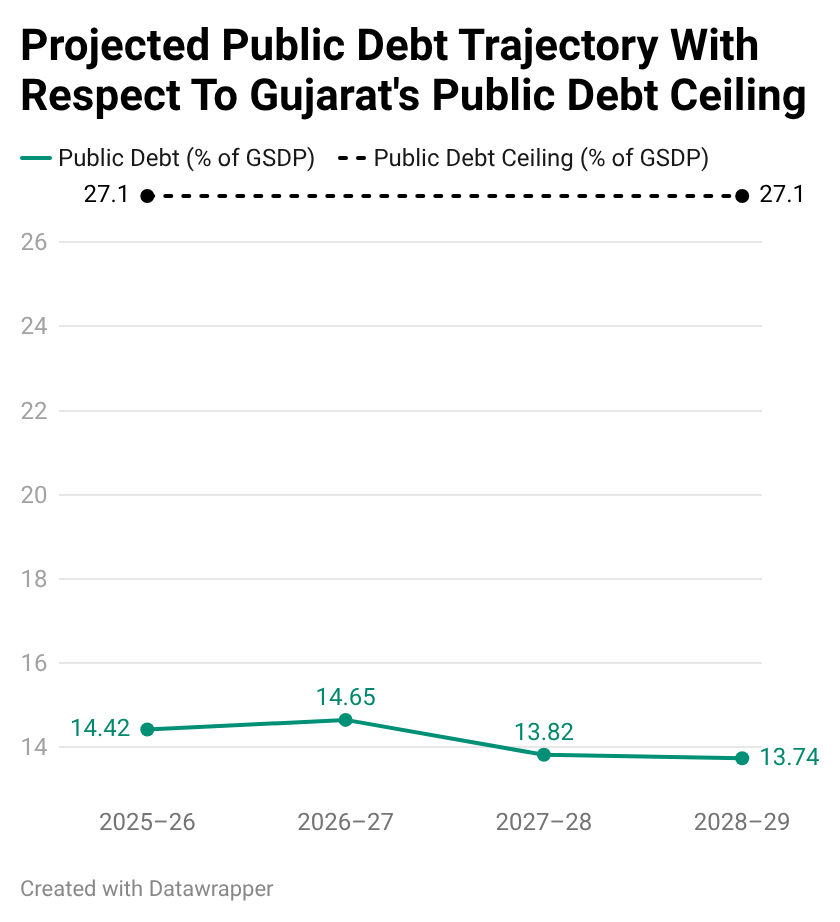
Gujarat’s public debt is governed by the Gujarat Fiscal Responsibility Act, 2005, which mandates fiscal prudence and long-term stability. The Act caps total public debt at 27.1% of GSDP, serving as the key fiscal anchor.
Gujarat’s public debt has increased in absolute terms from ₹ 2.99 lakh crore in 2020-21 to ₹ 3.75 lakh crore in 2024-25, and is estimated at ₹ 4.30 lakh crore in 2025-26 (RE).
The debt-to-GSDP ratio improved from 14.38% in 2023–24 to 13.87% in 2024–25, and is estimated at 14.42% in 2025–26 (RE), with a projection of 14.65% in 2026–27 (BE), remaining well below the FRBM threshold of 27.1% and indicating sustainable debt levels.
Over the medium term, debt is projected at 14.65% in 2026–27, moderating further to 13.82% in 2027–28 and 13.74% in 2028–29, indicating a stable and declining debt trajectory relative to GSDP.
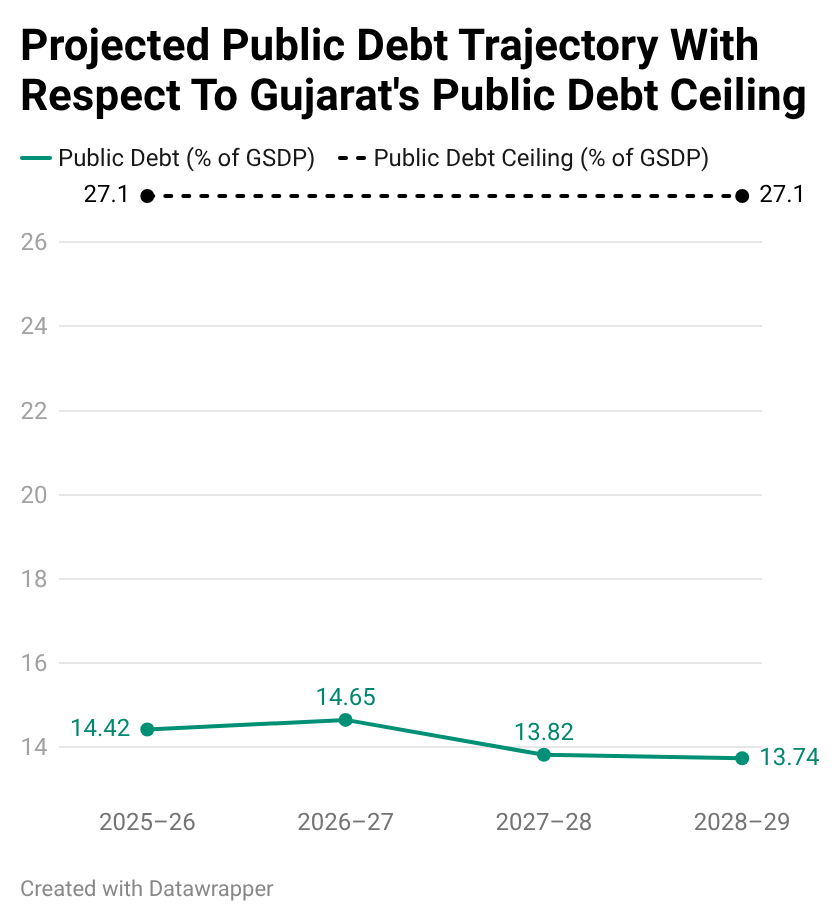
Image 12: Projected FD Trajectory With Respect To Gujarat’s FD Ceiling Gujarat’s contingent liabilities, governed by the Gujarat State Guarantees Act, 1963, are capped at ₹ 20,000 crore. The State’s outstanding guarantees have declined sharply to ₹ 1,421 crore as on 31st March 2025 from ₹ 7,620 crore in 2011–12, indicating a significant reduction in contingent liabilities.
Gujarat’s public debt is composed of four main components such as Market Loans and Power Bonds, National Small Savings Fund (NSSF), Central Government Loans, and Loans from Financial Institutions and Banks. Over the period 2011–12 to 2024–25, the composition has shifted significantly toward market borrowings.
In 2011–12, Market Loans and Power Bonds accounted for 49.83% of total debt, while NSSF loans constituted 39.51%, with the remaining 10.66% coming from other sources. By 2024–25, Market Loans and Power Bonds had increased to 83.04% (₹ 3.11 lakh crore), becoming the dominant component. NSSF loans declined sharply to 4.70% (₹ 17,609 crore), reflecting their phased reduction.
X. Infrastructure-Led Growth
Gujarat’s growth model is anchored in sustained state-funded infrastructure expansion. Capital outlay has risen from ₹ 65,428.32 crore in 2024–25 to ₹ 85,494.69 crore in 2025–26 RE to ₹ 1.07 lakh crore in 2026–27 BE, reflecting consistent double-digit growth. This positions the state among the highest infrastructure spenders in India.
Capital outlay remains elevated at 2.86% of GSDP in 2025–26 RE and is projected at 3.22% in 2026–27 BE, slightly above the national average of 3.0%. A revenue surplus of ₹ 25,587 crore in 2026-27 provides a stable internal funding base, reducing dependence on borrowings and enabling predictable execution of infrastructure projects.
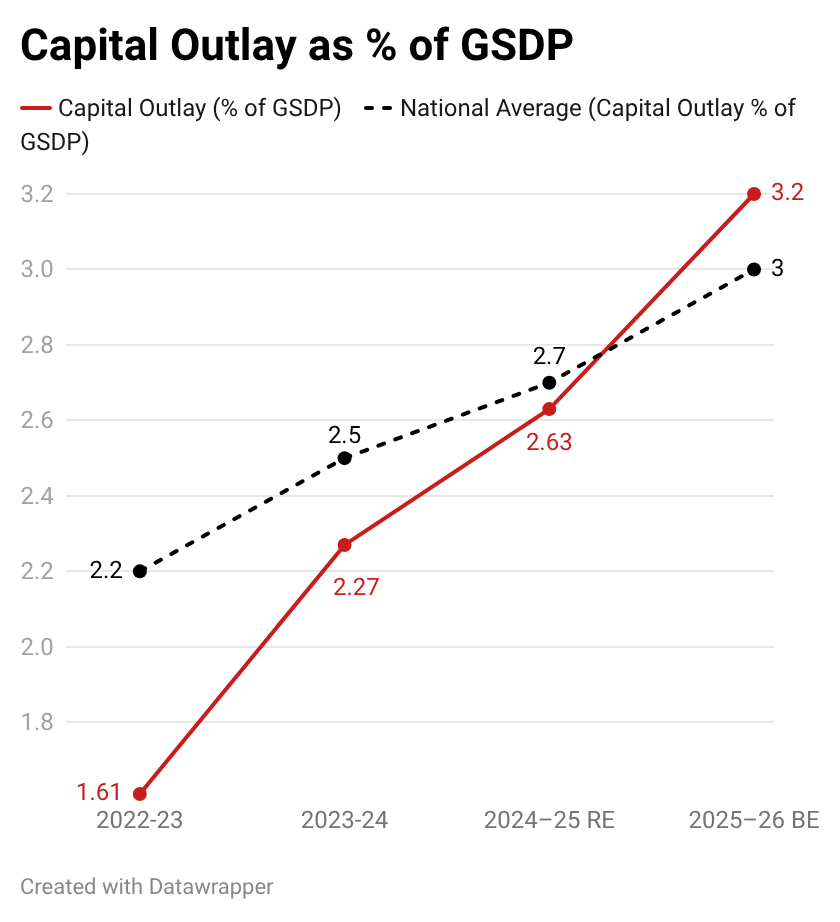
Image 13: Capital Outlay as % of GSDP The Viksit Gujarat Fund strengthens this push by adding an off-budget financing channel. With ₹ 5,001 crore in 2025–26 and ₹ 10,000 crore in 2026–27 as part of a ₹ 50,000 crore corpus, it is designed to crowd in up to ₹ 5,00,000 crore of private and institutional capital through blended financing mechanisms.
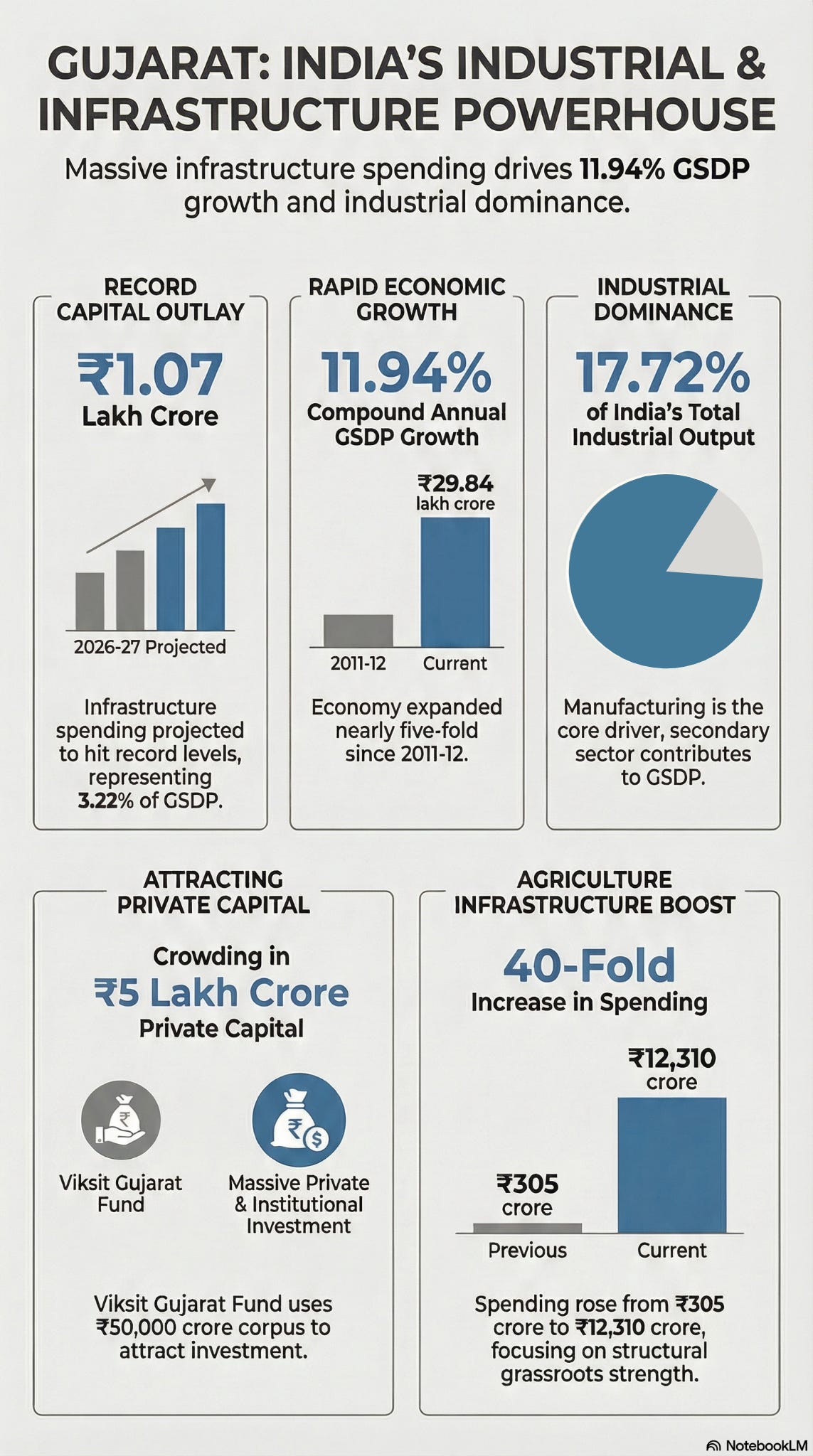
Image 14: Infrastructure led Growth of Gujarat Infrastructure support extends into productive sectors through Agriculture & Cooperation, where spending has increased from ₹ 305 crore in 2011–12 to ₹ 12,310 crore in 2025–26 RE. This nearly 40-fold rise reflects a structural focus on strengthening grassroots economic systems rather than short-term welfare provisioning.
Outstanding government guarantees to Agriculture and Cooperation have reduced from 10.81% of total guarantees in 2011–12 to 4.15% in 2024–25, indicating stronger balance sheets and reduced contingent liabilities for the state.
Gujarat contributes approximately 17.72% of India’s total industrial output. Industrial strength is broad-based, with 13 major industry groups accounting for 95.85% of fixed capital and 93.21% of value addition. This diversification reduces sectoral risks and ensures that growth is not concentrated, allowing Gujarat to sustain industrial leadership over a prolonged period.
The impact is visible in GSVA composition, where the secondary sector contributes 43.9% in 2024-25. Such a high industrial share indicates a structurally strong manufacturing base that consistently drives the state’s economic output.
Annexure I
Annexure II -
Annexure III -
Annexure IV -
Also, please consider subscribing to NFPRC Foundation’s focused centres covering latest economic, policy and administrative developments -
Centre for Law, Policy and Governance - Link
Centre for Accelerating India’s Growth - Link
Centre for Studies in Indian Social Systems - Link
NFPRC Foundation - Link