This fortnightly brief tracks the decisions by the Central Government and what they add up to. We begin with amendments to the Foreign Direct Investment policy for investments originating from land bordering countries, before examining the creation of a ₹ 1 lakh crore Economic Stabilisation Fund to cushion external shocks. We then turn to the restructuring of Jal Jeevan Mission through JJM 2.0, new natural gas allocation rules prioritising fertilizer production, the initiation of negotiations for the India–Canada Comprehensive Economic Partnership Agreement, and announcement of assembly elections in four states and one Union territory.
I. Easing FDI Restrictions For Land-Bordering Countries
The Union Cabinet has approved amendments to India’s Foreign Direct Investment (FDI) policy governing investments originating from countries that share a land border with India. These rules were originally tightened in 2020 under Press Note 3 to prevent opportunistic takeovers of Indian companies during the pandemic.
The revised framework introduces a clearer definition of beneficial ownership aligned with the Prevention of Money Laundering Rules. Investments involving up to 10% non-controlling beneficial ownership from land-bordering countries will now be permitted through the automatic route, subject to sectoral conditions. The reform also introduces a 60-day approval timeline for investment proposals in select manufacturing sectors, including electronic components and solar value-chain manufacturing.
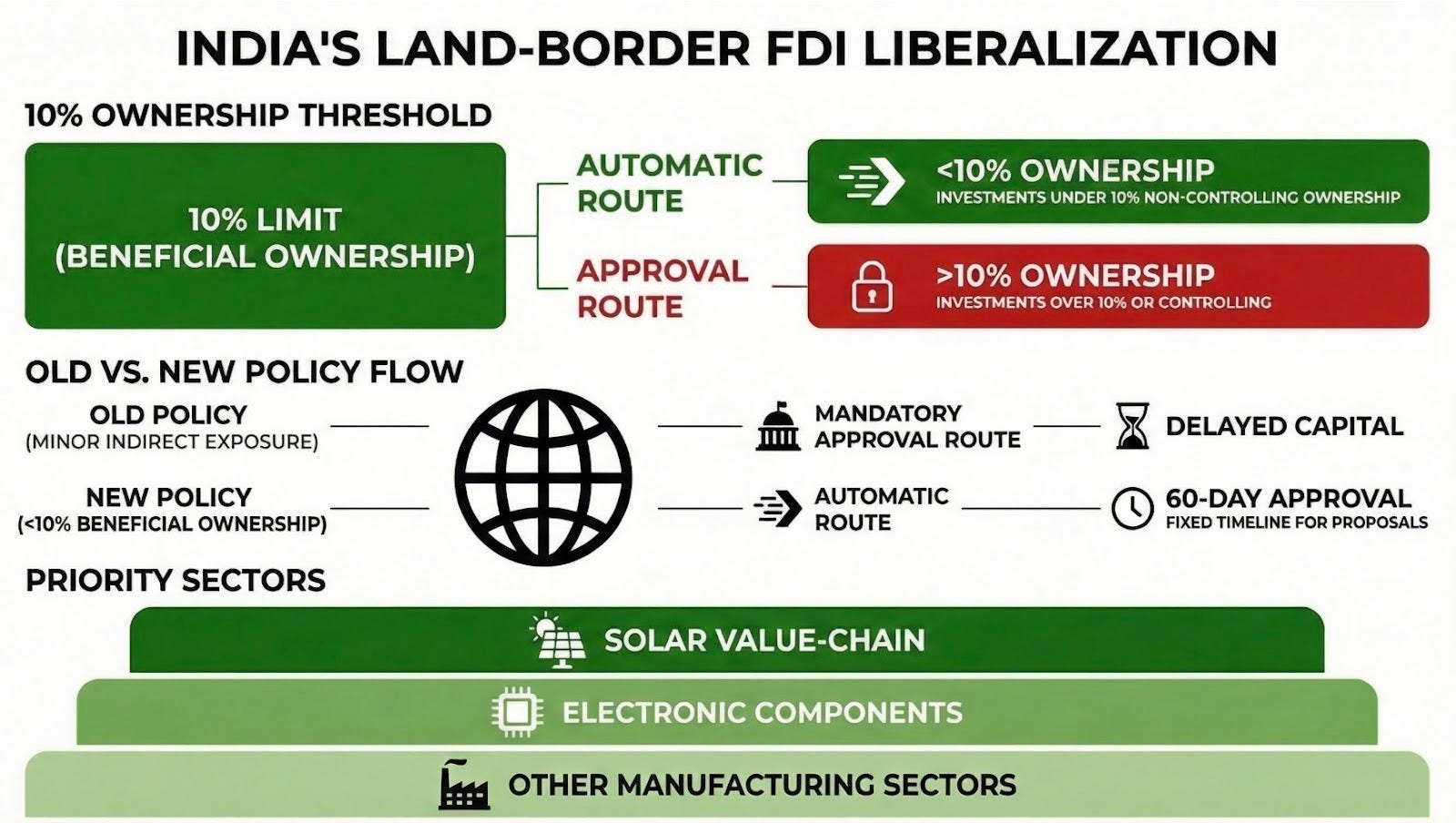
The change addresses compliance challenges faced by global private equity and venture capital funds with diversified investor bases. Previously, even minor indirect exposure to land-bordering jurisdictions triggered the government approval route, slowing down capital inflows into sectors where India seeks supply-chain expansion.
II. ₹ 1 Lakh Crore Economic Stabilisation Fund To Manage External Shocks
The Government of India has announced the creation of a ₹ 1 lakh crore Economic Stabilisation Fund (ESF) aimed at strengthening the country’s ability to respond to global economic disruptions. The fund will provide fiscal space to manage shocks such as geopolitical conflicts, energy price spikes and supply-chain disruptions without derailing fiscal consolidation targets.
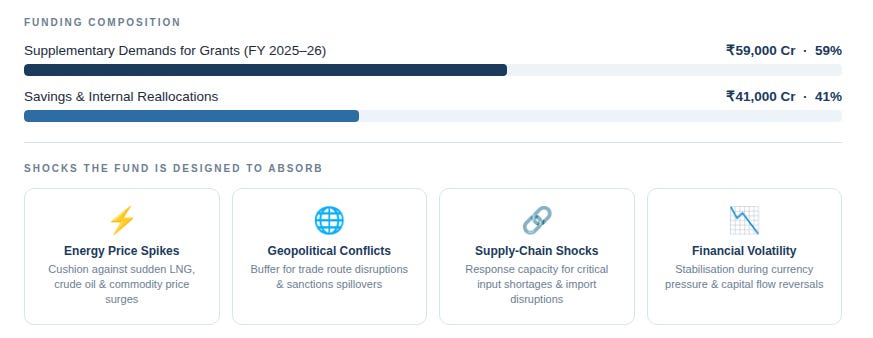
To operationalise the fund, the Government has proposed ₹ 59,000 crore through the second Supplementary Demand for Grants for FY 2025–26, with the remaining corpus to be mobilised through savings and reallocations. The Lok Sabha has passed the second batch of Supplementary Demands for Grants, bringing total supplementary spending for the financial year to ₹ 4.13 lakh crore, including ₹ 1.71 lakh crore classified as technical supplementary requirements.
III. Jal Jeevan Mission 2.0: From Infrastructure Creation To Service Delivery
The Union Cabinet has approved Jal Jeevan Mission 2.0, extending and restructuring India’s flagship rural drinking water programme until December 2028 with a total outlay of ₹ 8.69 lakh crore.
While the first phase of the mission focused primarily on expanding household tap connections, the new phase shifts attention toward long-term reliability, system maintenance and governance. A major feature is the introduction of a national digital monitoring framework called “Sujalam Bharat”, including the Sujal Gaon ID system that will digitally map rural drinking water infrastructure at the village level.
The restructuring reflects a shift in public infrastructure programmes toward service delivery outcomes rather than asset creation alone.
V. Natural Gas Allocation Prioritised For Fertilizer Production
The Ministry of Chemicals and Fertilizers has notified the Natural Gas (Supply Regulation) Order, 2026, placing fertilizer plants in Priority Sector-2 for natural gas allocation. Under the new framework, fertilizer units will receive at least 70% of their average natural gas consumption, calculated based on usage over the previous six months. The policy has been introduced amid global LNG supply disruptions, ensuring stable domestic fertilizer production and preventing shortages during the upcoming Kharif sowing season.
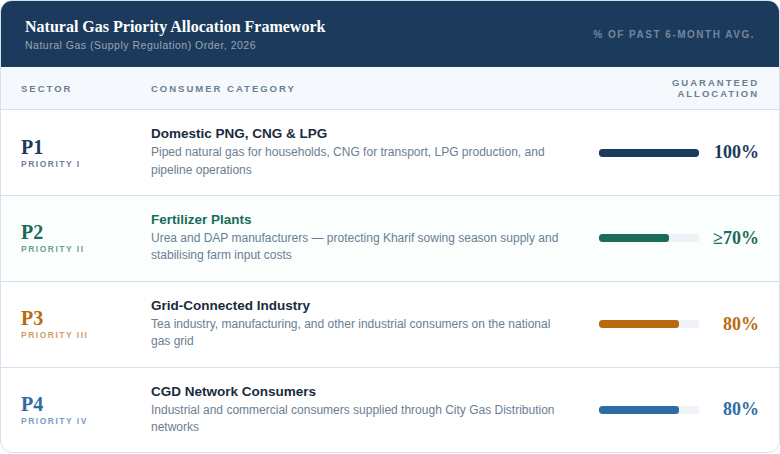
By safeguarding fertilizer supply chains during energy market disruptions, the measure helps protect agricultural output and stabilise input costs for farmers.
VI. India–Canada CEPA Negotiations Begin
India and Canada have formally launched negotiations for a Comprehensive Economic Partnership Agreement (CEPA) after signing the Terms of Reference on 2 March 2026. The agreement aims to expand bilateral trade to $ 50 billion by 2030, up from $ 8.66 billion in FY 2024-25.
Negotiations will cover trade in goods, services, investment and supply-chain cooperation, with particular emphasis on critical minerals, clean energy and energy security. The agreement will strengthen India’s access to key energy inputs such as uranium and LNG while deepening economic integration with Canada in emerging technology and resource sectors.
VII. Assembly Elections 2026 Announced For Four States And One Union Territory
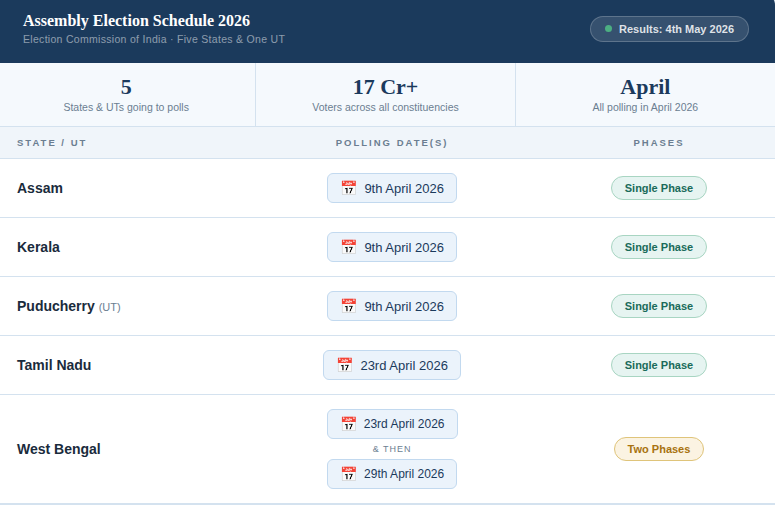
The Election Commission of India has announced the schedule for assembly elections in West Bengal, Tamil Nadu, Kerala, Assam and Puducherry. Polling will be conducted in April 2026, with West Bengal voting in two phases while the other states and the Union Territory vote in a single phase. The results for all states will be declared on 4th May 2026.