
This fortnightly brief tracks major economic, industrial, and financial policy developments and what they add up to. We begin with the coal gasification push aimed at strengthening energy security and reducing import dependence, before examining the expansion of semiconductor manufacturing under the India Semiconductor Mission. We then turn to SEBI’s proposed municipal bond reforms, which seek to deepen urban financing markets and improve long-term capital access for infrastructure development.
I. Coal Gasification Push For Energy Security And Import Substitution
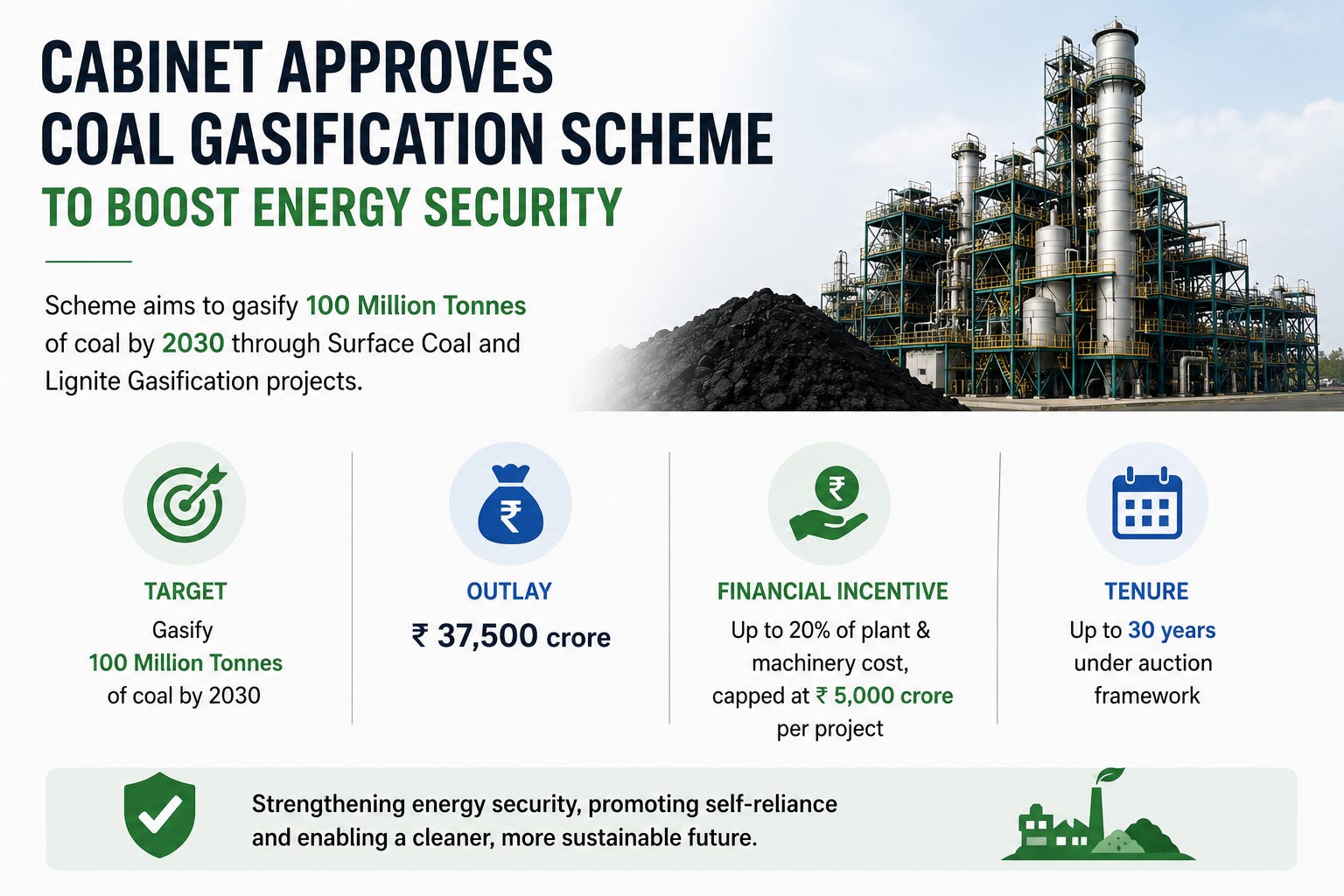
The Union Cabinet has approved a ₹ 37,500 crore Scheme for Promotion of Surface Coal and Lignite Gasification Projects, anchored to India’s target of gasifying 100 million tonnes of coal by 2030.
The scheme is designed to crowd in long-term private investment, estimated at ₹ 2.5 - 3.0 lakh crore, through a combination of extended coal linkage tenures of up to 30 years and upfront financial incentives of up to 20% of plant and machinery costs, capped at ₹ 5,000 crore per project.
Shifting away from imported LNG and industrial feedstocks toward domestically produced synthetic natural gas, methanol, and ammonia tightens the trade balance while building out an indigenous clean coal technology base.
II. Semiconductor Manufacturing Expansion Under India Semiconductor Mission
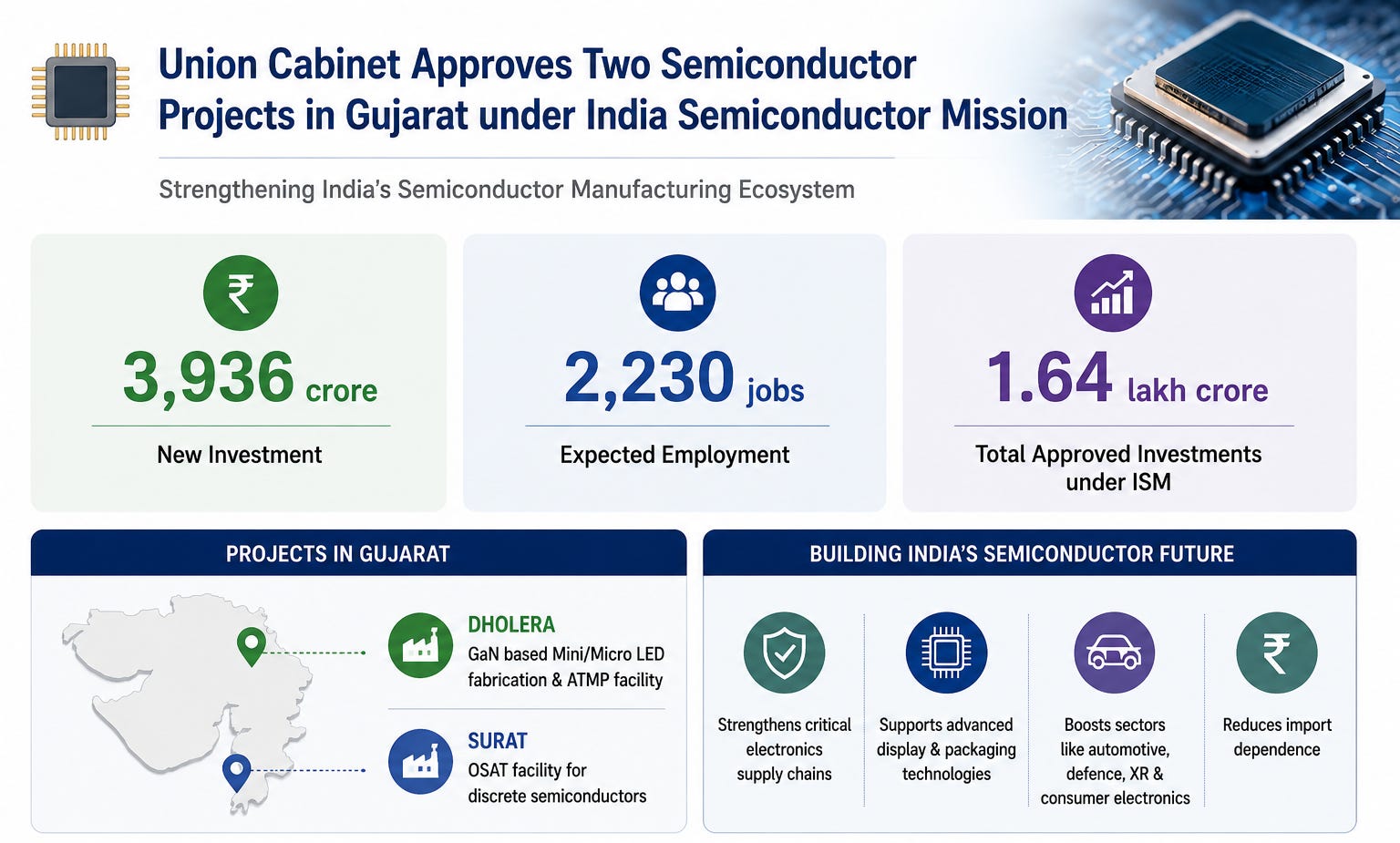
The Union Cabinet has approved two new semiconductor projects in Gujarat under the India Semiconductor Mission (ISM), giving fresh momentum to India’s chip manufacturing ambitions. With a cumulative investment of ₹ 3,936 crore, the projects will support advanced chip packaging and next generation display technologies.
The approval includes a Gallium Nitride (GaN) based Mini/Micro LED facility in Dholera and an Outsourced Semiconductor Assembly and Test (OSAT) facility in Surat, together expected to generate 2,230 jobs. The move takes total approved investments under the mission to ₹ 1.64 lakh crore.
Beyond the numbers, this marks another step towards reducing import dependence and building domestic capabilities for high value sectors such as automobiles, defence, and advanced consumer electronics.
III. SEBI Proposes Municipal Bond Reforms To Strengthen Urban Financing
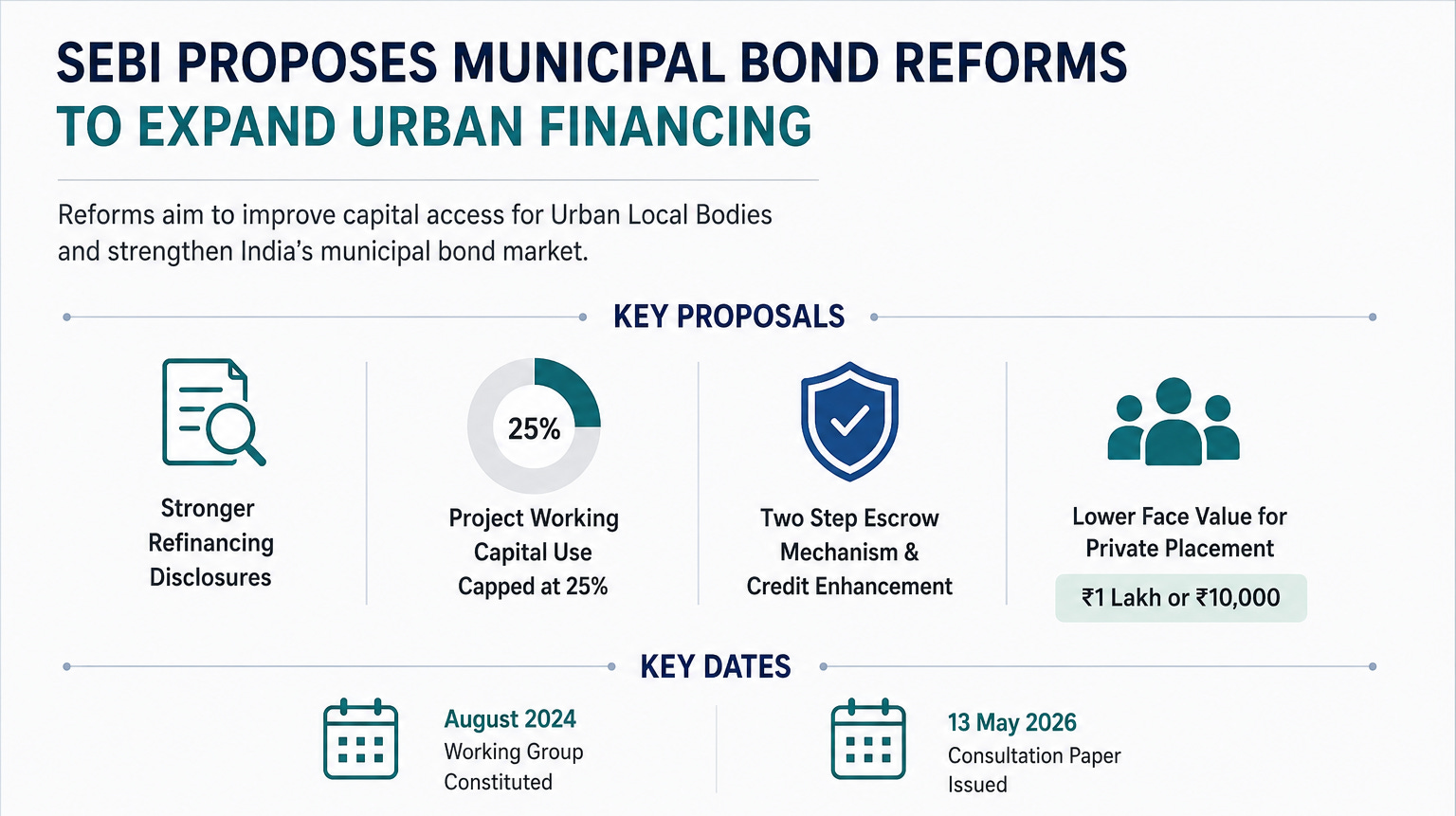
SEBI has proposed a major overhaul of the municipal debt framework to improve capital access for urban local bodies and strengthen the municipal bond market. The consultation paper introduces measures such as stronger refinancing disclosures, a cap limiting project working capital use to 25%, and a two step escrow mechanism with credit enhancement structures for pooled financing.
The proposals also seek to widen investor participation by reducing private placement face values to ₹ 1 lakh or ₹ 10,000 as deemed appropriate and introducing an ESG debt framework for urban infrastructure financing. If implemented, the reforms will help cities access more sustainable long term financing for infrastructure and urban development projects.
The pooled financing model draws from the US experience, where municipal bond banks aggregate smaller local borrowings into a single pooled issue. This enabled smaller and unrated local governments to access capital markets at lower financing costs by improving creditworthiness and distributing risk across the financing pool.
If you are interested in more detailed coverage of these and other policy developments, we invite you to read the full India Governance Watch (1st May to 15th May, 2026) newsletter here.
Click here to read full Newsletter
Also, please consider subscribing to NFPRC Foundation’s focused centres covering latest economic, policy and administrative developments -
Centre for Law, Policy and Governance - Link
Centre for Accelerating India’s Growth - Link
Centre for Studies in Indian Social Systems - Link
NFPRC Foundation - Link