

Executive Summary -
The Ordinance eliminates interest and capital gains taxes on Government Securities (G-Secs) for foreign institutional investors.
This measure is enacted in response to recent capital outflows from the Indian debt market, currency depreciation, elevated global interest rates, and increased sovereign borrowing requirements.
Foreign investment in G-Secs is lower when compared to other emerging markets, leaving plenty of room to attract more capital.
By removing specific tax barriers, this Ordinance aligns India’s fiscal architecture with global best practices. This strategic harmonization aims to attract sustainable foreign capital, deepen market liquidity, and ultimately reduce sovereign borrowing costs.
I. Introduction
The President has promulgated the Income-tax (Amendment) Ordinance, 2026 (effective 1st April, 2026), which exempts Foreign Institutional Investors (FIIs) and the Bank for International Settlements (BIS) from taxes on interest income and capital gains arising from investments in Indian Government Securities (G-Secs).
This move is complemented by other G-Sec reforms such as expansion of the Fully Accessible Route (FAR) to include fresh 15, 30, and 40-year G-Secs alongside Sovereign Green Bonds. The Government has also streamlined the General Route by removing short-term, concentration, and security-wise investment limits. These comprehensive measures are designed to attract stable, long-term global capital, deepen India’s debt market, lower borrowing costs, and integrate its financial system more closely with the global economy.
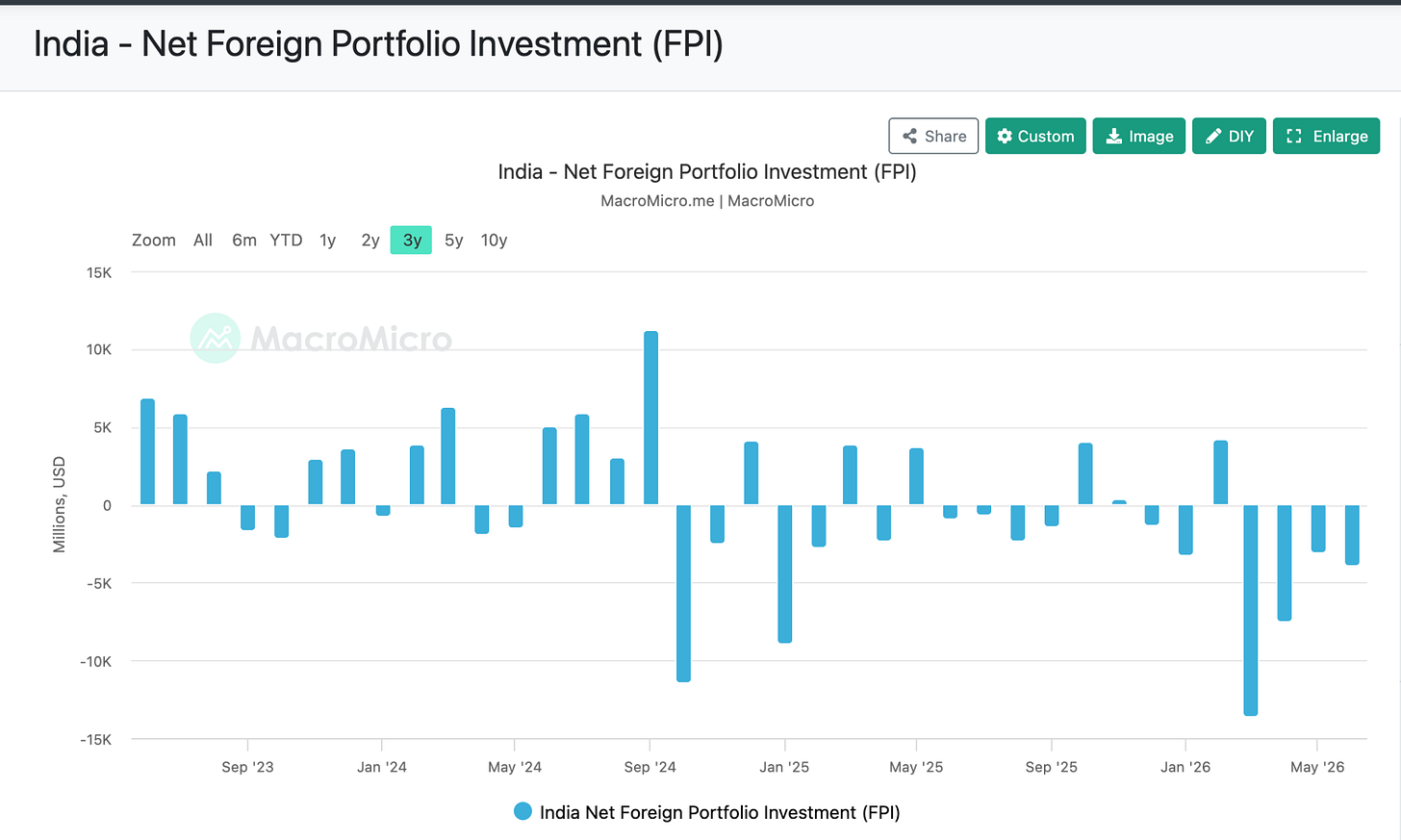
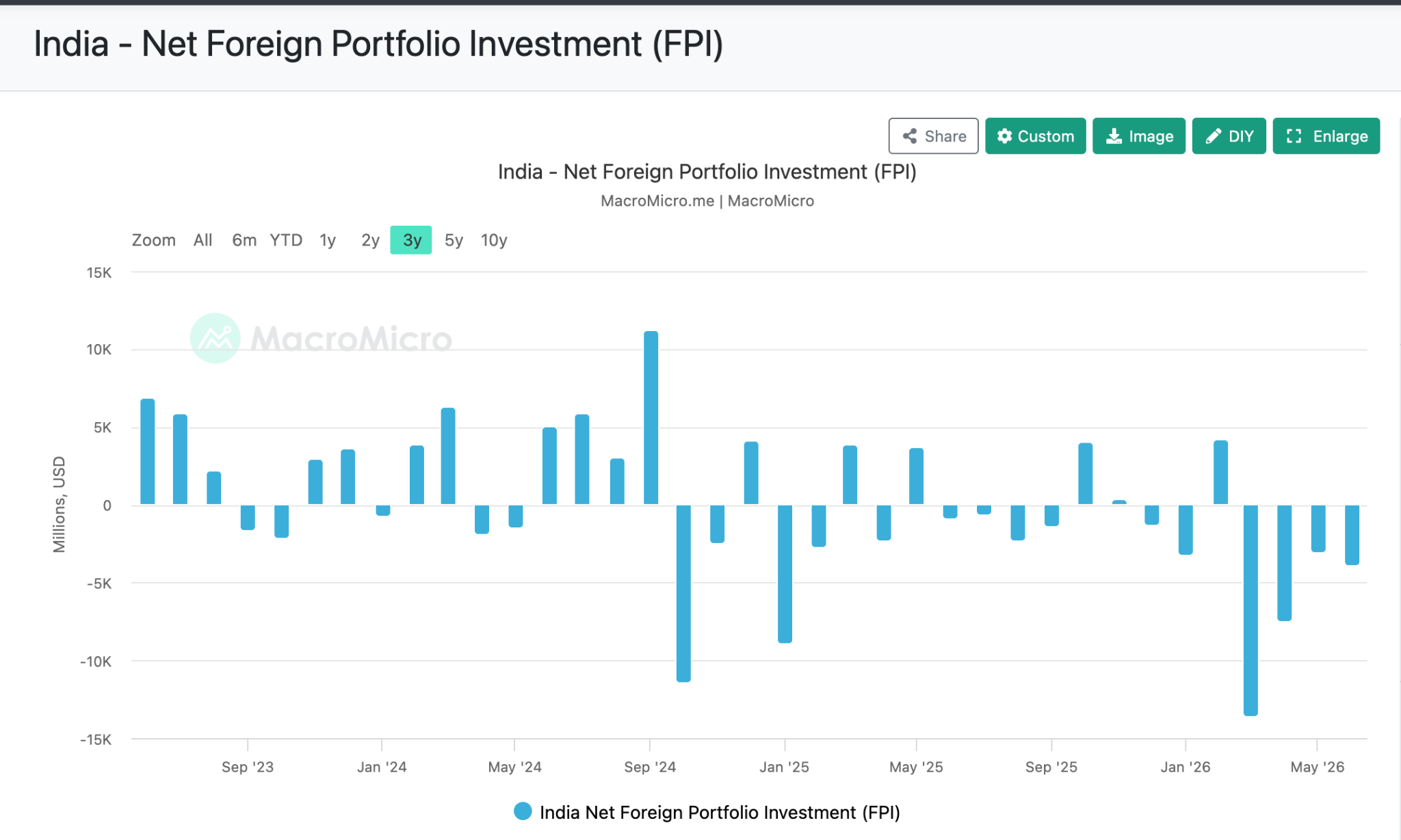
Image 1: India - Net Foreign Portfolio Investment (FPI) in Million USD (2024-2026). The Ordinance responds directly to the persistent exit of foreign capital from the Indian debt market in early 2026, fueled by high US interest rates, global panic, and a declining forex.
II. Economic Context
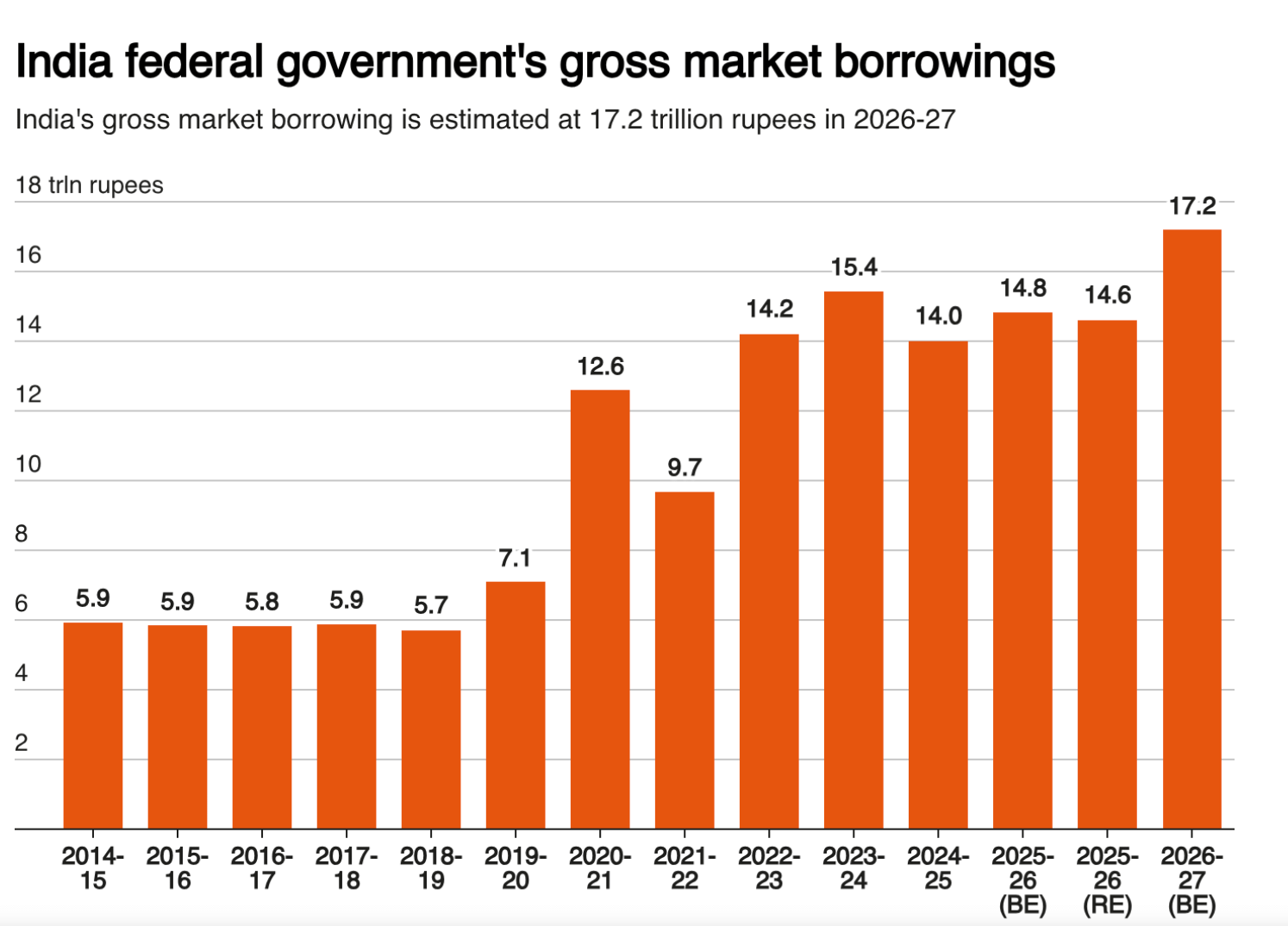
Increasing Domestic Borrowing Requirements: The central Government’s gross market borrowing for the financial year 2026-27 was estimated at ₹ 17.2 lakh crore, representing an increase of approximately 21% over the revised estimates for 2025-26 which were of ₹ 14.2 Lakh Crore. Despite a strong investment potential, the Indian market suffered from the global phenomenon of losing massive amounts of foreign investment and facing higher borrowing costs for the Government in early 2026.
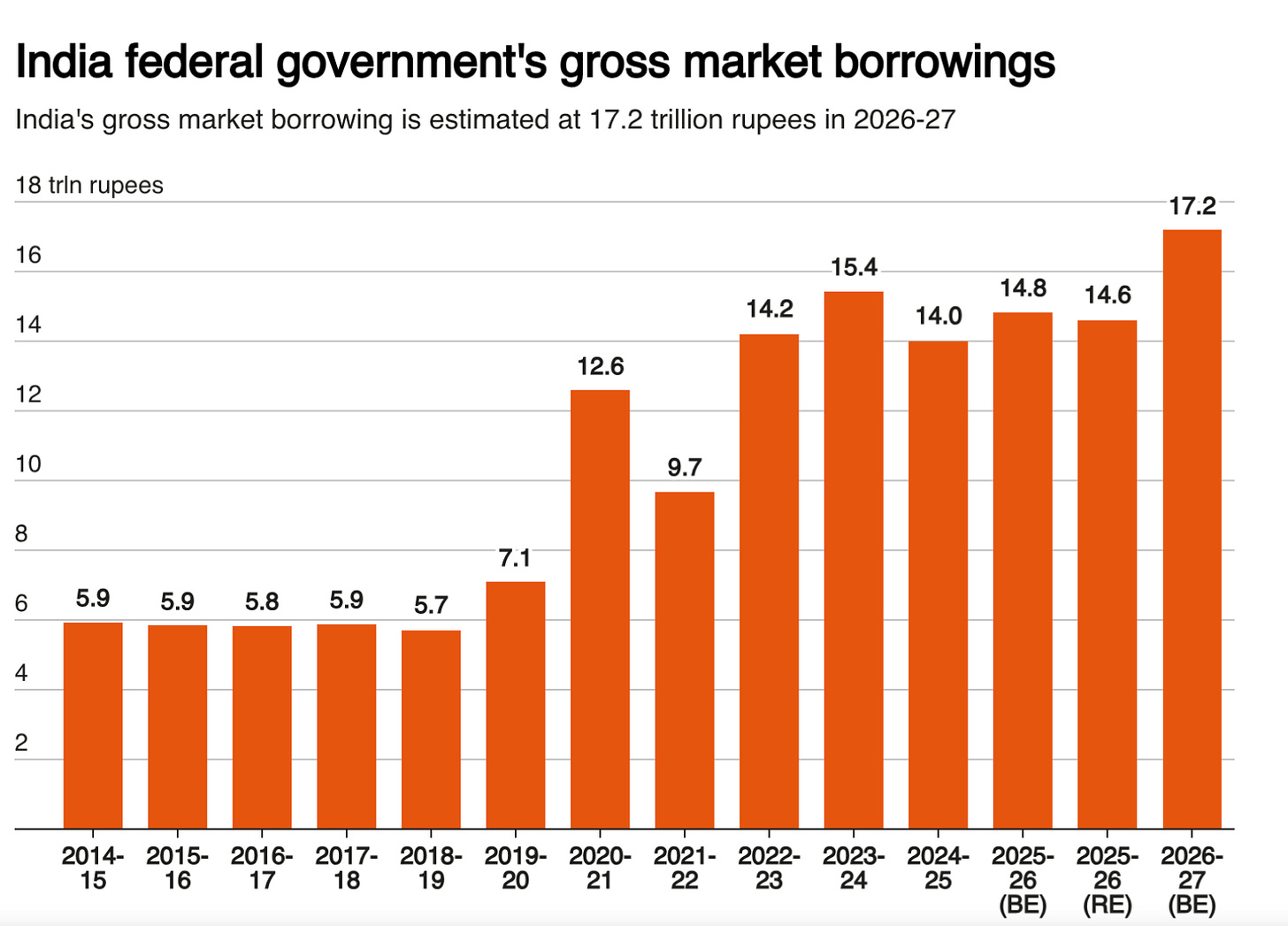
Image 2: India's Gross Market Borrowing Trajectory (FY15–FY27). Geopolitical Uncertainty: While there are historical precedents of foreign capital fleeing emerging markets before, such as in 2013 and 2018, this current crisis of global uncertainty driven by escalating US-Iran geopolitical tensions is uniquely severe. It is lasting much longer, and global investors are rapidly pulling their money out of almost all types of investments at the exact same time.
Severe Capital Migration: The period from late 2024 through the first half of 2026 witnessed capital migration because FIIs shifted their capital to safer foreign markets that offered better returns. Amidst the rising borrowing costs as of March 2026, G-secs made up 45.42% of the Indian bond market, making it a critical funding avenue for the Government.
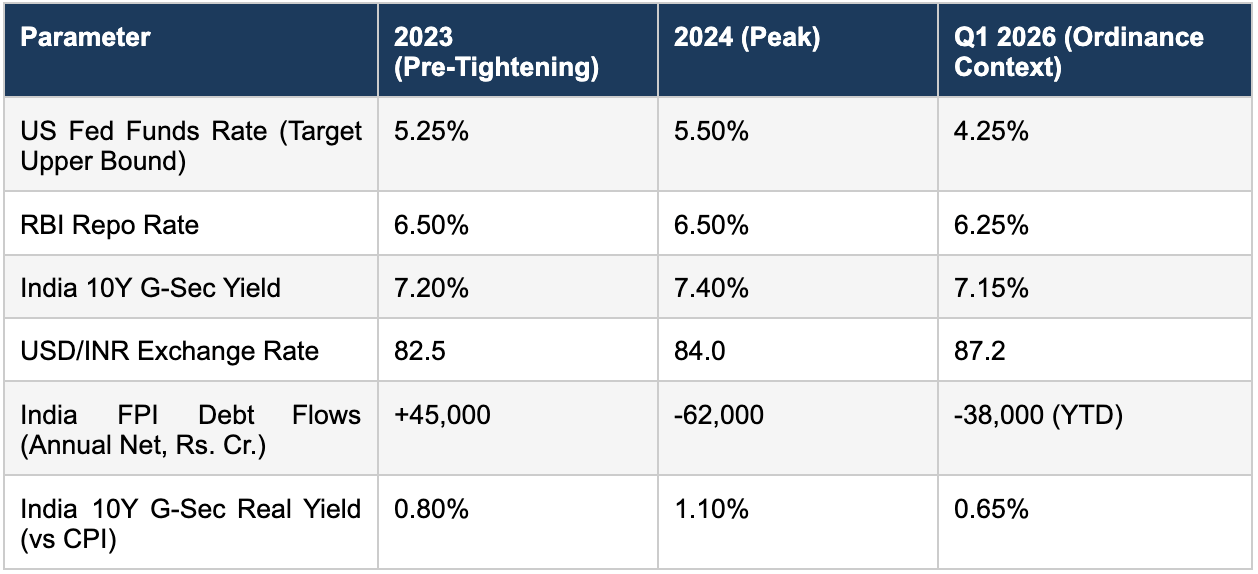
Elevated Global Risk Aversion: Simultaneously the global markets observed a high interest rate environment compounding the domestic pressure. Global risk aversion indices, including the VIX (CBOE Volatility Index) and the MSCI EM Volatility Index, remained elevated through the first quarter of 2026.
Pressure from US Market: With interest rates on US Government bonds remaining elevated, immense pressure is being placed directly on India’s macroeconomic stability. This sustained yield advantage actively pulls foreign capital out of Indian markets, making the Ordinance’s fiscal intervention on Indian sovereign bonds a necessary mechanism to counter capital flight and defend the domestic economy.
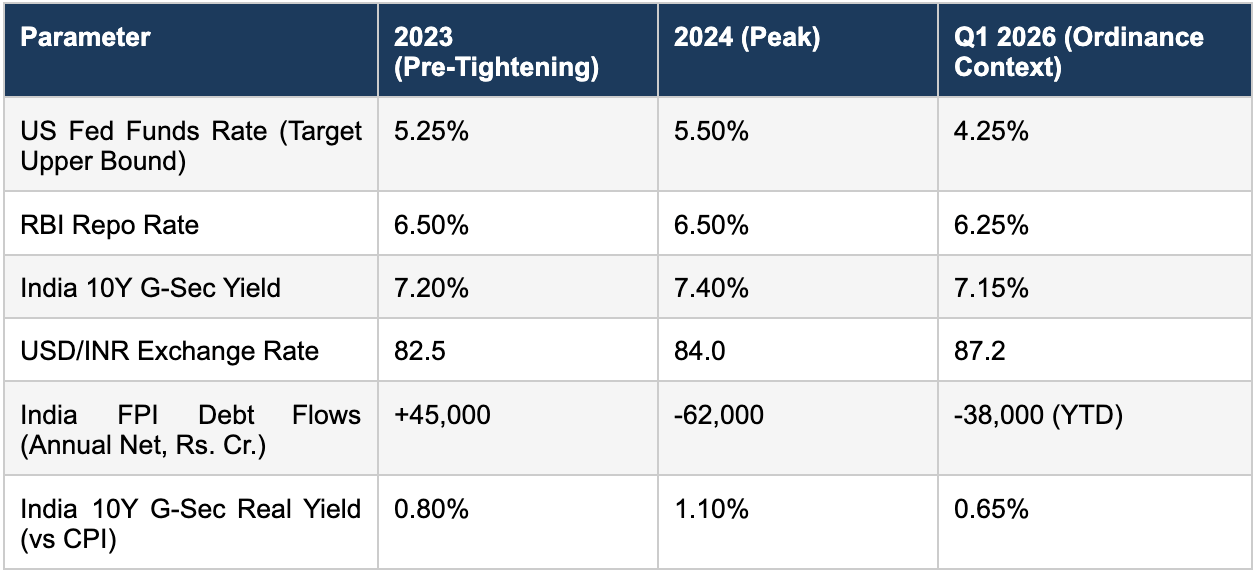
Image 3: Macroeconomic Indicators and Economic Context (2023 – Q1 2026). 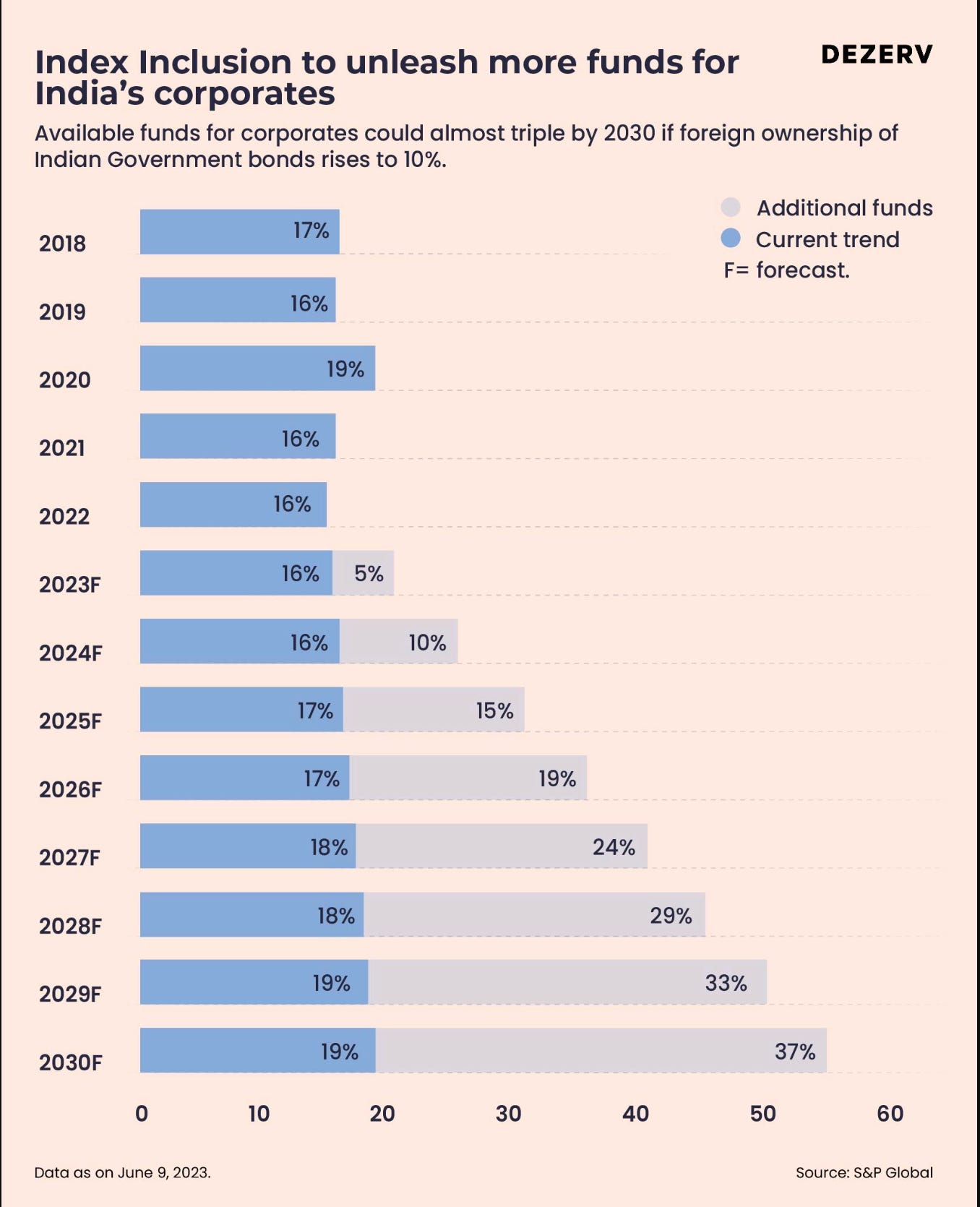
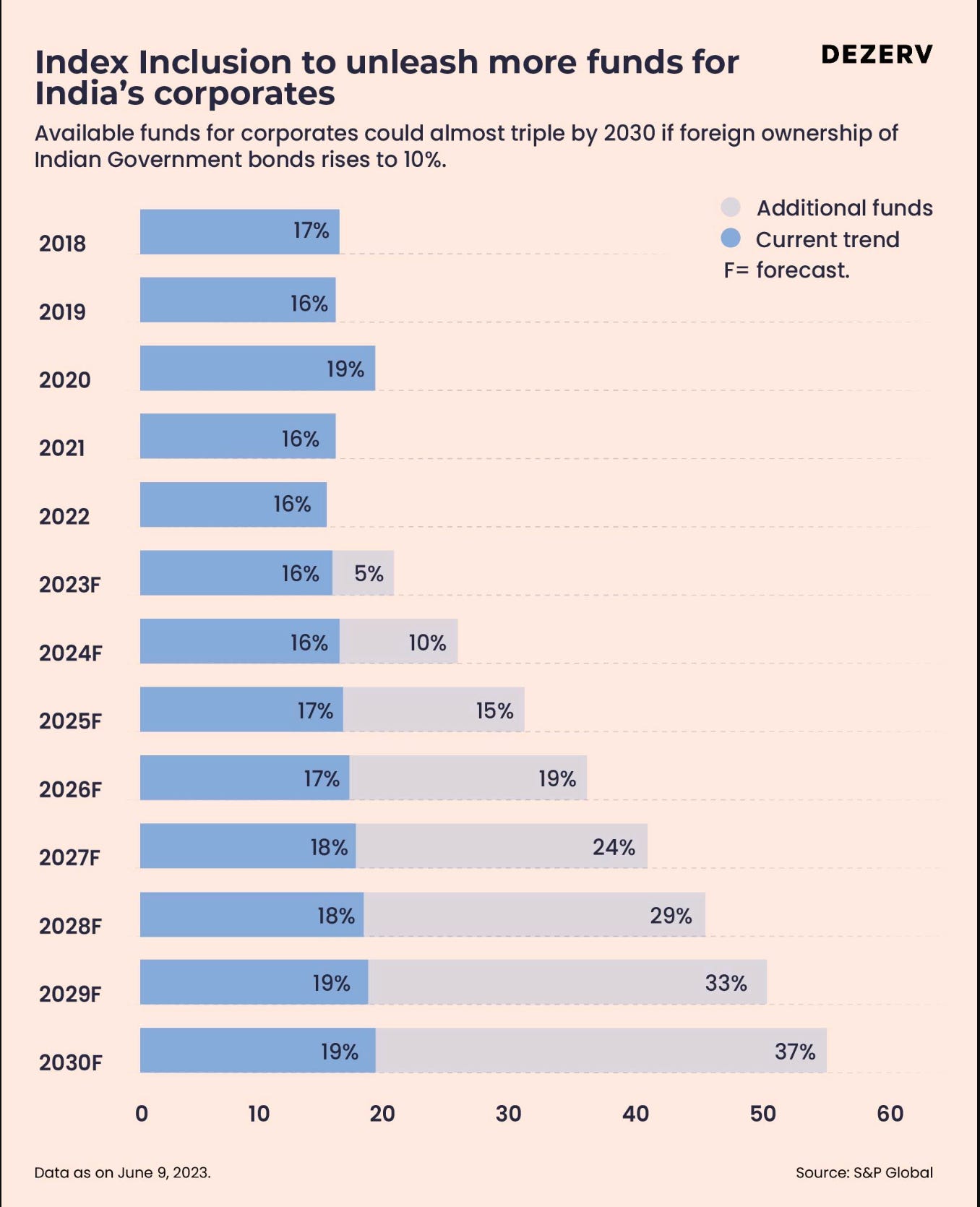
Image 4: Projected Impact of Sovereign Bond Index Inclusion on Corporate Capital Availability Structural Stability and the Sovereign Debt Profile: Government Securities, as instruments of the sovereign, possess distinctive attributes that make them a strategic investment tool for institutional investors. India’s exceptionally high yield predictability creates inherent incentives for investment. Anchored by 85.3% long-term, fixed-rate borrowing, these securities indicate long-term stability. As India’s foreign currency debt stands at just 4.7%, it remains highly resilient to external shocks, unlike regional peers with high.
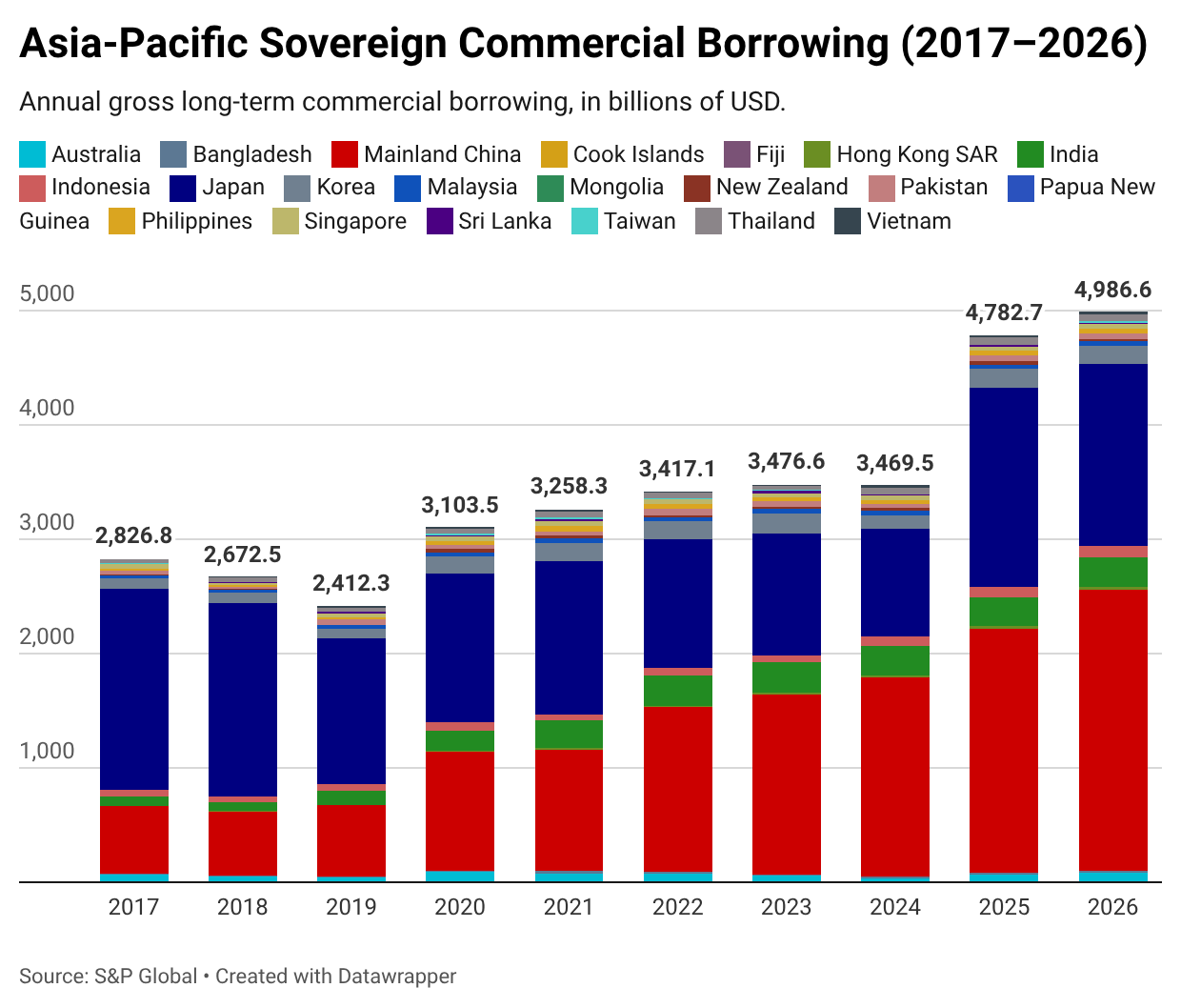
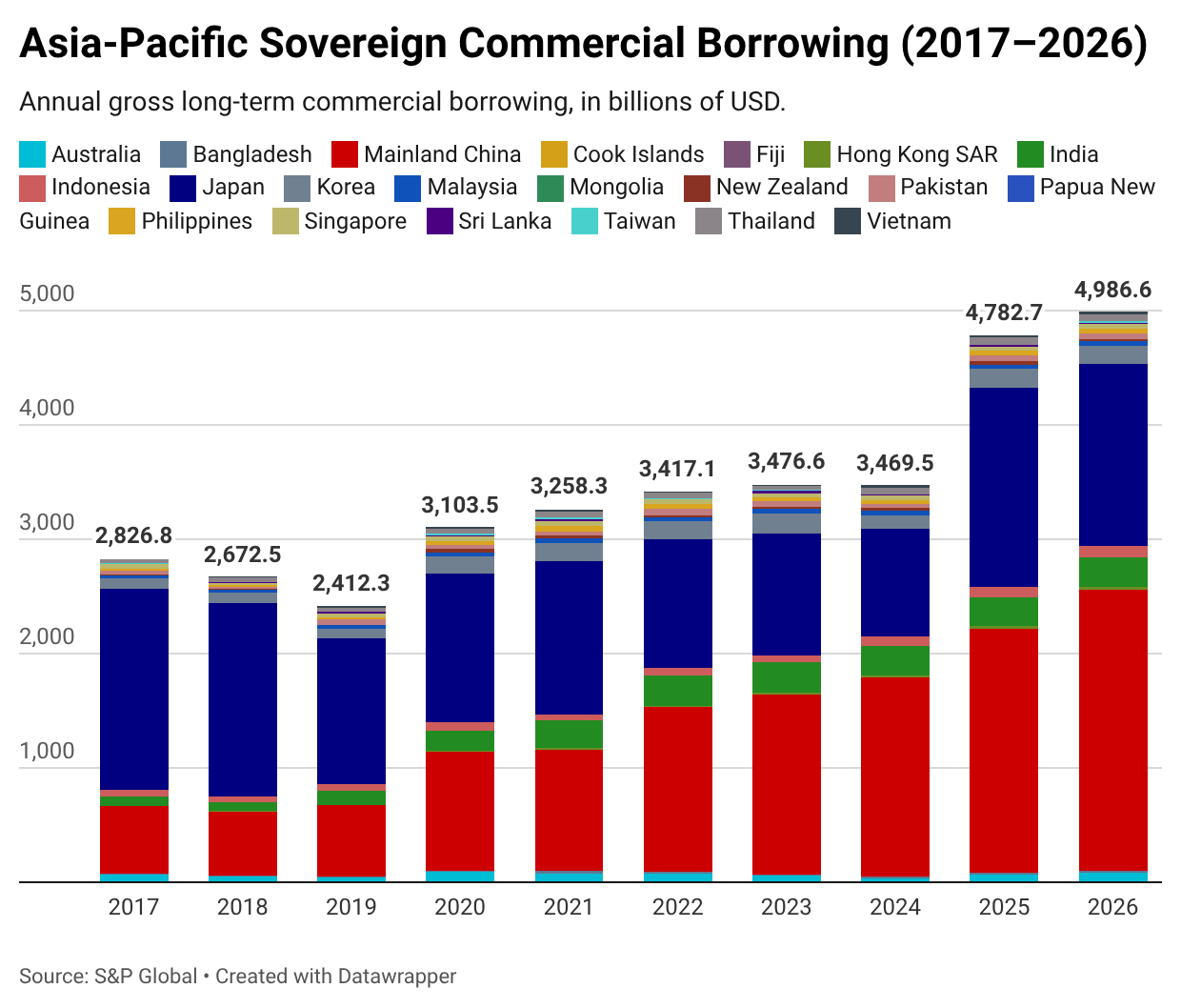
Image 5: Asia-Pacific Sovereign Commercial Borrowing Trends (2017–2026).
III. Economic Impact and Strategic Benefits
Elimination of Tax Friction: Prior to the Ordinance, a foreign investor in Indian G-Secs was subject to withholding tax on interest income at 20% (with beneficial treaty rates applicable in some cases at 10-15%), along with the application of capital gains taxation on secondary market transactions. Post-ordinance, both income streams are fully exempt, bringing India's tax treatment of G-Sec income for foreign investors substantially in line with international best practice for sovereign bond markets.
Investor Diversification: By relying more on foreign capital to finance sovereign debt, the Government reduces the strain on domestic savings, effectively mitigating the crowding-out effect. This relieves pressure on domestic institutional investors and banks.
Better Price Discovery: By stimulating robust foreign institutional demand and improving market liquidity. Consequently, the Government no longer needs to offer elevated interest rates to attract buyers, significantly bringing certainty in issuing new sovereign debt.
Forex Reserves & Rupee Stability: Facilitating foreign capital inflows into sovereign bonds directly bolsters Rupee demand, thereby mitigating the need for the RBI to deplete its foreign exchange reserves to defend the rupee value. This structural stability reduces the currency risk premium demanded by international investors, establishing a virtuous cycle of lowered sovereign borrowing costs and reinforced macroeconomic confidence.
The Strategic Role of the BIS: While the direct financial impact of extending exemptions to the BIS may initially be aspirational due to current low investment volumes, the strategic value is immense. Securing BIS backing serves as a critical stepping stone for easier entry into European bond indices by helping to address historical operational hesitations. If the RBI decides to borrow from the BIS in the future, even a minor concession in basis points resulting from this relationship would yield significant fiscal benefits for India.
Conclusion
India's G-Sec market, while one of the largest in Asia by absolute size, has historically been characterised by a narrow and highly regulated investor base, dominated by domestic banks, insurance companies, and provident funds. The expansion of the FII investor base, particularly the participation of foreign sovereign wealth funds, pension funds, and supranational institutions would significantly deepen this structural issue of the market.
This Ordinance is a major step in linking India to the global economy. By removing a key tax hurdle, it directly resolves foreign investors’ hesitation and clears the path for massive international investment.
Removing these key operational hurdles, makes the Indian debt market globally competitive. It makes the case that India is highly investor-friendly, which paves the way for a sovereign credit rating upgrade. While this Ordinance provides a crucial, timely intervention to stabilise the Rupee and moderate borrowing costs in the short run, tax exemptions alone cannot substitute for structural market depth. Achieving long-term resilience will require targeted, sustained interventions to truly strengthen the corporate and sovereign bond markets.
Annexure I -
The Income-tax (Amendment) Ordinance, 2026, inserts new entries into Schedule IV of the Income-tax Act, 2025, providing targeted tax exemptions:
Statutory Definitions:
(a) “Bank for International Settlements” means the Bank for International Settlements established at the Hague Conference in 1930 and headquartered at Basel, Switzerland;
(b) “Foreign Institutional Investor” shall have the meaning assigned to it in section 210(6)(a);
(c) “Government security” shall have the same meaning as assigned to it in section 2(f) of the Government Securities Act, 2006.
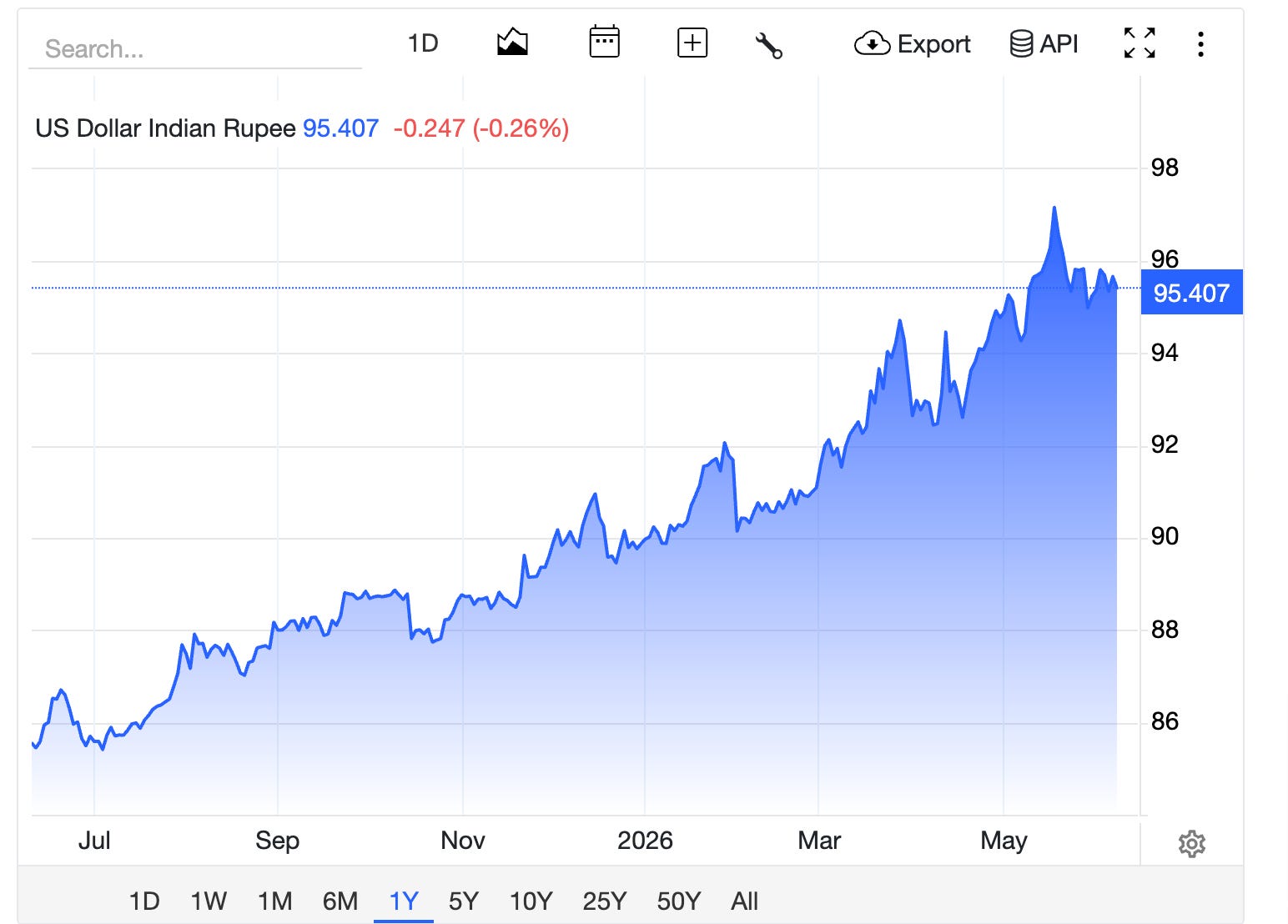
Annexure II - Rupee Performance Data July 2025-June 2026
Also, please consider subscribing to NFPRC Foundation’s focused centres covering latest economic, policy and administrative developments -
Centre for Law, Policy and Governance - Link
Centre for Accelerating India’s Growth - Link
Centre for Studies in Indian Social Systems - Link
NFPRC Foundation - Link