
I. Key Takeaways :
The Jan Vishwas (Amendment of Provisions) Bill, 2026, aims to improve Ease of Doing Business and Ease of Living by replacing criminal penalties for minor offences with proportionate civil mechanisms across a wide legislative landscape.
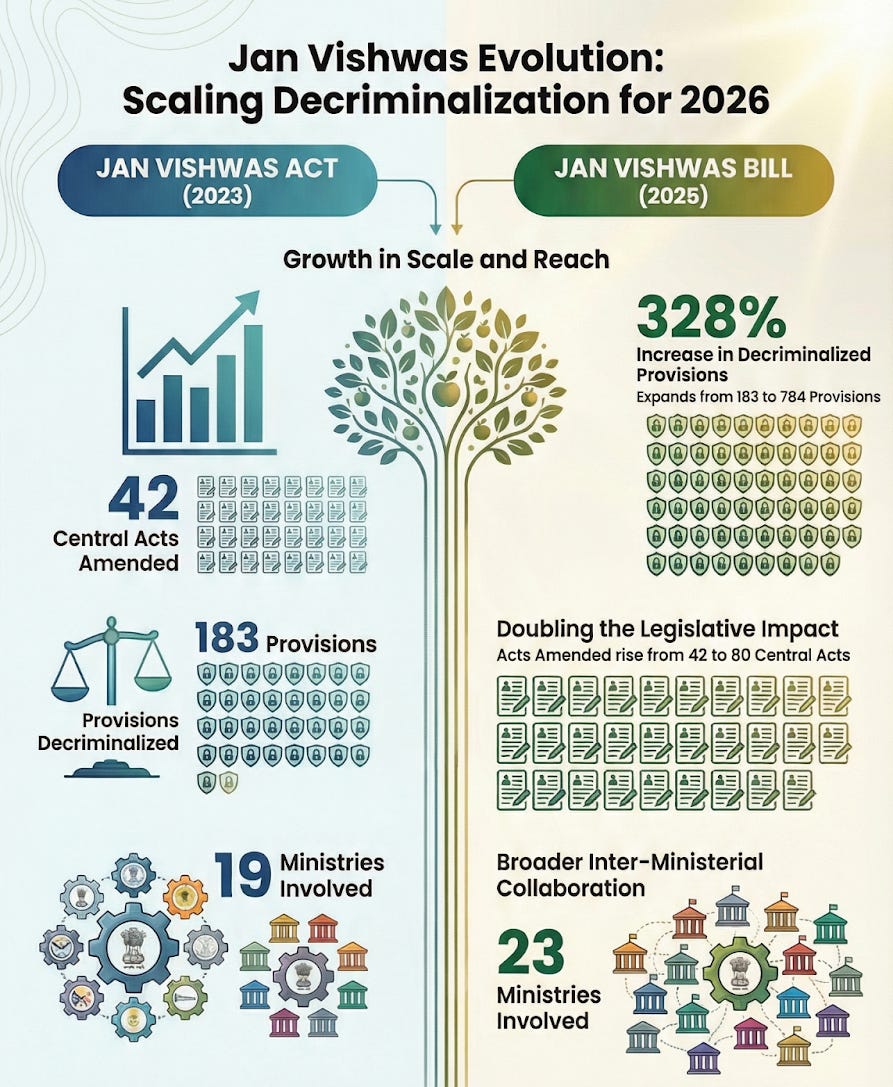
The Bill proposes to amend 784 provisions across 80 Central Acts administered by 23 ministries rationalising more than 1000 offences.
The Bill was reintroduced in Lok Sabha after incorporating the recommendations of the 24- member Select Committee which worked extensively across 49 sitting and extensive consultation processes to recommend decriminalisation of 689 provisions across 78 legislations.
The Bill shifts enforcement from criminal prosecution to designated administrative adjudicating officers, ensuring faster resolution of contraventions.
The Bill establishes a multi-tiered appellate mechanism and a graded enforcement framework that prioritises warnings and improvement notices for first-time offenders.
I. Introduction :
The Jan Vishwas (Amendment of Provisions) Bill, 2026 (the ‘Bill’) was passed in Lok Sabha on 1st April, 2026, to replace imprisonment for minor offences with civil penalties across multiple laws.
The Bill was initially introduced in the Lok Sabha during the Monsoon Session of 2025, proposing amendments to 355 provisions across 16 Central Acts, and was subsequently referred to a Select Committee of Parliament. The Committee held 49 sittings, conducted 10 inter-ministerial consultations, and organized 7 formal industry consultations, alongside extensive stakeholder interactions with industry bodies, RWAs, and expert witnesses recommended to decriminalise 689 provisions across 78 legislations.
To incorporate the suggestions of the Committee the Bill was withdrawn and reintroduced in the Lok Sabha in March 2026 seeking to amend 784 provisions across 80 central legislations administered by 23 ministries.
The present Bill builds on the success of the Jan Vishwas (Amendment of Provisions) Act, 2023, which was the first consolidated legislation to systematically decriminalise minor offences across multiple Acts. The 2023 Act decriminalised 183 provisions in 42 central acts administered by 19 ministries/departments.
II. Details of the Bill and Key Provisions:
Broad Scope of Decriminalisation: The Bill seeks to amend 80 Central enactments to decriminalise and rationalise minor offences by replacing imprisonment with monetary penalties, particularly where there is no fraudulent intent or significant public harm. For instance, smoking in a metro compartment or underground station will now be treated as a civil default, punishable with a ₹2,000 fine rather than criminal liability. However, it is crucial to note that strict provisions for serious violations remain untouched.
Trust-Based Governance and Ease of Business: The Bill seeks to replace a fear-based regulatory regime by removing imprisonment for minor defaults, thereby boosting investor confidence and easing judicial burden. By streamlining numerous provisions, it aims to create a more business-friendly environment that allows enterprises, especially in early stages, to grow without unnecessary regulatory constraints.
Establishment of Administrative Adjudication: For several Acts, the Bill moves the enforcement of penalties from the courts to designated administrative adjudicating officers. The proposed amendments to the Cattle Trespass Act, 1871 replace criminal proceedings for cattle trespass with an adjudicatory mechanism. Instead of prosecution, an executive magistrate will determine liability and may impose a penalty of up to ₹ 5,000.
Multi-Tiered Appellate Mechanism: To ensure fairness, the Bill introduces a structured appeal process. Any person aggrieved by an order of an adjudicating officer can prefer an appeal to an appellate authority, usually an officer of a higher rank, within a specified timeframe (typically 30 days). For example, under The Court-fees Act, 1870 any person aggrieved by an order may file an appeal before the Commissioner (or any officer notified) within 30 days.
Graded Enforcement: The Bill introduces a rationalised enforcement framework where, for first-time or minor contraventions, authorities may issue advisories, warning notices, or remedial actions instead of immediately imposing fines. Monetary penalties are then applied for subsequent or continuing violations. For many first-time violations, such as under the Apprentices Act, 1961, authorities will issue warnings instead of immediate fines, allowing individuals and small employers to correct lapses within a specified period of time.
Compounding of Certain Offences: The Bill expands the scope for compounding offences, allowing individuals to settle minor criminal charges by paying a specified sum, thereby avoiding criminal prosecution and court trials. This has been done acts such as The Metro Railways (Operation and Maintenance) Act, 2002; The Legal Metrology Act, 2009; The Recycling of Ships Act, 2019.
Periodic Revision of Fines and Penalties: Clause 3 mandates that the fines and penalties specified in the amended enactments (unless they already provide a specific revision method) shall be increased by 10% of the minimum amount every three years from the date the Act comes into force. This is likely to ensure that the penalties retain their deterrent value over time despite economic changes or inflation. This move maintains the integrity of a trust-based governance model, as it prevents penalties from becoming negligible, thereby ensuring continued compliance and reducing the need for frequent, piecemeal legislative amendments to dozens of different acts.
III. Sectoral Achievements :
The reforms in the last 13 years collectively signify India's shift toward a high-trust, transparent business environment by replacing bureaucratic hurdles with digital governance, fiscal clarity, and robust insolvency frameworks that empower both domestic scaling and global integration.
Regulatory Compliance Burden (RCB) Initiative
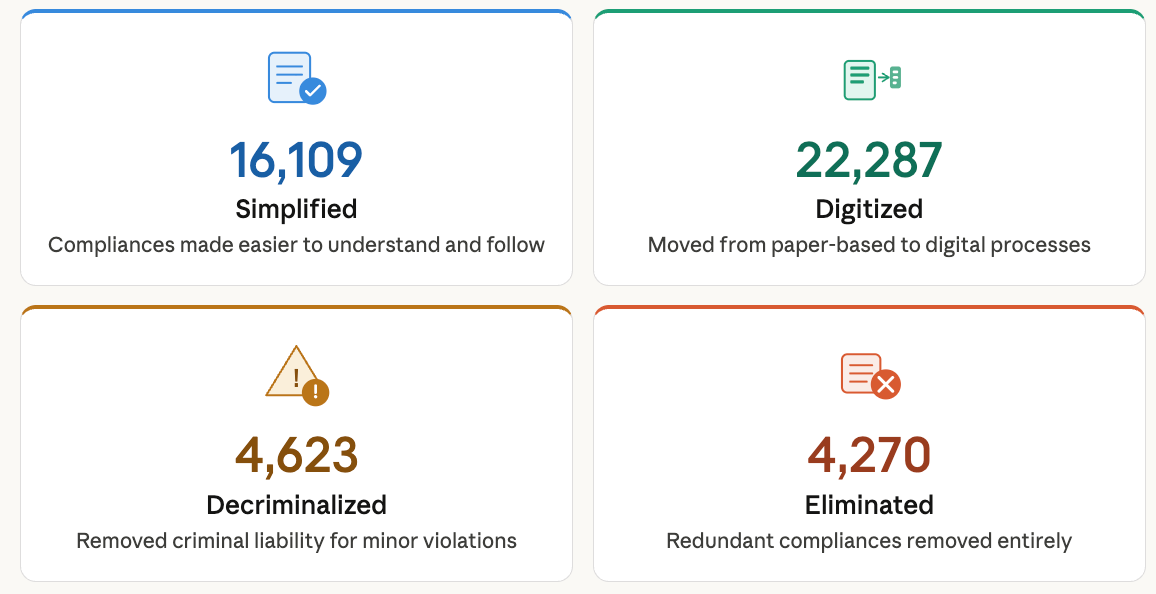
Reduction in Compliance Hurdles: Launched in 2020, the RCB initiative involved a self-identification exercise by Central Ministries and States to eliminate burdensome regulations. This has led to the reduction of over 47,000 compliances in the last 5 years, focusing on simplifying, digitizing, and eliminating redundant requirements to improve the business climate.
RCB+ for Interstate Harmonization: To address regional duplication and create a more uniform regulatory framework, the Government introduced RCB+, which has successfully harmonized and reduced 4,846 compliances out of 6,262 identified across 23 commonly implemented Acts in various States and Union Territories.
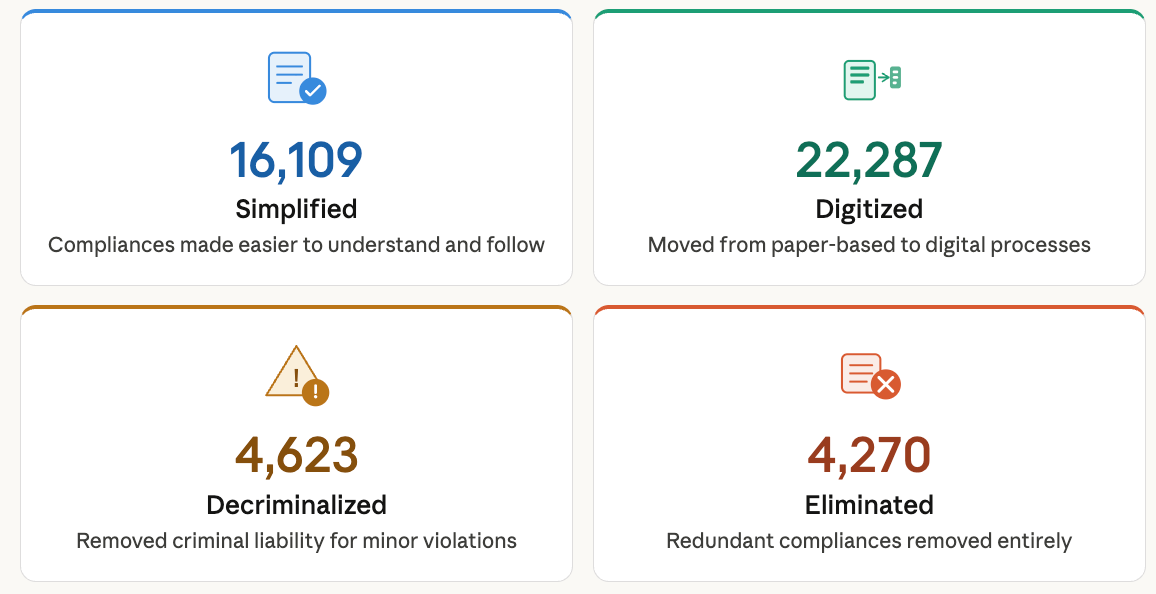
Image 2: Breakdown of the reduction in compliance by the RCB initiative. Regulatory Reorganisation by RBI: The Reserve Bank of India (RBI) has streamlined its regulatory framework by consolidating over 9,000 circulars and guidelines into 238 function-specific Master Directions across regulated entities. As part of this exercise, 9,446 circulars are being repealed, 3,809 integrated into Master Circulars and 5,673 identified as obsolete. This rationalisation enhances regulatory clarity, reduces compliance burden.
Goods and Services Tax 2.0
GST reforms introduced in September 2025 have enhanced Ease of Doing Business by simplifying tax slabs and moving toward a two-rate structure (5% and 18%), reducing compliance burdens and transaction costs. Rationalised rates across key sectors such as automobiles, cements etc. have lowered tax incidence, improved affordability, and boosted price competitiveness, supporting entrepreneurship.
The reforms have also driven formalisation, with GST registered taxpayers rising from around 60 lakh in 2017 to over 1.5 crore by November 2025. Additionally, correcting inverted duty structures in sectors like textiles and fertilisers has reduced costs and eased working capital pressures, improving overall business efficiency.
The Corporate Laws (Amendment) Bill, 2026
The Corporate Laws (Amendment) Bill, 2026 seeks to propose comprehensive reforms to the Companies Act, 2013, and the Limited Liability Partnership (LLP) Act, 2008. It seeks to replace criminal sanctions with civil penalties for procedural defaults, such as non-compliance with Registrar requisitions and audit-related lapses. Key introductions include a specialized framework for IFSC-based LLPs (allowing share capital in foreign currency), the enablement of virtual and hybrid AGMs, and the streamlining of Fast-Track Mergers. Additionally, it proposes rationalizing CSR thresholds and providing greater flexibility in share buy-backs to modernize India’s corporate regulatory environment.
The Bill was introduced in Parliament on 26th March, 2026, and has since been referred to the Parliamentary Standing Committee on Finance for detailed examination.
Continuing the momentum of the Ease of Doing Business 2.0 reforms, this Bill builds directly upon the foundational amendments made in 2018 and 2020, which decriminalized 51 technical and procedural violations under the Companies Act, 2013, and the subsequent decriminalization of 12 offences under the LLP (Amendment) Act, 2021. By further transitioning remaining minor lapses into civil defaults adjudicated through monetary penalties, this Bill seeks to alleviate the burden on criminal courts and the NCLT. This legislative evolution integrates with recent systemic upgrades like MCA21 V3 and the enhanced thresholds for “Small Companies” (effective December 1, 2025), ensuring a modernized, disclosure-based governance framework that balances strict board accountability with a frictionless environment for corporate growth.
Insolvency and Bankruptcy Code
The IBC replaced a fragmented system with a structured, time-bound framework that prioritizes the revival of distressed assets over liquidation. This “creditor-in-control” model has improved investor confidence by ensuring that assets are reorganized to maximize value. As of 31st March 2025; 1,194 companies have been successfully resolved under IBC. Creditors realized ₹ 3.89 lakh crore, which represents over 170% of the liquidation value and more than 93% of the fair value of these companies at the time of admission.
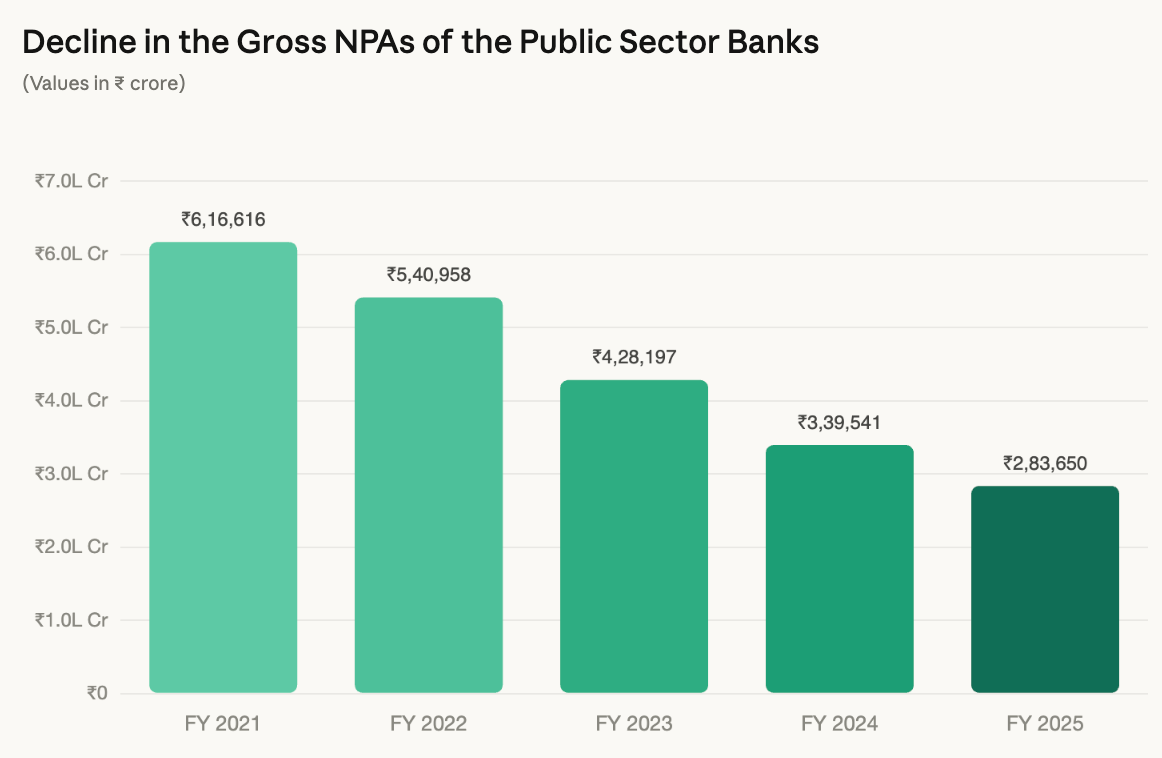
By providing an efficient exit and recovery mechanism, the IBC has significantly cleaned up the balance sheets of Indian banks, restoring the sector’s health and increasing credit availability for new businesses. Gross Non-Performing Assets (GNPAs) reached a multi-decadal low of 2.15% by September 2025. The Code has become a primary driver of financial stability, accounting for 48.1% of all bank recoveries in the 2023–24 period by contributing ₹46,340 crore out of a total recovery of ₹ 96,325 crore.
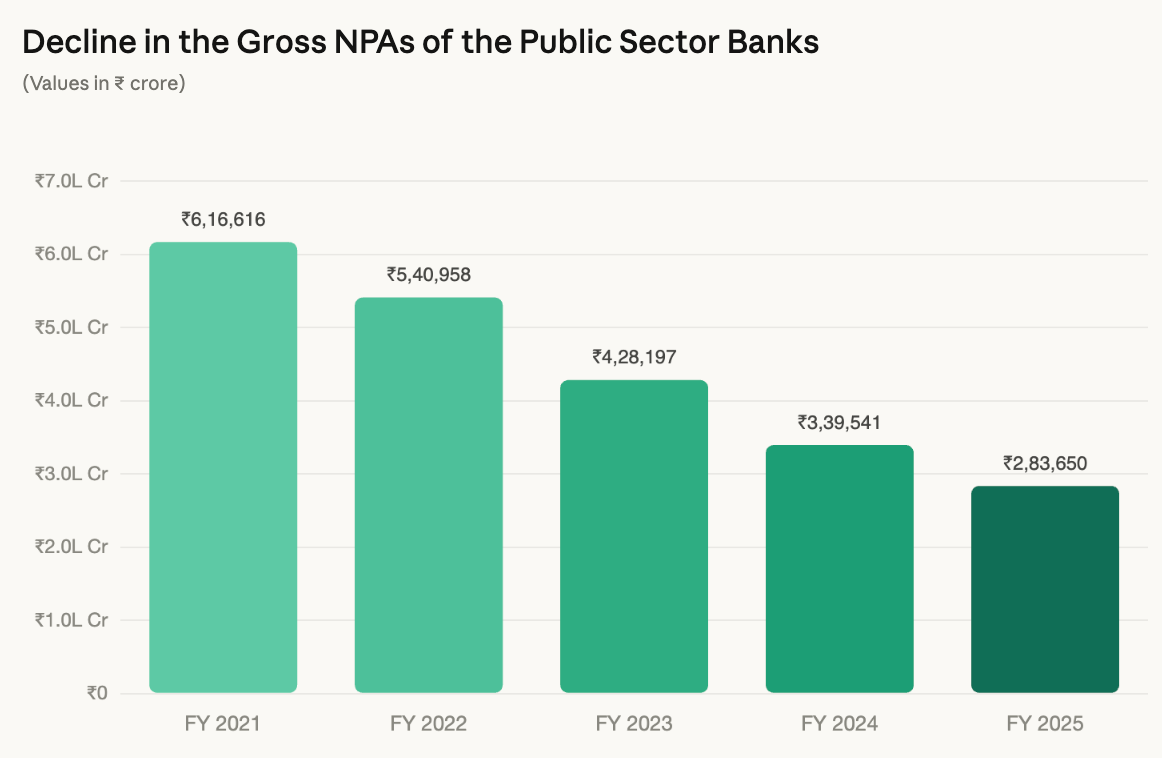
Image 3: Reduction in the Gross NPAs in the last 5 years
Consolidation of Labour Codes
The consolidation of 29 central labor laws into four codes has streamlined operations by cutting factory approval timelines from 90 to 30 days. Efficiency is further boosted by a single national tripartite board, electronic registrations, and 5-year all-India licenses with deemed approvals, replacing a fragmented and slow-moving bureaucratic system.
Operational flexibility has increased as the threshold for layoffs and standing orders rose to 300 workers. Furthermore, the shift from criminal to civil penalties, graded fines, and a mandatory 30-day compliance notice period ensures a more supportive, less litigious environment for businesses to scale.
Production Linked Incentive (PLI) Schemes
The PLI scheme offers performance-based incentives that have successfully shifted the industrial focus from simple assembly to deep-rooted manufacturing across 14 strategic sectors such as automobiles, pharmaceutical drugs etc.
This structural shift is backed by significant capital, with realized investments reaching approximately ₹ 1.76 lakh crore and 806 approved applications as of March 2025. The impact is particularly visible in high-tech industries, such as the Automobile and Auto Components sector, which alone has seen committed investments climb to ₹ 67,690 crore, signaling robust global and domestic confidence in India’s industrial ecosystem.
PLI scheme has integrated Indian businesses into global value chains and shifted the nation from import dependency to a net exporter in critical sectors. The total participant sales exceeded ₹16.5 lakh crore, a 146% production surge in electronics (reaching ₹5.25 lakh crore in FY 2024–25), and the pharmaceutical sector transitioned to a ₹2,280 crore trade surplus in bulk drugs by March 2025.
The PLI scheme creates a ripple effect where large anchor units modernise the MSME sector and decentralise industrial growth into Tier-2 and Tier-3 cities, creating a more inclusive business environment. This has generated over 12 lakh direct and indirect jobs, with specific impacts including nearly 38,500 direct jobs in Solar PV Modules as of June 2025 and over 171 approved applications to modernize smaller units in the Food Processing sector.
National Single Window System (NSWS)
The NSWS which guides in identifying and applying for approvals according to the business requirements has emerged as a key reform initiative to streamline business approvals by reducing approval timelines, securing a document repository and fast query management through a single digital gateway. It integrates approval processes across 32 Central Departments and 32 State Governments, and has access over 698 Central and 7435 State approvals. NSWS has granted over 8,29,750 approvals since its launch.
Annexure I - Summary of Bill Provisions
Annexure II - List of Acts Proposed to be Decriminalised Under the Bill
Annexure III - Chronological Overview of the Jan Vishwas Reforms
Annexure IV - Questions Asked In The Parliament
A. Lok Sabha
B. Rajya Sabha