
I. Executive Summary
West Bengal’s 2026–27 Interim Budget outlines several welfare expansions, including enhanced cash transfers and honorarium hikes. These announcements come amidst the state’s expanding welfare commitments in its already stretched fiscal capacity.
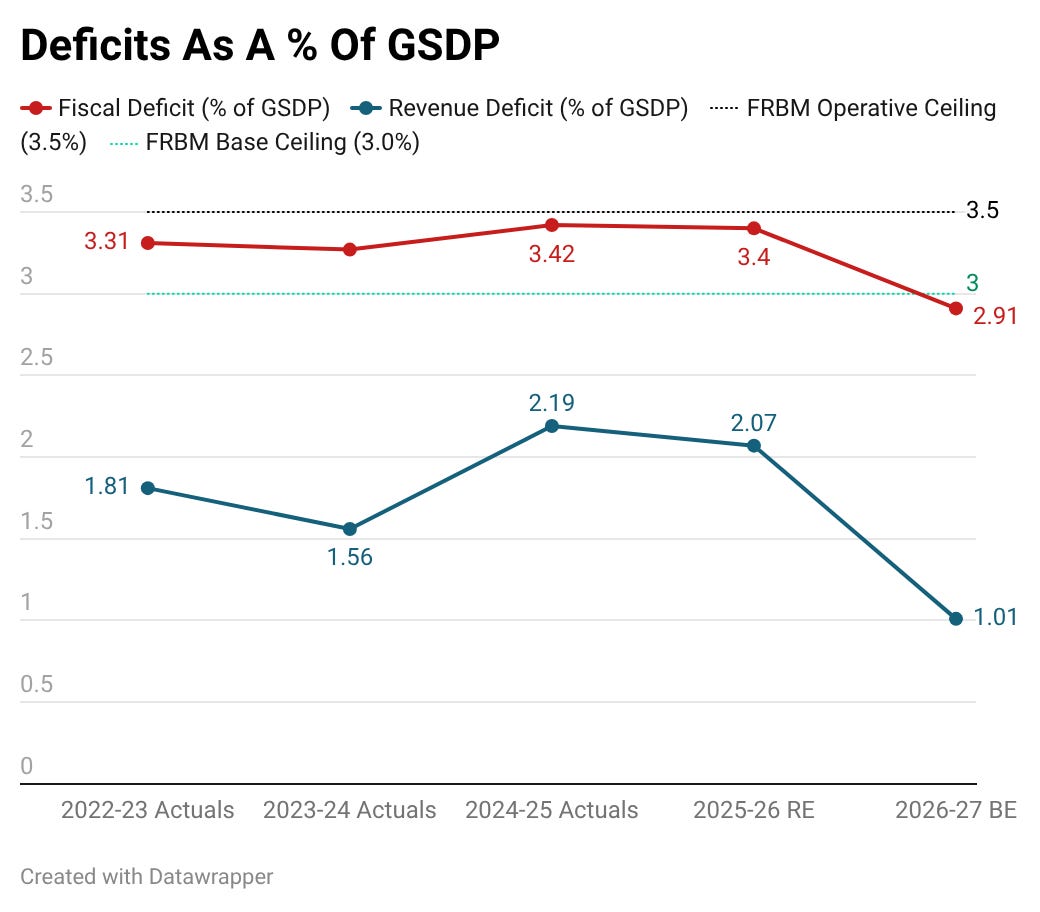
The state projects a fiscal deficit of 2.91% of GSDP, the first time since FY18 that the projection falls below the FRBM ceiling of 3%, alongside a revenue deficit of 1.01% of GSDP. While this signals an apparent improvement, it rests on a 116% jump in central grants over the 2025–26 revised estimate.
A large share of the state’s revenue is pre-committed to salaries, pensions, and interest payments, which together consume 51.17% of estimated revenue receipts in 2026–27. NITI Aayog’s Fiscal Health Index, 2026 places West Bengal third-last among 18 states evaluated.
Capital outlay remains constrained at just 1.9% of GSDP, well below the national average. West Bengal has consistently underspent its capital outlay by 20–34% in recent years. If a similar underspend recurs in 2026–27, the projected improvement in fiscal quality ratios will not materialise.
Expenditure on social services, at 7.5% of GSDP, significantly exceeds the 1.9% allocated for capital outlay. This highlights a structural trend where current consumption continues to displace productive long-term investment.
I. Introduction
The Finance Minister, Smt Chandrima Bhattacharya presented the West Bengal Interim Vote-on-Account Budget 2026-27 before the State Legislature on 5th February, 2026. This interim budget was tabled by Trinamool Congress (TMC) Government in the run up to the upcoming state assembly elections.
II. Financial Highlights :
Gross State Domestic Product (GSDP): West Bengal’s GSDP for 2026–27 (at current prices) is projected to be ₹ 21,48,244 crore, amounting to a growth of about 7.9% over the revised estimates (RE) for 2025–26 (₹ 19,90,896 crore).
Net State Domestic Product (NSDP) Per Capita: NSDP per capita of the state for 2024-25 is ₹ 1,63,467, a 9.3% growth over 2023-24 figure of ₹ 1,49,515.
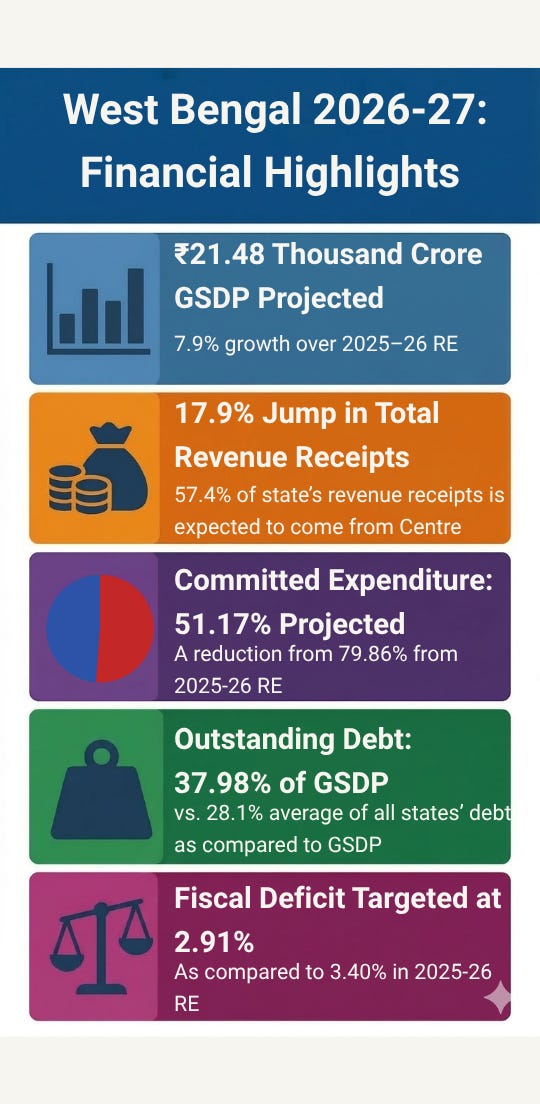
Revenue Deficit (RD): RD in 2026–27 is estimated at 1.01% of GSDP (₹ 21,759.34 crore), as compared to an RD of 2.07% of GSDP (₹ 41,164.05 crore) in 2025–26 RE.
Fiscal Deficit (FD): FD for 2026–27 is targeted at 2.91% of GSDP (₹ 62,423.36 crore) as compared to an FD of 3.40% of GSDP (₹ 67,773.98 crore) in 2025-26 RE.
Expenditure: Expenditure (excluding debt repayment and loans and advances) for West Bengal in 2026–27 is estimated to be ₹ 3,50,866.48 crore, an increase of about 12.3% over the revised estimates of 2025–26 (₹ 3,12,469.49 crore).
Receipts: Receipts (excluding borrowings) for West Bengal for 2026–27 are estimated to be ₹ 2,89,054.28 crore, an increase of about 17.9% as compared to the revised estimates of 2025–26 (₹ 2,45,123.12 crore).
III. Policy Highlights :
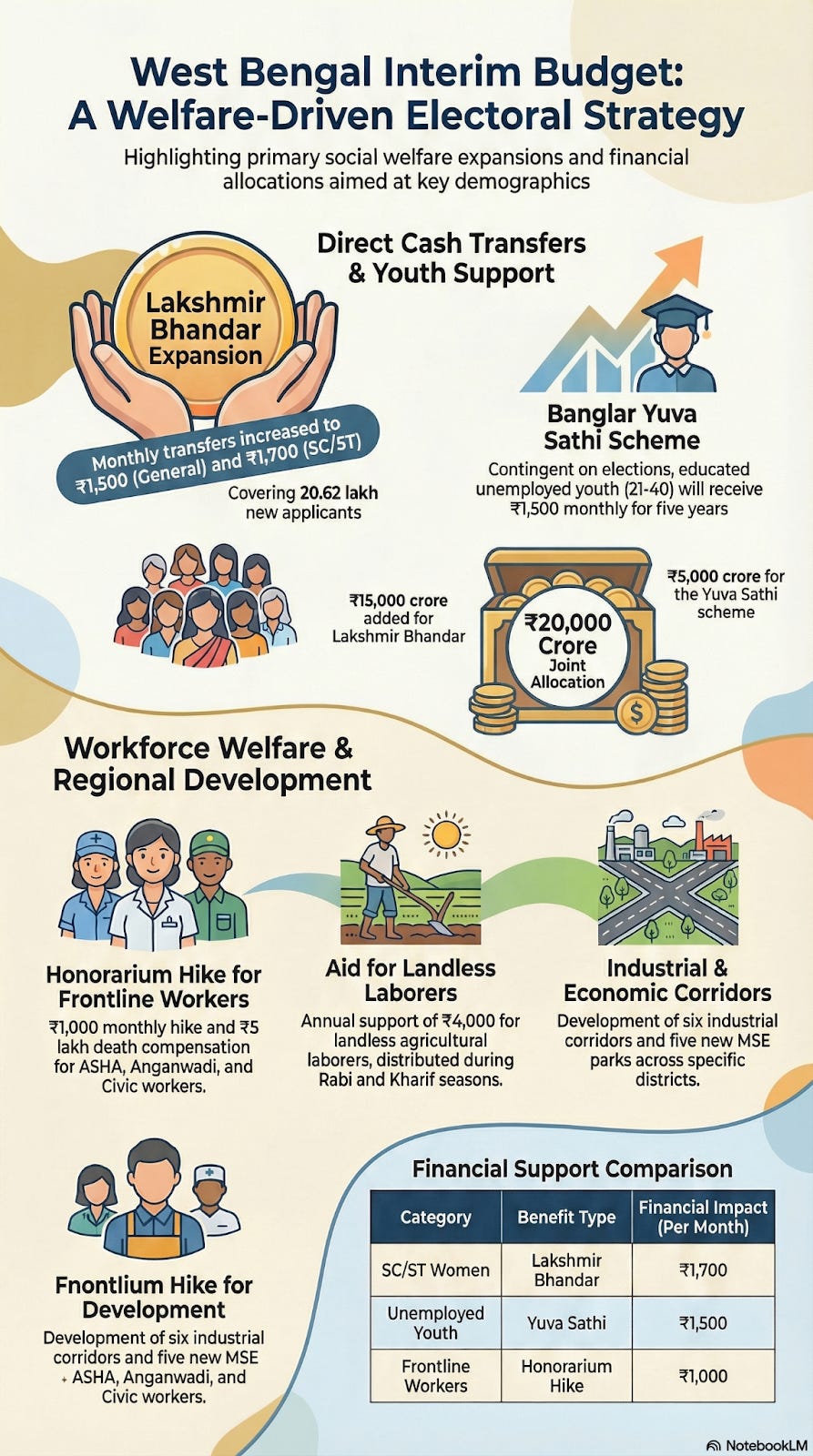
West Bengal’s interim budget is politically calibrated considering the upcoming state elections. Majority of the expenditure in the budget is welfare-driven, with significant increase in existing schemes such as Lakshmir Bhandar, Frontline and Civic Worker Welfare. It also features welfare schemes like Banglar Yuva Sathi, which is directly contingent on electoral outcomes.
Lakshmir Bhandar: The scheme provides monthly financial support to women aged 25–60 years, excluding government employees, to enhance economic security. Women from SC and ST categories will receive ₹ 1,700 per month, while others will receive ₹ 1,500 per month, an increase by ₹ 500. The scheme currently covers 2.20 crore beneficiaries, with an expenditure of ₹ 17,076.03 crore in 2025–26.
Banglar Yuba-Sathi: Contingent to election outcome, this scheme is set to be launched in August, 2026. Educated unemployed youth, who have passed Madhyamik, aged 21-40 years would be eligible for ₹ 1,500 per month until employed or for up to five years. ₹ 5,000 crore has been allocated for this scheme.
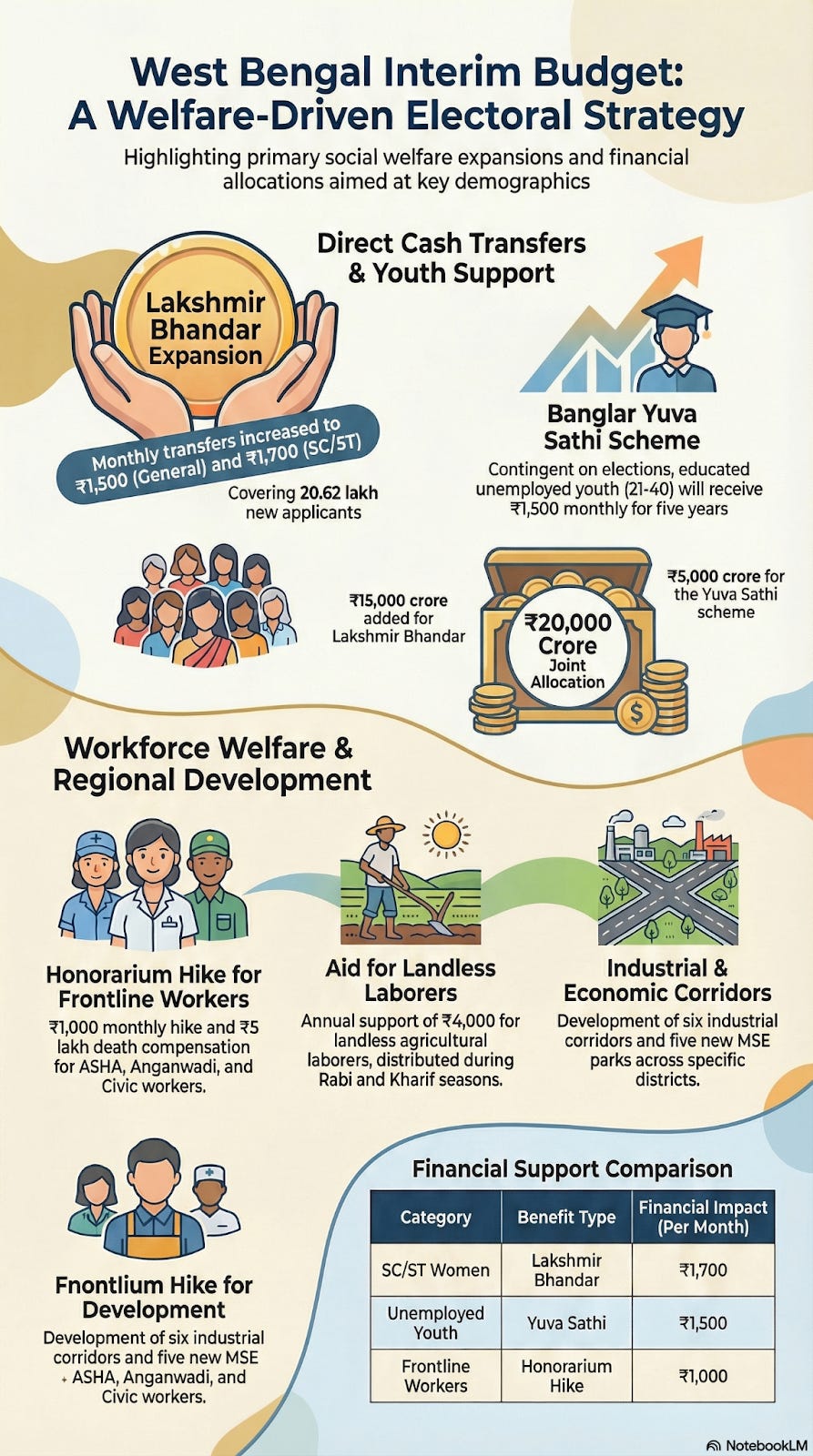
ASHA And Civic Worker Welfare: ASHA workers would receive ₹ 1,000 per month honorarium hike, 180 days maternity leave as well as ₹ 5 lakh family compensation in the event of their death before 60 years of age. Civic volunteers, which is a significant feature of the state, village police and green police are also set to receive a hike to ₹ 1,000 per month.
Landless Agricultural Labourers: Landless agricultural labourers are set to receive an annual support of ₹ 4,000 in two equal installments during Rabi and Kharif seasons to mitigate the vulnerability of these workers. A database will also be created for eligible workers who do not own any agricultural land and are not recorded as a sharecropper.
Master Plan For Preventing Erosion: In the districts of Murshidabad and Malda, along the Ganga floodplains, the Government will come up with a master plan to prevent erosion of the river banks.
Industrial And Economic Corridors And Parks: The Government has taken up the development of six Industrial and Economic Corridors in partnership with Financial Institutions. The aim is rapid infrastructure development and employment generation but no allocation has been specifically made for the same. In addition, five new MSE industrial Parks will be set up by the state in Jalpaiguri, Birbhum, Bankura and Murshidabad.
IV. West Bengal’s Economy :
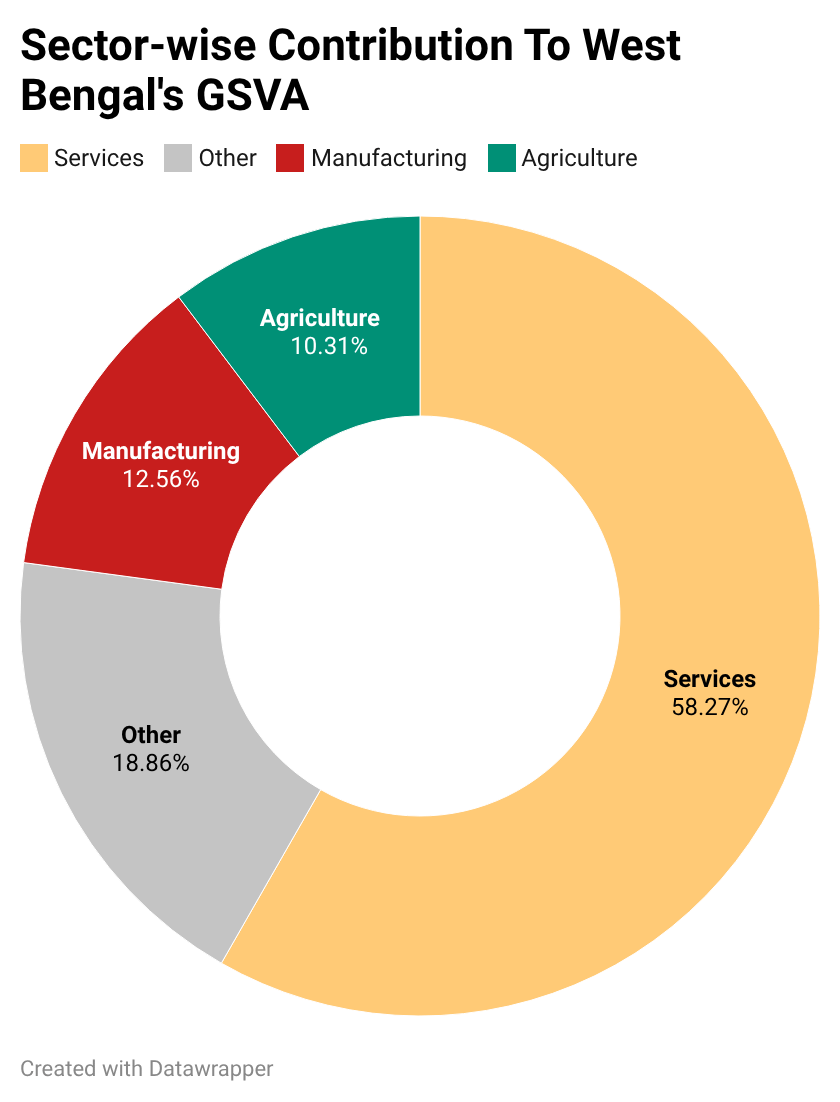
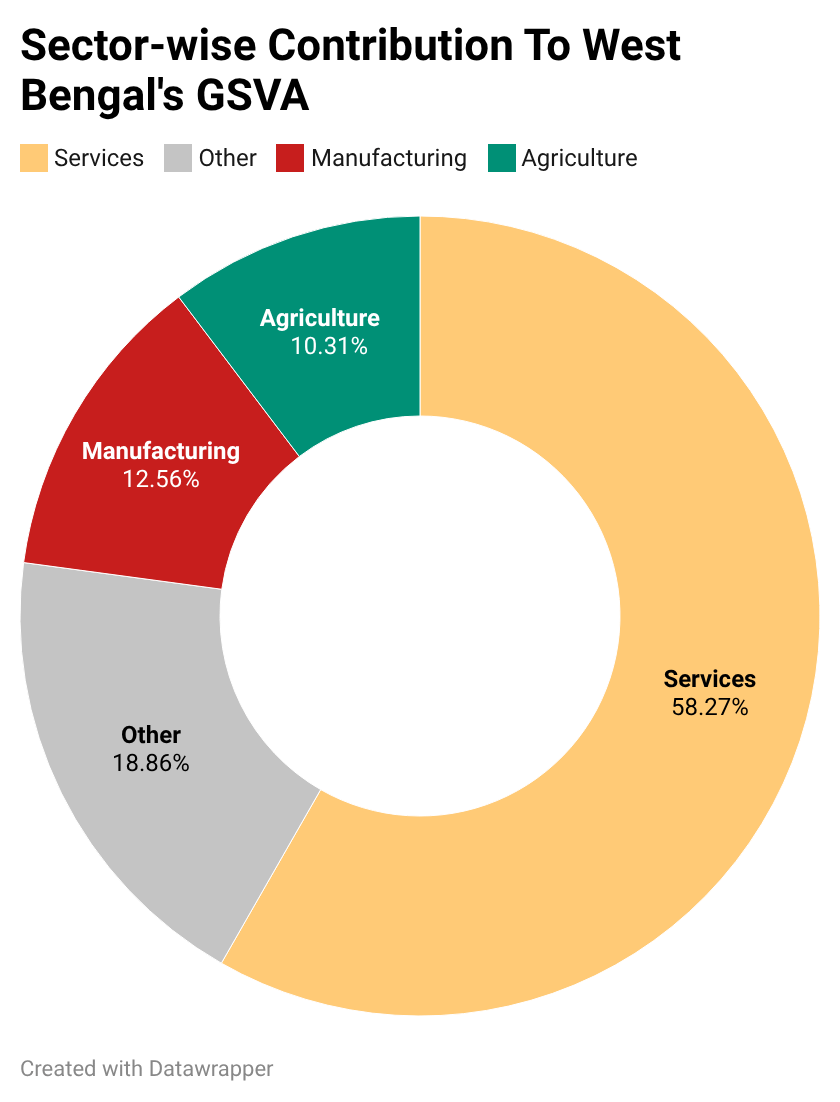
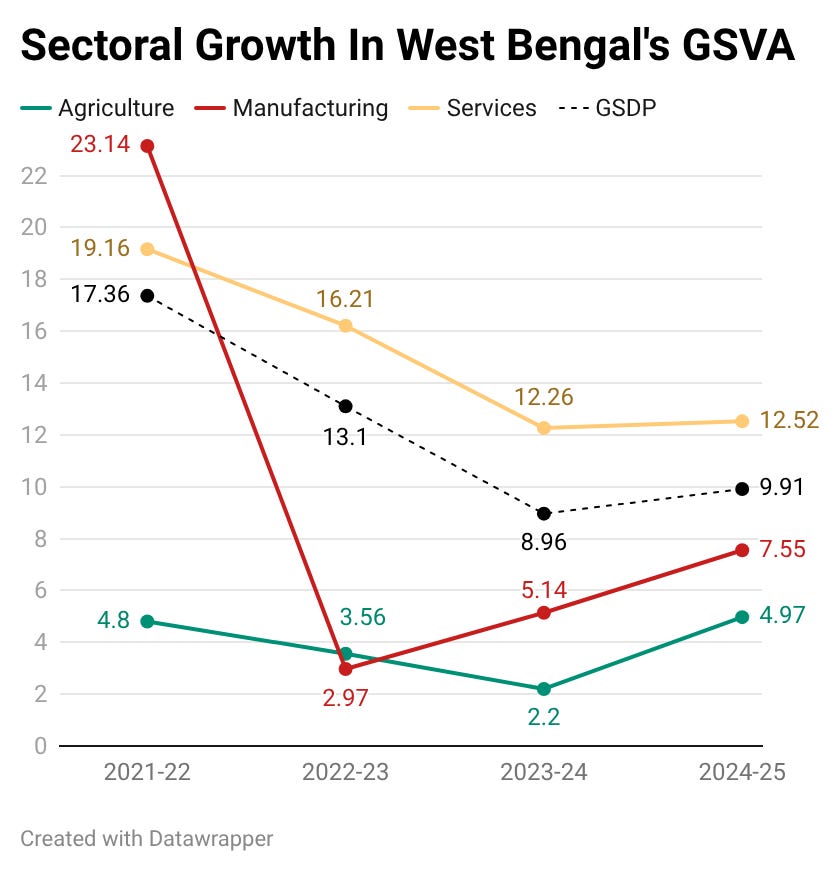
Gross State Value Addition (GSVA) Contribution Of Sectors: In 2024–25, agriculture, manufacturing, and services sectors are estimated to contribute 10.31%, 12.56%, and 58.27% of the state’s GSVA, respectively (at current prices).
V. Expenditure :
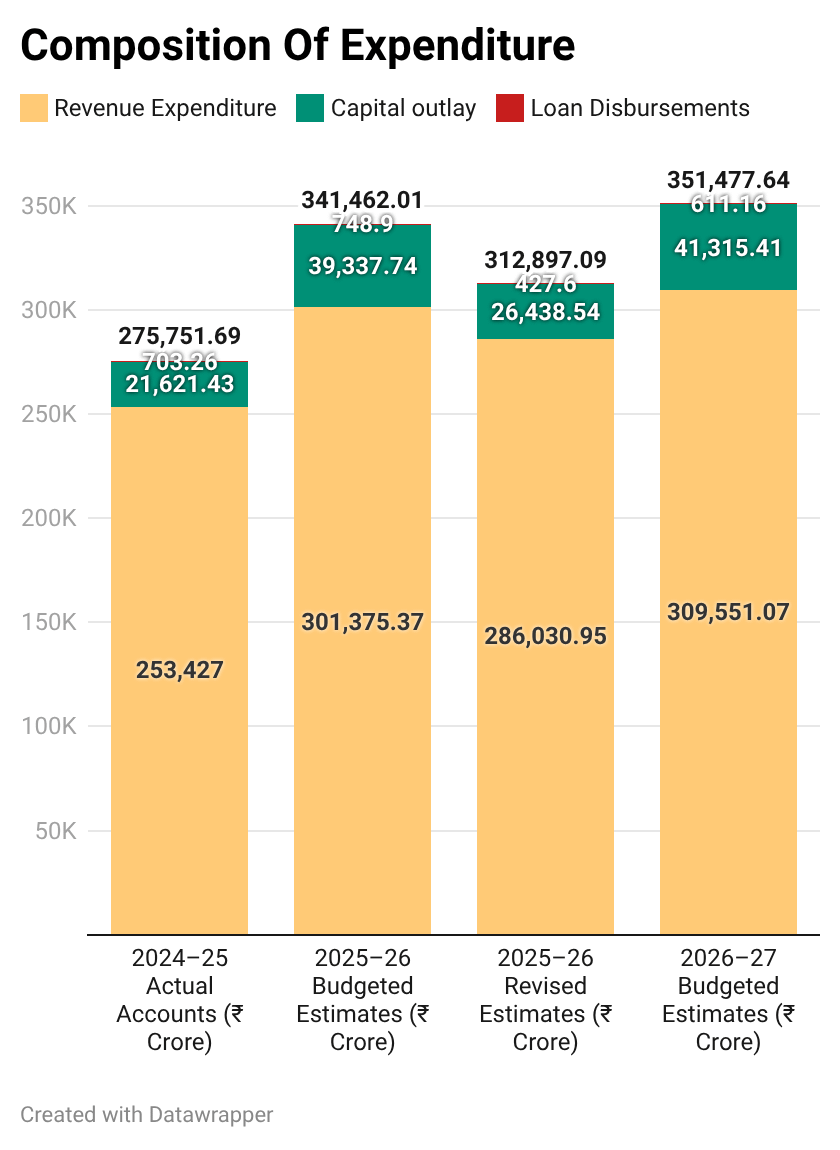
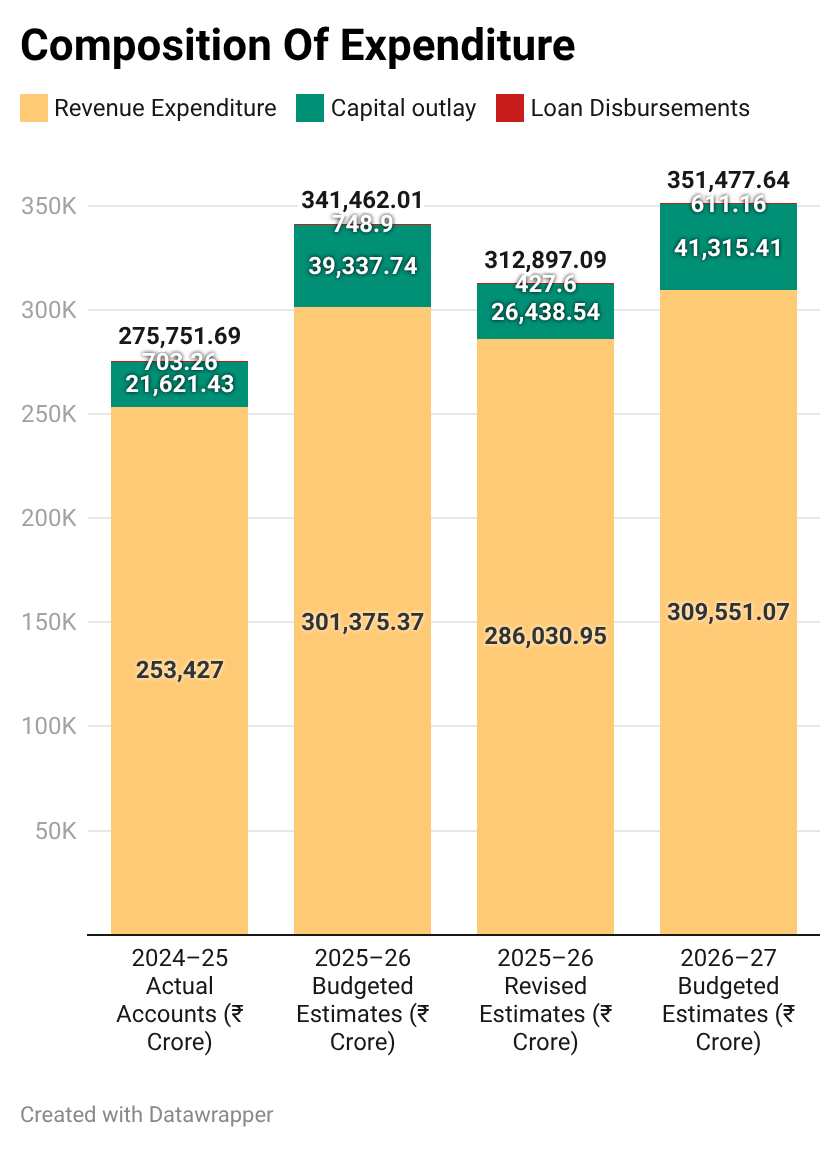
Revenue Expenditure: Revenue expenditure for West Bengal for 2026–27 is proposed to be ₹ 3,09,551.07 crore, an increase of about 8.2% over the revised estimate of 2025–26 (₹ 2,86,030.95 crore). This includes the expenditure on salaries, pension, interest, grants, and subsidies.
Committed Expenditure:
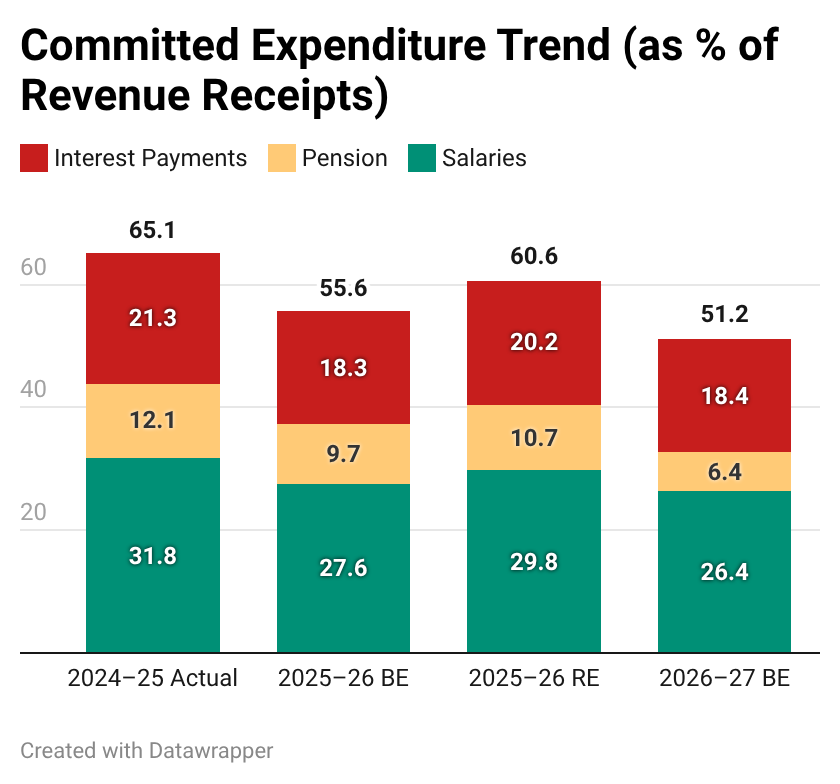
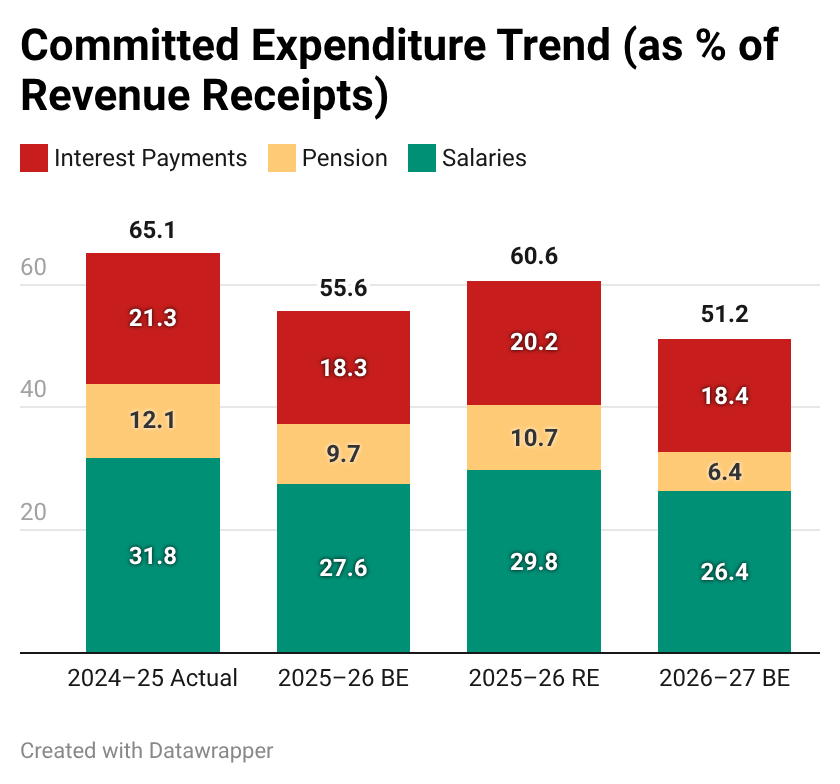
In 2026–27, West Bengal is estimated to spend ₹ 1,47,269.86 crore on committed expenditure, which is 51.17% of its estimated revenue receipts of ₹ 2,87,791.73 crore. In 2024–25, as per actual figures, 65.14% of revenue receipts were spent towards committed expenditure (₹ 1,39,201.64 crore out of revenue receipts of ₹ 2,13,699.56 crore).
This comprises spending on salaries (₹ 75,843.06 crore), pension (₹ 18,393.01 crore), and interest payments (₹ 53,033.79 crore).
Out of every rupee that comes in as revenue receipts, about 51 paise goes towards pre-committed expenditure. The biggest head is salaries but interest payments, which constitute 18.4% of revenue receipts, is above the threshold that NITI Aayog’s Fiscal Health Index (FHI) classifies as a marker of fiscal stress. In this index, West Bengal ranks the 3rd last among the 18 states considered.
Capital Outlay: Capital outlay for West Bengal for 2026–27 is proposed to be ₹ 41,315.41 crore, an increase of about 56.3% over the revised estimate of 2025–26 (₹ 26,438.54 crore).
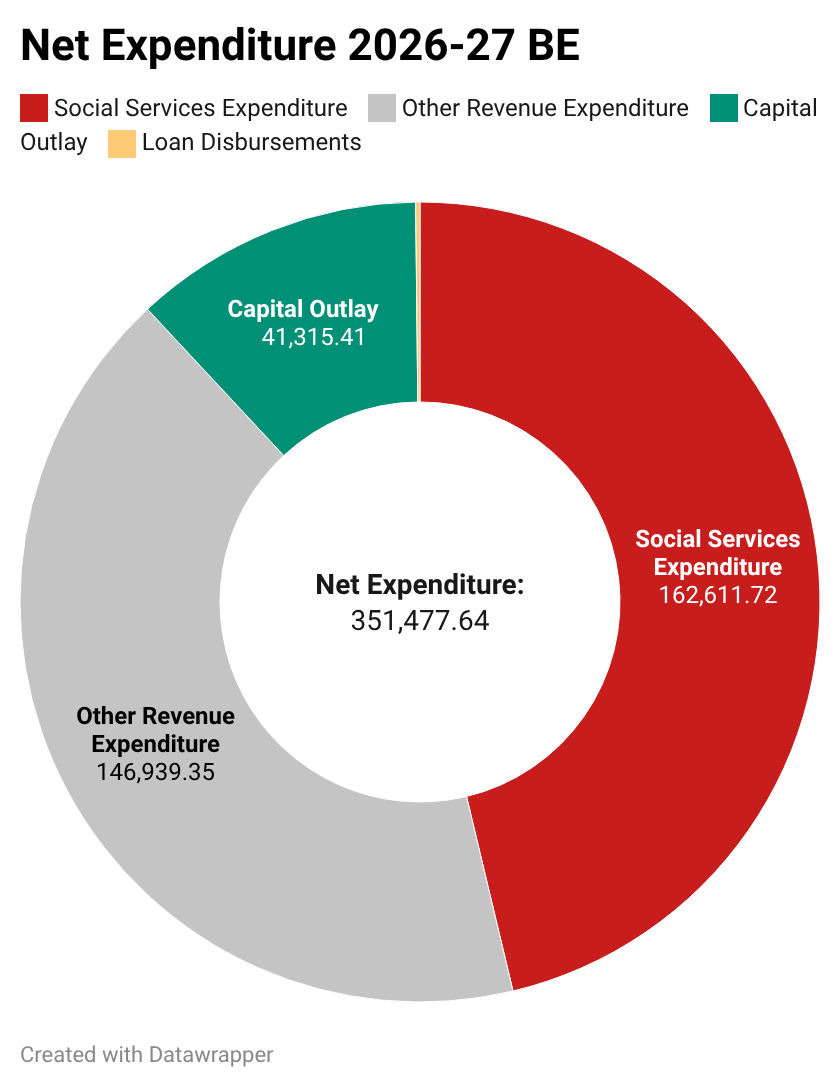
In 2026–27, capital outlay in West Bengal accounts for about 11.75% of the net expenditure (₹ 3,51,477.64 crore) and around 1.9% of the GSDP (₹ 21,48,000 crore). This is lower than the national average capital outlay of about 3.0% of GSDP in the 2025–26 Budget Estimates.
Compared to previous years, the proposed outlay reflects a significant step-up in capital spending. Capital outlay was ₹ 21,621.43 crore in 2024–25 (actuals) and ₹ 28,963.09 crore in 2023–24, indicating some fluctuation over the last two years, with a sharper rise proposed in 2026–27.
West Bengal has consistently undershot its capital outlay 20%-34% from FY 2022-23 to FY 2025-26 (RE). If 2026-27 capital outlay suffers a 30% underspend, which is closer to the 2025-26 outcome, it would leave actual outlay at about ₹ 28,920 crore, barely above the 2025-26 revised level. Under these circumstances, the improvement in the state’s fiscal quality ratios will not materialise.
Loans and Advances: In 2026–27, loans and advances by West Bengal are expected to be ₹ 611.16 crore, about 43% higher as compared to the revised estimate of 2025–26 (₹ 427.60 crore).
VI. Revenue Receipts :
Total Revenue Receipts: Total revenue receipts for West Bengal for 2026–27 are estimated to be ₹ 2,87,791.73 crore, an increase of about 17.5% over the revised estimate of 2025–26 (₹ 2,44,866.90 crore). Of this, ₹ 1,22,507.70 crore (about 42.6%) will be raised by the state through its own resources, and ₹ 1,65,284.03 crore (about 57.4%) will come from the centre. Resources from the centre are the state’s share in central taxes (about 40.9% of revenue receipts) and grants-in-aid (about 16.5% of revenue receipts).
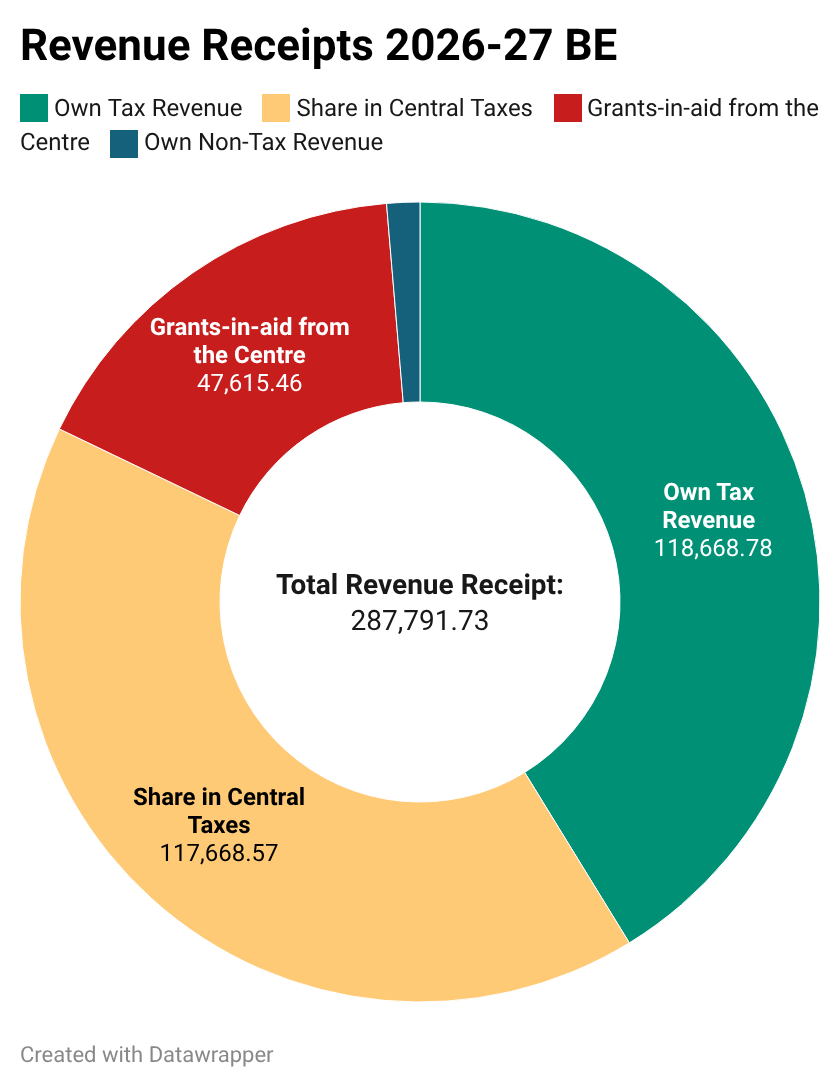
16th Finance Commission: In 2026–27, State’s share in central taxes is estimated at ₹ 1,17,668.57 crore, an increase of about 9.7% over the revised estimate of 2025–26 (₹ 1,07,265.82 crore). This moderate increase indicates a steady growth in tax devolution from the centre, which will support the state’s revenue base and help finance expenditure commitments and welfare programmes.
Central Grants
Grants from the centre in 2026–27 are estimated at ₹ 47,615.46 crore, an increase of about 116% over the revised estimates for 2025–26 (₹ 22,068.85 crore) which is, 28% higher than the budget estimate of ₹ 37,157.57 crore. The 2024–25 actual grants from the centre (₹ 15,205.17 crore) represent a decline of about 31% compared to ₹ 22,072.18 crore in 2023–24.
The projected jump in 2026–27 therefore represents a substantial increase over the recent trend of central grants and suggests expectations of higher transfers from the centre, potentially linked to scheme-based allocations or other grant components.
Central transfers (devolution and grants) constitute 57.43% of the state’s revenue receipts in 2026-27 BE, compared to own resources at 42.57%. This high central dependency is flagged by both, the NITI Aayog and the RBI, which shows the state’s transfer-dependency ratio has been consistently above the major-state average.
State’s Own Tax Revenue: West Bengal’s total own tax revenue is estimated to be ₹ 1,18,668.78 crore in 2026–27, an increase of about 6% over the revised estimate of 2025–26 (₹ 1,11,737.13 crore). Own tax revenue as a percentage of GSDP is estimated at about 5.5% in 2026–27.
VII. Deficits and Debt :
A significant improvement in RD and FD has been noted in the FY 2026-27 BE, which owes to a significant improvement in central grants (115.75% over FY 2025-26 RE). Such dependency, in the light of previous shortfalls between the budgeted and actual grants, would lead to a similar deficit as in the previous years.
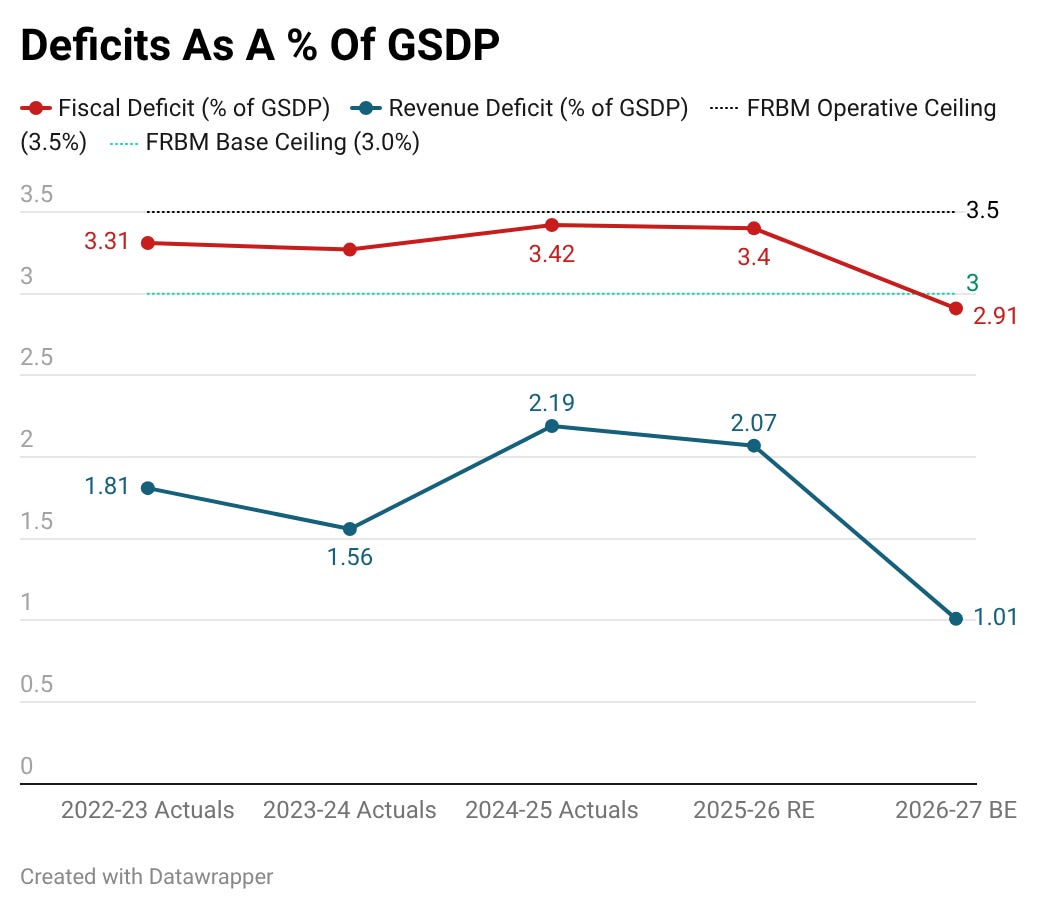
Revenue Deficit: Revenue Deficit in 2026–27 is estimated to be 1.01% of GSDP (₹ 21,759.34 crore), as compared to a revenue deficit of 2.07% of GSDP (₹ 41,164.05 crore) at the revised estimate stage in 2025–26.
The state has recorded persistent revenue deficits in recent years, with the revenue deficit at 1.81% of GSDP in 2022–23 (actuals), declining to 1.56% in 2023–24, and further rising to about 2.19% in 2024–25 (actuals). This trend indicates a fluctuating but overall elevated level of revenue deficit, reflecting pressures on the state’s revenue account.
West Bengal’s revenue deficit levels are also significantly higher than the aggregate state average of about 0.2% of GDP, as reported in the RBI State Finances, suggesting that the state’s fiscal position on the revenue account remains comparatively weaker than that of most states.
Fiscal Deficit (FD): Fiscal Deficit for West Bengal for 2026–27 is targeted at 2.91% of GSDP (₹ 62,423.36 crore). In 2025–26, as per the revised estimates, the fiscal deficit is expected to be 3.40% of GSDP (₹ 67,773.98 crore).
Under the West Bengal Fiscal Responsibility and Budget Management (FRBM) Act, 2010, the fiscal deficit ceiling remains 3% of GSDP. However, the 2025–26 budget estimate places the fiscal deficit at 3.68% of GSDP, implying a breach of the ceiling by 68 basis points.
This BE is the first time since FY18 where projection is less than target FD of 3%.
Outstanding Debt:
The outstanding debt of West Bengal in 2026–27 is projected at ₹ 8,15,891.35 crore, equivalent to 37.98% of GSDP, which is slightly higher than the revised estimate of 37.52% of GSDP (₹ 7,62,326.61 crore) in 2025–26.
This raises concerns around debt sustainability, as NITI Aayog’s FHI shows that debt has remained above median-state levels and that the state’s revenue structure is weaker than average, constraining fiscal flexibility.
VIII. Social Services Expenditure :
Social Services’ Expenditure (₹ 1,62,611.72 crore) is the most significant head under Revenue Expenditure (₹ 3,09,551.07), with a 52.53% share. It is 46.26% of the Net Expenditure (7.5% of GSDP), while capital outlay is just 11.75% (1.9% of GSDP).
This marks a 10.18% increase over FY 2025–26 RE, reflecting a welfare-heavy, election-oriented budget that prioritises direct transfers over capital investment. In 2024–25, actual capital outlay fell 39.72% below BE, while revenue expenditure declined only 5.51%, showing that investment bore the adjustment burden.
Direct benefit transfers alone impose a substantial and growing burden on the revenue account. The enhanced Lakshmir Bhandar scheme adds ₹ 15,000 crore per annum, while the Banglar Yuva Sathi scheme carries a ₹ 5,000 crore allocation, placing a combined ₹ 20,000 crore joint commitment on current revenues in a single year.
This continued focus on current spending over capital investment limits long-term growth and weakens the state’s ability to build a strong tax base to sustain rising welfare spending.
Annexure I - Overview Of West Bengal’s Receipts And Expenditure For 2024-25
Annexure II - Break-up Of The State’s Expenditure Budget Over The Years
Annexure III - State’s Committed Expenditure Trend As % Of Revenue Receipts
Annexure IV - Break-up Of The State Government’s Receipts Over The Years
Annexure V - Major Heads Of Sources For State’s Tax Revenue