
Key Takeaways:
The Uniform Civil Code, Assam Bill, 2026 creates a religion-neutral framework for family law, making Assam the first North-Eastern and fourth Indian State to enact a UCC.
The Bill makes registration of marriages, divorces and decrees of nullity mandatory, transforming registration into a central governance and civil record-keeping mechanism.
The Bill represents a significant step towards aligning family law with contemporary social realities while safeguarding the rights of partners and children born from live-in relationships.
The Bill goes a step above the existing personal laws which prohibit polygamy, by making monogamy a universal statutory condition of a valid marriage, requiring disclosure of existing polygamous marriages and prohibiting remarriage if the existing spouse is alive.
The Bill introduces a uniform hierarchy of heirs for intestate succession, while preserving religious and customary marriage ceremonies
It exempts Scheduled Tribes under Articles 342 and 366(25), safeguarding tribal customary laws and Sixth Schedule protections.
Being repugnant to certain Central enactments on the Concurrent List, the Bill is reserved for the assent of the President under Article 254(2).
I. Introduction
The Uniform Civil Code, Assam, 2026, anchored in Article 44 of the Constitution, codifies a single body of civil law for all communities of the State, except Scheduled Tribes. It aims to replace the fragmented and often discriminatory personal laws that have governed marriage, divorce and succession since Independence. For over seven decades Article 44 remained a dead letter, and the Bill now translates that constitutional aspiration into binding statute, fulfilling a long-standing commitment of the State Government.
The Bill gives legislative effect to several longstanding judicial observations and directions advocating the implementation of a Uniform Civil Code under Article 44 of the Constitution such as in the case of Sarla Mudgal and Shah Bano.
The Bill builds upon a deliberate sequence of reform. It expressly repeals the Assam Compulsory Registration of Muslim Marriages and Divorces Act, 2024 and subsumes the Assam Prohibition of Polygamy Act, 2025. It was vetted by the Legislative Department on 12th May 2026, approved by the Cabinet on 13th May 2026, and passed by the Assembly by voice vote on 27th May 2026 after about five hours of debate.
This Legislative Brief presents an overview of the Bill covering its provisions on the UCC framework, conditions for marriage, recognition of ceremonies, prohibition of polygamy, registration, divorce, maintenance, succession, live-in relationships and the constitutional exemption for Scheduled Tribes, together with the sectoral record of reform and the relevant judicial observations on Article 44.
II. Details of the Bill and Key Provisions
A Single, Community-Neutral Civil Framework: The Bill replaces the patchwork of religion specific personal laws with one uniform code applicable to all residents of Assam, except Scheduled Tribes. Further, it also applies to residents of Assam residing outside the State. By securing the same rights and obligations in marriage, divorce and succession irrespective of faith, it advances the constitutional goals of equality before the law and national integration, while removing the discriminatory distinctions that fragmented personal-law regimes had perpetuated.
Constitutional Exemption for Scheduled Tribes: Clause 2 excludes all members of Scheduled Tribes from the Code, an exemption anchored in Article 366(25) read with Article 342 and the Sixth Schedule. It safeguards the customary-law jurisdiction conferred on the autonomous councils of the Bodoland Territorial Region, Karbi Anglong and Dima Hasao, which vests legislative competence over inheritance, marriage and divorce, and social customs in those councils.
Conditions for a Valid Marriage: Clause 4 fixes the minimum age of marriage at 21 years for men and 18 years for women. It requires that neither party has a living spouse, mandates free consent untainted by force, coercion, deception or fraud, and bars marriage within the prohibited degrees unless a recognised custom permits it and is not against public policy or morality.
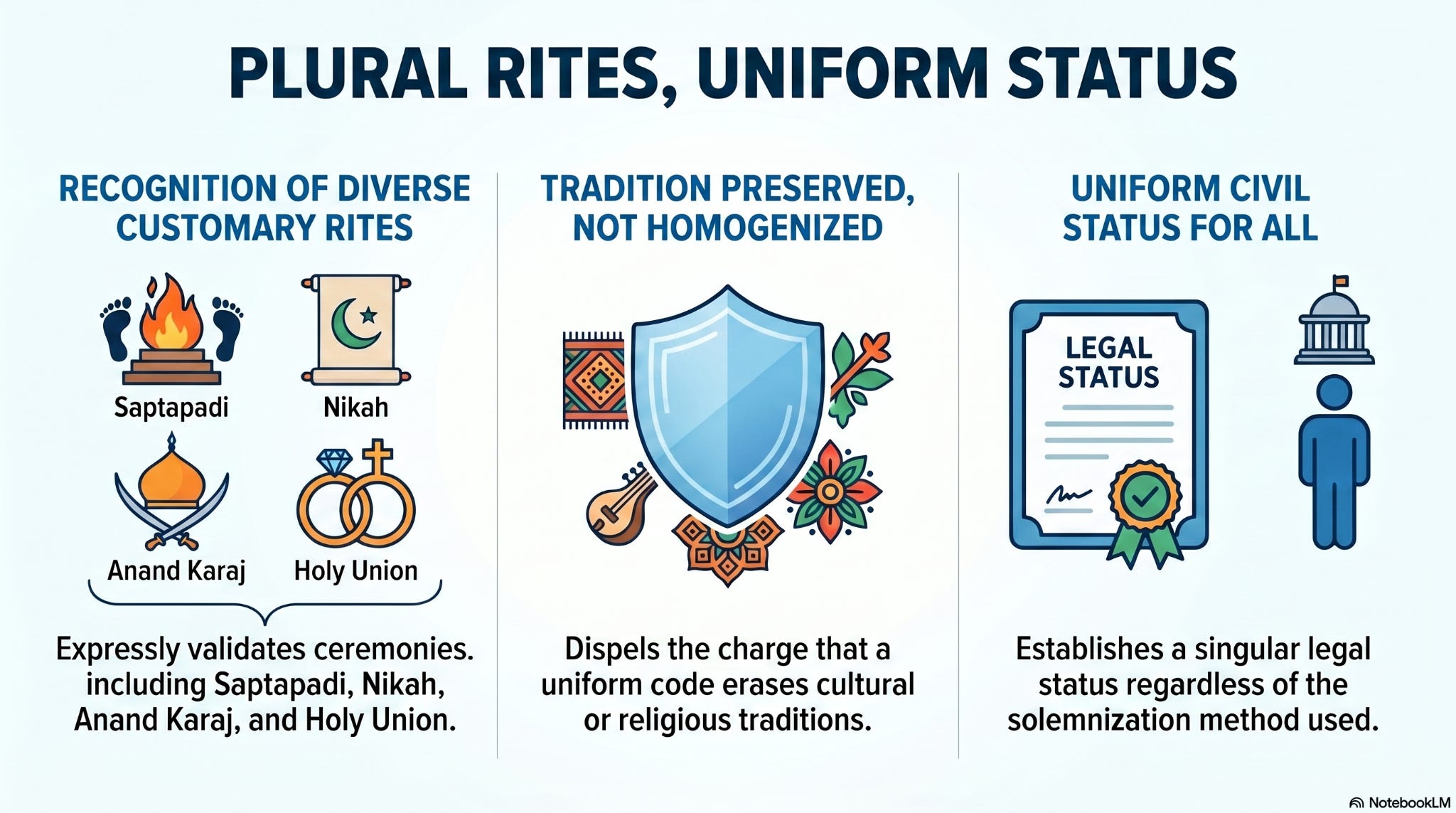
Preservation of Religious and Customary Ceremonies: Far from homogenising culture, Clause 5 expressly recognises that a marriage may be solemnised according to the religious beliefs and customary rites of every community, including Saptapadi, Ashirvad, Nikah, Holy Union, Vedic Bibah, Ahom Chaklong Bibah, Brahma (Bhagabati) Bibah and Anand Karaj. The governing principle is one of plural ceremonies within a uniform civil status, dispelling the charge that a Uniform Civil Code erases tradition.
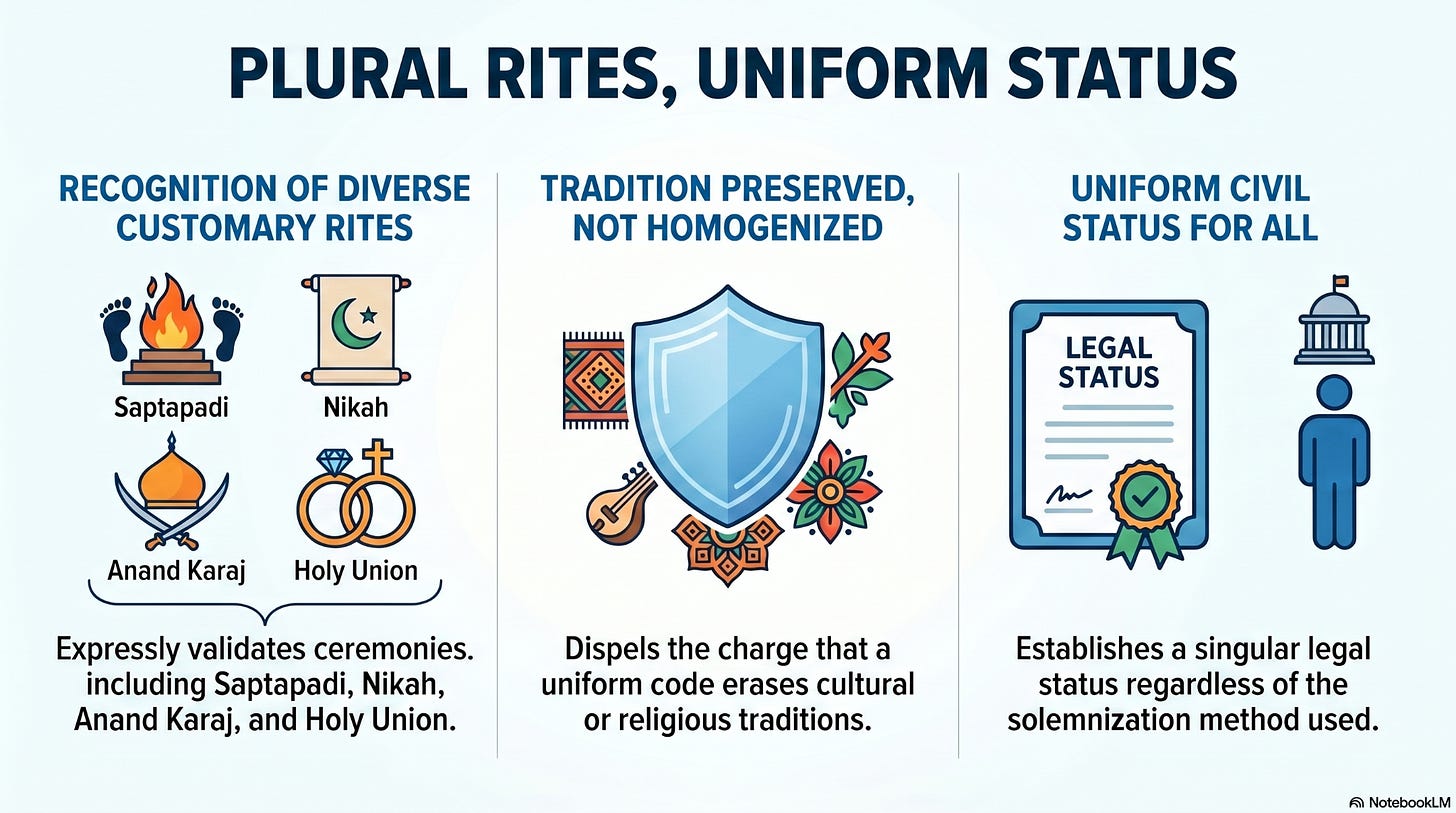
Image 1: Plural Ceremony but Uniform Civil Status Prohibition of Polygamy: The Bill makes monogamy a statutory condition of valid marriage and bars any person with a living spouse from marrying again. The significance of the Bill lies not in outlawing polygamy for the first time, but in extending the principle of monogamy uniformly across communities. All pre-commencement polygamous marriages must be disclosed and registered within the prescribed window under Clause 7(3), bringing previously concealed unions on to the civil record. The criminal consequences of bigamy continue to apply under the Bharatiya Nyaya Sanhita, 2023, with imprisonment of up to seven years for a second marriage during the subsistence of the first and up to ten years where the previous marriage is concealed, alongside independent liability for officiants and abettors.
Compulsory Registration of Marriages: Clause 6 makes registration of marriages solemnised after commencement compulsory where at least one party is a resident of the State, subject to the conditions of Clauses 4 and 5. The framework brings every marriage on record, curbs underage and clandestine marriages, and enables access to government welfare schemes.
The Registration Window: Clause 7 creates a six-month retrospective registration window for marriages solemnised on or after 25th October, 2024, the date on which the predecessor Muslim marriage registration regime commenced, and compels disclosure of pre-commencement polygamous marriages. The provision formalises an earlier reform pathway without disturbing settled marriages.
Codified Grounds and Procedure for Divorce: Clauses 31 to 33 lay down uniform grounds for divorce and provide for divorce by mutual consent, with a one-year separation requirement, a six-month cooling-off period and an 18 months outer limit, subject to judicial waiver in cases of exceptional hardship, broadly aligning with the settled position of the Supreme Court.
A Broad, Community-Neutral Right to Maintenance: Chapter 5 defines maintenance expansively to include food, clothing, residence, education, medical attendance and special-needs care. This ensures securing the dignity of dependents across all communities and codifying, in neutral terms, the principle that flows from judicial precedents such as Shah Bano and Daniel Latifi.
Uniform Codification of Succession: Part 2 provides a near-complete codification of intestate and testamentary succession, wills, codicils, probate and letters of administration, modelled closely on the Indian Succession Act, 1925 and applied uniformly to all communities except Scheduled Tribes. It guarantees equal succession rights to daughters and widows. The District Judge of the concerned district, or any other judicial officers appointed by the High Court, shall act as the probate authority.
Recognition and Regulation of Live-in Relationships: Part 3 requires a statement of a live-in relationship to be submitted to the Sub-Registrar, confers legitimacy on children of such relationships, and provides maintenance for a deserted female partner. Penalties attach to false statements and to failure to submit a statement on notice.
Repeal, Rule-making and Removal of Difficulties: Part 4 expressly repeals the Assam Compulsory Registration of Muslim Marriages and Divorces Act, 2024 with savings and empowers the State Government to frame rules, including for electronic and portal-based registration and linkage to welfare schemes. Further, it also confers a time-bound power to remove difficulties within two years of commencement.
III. Analysis of the Bill's Transformative Features
Decisive Reform Trajectory in Assam: The Bill is the culmination of a sustained reform agenda. The State repealed the colonial-era Assam (Moslem) Marriages and Divorces Registration Act, 1935, enacted the Assam Compulsory Registration of Muslim Marriages and Divorces Act, 2024, which dissolved the positions of 94 Muslim Marriage Registrars (qazis), and passed the Assam Prohibition of Polygamy Act, 2025. The Uniform Civil Code now harmonises these measures within a single community-neutral architecture.
Codifying Evolving Judicial Principles around status of live-in relationships: One of the Bill’s most progressive features is its formal recognition of live-in relationships as a legally recognisable family arrangement. By defining, regulating and providing for the registration of live-in relationships, the Bill moves such relationships from the realm of social ambiguity into a recognised legal framework. This approach is broadly consistent with the jurisprudence of the Supreme Court and various High Courts, which have repeatedly acknowledged that relationships in the nature of marriage deserve legal protection, particularly in matters of maintenance, legitimacy of children and social welfare benefits. Judicial decisions such as Chanmuniya v. Virendra Kumar Singh Kushwaha. The Bill represents a significant step towards aligning family law with contemporary social realities while safeguarding the rights of partners and children born from such unions.
Protecting Indigenous Traditions and Autonomy: A particularly significant feature of the Bill in Assam’s context is its express exemption for Scheduled Tribes. By preserving the applicability of tribal customary laws and traditional institutions, the Bill acknowledges the State’s unique ethnic and cultural diversity while respecting constitutional protections accorded to tribal communities. The exemption ensures that the pursuit of a uniform civil framework does not come at the expense of indigenous identities. The exemption is rooted in the constitutional framework that safeguards the distinct identity, customs and self-governance traditions of Scheduled Tribes. This is primarily on account of the fact that tribal communities have continued to be governed by well-established self-regulated customary norms and social institutions. The exemption therefore acknowledges that these communities already possess functional customary governance systems.
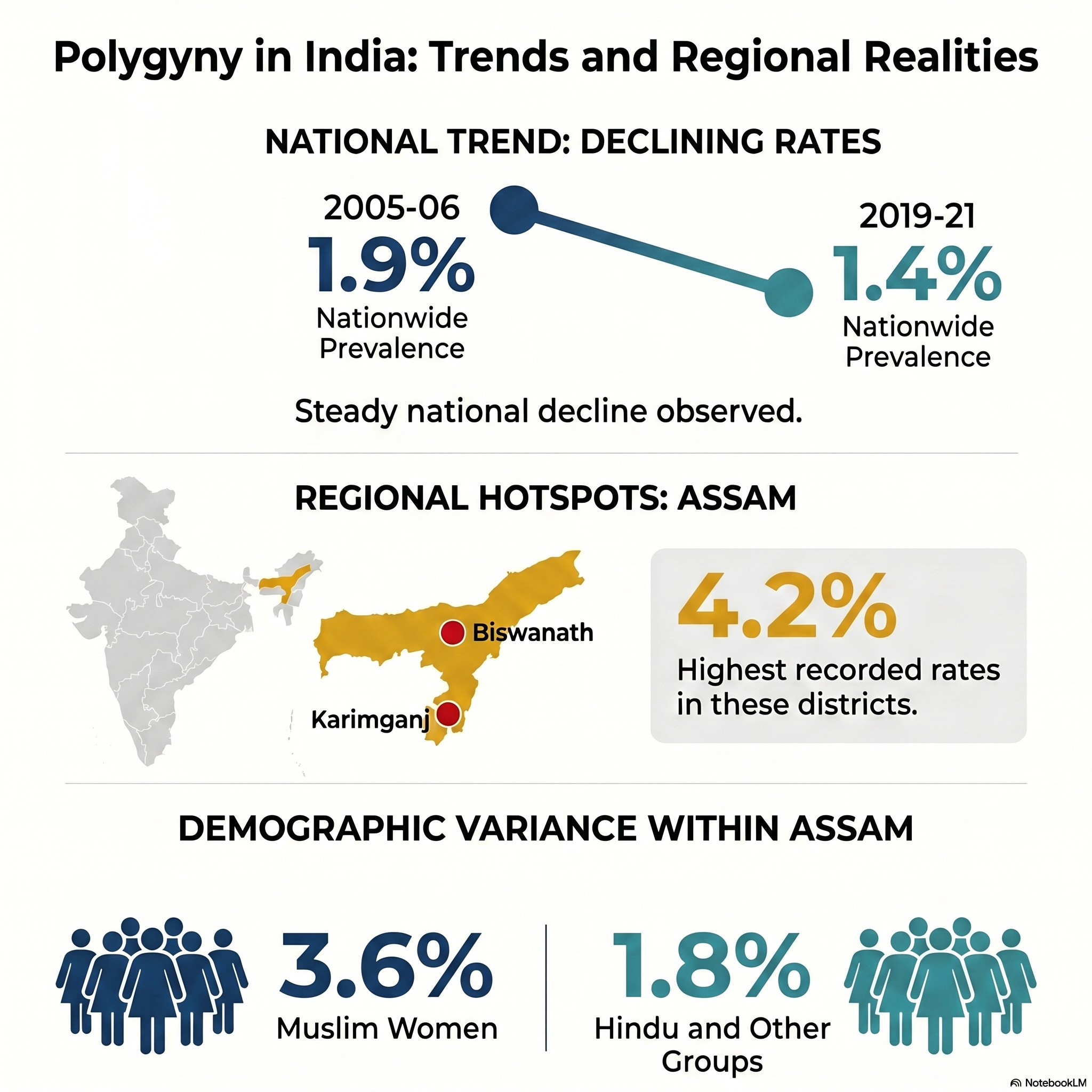
An Evidence-Based Case Against Polygamy: National prevalence of polygyny declined from 1.9% in NFHS-3 (2005-06) to 1.4% in NFHS-5 (2019-21). Within Assam, 3.6% of Muslim women, 1.8% of Hindu women and 1.8% of other women reported a polygamous marriage, with Biswanath and Karimganj districts recording 4.2%, among the highest in India. The data establish a clear policy basis for the statutory bar.
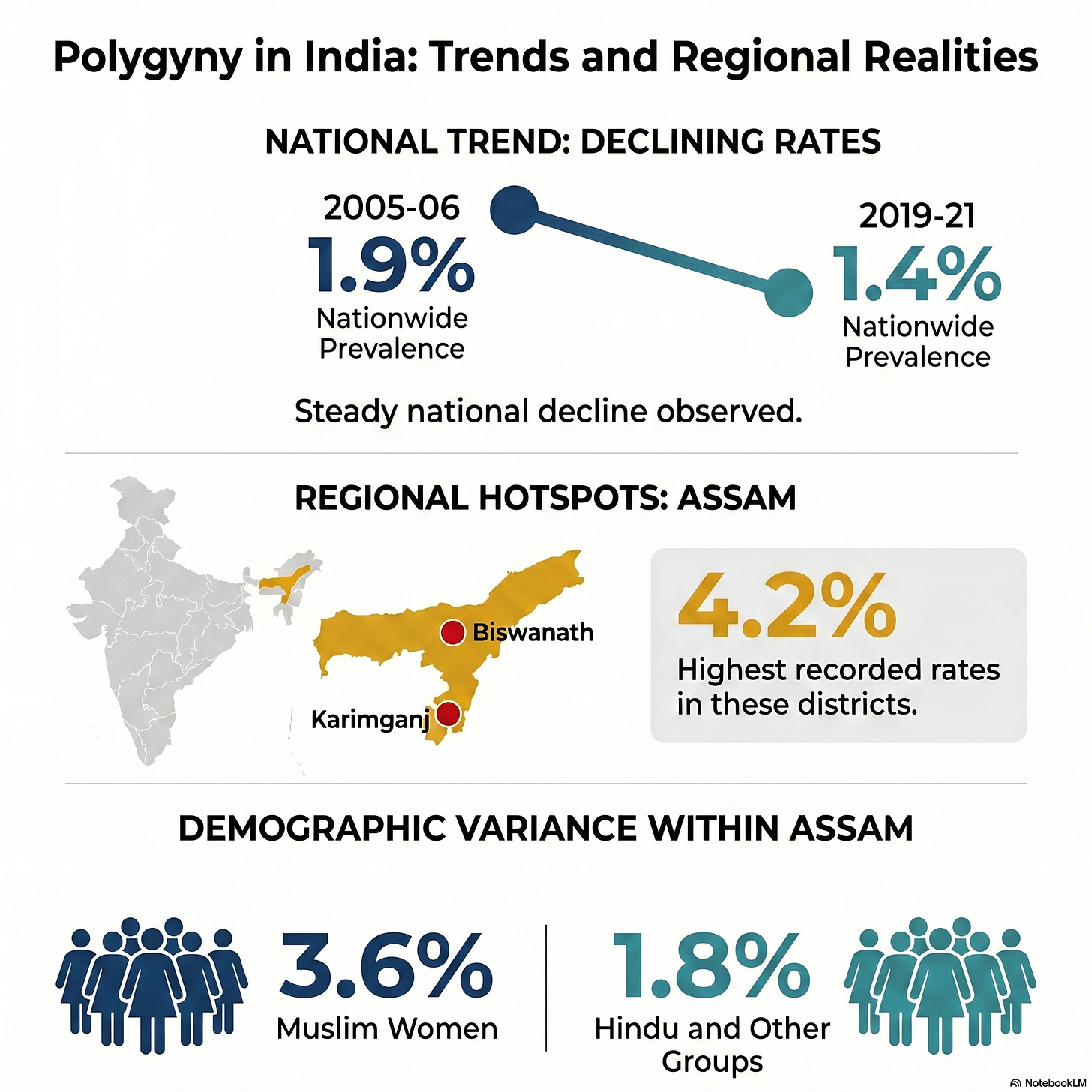
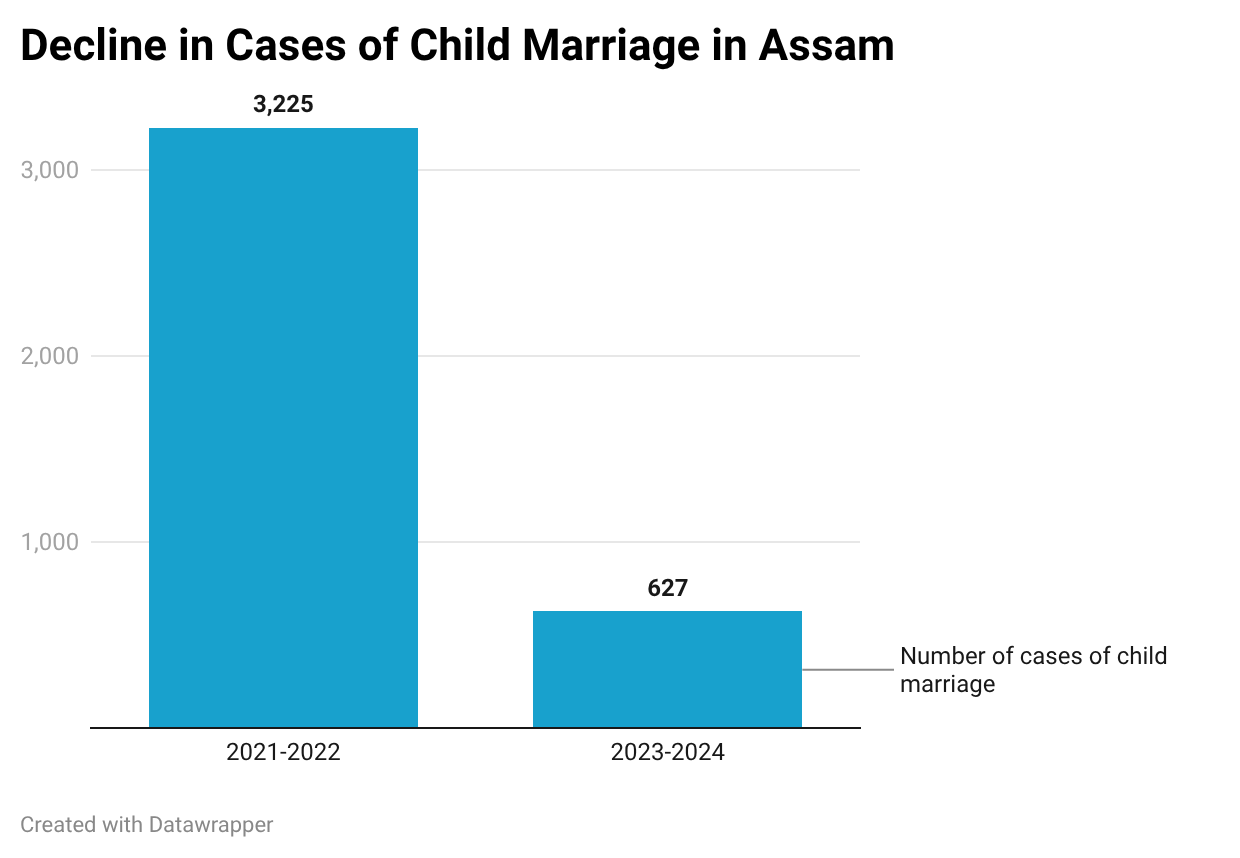
Image 2: Prevalence of Polygamy Sustained Action Against Child Marriage: In the statewide drive of February 2023, Assam Police filed 4,074 FIRs and made over 2,000 arrests, under the Prohibition of Child Marriage Act, 2006 and the POCSO Act, 2012. Independent assessment recorded an 81% reduction in child marriages across 1,132 sampled villages between 2021-22 and 2023-24, validating the State’s enforcement-led approach through compulsory registration.
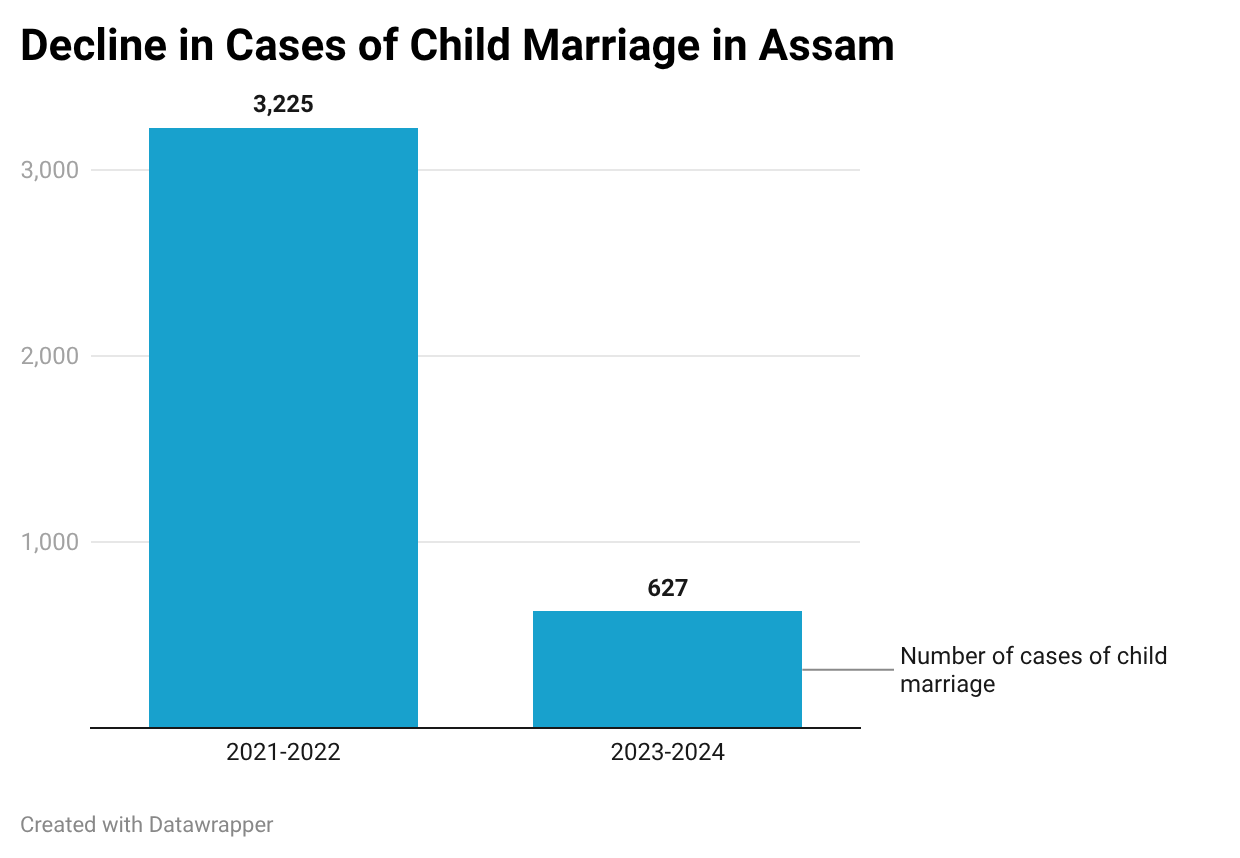
Image 3: Reduction of child marriages in Assam The Uttarakhand Benchmark: Uttarakhand became the first independent-India State to operationalise a Uniform Civil Code, in force from 27th January, 2025. As of 30th May, 2026 its portal had recorded 4,44,234 marriage registrations, 359 divorce certificates and 89 live-in registrations, an order-of-magnitude jump from the pre-Code daily average of 67 registrations, with certificates issued in an average of five days against the prescribed 15 days. The precedent demonstrates that a uniform code is administratively workable at scale.
A Nation Moving from Consultation to Codification: The enactment of the Uniform Civil Code in Assam follows an extensive period of public engagement and deliberation on personal law reform across the country. The 22nd Law Commission of India received over 75 lakh responses to its public notice of June 2023, while the Uttarakhand Drafting Committee chaired by Justice (retd.) Ranjana Prakash Desai conducted 43 public consultations and considered more than 2.31 lakh suggestions. Building upon this broader national exercise in consensus-building, Assam has joined Uttarakhand and Gujarat in translating the long-debated constitutional vision of a Uniform Civil Code into a legislative reality.
Annexure I -
Annexure II -
Annexure III -
Also, please consider subscribing to NFPRC Foundation’s focused centres covering latest economic, policy and administrative developments -
Centre for Law, Policy and Governance - Link
Centre for Accelerating India’s Growth - Link
Centre for Studies in Indian Social Systems - Link
NFPRC Foundation - Link