
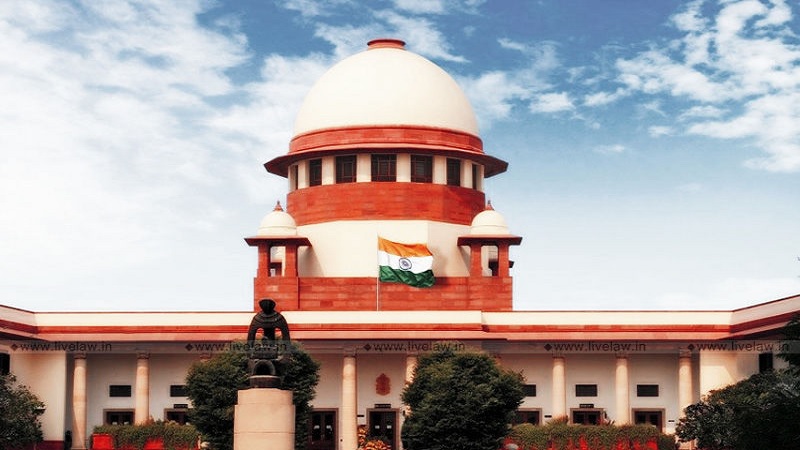
The Supreme Court is grappling with a growing backlog of constitutional cases, a concern openly acknowledged by Chief Justice Surya Kant. In response, the Court has taken a significant step toward addressing judicial delays by adopting a formal Statement of Procedure (SoP) that establishes set timelines for oral arguments and page limits for written submissions. The Chief Justice, with a longer tenure of 15 months, is in a better position to deal with pending constitutional matters in a systematic manner. The apex court has accordingly listed several important constitutional matters for hearing.
Kantaru Rajeevaru v. Indian Young Lawyers’ Association (2018), relating to the review of the Sabarimala judgment, and the State of Uttar Pradesh v. Jai Bir Singh (1978), concerning the scope of the term ‘industry’ under the Industrial Disputes Act, 1947 are both scheduled for hearing by nine-judge Benches under strict timelines. In the Sabarimala review, a Bench led by Chief Justice Surya Kant has scheduled arguments from 7th April, 2026, with hearings spread across specific dates and concluding submissions on 22nd April, 2026. In the industry matter, the final arguments on the scope of Section 2(j) of the Industrial Disputes Act, 1947, will commence on 17th March, 2026, with two days allotted to address questions arising from the 2005 reference. Counsels in both matters have been directed to adhere to the Court’s SoP. The constitutional challenge to the Citizenship (Amendment) Act, 2019, is also being taken up by a Chief Justice-led three-judge Bench after a gap of two years, with arguments from parties to be heard from 5th to 7th May, 2026.
I. The review of the Sabarimala judgment - Kantaru Rajeevaru v. Indian Young Lawyers’ Association
Background -
In Indian Young Lawyers Association v. State of Kerala (2018), a five-judge Bench of the Supreme Court struck down the Sabarimala Temple practice that barred women aged 10 to 50 from entering the temple by a 4:1 majority. The majority held that the custom, which prohibits the entry of women in menstrual age bracket due to the celibate nature of the deity and Rule 3(b) of the Kerala Hindu Places of Public Worship Rules, 1965 which validated such prohibition (as opposed to the general rule under Article 25(2)(b) of throwing open Hindu temples to all sections of society) violated right to practice religion under Article 25(1). They concluded that the exclusion of women was not an essential religious practice and declared the restriction unconstitutional and discriminatory.
In 2019, a five-judge Bench led by Former Chief Justice Ranjan Gogoi referred the review petitions to a larger Bench, noting that the issues raised had implications for gender justice across religions. In 2020, a nine-judge Bench led by then Chief Justice S.A. Bobde affirmed that such broader questions of law could be referred even in a review jurisdiction. After delays, final hearings are scheduled to begin on 7th April, 2026.
The 2018 Judgment -
Former CJI Dipak Misra, speaking for himself and Justice Khanwilkar, held that exclusion of women from the Sabarimala Temple violated their right under Article 25(1) to practice religion. He rejected the argument that Ayyappa devotees form a separate religious denomination, holding that they are Hindus and that denominational rights under Article 26(b) are subject to the State’s power of social reform under Article 25(2)(b), which allows Hindu temples to be opened to all classes and sections. The Court found that the exclusion was not an essential religious practice and struck down Rule 3(b) of the 1965 Rules as unconstitutional and beyond the Parent Act. Justice Nariman delivered a concurring opinion holding that denominational freedom cannot override women’s Article 25 rights.
Justice Chandrachud, in a separate concurring opinion, by invoking constitutional morality, held that the exclusion undermined women’s dignity, autonomy, and equality, and that notions of purity and pollution cannot justify discrimination. He gave Article 17 - a broad interpretation, suggesting that constitutional protection against exclusion extends beyond caste-based untouchability and includes a gendered dimension as well.
In dissent, Justice Indu Malhotra held that constitutional morality requires respect for religious autonomy in a plural society. She concluded that Sabarimala devotees do constitute a separate religious denomination deserving protection under Article 26(b), and that Article 25(2)(b) does not override such rights. She also held that Article 17 applies only to caste-based untouchability, not gender-based exclusion.
The Review Petition & Arguments by The Petitioners
Under Chief Justice Surya Kant, a nine-judge Bench is set to clarify key constitutional questions arising from the Sabarimala reference, with a decision expected by 22nd April, 2026. The larger Bench will examine the scope of religious freedom under Articles 25 and 26, the meaning of “morality,” the extent of judicial review in identifying essential religious practices, and related issues.
In the review proceedings, organisations such as the All Kerala Brahmins Association and the Nair Service Society have challenged the 2018 judgment. They argue that the Court exceeded its jurisdiction under Article 145(3) by deciding disputed questions of fact and by overlooking earlier findings of the Kerala High Court in Indian Young Lawyers Association (2018). They also contend that the exclusion of women was linked to the celibate character of the deity as a Naishtika Brahmachari and was regulatory, not discriminatory. Emphasising denominational autonomy under Article 26, they maintain that essential religious practices cannot be overridden by social reform.
Opening the Floodgates or Recalibrating Faith?
The ongoing constitutional debate presents a clear tussle between judicial review and religious autonomy. Justice Indu Malhotra had cautioned in her dissent that permitting public interest litigations in matters of faith could open the floodgates to challenges by those who are neither believers nor worshippers, which may be particularly sensitive in a pluralistic society and could affect religious minorities. Senior advocate Fali Nariman expressed a similar concern when he questioned the Court’s decision to expand the Sabarimala review into a broader examination of essential religious practices across faiths. Although a nine-judge Bench has affirmed its authority to undertake such a wide reference, the inquiry has moved beyond a single temple practice to a larger question of how constitutional morality interacts with religious traditions. It remains to be seen whether the Court will reshape the essential religious practices doctrine, reinforce denominational autonomy, or strike a balance between religious freedom and gender equality.
II. Revisiting the Definition of “Industry” Under the Industrial Disputes Act
Background
In Bangalore Water Supply & Sewerage Board v. A. Rajappa (1978) (BWSSB), a seven-judge Bench interpreted the meaning of “industry” under Section 2(j) of the Industrial Disputes Act, 1947. The Court adopted a broad and worker-oriented approach, drawing guidance from the Directive Principles of State Policy, particularly Articles 38, 39, and 43. Although the Act defines “industry” in a wide manner, earlier rulings had limited the scope of the term to activities similar to business or trade. The Court had laid down the “triple test” to determine whether an activity qualifies as an industry, the three prongs of the test are:
There must be a systematic and continuous activity.
It must involve cooperation between the employer and the employee.
It must relate to the production or distribution of goods or services to satisfy human needs.
Justice Krishna Iyer, writing for the majority, expanded the meaning of “industry” to also include educational, charitable, and research institutions that meet the triple test. Owing to continued uncertainty in these institutions and judgments that followed, the issue was referred in 2017 to a nine-judge Bench of the Supreme Court, which will begin hearing final arguments on 17th March, 2026.
Issues with BWSSB
Several concerns have emerged regarding the expansive interpretation adopted in the landmark BWSSB case. The judgment treated research and scientific institutions as “industry” on the basis that they generate social and technological benefits, even without a profit motive. However, in Physical Research Laboratory v. K.G. Sharma (1997) (PRL), a two-judge Bench adopted a narrower approach, holding that research bodies engaged in purely governmental or academic functions, and lacking commercial or service-oriented objectives, fall outside the purview of Section 2(j). The introduction of “commercial character” by PRL created a tension with the BWSSB judgment.
Uncertainty also arose regarding the scope of sovereign functions of the State, meaning duties performed in the exercise of its constitutional authority and core governmental responsibilities, which were treated as an exception even where State functionaries satisfied the triple test and would otherwise fall within the definition of “industry.” In BWSSB, the Court had limited the sovereign function exception to the primary and inalienable constitutional functions. Yet, in Bombay Telephone Canteen Employees’ Association v. Union of India (1997), the Court treated telecommunication services as sovereign and held that the canteen employees, being holders of civil posts governed by statutory rules, were not workmen under the Industrial Disputes Act.
Further, in Coir Board v. Indira Devi (1998), the Court expressed concern over including charitable and welfare institutions within the ambit of “industry” as the Act imposed stringent labour compliance on non-profit entities. Finally, in the State of U.P. v. Jai Bir Singh (2005), a five-judge Bench questioned BWSSB’s precedential value, stating the lack of unanimity and the unsettled nature of its formulation owing to the polyvocal nature of the bench.
Legislative Intent
The Industrial Disputes (Amendment) Act, 1982 reflected a clear legislative intent to narrow the broad interpretation of ‘industry’ laid down in the BWSSB judgment by expressly excluding hospitals, research institutions, and philanthropic organisations from the definition under Section 2(j), on the basis that such institutions have a distinct character and ought not to be treated like commercial establishments. However, despite being passed over forty years ago, the amendment was never brought into force. In Aeltemesh Rein v. Union of India (1988), the Union Government explained that the notification was withheld due to the absence of an alternative legal framework to address employee grievances in the excluded sectors, leaving the broader BWSSB interpretation in continued operation. The Industrial Relations Code, 2020, which consolidates several labour laws, largely retains a wide definition of ‘industry’ consistent with BWSSB interpretation, while exempting institutions engaged mainly in charitable or social services, but falls short of clearly addressing research institutions, adding to the persisting uncertainty around the scope of the term.
Possible Way Forward
A pragmatic way to address this confusion is to shift the focus from the nature and definitional aspect of the “industry” to the existence of an employment relationship. Rather than debating whether a particular organisation falls within Section 2(j), the law could adopt a more universal and activity-neutral framework intended for labour protection. The Second National Commission on Labour (2001) recommended a single, composite law applicable to all establishments employing twenty or more workers, regardless of the activities carried on, thereby reducing classification disputes and prioritising worker protection. Similarly, in the United Kingdom, the Employment Rights Act 1996 grants key protections such as safeguards against unfair dismissal and redundancy pay to anyone working under a contract of employment, based on the employer–employee relationship rather than the nature of the enterprise. South Africa’s Labour Relations Act, 1995, also adopts a broad definition of “employee,” extending protection to most workers while excluding only limited categories such as members of the armed forces and intelligence services. These approaches provide insights to reduce disputes while keeping the focus on worker protection.
III. The Constitutional Challenge to the Citizenship (Amendment) Act, 2019
The Citizenship (Amendment) Act, 2019, amends the Citizenship Act of 1955 to provide an expedited pathway to Indian citizenship for Hindu, Sikh, Buddhist, Jain, Parsi, and Christian migrants from Pakistan, Bangladesh, and Afghanistan who entered India on or before 31st December, 2024. Rules notified on 11th March, 2024, simplified the application process by permitting alternative documents in place of a passport or visa. Nearly 200 petitions challenging the Act have been consolidated before the Supreme Court, with hearings scheduled for May 2026.
The Act is primarily challenged on the ground that it violates Article 14 of the Constitution, which guarantees equality before the law, by conferring fast-tracked citizenship exclusively on six non-Muslim communities from three Muslim-majority countries while excluding Muslims from the same nations. Petitioners also raise concerns about the CAA operating alongside the National Register of Citizens (NRC), arguing that non-Muslims unable to establish citizenship under the NRC process may seek protection under the CAA, while Muslims in the same position would have no comparable recourse. The Court may consider this under the doctrine of reasonable classification, which requires that any classification bear a rational nexus with the legislation’s objective. The Court may strike down the law if the classification based on religion is found lacking or uphold it, if deemed reasonably connected to the stated aim, i.e., protecting the persecuted minorities, or may interpret it conservatively, deferring to Parliament’s legislative competence in the spirit of separation of powers.