
Executive Summary :
Kerala’s 2026–27 Budget outlines several initiatives, including free higher education, Rare Earth Corridor, and infrastructure expansion. These announcements come alongside a constrained fiscal position, highlighting the balance the state must maintain between developmental commitments and fiscal space.
The state projects a fiscal deficit of 3.40% of GSDP, close to the permissible ceiling, alongside a revenue deficit of about 2.12% of GSDP. This indicates that routine expenditure continues to exceed recurring revenue, pointing to a structural fiscal imbalance rather than a short-term fluctuation.
A large portion of the state’s revenue is committed to salaries, pensions, and interest payments, leaving limited flexibility to expand capital expenditure. Simultaneously, borrowing overruns of 43.81% and Kerala’s ageing demography could further increase pension and welfare liabilities in the coming years.
Capital outlay remains modest at around 1.2% of GSDP, substantially below the levels typically associated with growth-oriented state budgets, which are closer to 3%. This suggests that mounting fiscal pressures are limiting the state’s ability to invest in long-term productive assets.
A significant portion of projected revenue relies on central transfers, estimated to increase by about 268%. Given the volatility observed in such transfers in recent years, this dependence introduces a potential downside risk if the anticipated inflows do not materialise fully.
The Finance Minister, Shri K.N. Balagopal presented the Kerala Budget 2026-27 before the State Legislature on 29th January, 2026.
I. Key Highlights :
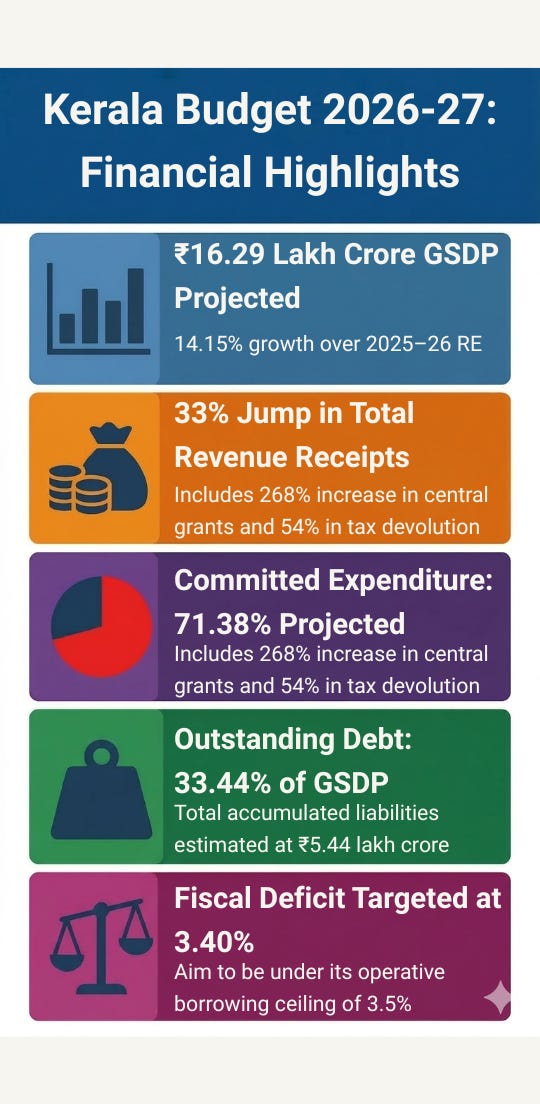
Gross State Domestic Product (GSDP): Kerala’s GSDP for 2026–27 (at current prices) is projected to be ₹ 16,29,072.51 crore, amounting to a growth of about 14.15% over the revised estimates (RE) for 2025–26 (₹ 14,27,145.23 crore).
GSDP Per Capita: In 2024–25, Kerala’s per capita GSDP (at current prices) is estimated to be ₹ 3,46,437, an increase of 9.42% over 2023–24 (₹ 3,16,612). In 2023–24, per capita GSDP had grown by 8.86% over 2022–23.
Revenue Deficit (RD): RD in 2026–27 is estimated at 2.12% of GSDP (₹ 34,586.66 crore), as compared to an RD of 2.58% of GSDP (₹ 36,889.19 crore) in 2025–26 RE.
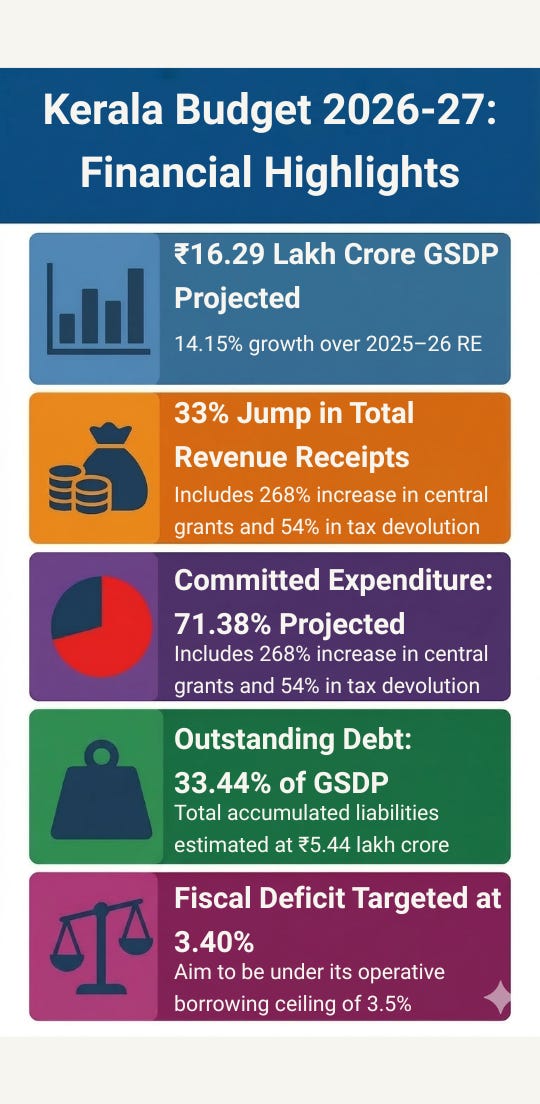
Image 1: Key Financial Highlights Fiscal Deficit (FD): FD for 2026–27 is targeted at 3.40% of GSDP (₹ 55,419.51 crore) as compared to an FD of 3.78% of GSDP (₹ 53,949.50 crore) in 2025-26 RE.
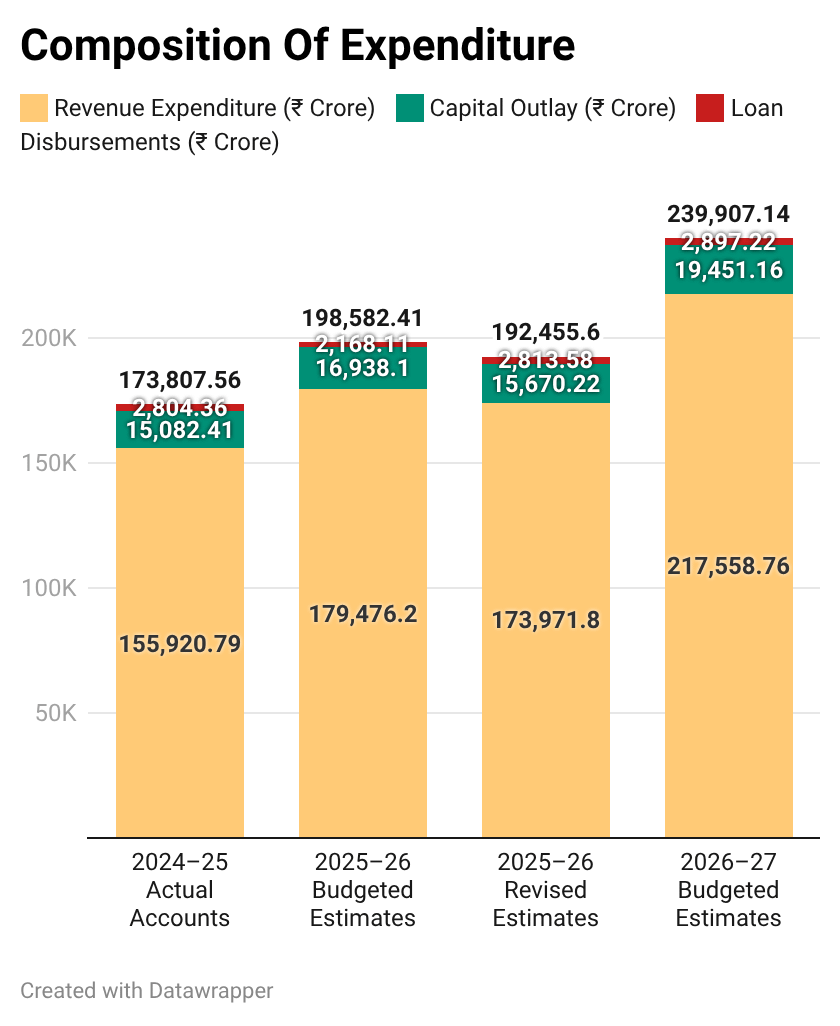
Expenditure: Expenditure (excluding debt repayment) in 2026–27 is estimated to be ₹ 2,39,907.14 crore, an increase of about 25% over the revised estimates of 2025–26 (₹ 1,92,455.60 crore). In addition, debt repayment of ₹ 1,39,963.11 crore is estimated.
Receipts: Receipts (excluding borrowings) for 2026–27 are estimated to be ₹ 1,84,487.63 crore, an increase of about 33% as compared to the RE of 2025–26 (₹ 1,38,506.10 crore).
II. Policy Highlights :
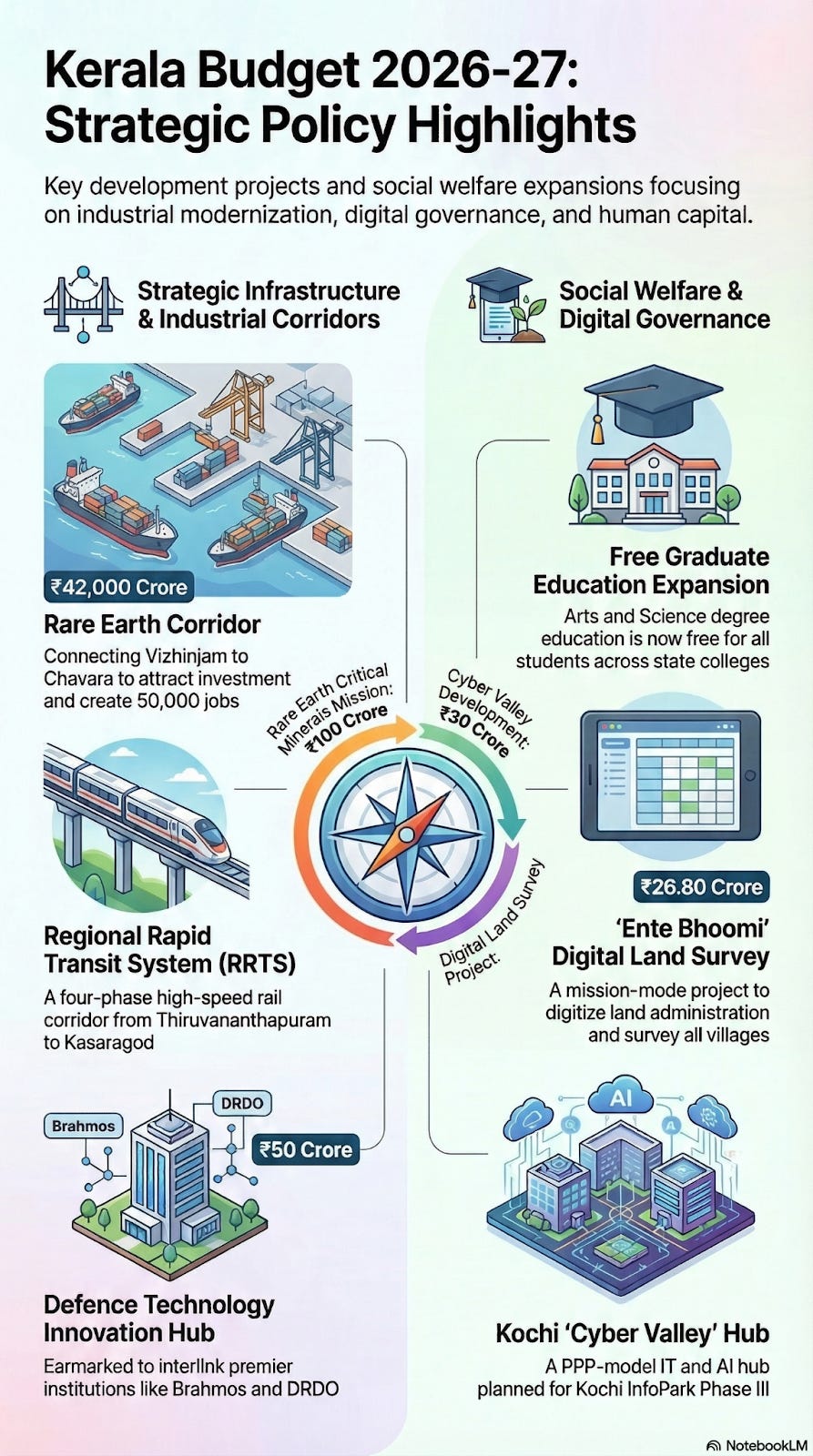
Free Graduate Education: Graduate degree education in Arts and Science state colleges has been made free for all students. Until now, free education existed only up to the Plus Two level.
Rare Earth Corridor: A new ‘Rare Earth Corridor’ connecting Vizhinjam Port to Chavara is planned to harness Kerala’s coastal deposits of rare earth elements. This is expected to attract ₹ 42,000 crore investment and generate 50,000 jobs. ₹ 100 crore is earmarked for a Rare Earth Critical Minerals Mission in partnership with KMML, KELTRON and NFTDC.
Defence Corridor: A new ‘Defence Technology Innovation Hub’ is planned to interlink defence institutions, including the Naval Command, Southern Air Command, Naval Academy, DRDO-NPOL, Brahmos Aerospace, VSCC, IIST, and IISER to develop a high-tech Defence Research Development Corridor to drive national security innovation. An amount of ₹ 50 crore has been earmarked for the commencement of this project.
Regional Rapid Transit System (RRTS): A high-speed rail corridor from Thiruvananthapuram to Kasaragod is planned in 4 phases, modelled on the Delhi-Meerut RRTS. The initiative has been supported by the Union Housing and Urban Affairs Ministry. Phase 1 covers Thiruvananthapuram to Thrissur.
Nativity Card: Kerala will enact a law to issue a Nativity Card to all citizens who have been residents of Kerala for generations. ₹ 20 crore has been earmarked for its implementation.
‘Ente Bhoomi’ Digital Land Survey Project: The Survey Department has launched a digital land survey project named ‘Ente Bhoomi’ to transform land administration by digitising all land-related services. The target is to complete the digital survey of all villages in Kerala within a fixed time limit. An amount of ₹ 26.80 crore is earmarked for the Survey Department, including this project.
Cyber Valley: A Cyber Valley has been planned in the Kochi InfoPark phase III. It will function as a hub of IT, IT-based services, Artificial Intelligence and other new technologies to promote entrepreneurship and create jobs. ₹ 30 Crore has been earmarked for it to be developed in a PPP model.
III. Kerala’s Economy :
GSVA Contribution Of Sectors: In 2024–25, agriculture, manufacturing, and services sectors are estimated to contribute 9.1%, 23.7%, and 67.3% of Kerala’s economy, respectively (at current prices).
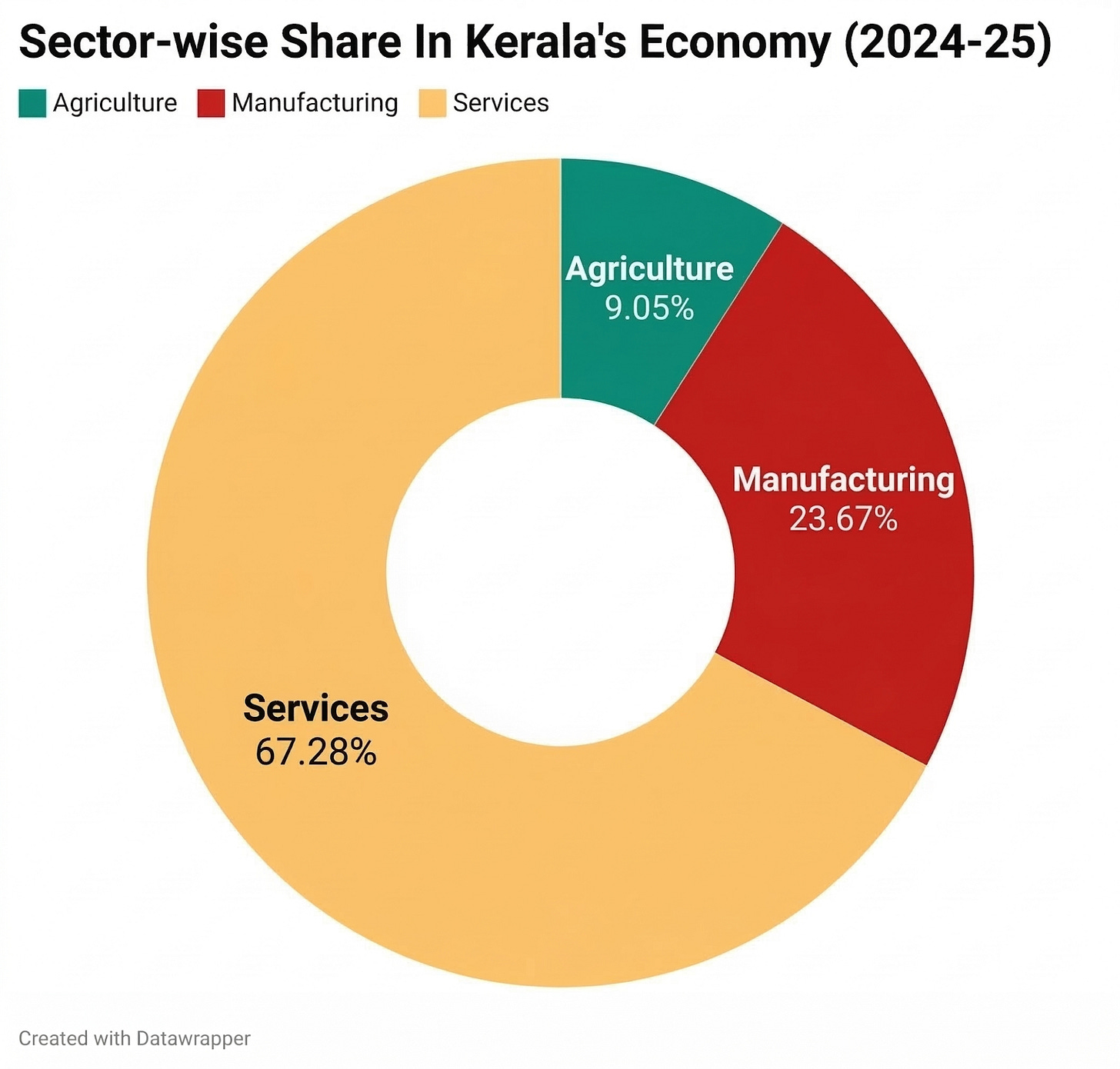
Image 3: Sector-wise Share In Kerala’s Economy (2024–25, at Current Prices)
IV. Expenditure :
Revenue Expenditure: Revenue expenditure for 2026–27 is proposed to be ₹ 2,17,558.76 crore, an increase of about 25% over the revised estimate of 2025–26 (₹ 1,73,971.80 crore). This includes the expenditure on salaries, pensions, interest, grants, and subsidies.
Committed Expenditure:
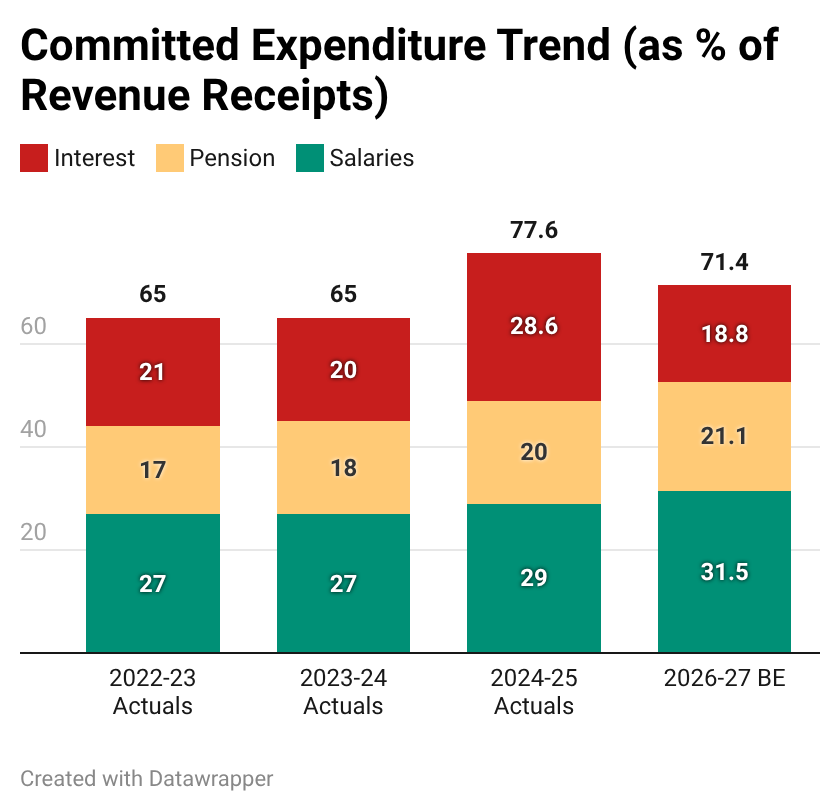
In 2026–27, Kerala is estimated to spend ₹ 1,30,602.99 crore on committed expenditure, which is 71.38% of its estimated revenue receipts of ₹ 1,82,972.10 crore. In 2024–25, as per actual figures, 77.59% of revenue receipts were spent towards committed expenditure (₹ 96,886.15 crore out of revenue receipts of ₹ 1,24,861.07 crore).
This comprises spending on salaries (₹ 57,557.85 crore), pension (₹ 38,669.12 crore), and interest payments (₹ 34,376.02 crore). This high expenditure limits the state’s ability to reorient spending toward capital.
However, this reduction in projection assumes a 33% jump in revenue receipts in a single year, a target that would require every revenue head, including a 268% increase in central grants and a 54% increase in tax devolution, to materialise fully. Given Kerala’s track record of revenue underperformance in recent years, this is a very optimistic projection.
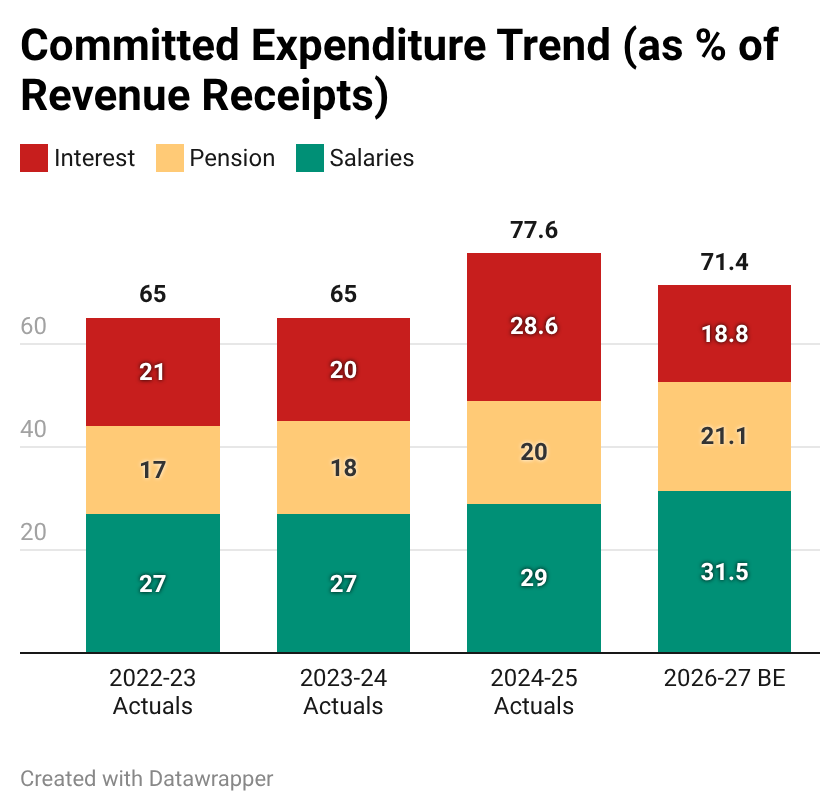
Image 5: Kerala’s Committed Expenditure Trend As % Of Revenue Receipts Capital Outlay: Capital outlay for 2026–27 is proposed to be ₹ 19,451.16 crore, an increase of about 24% over the revised estimate of 2025–26 (₹ 15,670.22 crore).
In 2026–27, capital outlay accounts for about 8.1% of the total expenditure (₹ 2,39,907.14 crore) and around 1.2% of the GSDP (₹ 16,29,072.51 crore). This is significantly lower than the national average capital outlay of about 3.0% of GSDP in the 2025–26 Budget Estimates.
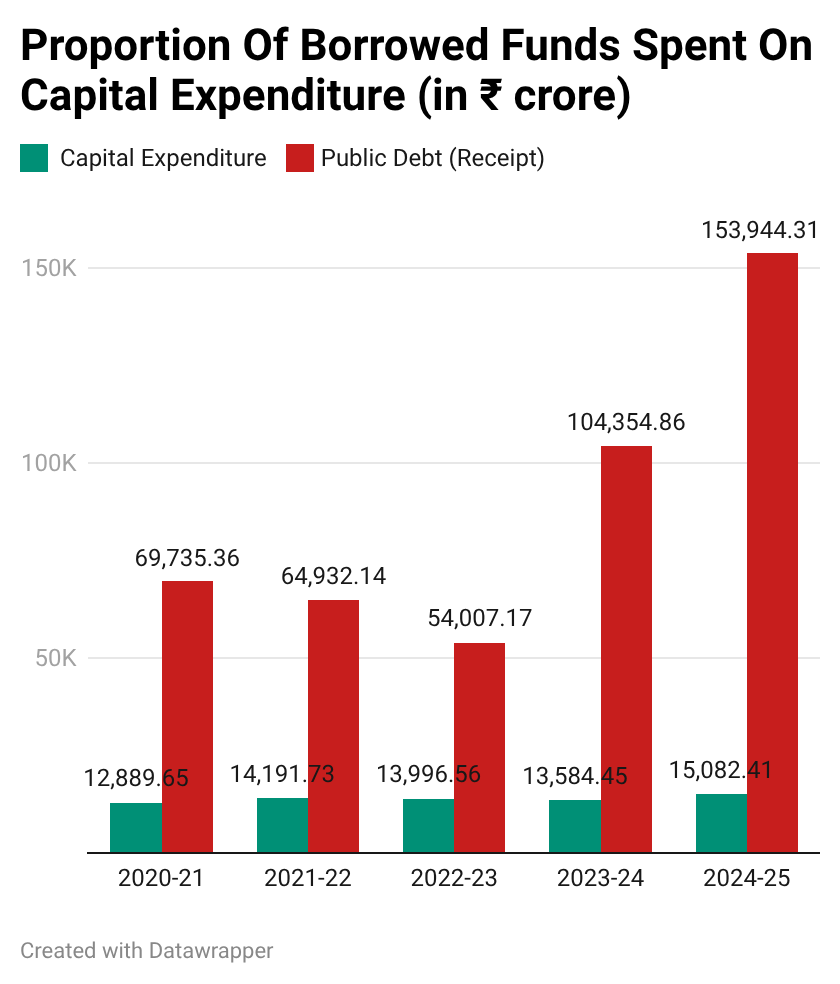
Compared to previous years, the proposed outlay reflects a moderate step-up in capital spending. Capital outlay was ₹ 15,082.41 crore in 2024–25 (actuals) and ₹ 13,584.45 crore in 2023–24, indicating a gradual increase over the last two years, with a sharper rise proposed in 2026–27.
However, the combination of low capex, which still remains significantly lower than national average, and high revenue commitments points to weakening of Kerala’s investment-led growth prospects over the medium term.
Loans And Advances: In 2026–27, loans and advances by the state are expected to be ₹ 2,897.22 crore, about 3% higher as compared to the revised estimate of 2025–26 (₹ 2,813.58 crore).
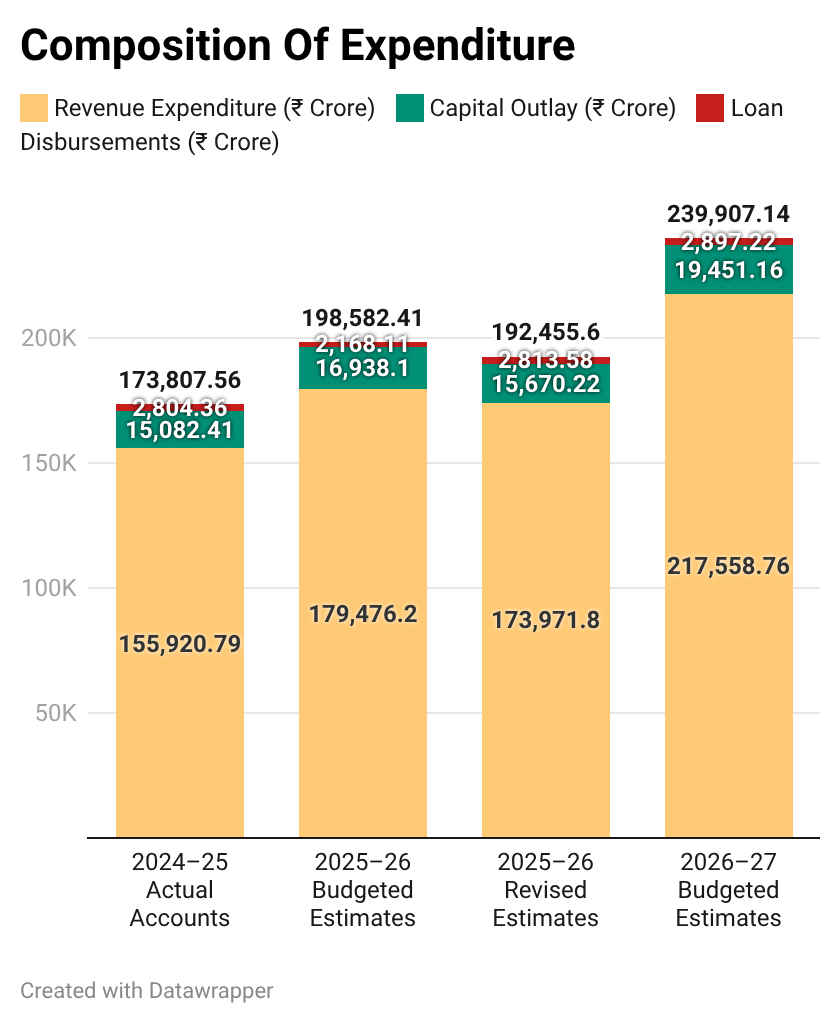
Image 6: Composition Of Kerala’s Expenditure (in ₹ crore) V. Revenue Receipt :
1. Total Revenue Receipts
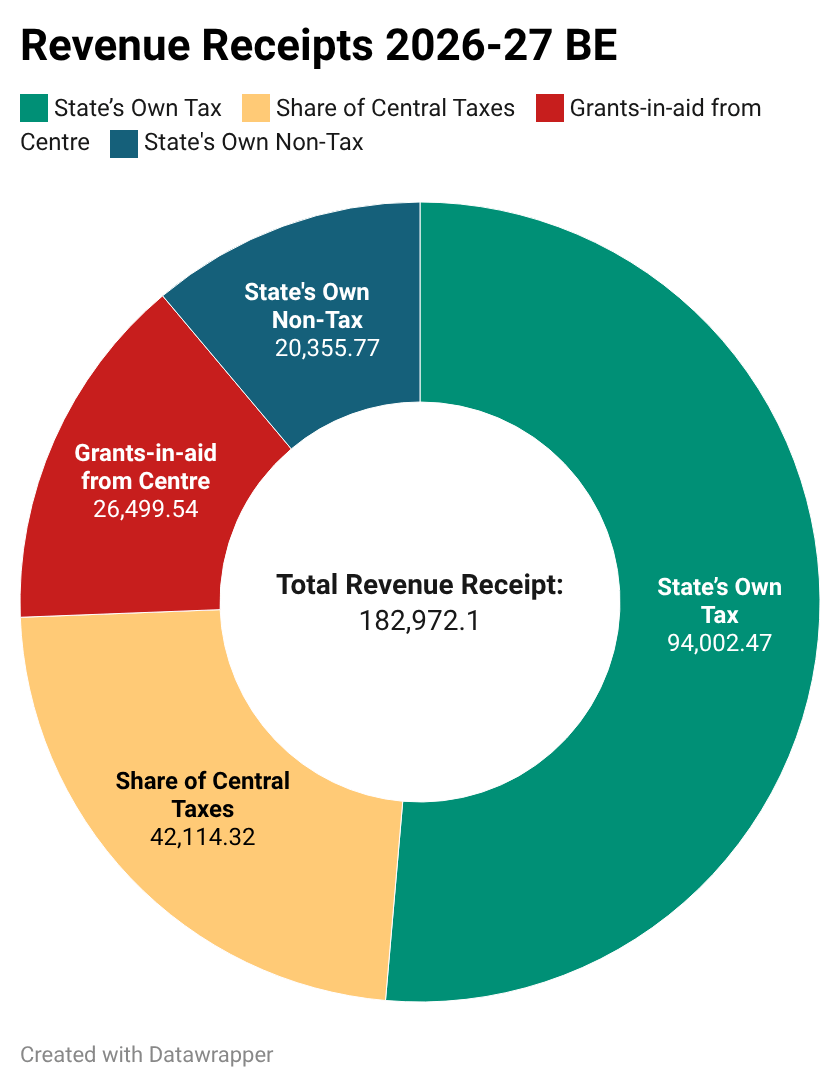
Total revenue receipts for 2026–27 are estimated to be ₹ 1,82,972.10 crore, an increase of about 33% over the revised estimate of 2025–26 (₹ 1,37,082.61 crore). Of this, ₹ 1,14,358.24 crore (about 63%) will be raised by the state through its own resources, and ₹ 68,613.86 crore (about 37%) will come from the centre.
Resources from the centre are the state’s share in central taxes (about 23% of revenue receipts) and grants-in-aid (about 14% of revenue receipts). This heavy reliance on a single year’s jump in transfers introduces downside risk because past years show large volatility in grants. This dependence reduces own-revenue resilience and increases vulnerability to grant volatility.
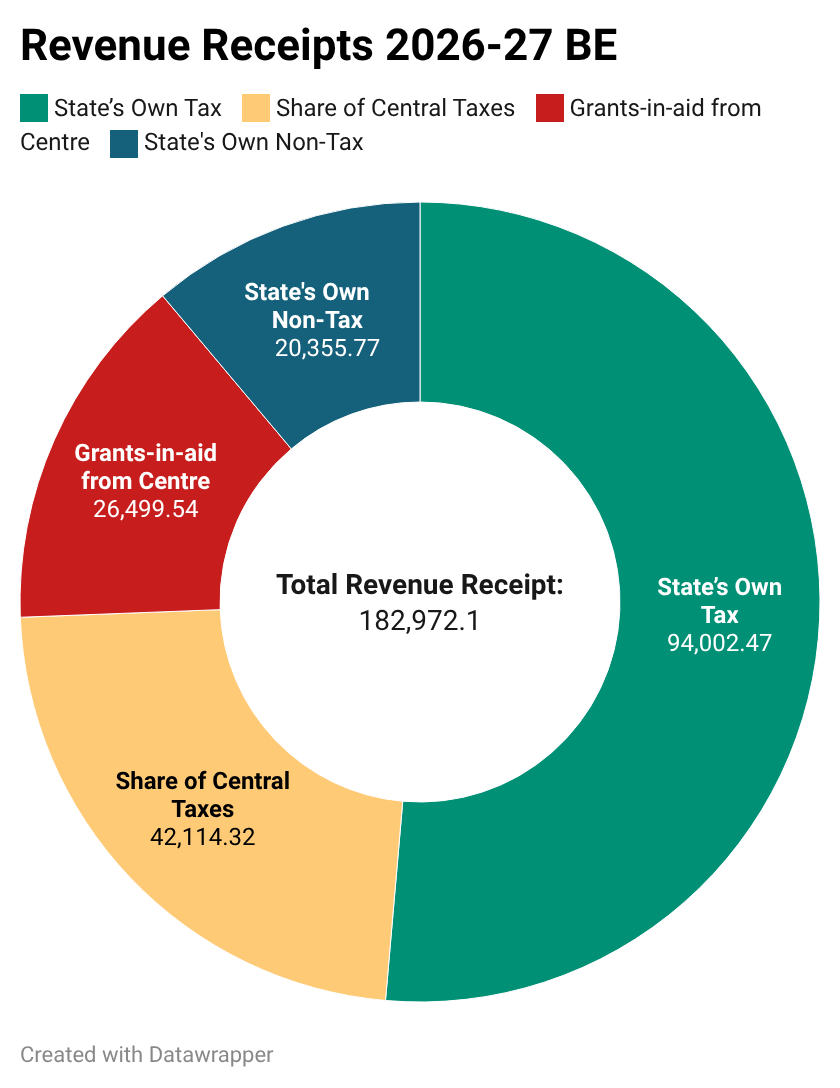
16th Finance Commission: In 2026–27, the state’s share in central taxes is estimated at ₹ 42,114.32 crore, an increase of about 54% over the revised estimate of 2025–26 (₹ 27,382.06 crore). This sharp increase is significant as higher tax devolution from the centre strengthens the state’s fiscal capacity, which is already high in debt, and provides greater resources for development expenditure and welfare programmes.
Central Grants: Grants from the centre in 2026–27 are estimated at ₹ 26,499.54 crore, an increase of about 268% over the revised estimates for 2025–26 (₹ 7,208.87 crore) which is, 45% less than the budget estimate of ₹ 13,074.90 crore. The 2024–25 actual grants from the centre (₹ 6,959.87 crore) represent a decline of about 42.33% compared to ₹ 12,068.26 crore in 2023–24. The projected jump in 2026–27 therefore represents a substantial increase over the recent trend of central grants and suggests expectations of higher transfers from the centre, potentially linked to scheme-based allocations or other grant components.
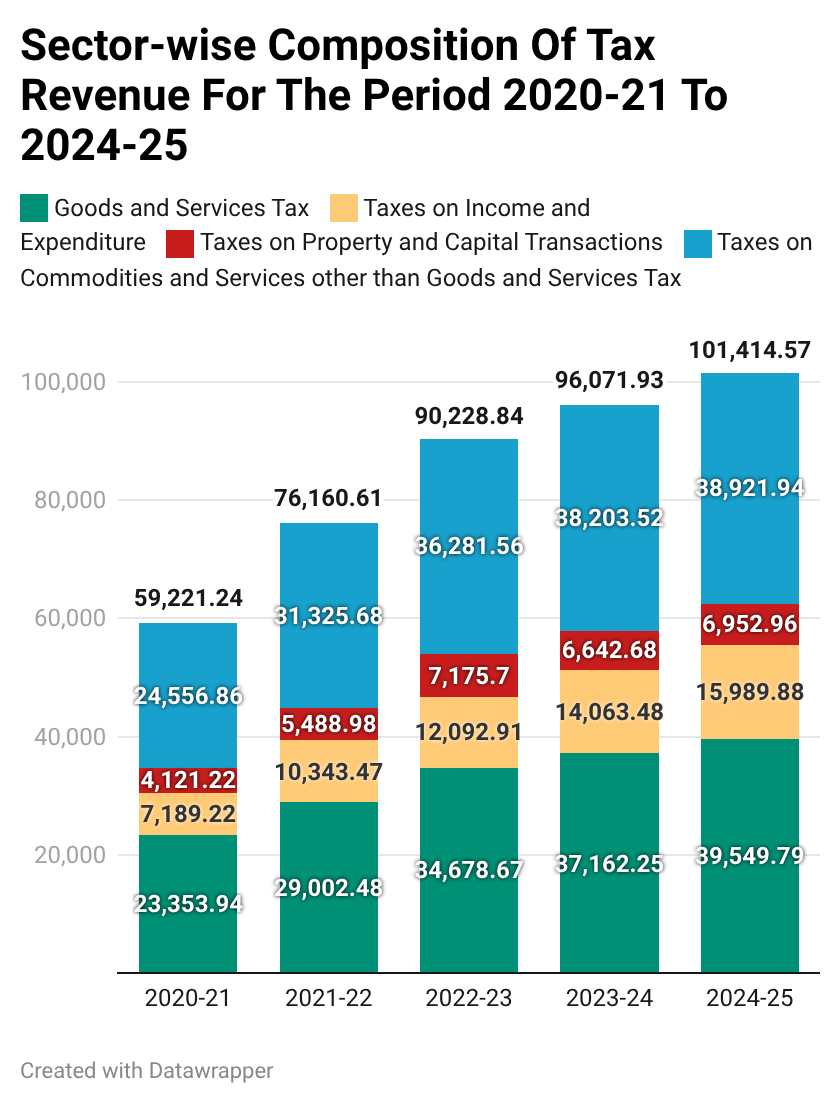
State’s Own Tax Revenue: Kerala’s total own tax revenue is estimated to be ₹ 94,002.47 crore in 2026–27, an increase of about 12% over the revised estimate of 2025–26 (₹ 83,730.96 crore). Own tax revenue as a percentage of GSDP is estimated at about 5.8% in 2026–27. As per the actual figures for 2024–25, own tax revenue as a percentage of GSDP was about 6.5%.
VI. Deficits And Debts :
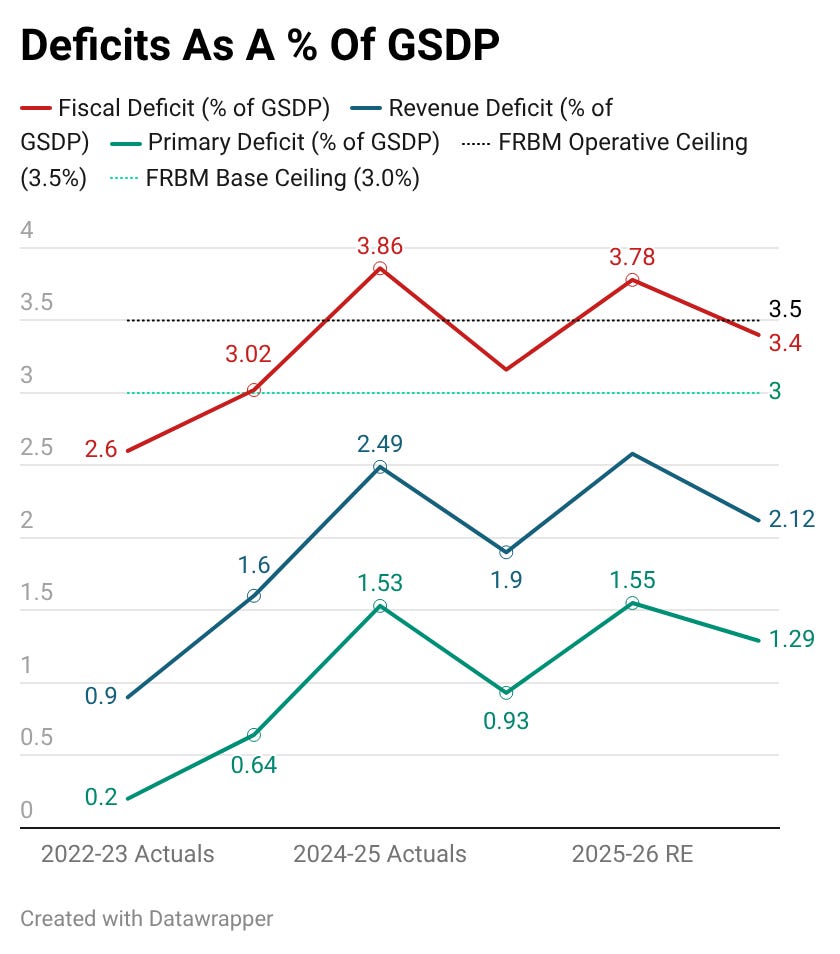
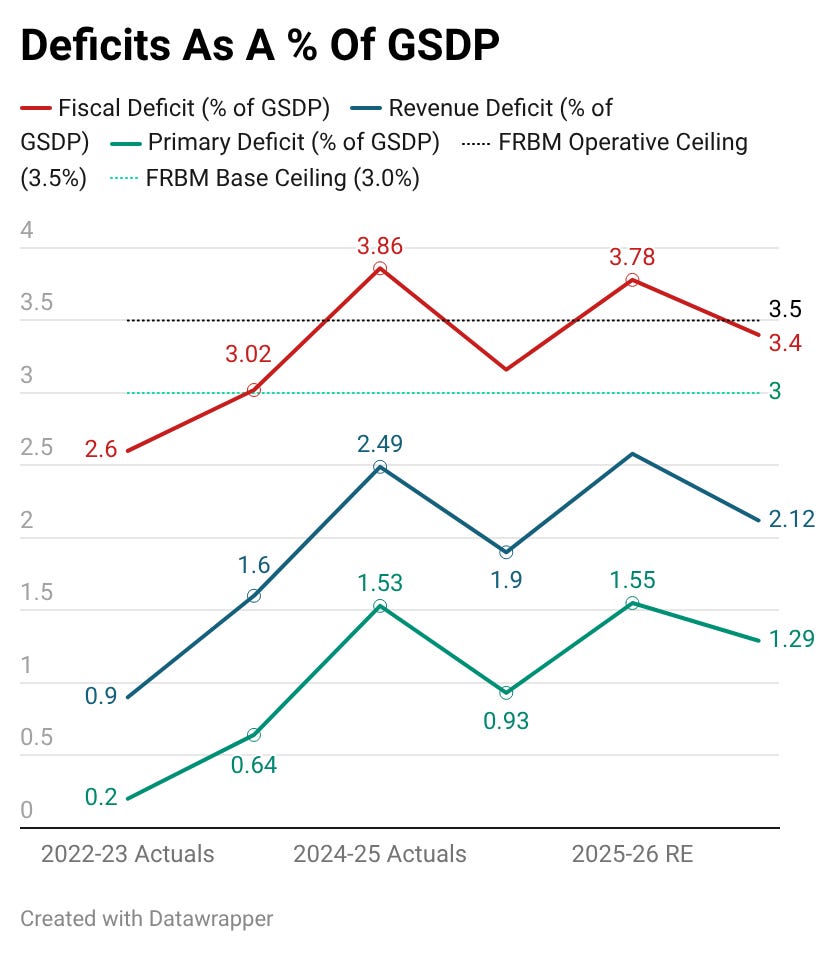
Revenue Deficit: Revenue Deficit in 2026–27 is estimated to be 2.12% of GSDP (₹ 34,586.66 crore), as compared to a revenue deficit of 2.58% of GSDP (₹ 36,889.19 crore) at the revised estimate stage in 2025–26.
The state has recorded persistent revenue deficits in recent years, with the revenue deficit rising from 0.90% of GSDP in 2022–23 (actuals) to 1.60% in 2023–24, and further to 2.49% in 2024–25 (actuals). This trend indicates a widening gap between revenue receipts and revenue expenditure over time.
Kerala’s fiscal trends are also reflected in its slippage into the ‘Aspirational’ category in the Fiscal Health Index, indicating a deterioration in its relative fiscal position. This underscores that persistent deficits, rising debt, and high committed expenditure are not temporary issues but signs of structural fiscal stress.
Kerala’s revenue deficit levels are also significantly higher than the national average of about 0.2% of GDP, as reported in the RBI State Finances, suggesting that the state’s fiscal position on the revenue account remains comparatively weaker than that of most states.
The 2026-27 BE estimates revenue from electricity duty at ₹ 1,475 crore. In contrast, the RE for 2025–26 places electricity duty collections at ₹ 100 crore, which is only about 9.1% of the budget estimate of ₹ 1,100 crore for that year. This is a major revenue loss for the state which stems from KSEB withholding duty from the state.
Fiscal Deficit (FD): Fiscal Deficit for 2026–27 is targeted at 3.40% of GSDP (₹ 55,419.51 crore). In 2025–26, as per the revised estimates, the fiscal deficit is expected to be 3.78% of GSDP (₹ 53,949.50 crore).
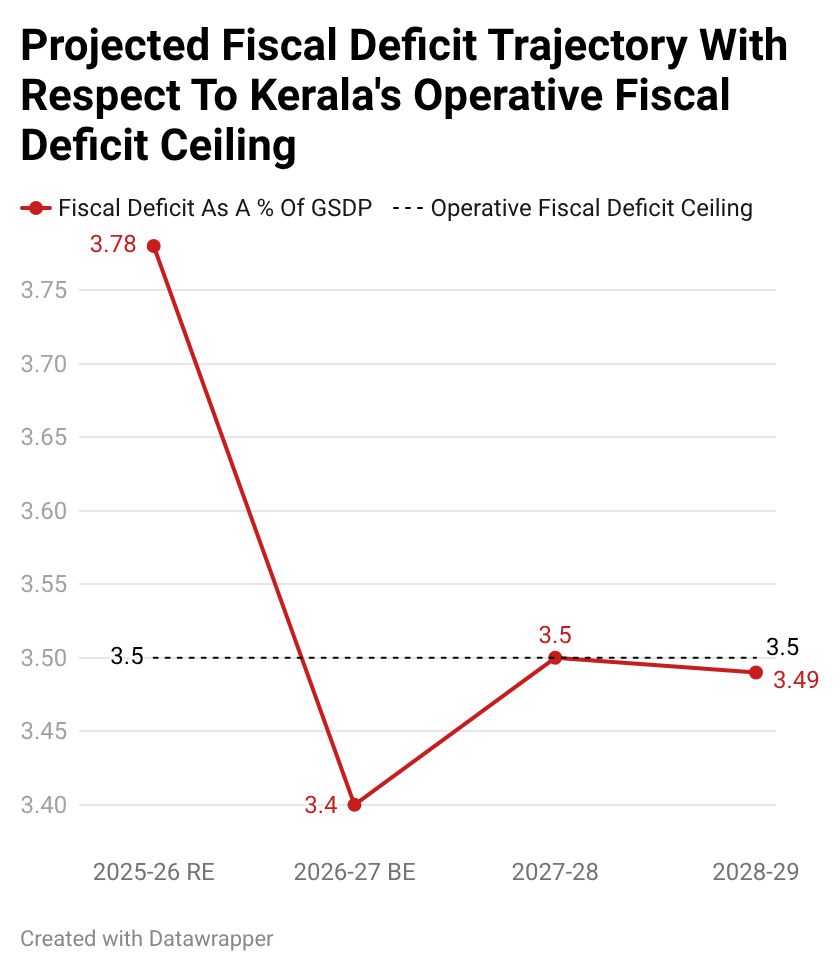
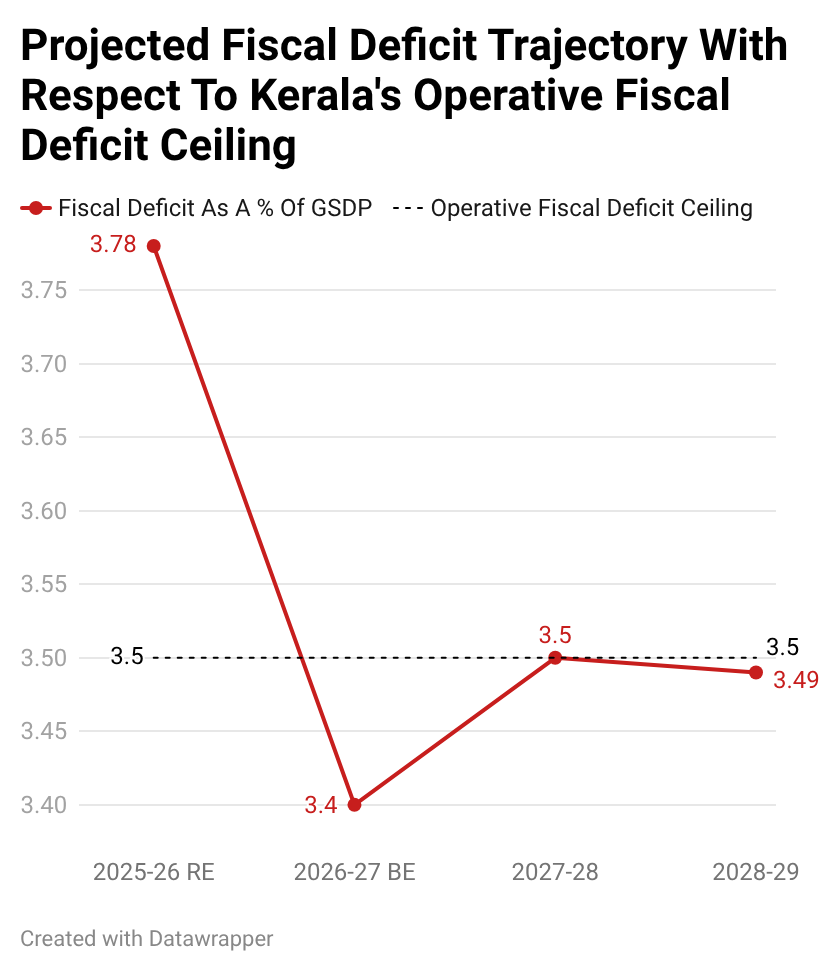
Under the Kerala Fiscal Responsibility Act, 2003, the state’s base borrowing ceiling is 3.0% of GSDP. For 2026–27, an additional 0.5% relaxation has been permitted for power sector reforms, raising the operative ceiling to 3.5% of GSDP. Against this, the fiscal deficit of 2025–26 revised estimate is 3.78% which is already in breach of the ceiling by 28 basis points (bps).
Looking ahead, the trajectory of the fiscal deficit is projected as: 3.40% in 2026–27, 3.50% in 2027–28, and 3.49% in 2028–29. This estimate is already close to the 3.5% operative ceiling, thus leaves no buffer for any shocks to revenue receipts and could lead to borrowings.
Kerala is not projecting a return to the 3.0% base ceiling at any point in the three-year window. It is instead budgeting to use the full 3.5% ceiling (including the power sector carve-out) as the effective operating norm through 2028–29.
Kerala Infrastructure Investment Fund Board (KIIFB) is a state-sponsored financing entity revitalised in 2016 to fund large infrastructure projects such as roads, hospitals, schools, power transmission outside the state budget. The FD figures above do not capture borrowings raised by it as its borrowings are off budget.
RBI explicitly flags off-budget as an all-India transparency and fiscal risk problem, and calls for further improvements in the reporting. Such borrowings also put further stress on the state exchequer since KIIFB has no other source of income.
Primary Deficit (PD): PD for 2026–27 is targeted at 1.29% of GSDP (₹ 21,043.49 crore). In 2025–26, as per the revised estimates, the primary deficit is expected to be 1.55% of GSDP (₹ 22,133.49 crore).
Outstanding Debt: The outstanding debt of Kerala in 2026–27, is projected at ₹ 5,44,832.88 crore, equivalent to 33.44% of GSDP, which is slightly lower than the revised estimate of 34.26% of GSDP (₹ 4,88,910.46 crore) in 2025–26.
VII. Borrowings :
In 2024–25, Kerala’s actual borrowings were ₹ 1,53,944.31 crore against a BE of ₹ 1,07,046.58 crore, an overrun of 43.81%, which is not an isolated deviation. Kerala has consistently borrowed significantly more than budgeted, driven by a combination of own tax revenue underperformance and expenditure commitments, such as welfare spending, that cannot be compressed mid-year.
The revenue shortfall in 2024–25 is documented across every receipt head, own tax revenue came in 10% below BE, own non-tax revenue 10% below, and most severely, grants-in-aid from the centre fell 40% below the budgeted estimate.
The state has limited ability to reduce salary, pension, and interest payments in response to such shortfalls, so the adjustment falls entirely on the borrowing side. This structural asymmetry, committed expenditure on one side and revenue receipts on the other, is the cause of repeated borrowing overruns.
Another structural feature of Kerala’s economy is its heavy dependence on overseas remittances, particularly from migrants working in the Gulf region accounting for over 23.2% of Kerala’s Net State Domestic Product and exceeding the state’s annual revenue receipts. These inflows constitute a significant share of household income and consumption in the state.
However, remittances accrue primarily to private households and are therefore only indirectly captured by the state’s fiscal system. As a result, they generate relatively limited direct tax revenue for the state government. This weak fiscal capture of a major income stream limits the expansion of the state’s own revenue base, reinforcing the structural reliance on borrowings to finance expenditure.
Further, Kerala is the only state which breached the national inflation target in 2025-26 (April-December), at 8.05%, which is being driven by such private consumption. Thus, remittances do not directly contribute to revenue but also undermine the purchasing power of the State’s citizens by increasing inflation.
Debt repayment in 2024–25 amounted to ₹ 1,11,918.42 crore, a figure 57.5% above the budgeted ₹ 71,058.3 crore. The gap reflects a large volume of earlier borrowings maturing simultaneously, a pattern that compounds the state’s fiscal pressure.
By 2026–27, net new borrowing is estimated at ₹ 55,378.49 crore, meaning that for every rupee the state spends on education, roads, and welfare combined, it is borrowing roughly 23 paise of new debt. During 2024-25, 90% of borrowed funds was utilised for debt servicing. Net borrowed funds for Capital Expenditure was 9.80% only, which is the lowest over the 2020-21 to 2024-25 period.
IX. Welfare Spending
Kerala records high social development indicators by Indian standards, including near-universal literacy, relatively high life expectancy, and low infant mortality. These outcomes are the product of decades of sustained, high public expenditure on education, health, and social protection instead of capital assets (1.2% of GSDP against 3% national average).
Pension expenditure is a major long-term driver of Kerala’s revenue deficit and is likely to grow faster than revenue receipts over the next decade, increasing pressure on the state’s finances, especially as the elderly population is projected to reach about 23% by 2036.
The 2026–27 budget extends free education to the graduate level at Arts and Science state colleges. This continues Kerala’s long-standing model of universally accessible public education at every level. Until now, free education existed only up to Plus Two level.
Kerala’s Government Arts and Science colleges have historically charged modest fees, so making them free has limited immediate revenue impact. Despite producing a large pool of skilled graduates, Kerala witnesses significant outward migration which reduces the economic productivity of the state, with over 22 lakh Keralites pursuing economic opportunities outside the state.
Annexures
Annexure I - Overview Of Kerala’s Receipts And Expenditure For 2024-25
Annexure II - Break-up Of The State’s Expenditure Budget Over The Years
Annexure III - Break-up Of The State Government’s Receipts Over The Years
Annexure IV - Major Heads Of Sources For State’s Tax Revenue