
State Governments are increasingly focusing on governance simplification, infrastructure-led growth, and institutional restructuring to improve service delivery, attract investment, and reduce administrative friction. This fortnight’s roundup examines Maharashtra’s push towards a waste-to-energy ecosystem, Odisha’s expansion of data governance and gas infrastructure, and state-led efforts to ensure fair land acquisition compensation and strengthen connectivity.
I. Delhi: Expanding The Jan Vishwas Decriminalisation Framework
Source: Delhi Jan Vishwas (Amendment Of Provisions) Act, 2026
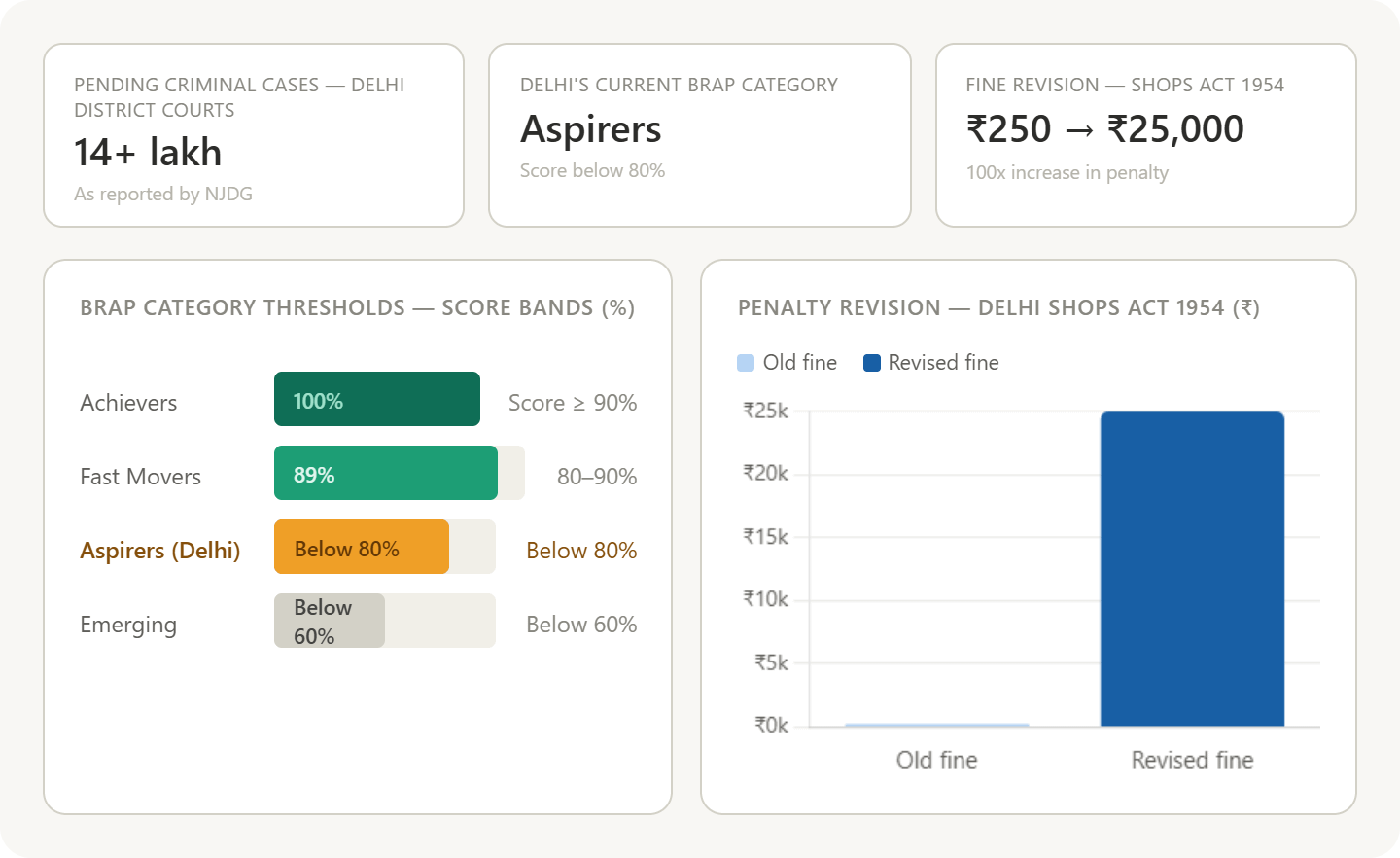
The Development: The Government of NCT Delhi has notified the Delhi Jan Vishwas (Amendment of Provisions) Act, 2026, replacing criminal penalties with civil adjudication mechanisms across multiple state laws, introducing structured penalty escalation, and aligning Delhi’s compliance framework with national decriminalisation reforms.
Key Takeaway: With over 14 lakh pending criminal cases in Delhi district courts, the reform shifts thousands of technical regulatory violations out of the criminal justice system into administrative enforcement. It reduces compliance friction for businesses while repositioning governance from criminal prosecution toward civil-regulatory adjudication and monetary deterrence.
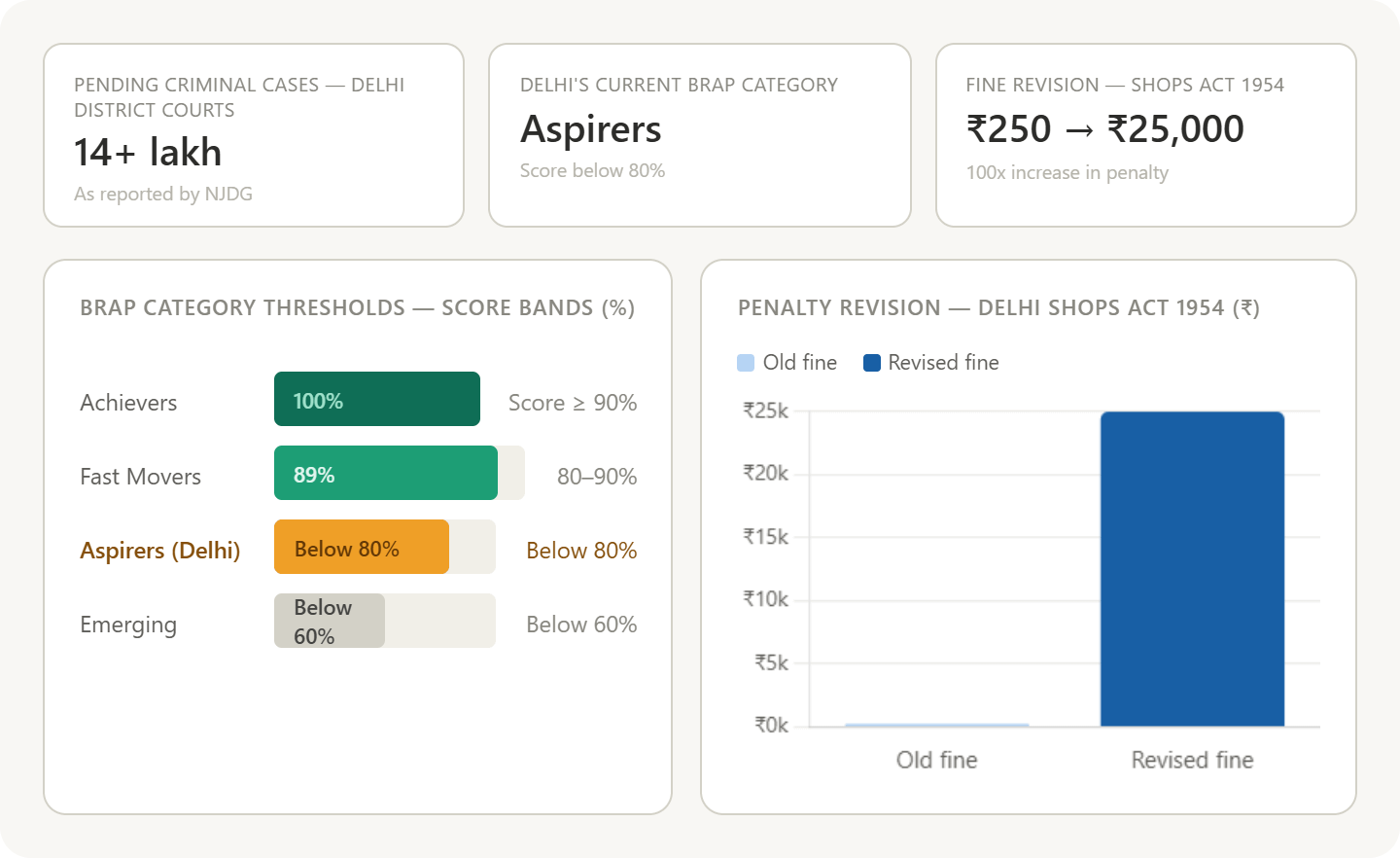
Image 1: A Representation Of Delhi’s Shift Towards Decriminalisation To Enable Ease Of Doing Business
II. Madhya Pradesh: Increasing Rural Land Acquisition Compensation
The Development: Madhya Pradesh has doubled the rural land acquisition multiplier from 1.0 to 2.0 under the Right to Fair Compensation and Transparency in Land Acquisition, Rehabilitation and Resettlement Rules, 2015, increasing compensation to up to four times the market value for infrastructure and public projects.
Key Takeaway: Land acquisition remains one of the largest causes of domestic infrastructure delays. By sharply increasing compensation, the state is attempting to convert land procurement from a conflict-heavy administrative process into a negotiated economic transaction, particularly as it pushes large irrigation, industrial corridor, and logistics projects tied to its long-term growth strategy.
III. Karnataka: Introducing Internal Reservation Within Scheduled Castes
Source: The Hindu, April, 2026
The Development: Karnataka has approved sub-classification within the existing 15% Scheduled Caste reservation, introducing category-wise internal quotas to ensure equitable distribution of reservation benefits among different Scheduled Castes sub-groups.
Key Takeaway: The Nagamohan Das Commission found the representation of Scheduled Castes in Karnataka Government departments at only 10.65%, with several castes having no MBBS graduates, PhDs, or Government employees. The sub-classification initiative redistributes the existing 15% quota across sub-groups using empirical data following the Supreme Court’s Davinder Singh ruling permitting such sub-classification.
IV. Odisha: Accelerating City Gas Infrastructure Expansion
Source: Hindustan Times, April 2026.
The Development: Odisha has approved the City Gas Distribution Policy, 2026, establishing a unified approval framework for PNG and CNG infrastructure with the Housing and Urban Development Department (H&UDD) as the nodal agency, supported by state and district-level monitoring committees and a fee moratorium until March 2027, with Private Investment Attraction as a primary goal.
Key Takeaway: India’s City Gas Distribution (CGD) market is projected to grow from ₹ 1.2 lakh crore in 2026 to ₹ 2.2 lakh crore by 2031. Odisha is using a private-investment-led framework to expand PNG and CNG infrastructure, reduce dependence on LPG, and support cleaner fuel adoption across industrial clusters.
V. Maharashtra: Building A Waste-To-Energy Biogas Ecosystem
Source: Economic Times, April, 2026
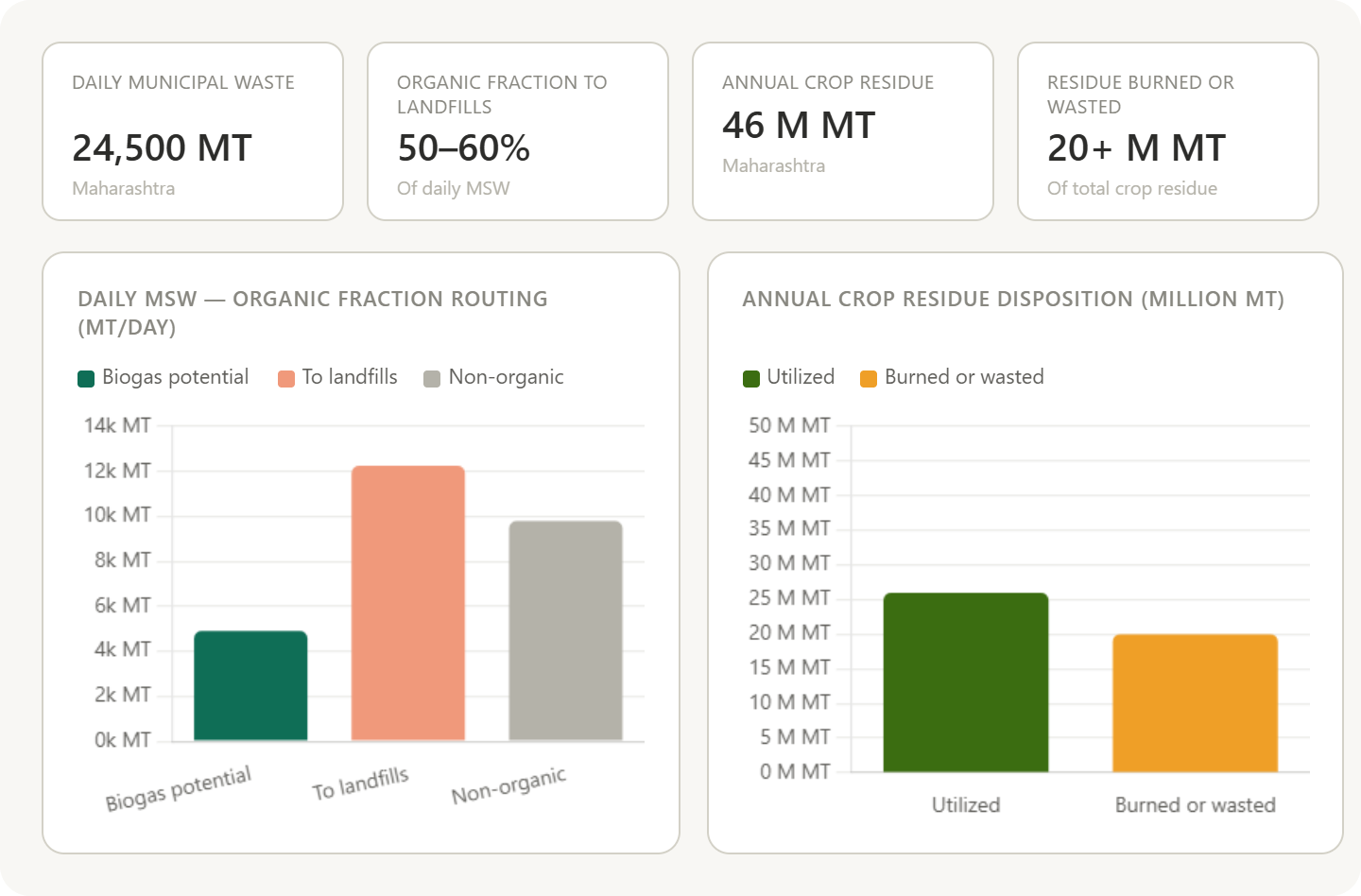
The Development: Maharashtra has approved the State Compressed Biogas (CBG) Policy, 2026, promoting conversion of municipal and agricultural waste into compressed biogas through ₹ 500 crore viability gap funding, and integration of waste management systems with energy production.
Key Takeaway: Maharashtra generates 24,500 MT of municipal waste and 46 million MT of crop residue annually, much of which ends up in landfills or open burning. The policy converts these waste streams into a clean-energy input while addressing execution gaps in India’s SATAT program through assured funding, and a guaranteed demand pipeline created by phased national CBG blending mandates from 1% in FY 2025-26 to 5% from FY 2028-29 for city gas distribution.
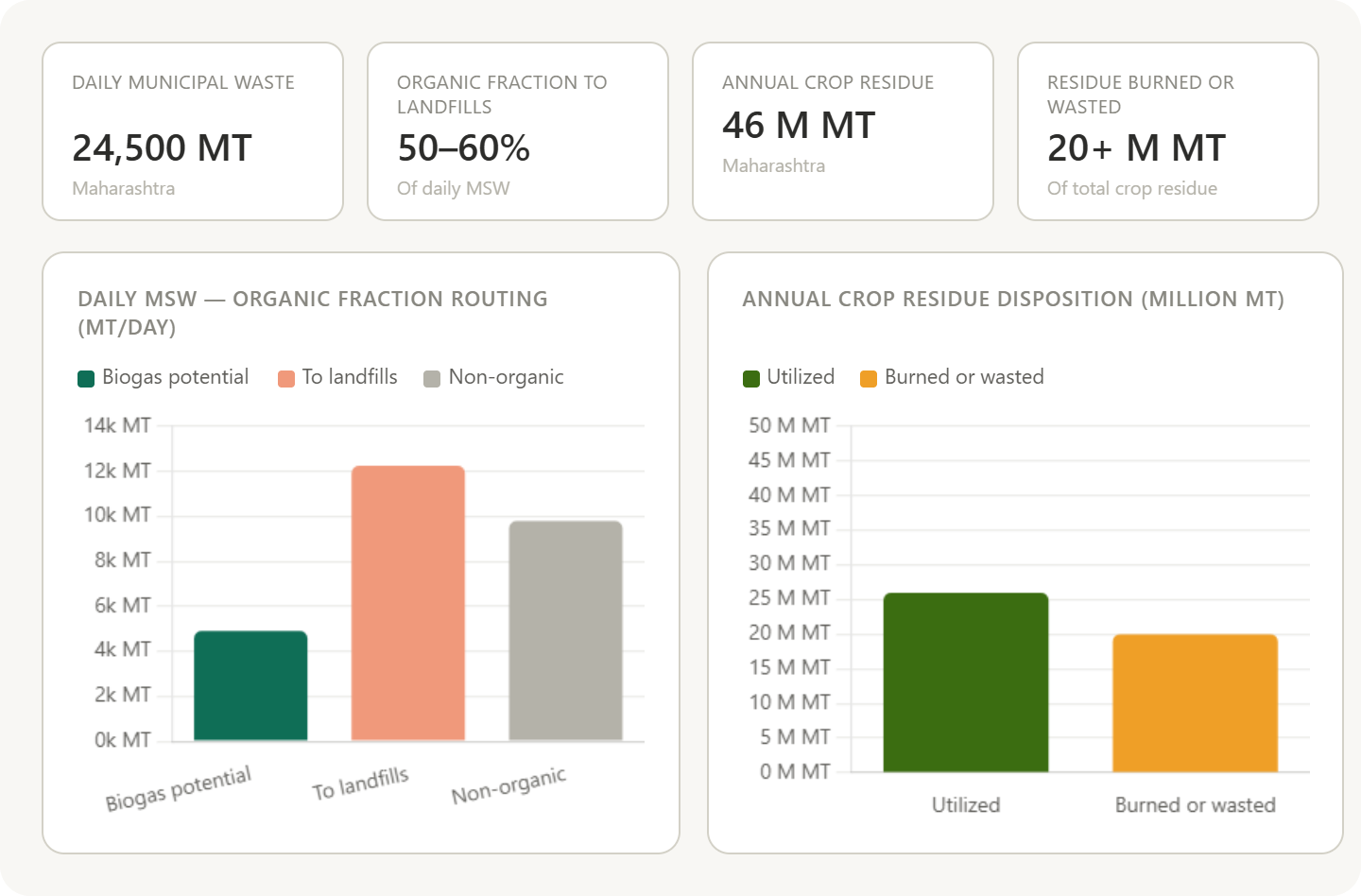
Image 2: A Demonstration Of Maharashtra’s Organic Waste And Crop Residue Gap
VI. Odisha: Institutionalising State-Level Data Governance
Source: Pragativadi, April, 2026
The Development: Odisha has approved the Odisha State Data Policy 2.0, creating a State Data Authority, multi-tier governance structure featuring state data steering and governance committees, and standardised interoperability and privacy protocols to regulate secure data sharing across Government departments.
Key Takeaway: The existing fragmented Government databases force citizens to repeatedly verify records across offices, increasing administrative costs and service delays. The policy creates a formal interoperability framework for Odisha’s ₹ 2.65 lakh crore governance system while aligning state-level data handling with compliance standards under the Digital Personal Data Protection (DPDP) Act, 2023.
VII. Uttarakhand: Expanding Climate-Resilient Connectivity Infrastructure
Source: Growth Of Tourism Industry In Uttarakhand.
The Development: Uttarakhand has unveiled a ₹ 74,100 crore five-year infrastructure plan to upgrade 5,735 km of rural roads into all-weather routes, modernise 1,200 bridges, strengthen landslide protection, and expand tourism and urban connectivity infrastructure.
Key Takeaway: In 2025 alone, landslides and heavy rainfall blocked over 150 rural roads and multiple highways across Uttarakhand. The plan combines climate-resilient road infrastructure with tourism diversification as the state targets 7 crore annual tourist arrivals and reduces pressure on existing Char Dham corridors.
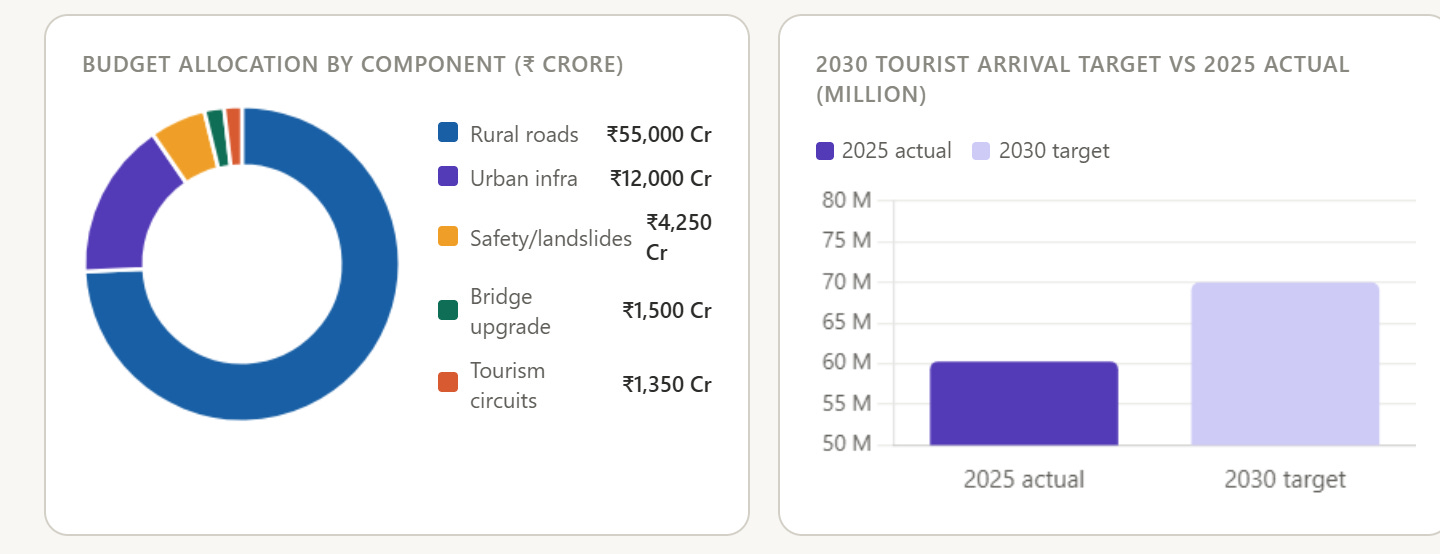
Image 3: A Snapshot Of Uttarakhand’s Budget Allocation To Achieve Its 2030 Tourism Targets
VIII. Uttar Pradesh: Extending Smart City Model to Tier II/III Towns
Source:
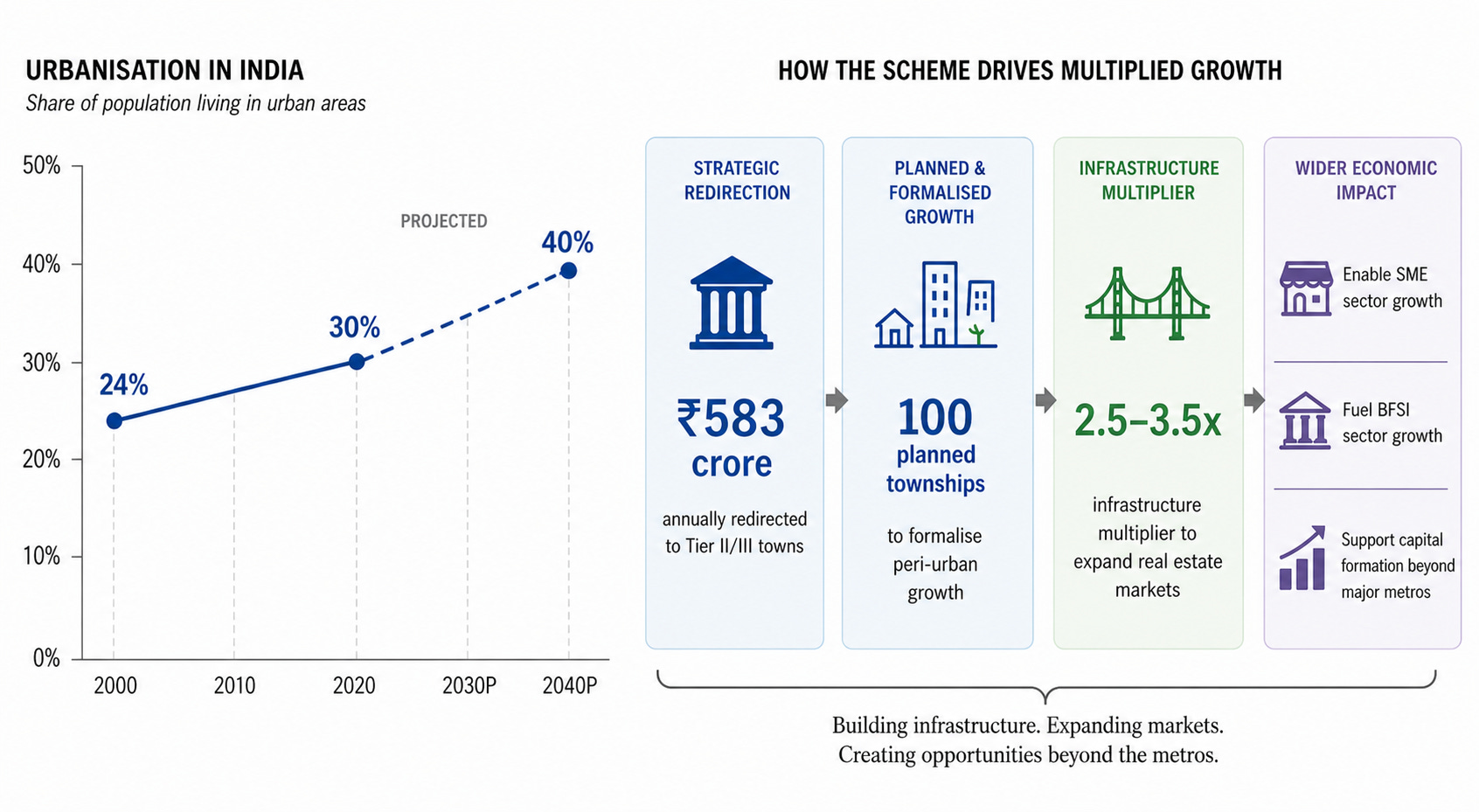
The Development: The Uttar Pradesh Government has launched the ₹ 2,915 crore Navayug Palika Yojana, 2026 to expand Smart City–style infrastructure to 58 district headquarters and smaller urban local bodies over a five-year period.
Key Takeaway: With urbanisation rising from 24% to 30% and projected to reach 40%, the scheme redirects ₹ 583 crore annually toward Tier II/III towns, formalises peri-urban growth through 100 planned townships, and leverages a 2.5–3.5x infrastructure multiplier to expand real estate markets, enable Small and Medium Enterprises (SME) and Banking, Financial Services, and Insurance (BFSI) sector growth, and support capital formation beyond major metropolitan centres.
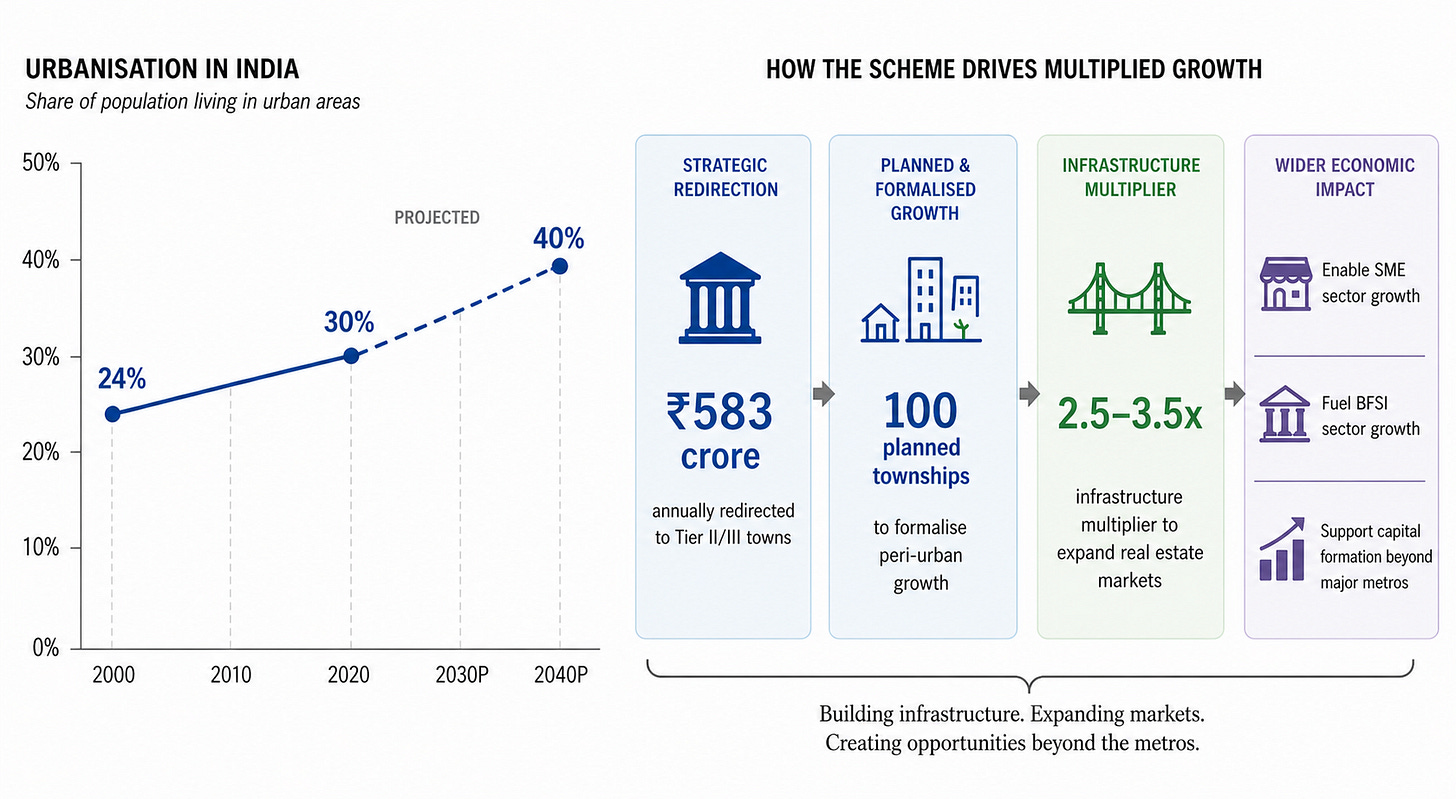
Image 4: A Depiction Of Rapid Urban Growth Beyond Metros By Investing In Tier II/III Towns
IX. Ladakh: Ladakh District Reorganisation Order, 2026
Source: Administration Of Union Territory Of Ladakh
The Development: The Ladakh Administration has approved the creation of five new districts via the Ladakh District Reorganisation Order, 2026, such as Nubra, Sham, Changthang, Zanskar, and Drass, to expand the Union Territory’s administrative structure from two to seven districts.
Key Takeaway: The expansion from two to seven districts reduces administrative concentration in one of India’s most geographically dispersed regions. By creating 33 new governance sub-units and appointing dedicated district-level officers, the reorganisation improves last-mile service delivery, border-area administration, and implementation of welfare and infrastructure schemes.
X. Odisha: B-MAAN Aviation Expansion Scheme, 2026
Source: Kalinga News, April, 2026.
The Development: The Odisha Government has approved 10 new flight routes under the ₹ 4,182 crore B-MAAN Aviation Expansion Scheme, 2026, alongside investments in airstrip upgrades, heliports, airport expansion, and aviation training infrastructure.
Key Takeaway: By combining route expansion with ₹ 500+ crore in airport upgrades, aviation skilling, and Aviation Turbine Fuel policy reforms, the scheme strengthens regional connectivity, integrates industrial hubs like Jharsuguda into national networks, and builds a broader aviation ecosystem spanning tourism, logistics, and workforce development.
If you are interested in the comprehensive reading of the newsletter, please click here to download the full version in PDF - Click Here