
Welcome to the latest edition of States in Motion, our fortnightly snapshot of key policy and governance developments across India’s states and Union Territories. This issue covers reforms spanning industrial approvals, tourism, aviation, labour markets, and local governance. Highlights include Andhra Pradesh’s target to expand air-cargo capacity nearly 68-fold by 2035, Odisha’s creation of a 5,500-acre hospitality land bank, Bihar’s new 30-day industrial approval framework, and Telangana’s extension of minimum-wage protections to gig workers. Together, these developments reflect how states are increasingly driving India’s next phase of economic and institutional reform.
I. Andaman And Nicobar Islands: Draft Tribal Councils (Preparation Of Electoral Rolls And Conduct Of Elections) Rules, 2026
Source: Click Here
The Development: The Andaman and Nicobar Administration has released the Draft Tribal Councils (Preparation of Electoral Rolls and Conduct of Elections) Rules, 2026, to formalise and standardise elections for the Nicobarese Tribal Councils under the Andaman and Nicobar Islands (Tribal Councils) Regulation, 2009. The rules provide for delimitation of constituencies, preparation of electoral rolls, reservation of seats, and the direct election of Chief Captains, with Island Tribal Councils serving fixed five-year terms.
Key Takeaway: The erstwhile regulation created Tribal Councils but never notified detailed electoral procedures, leaving representation to operate through customary, male clan-based structures. A formal framework, including reserved seats for women, is essential because the Nicobar Islands sit at the centre of the ₹ 92,000 crore Great Nicobar project, where Tribal Councils are key stakeholders in land-use and rehabilitation consultations.
II. Lakshadweep: The Excise Regulation, 2026
Source: Click Here
The Development: On 5th June, 2026, the President of India promulgated the Lakshadweep Excise Regulation, 2026, replacing the Lakshadweep Prohibition Regulation, 1979 and establishing a regulated liquor regime. The regulation permits licensed manufacture, import, sale, and consumption of liquor, while imposing excise duties of 400% on Indian-Made Foreign Liquor (IMFL) and imported liquor, 200% on beer, and 80% on wine, alongside age and location-based restrictions.
Key Takeaway: The regulation shifts Lakshadweep from a prohibition-based framework, which has been in place for 47 years, to a revenue-generating, tourism-oriented excise regime while retaining tight regulatory controls. By enabling licensed alcohol access and imposing high duties, it aims to strengthen the Union Territory’s competitiveness in premium tourism and create new revenue streams through excise duties, licence fees, and regulatory charges.
III. Haryana: Compliance Reduction And Deregulation Reforms
Source: Click Here
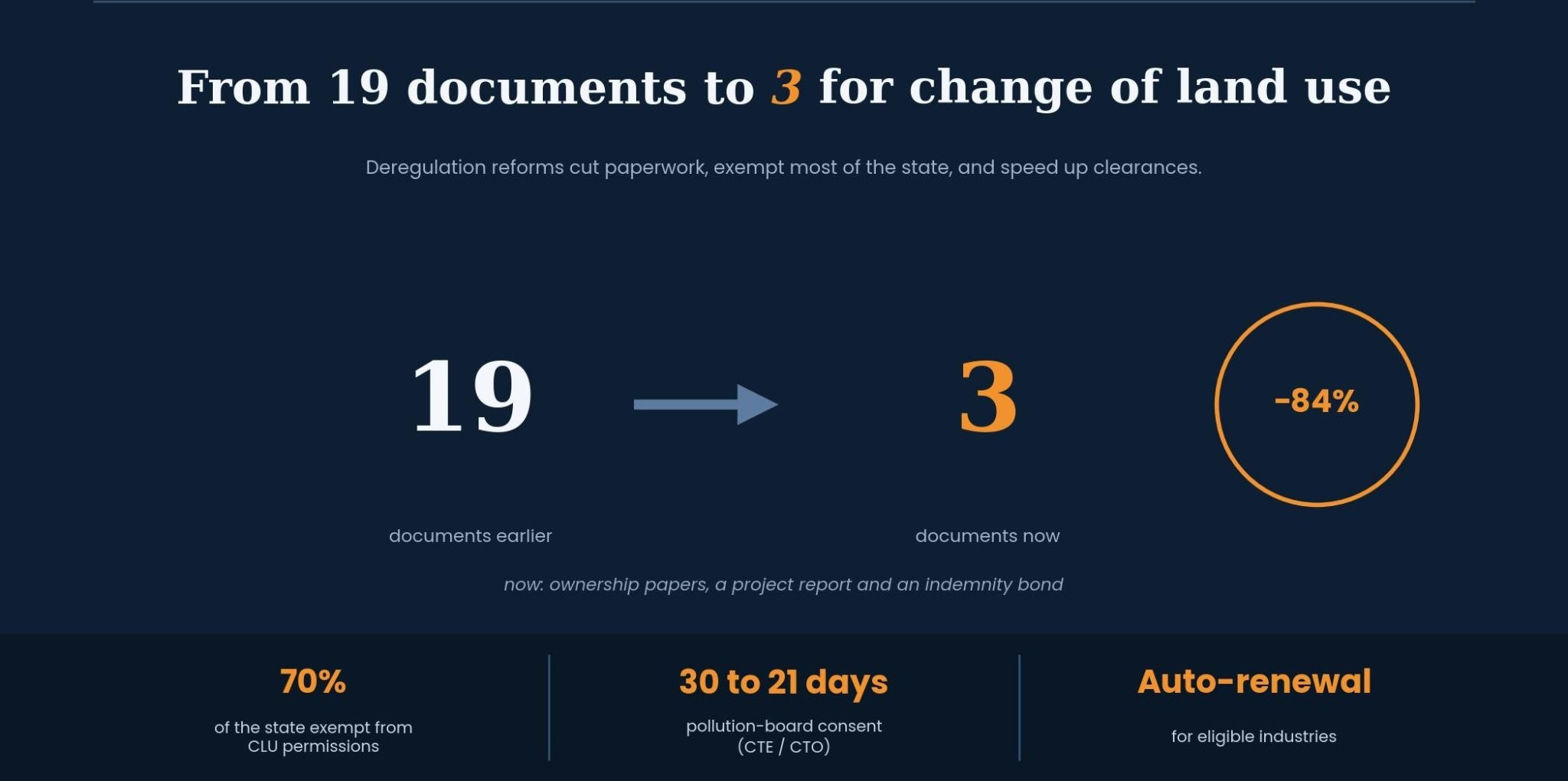
The Development: On 4th June, 2026, the Haryana Government announced compliance reduction and deregulation reforms, cutting Change of Land Use (CLU) documentation requirements from 19 documents to 3, exempting nearly 70% of the state’s geographical area from CLU permissions, and reducing Pollution Control Board approval timelines from 30 to 21 working days with auto-renewal for eligible industries.
Key Takeaway: The reforms significantly reduce approval and compliance burdens in a state that attracted 5% of India’s total FDI between October 2019 and March 2025 and recorded merchandise exports of ₹ 23,597.5 crore in FY 2024–25. Faster clearances and wider land-use flexibility could accelerate project implementation across Haryana’s industrial base, including over 450 companies operating in its four Software Technology Parks.
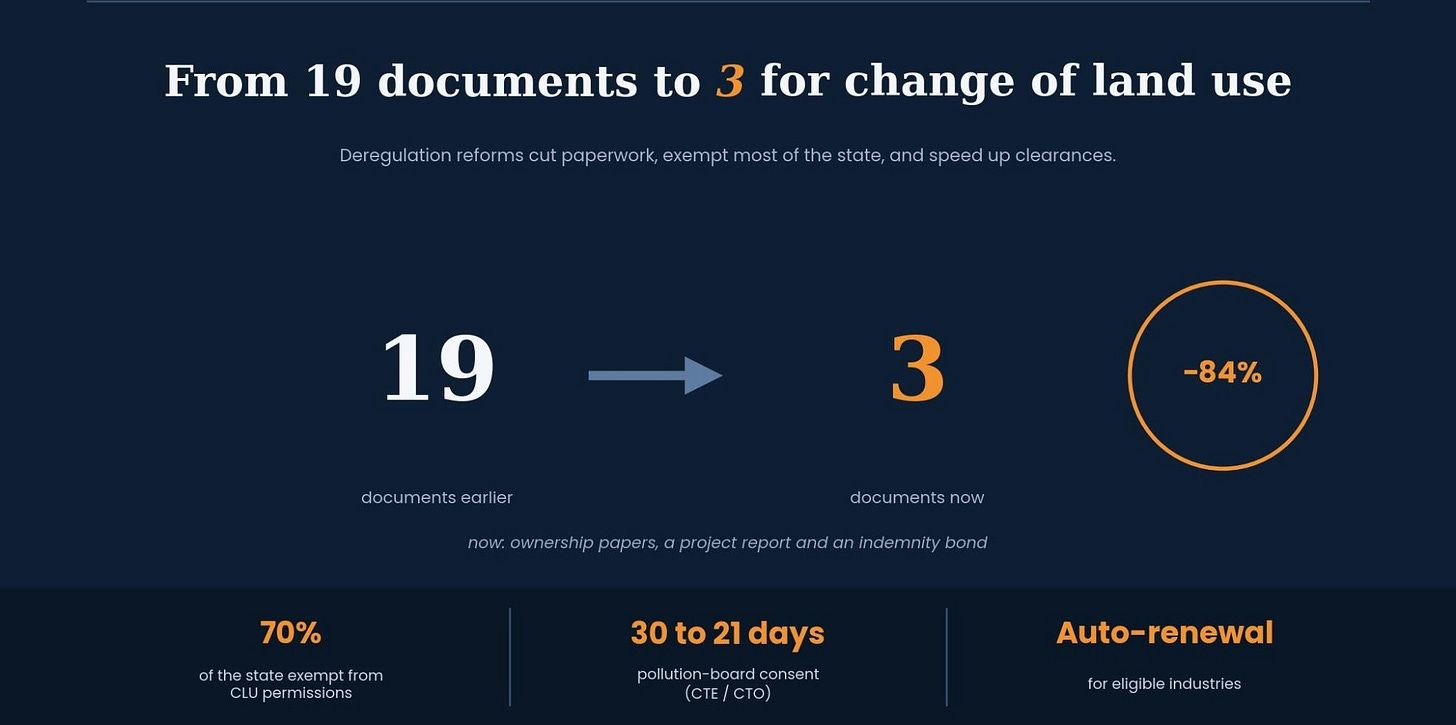
Image 1: Haryana Compliance Reduction In Change Of Land Use Documentation
IV. Andhra Pradesh: State Aviation Policy, 2026
Source: Click Here
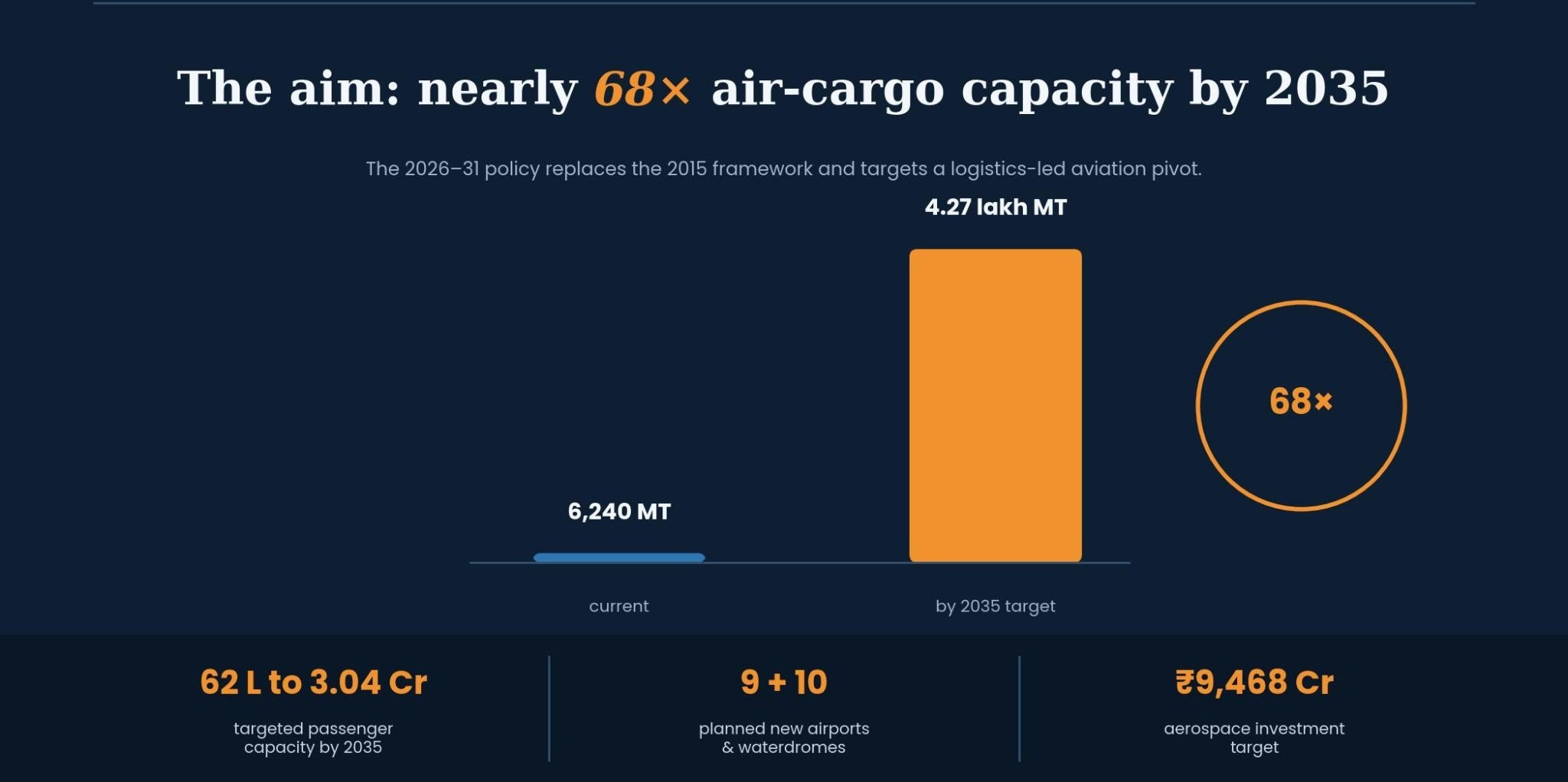
The Development: On 4th June, 2026, the Andhra Pradesh Cabinet approved the State Aviation Policy, 2026, replacing the Andhra Pradesh Civil Aviation Policy, 2015. The policy targets expansion of annual passenger capacity from 62 lakh to 3.038 crore and air-cargo capacity from 6,240 metric tonnes to 4.27 lakh metric tonnes by 2035, alongside plans for nine new airports and ten waterdromes.
Key Takeaway: The policy positions aviation as a logistics and industrial growth driver by targeting a nearly 68-fold increase in air-cargo capacity and over $ 1 billion (₹ 9,468 crore) in aerospace investment. It also seeks to support sectoral expansion through new airport infrastructure and annual aviation training for 5,000 individuals, strengthening the state’s aerospace and aviation ecosystem.
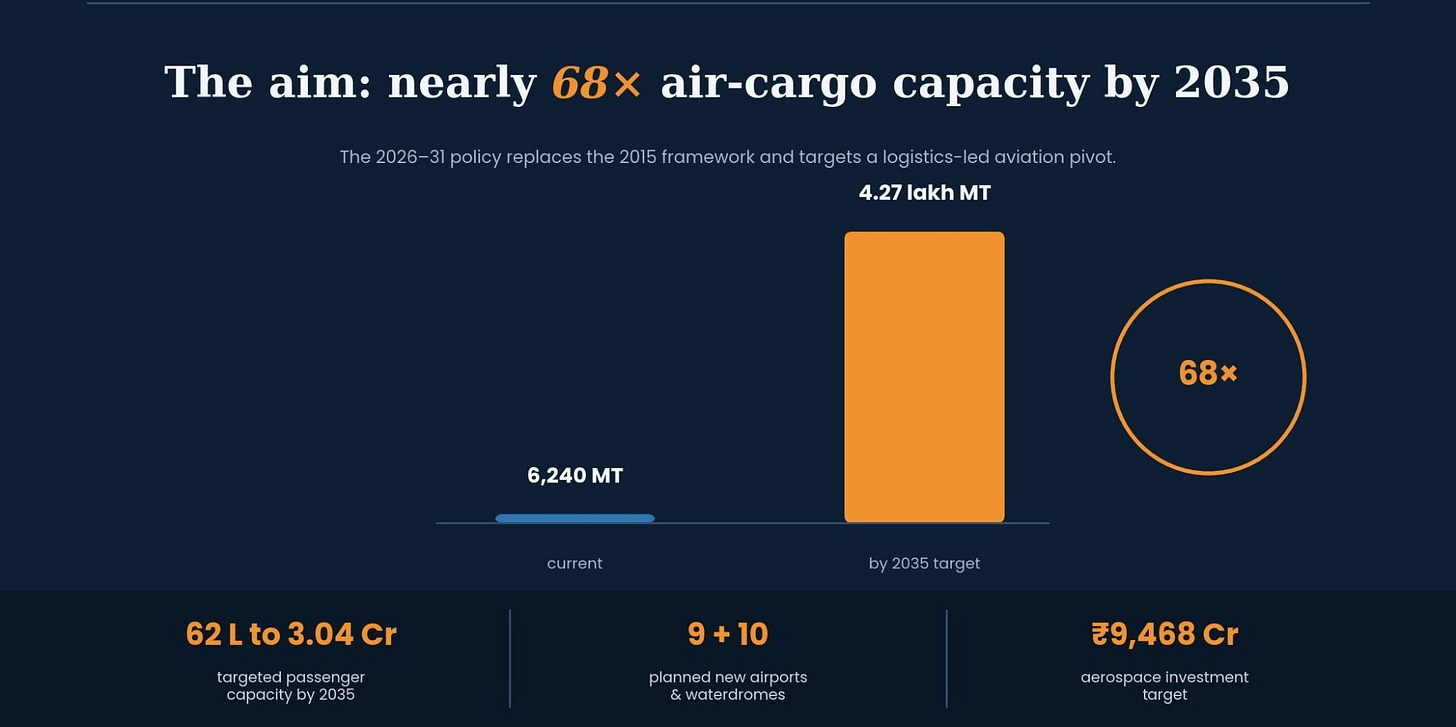
Image 2: Goals Of Andhra Pradesh State Aviation Policy, 2026
V. Bihar: Industrial Approval Timeline And Deemed Clearance Framework
Source: Click Here
The Development: On 9th June, 2026, the Government of Bihar notified the Industrial Approval Timeline and Deemed Clearance Framework under the Bihar Industrial Investment Promotion Act, 2016. The framework mandates approval of eligible investment proposals within 30 days or the prescribed statutory timeline, introduces legally binding deemed clearances for delayed decisions, and designates the State Investment Promotion Board (SIPB) Secretariat as the single nodal agency for processing proposals.
Key Takeaway: The framework addresses approval bottlenecks that persisted despite Bihar securing 423 MoUs worth ₹ 1.81 lakh crore at Bihar Business Connect 2024, of which only 167 projects worth ₹ 6,794 crore had received approvals by mid-2025. By making the 30-day approval timeline enforceable and enabling deemed clearances, it seeks to convert a larger share of committed investment into operational projects.
VI. Assam: Declaration Of Dibrugarh As The Second Capital Region
Source: Click Here
The Development: On 5th June, 2026, the Assam Cabinet approved the declaration of Dibrugarh as the state’s second capital region and constituted the Second State Capital Region Development Authority–Dibrugarh (SCRDA-D). The authority will oversee a 20-km radius around the Dibrugarh Capital Complex and be supported by a dedicated infrastructure fund of ₹ 500 crore.
Key Takeaway: The move establishes a statutory planning and development framework for Upper Assam, centred on Dibrugarh, which is located about 478 km from Guwahati and serves as a major economic hub with around 177 tea gardens and the Duliajan oilfield. Backed by ₹ 500 crore and regional planning powers, the initiative seeks to decentralise administrative functions and infrastructure development beyond Guwahati.
VII. Odisha: Hospitality Infrastructure Land Bank Scheme (FY 2026–27 To 2030–31)
Source: Click Here
The Development: On 9th June, 2026, the Odisha Cabinet approved the Hospitality Infrastructure Land Bank Scheme to create a 5,500-acre pool of investment-ready land across major tourism destinations. The five-year scheme (spanning from 2026–27 to 2030–31) carries an annual outlay of ₹ 300 crore and a total estimated investment of ₹ 1,500 crore to support hospitality and tourism infrastructure projects.
Key Takeaway: The scheme addresses prolonged hospitality project delays due to land unavailability in Odisha’s tourism sector by creating 5,500 acres of investment-ready land across major destinations, reducing delays linked to land acquisition and site readiness. This is significant for a sector that contributed around 13% of GSDP in 2023–24 and supported a record 1.14 crore tourist visits in 2024–25, up from 1.00 crore a year earlier.
VIII. Telangana: Gig And Platform Workers Minimum Wage Framework
Source: Click Here
The Development: The Government of Telangana notified the Code on Wages, 2019, superseding the Minimum Wages Act, 1948, with effect from 1st June, 2026. The framework extends minimum-wage coverage to gig and platform workers, mandates electronic wage payments, and raises Zone-1 minimum wages from ₹ 12,750 to ₹ 16,000 for unskilled workers and from ₹ 14,607 to ₹ 20,000 for highly skilled workers.
Key Takeaway: The framework formalises wage protection for gig workers through mandatory digital payments and integration with Telangana’s platform-worker welfare architecture, which includes worker registration and real-time payment tracking. Notably, surveys of platform workers in Hyderabad found that 45% reported arbitrary ID blocks, 66% lacked effective grievance mechanisms, and many workers had no access to accident insurance or social-security benefits. Therefore, by bringing gig workers within a formal wage and welfare architecture, the state is attempting to address the persisting vulnerabilities.
Also, please consider subscribing to NFPRC Foundation’s focused centres covering latest economic, policy and administrative developments -
Centre for Law, Policy and Governance - Link
Centre for Accelerating India’s Growth - Link
Centre for Studies in Indian Social Systems - Link
NFPRC Foundation - Link