
State-level governance in India is entering a more execution-driven phase. The focus is shifting away from broad policy expansion toward legal rationalisation, regulatory clarity, and systems that can be implemented at scale.
This edition of States in Motion examines how states are restructuring their legal and regulatory frameworks to respond to emerging pressures ranging from digital harm and platform economies to energy transition and social protection. From Maharashtra’s attempt to clean up legacy laws and extend criminal law into the digital domain, to Gujarat’s move toward a standardised civil framework, the developments reflect a deeper shift toward governance precision and state-led institutional design.
I. Maharashtra: Cleaning Up The Statute Book
Source: Click Here
The Development: Maharashtra has passed the Repealing Bill (Obsolete Laws), 2026, removing around 80 outdated and colonial-era laws to streamline its legal framework and eliminate redundant provisions.
Key Takeaway: This shifts the legal system from a legacy-heavy regulatory framework to an investor-aligned code, removing ghost laws that inflated compliance risk and administrative discretion.
II. Maharashtra: Criminalising Digital Sexual Harassment
Source: Click Here
The Development: The Maharashtra Legislature passed the Bharatiya Nyaya Sanhita (Maharashtra Amendment) Act, 2026, to extend legal protections to acid attack survivors and recognise digital sexual harassment, criminalising online abuse, identity disclosure, and threats involving digital content.
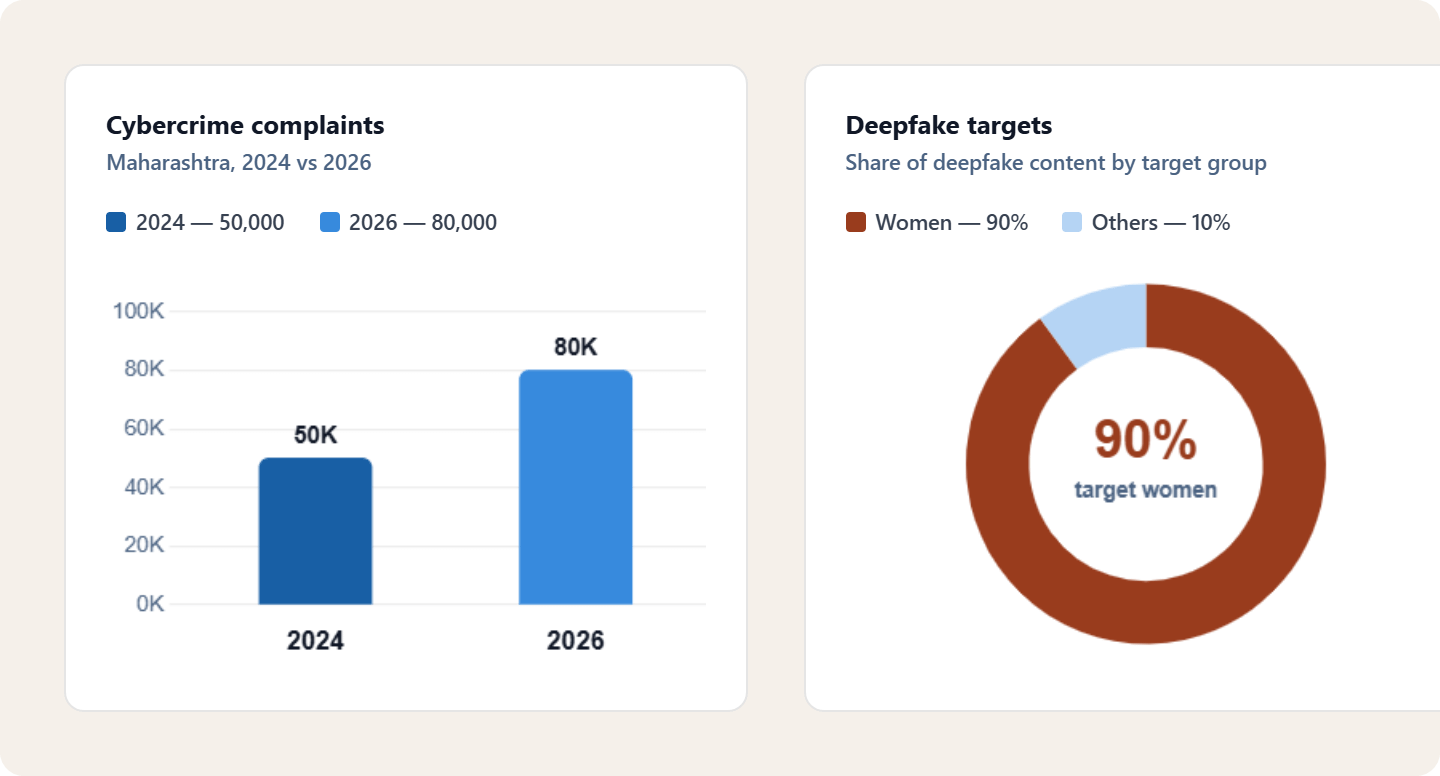
Key Takeaway: As deepfakes surge by 900% and cybercrime complaints rise of 60%, criminal law is being extended from physical offences to digitally mediated harm. It repositions online abuse as a core law-and-order issue rather than a peripheral cyber concern.
III. Chhattisgarh: Strengthening The Anti-Conversion Framework
Source: Click Here
The Development: Chhattisgarh has introduced the Freedom of Religion Bill, 2026, expanding the scope of anti-conversion laws to include digital and economic inducements, with stringent penalties ranging from 7 years to life imprisonment for violations.
Key Takeaway: The Bill responds to rising religious conversion cases in Chhattisgarh, with at least 13 FIRs registered in 2024, indicating a clear law-and-order concern, particularly in tribal and sensitive districts. It explicitly targets digital inducements while strengthening protections for vulnerable groups such as women, minors and the Scheduled Castes/Scheduled Tribes communities.
IV. Maharashtra: Scaling Renewable Energy With Storage Integration
Source: Click Here
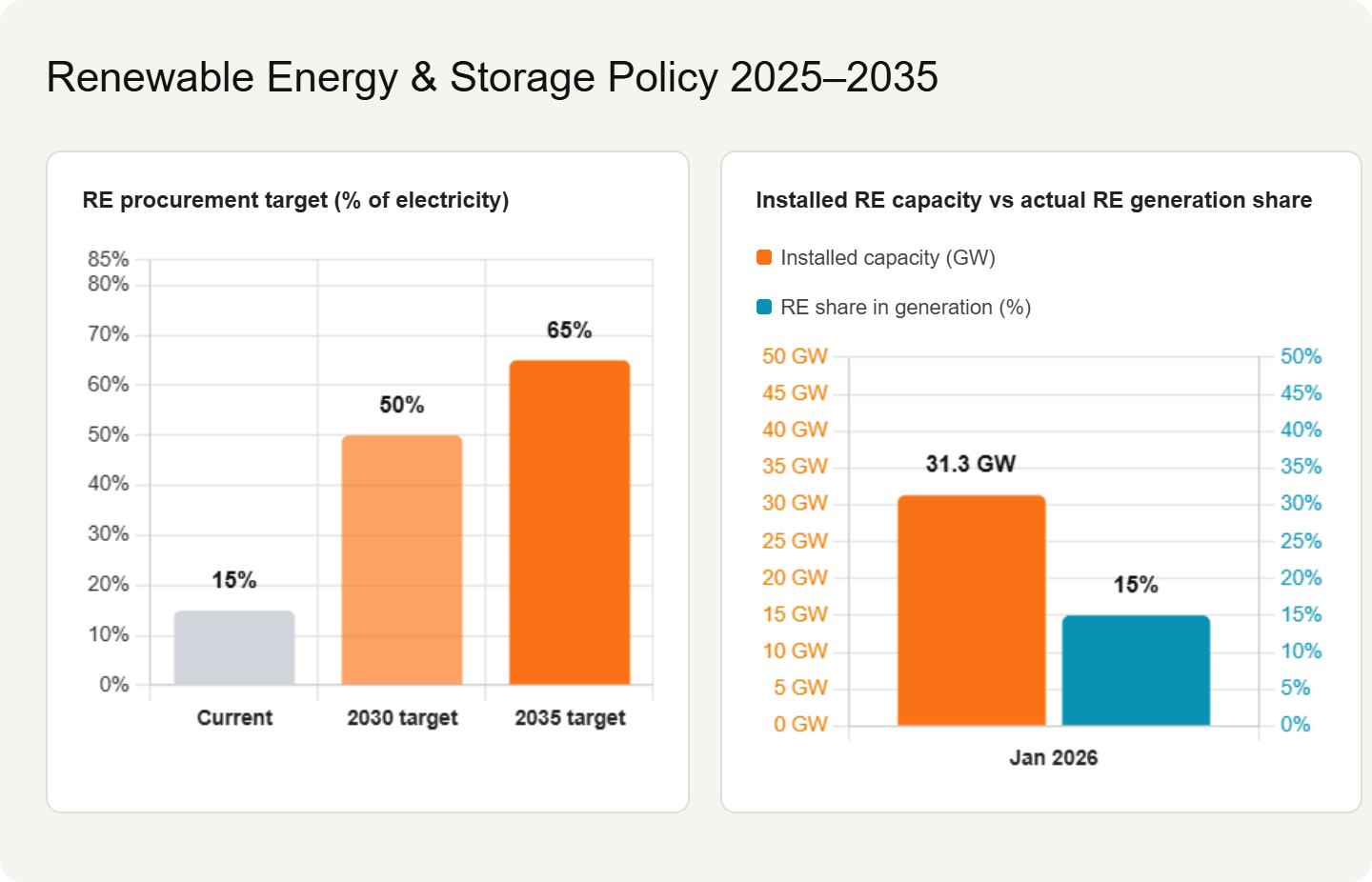
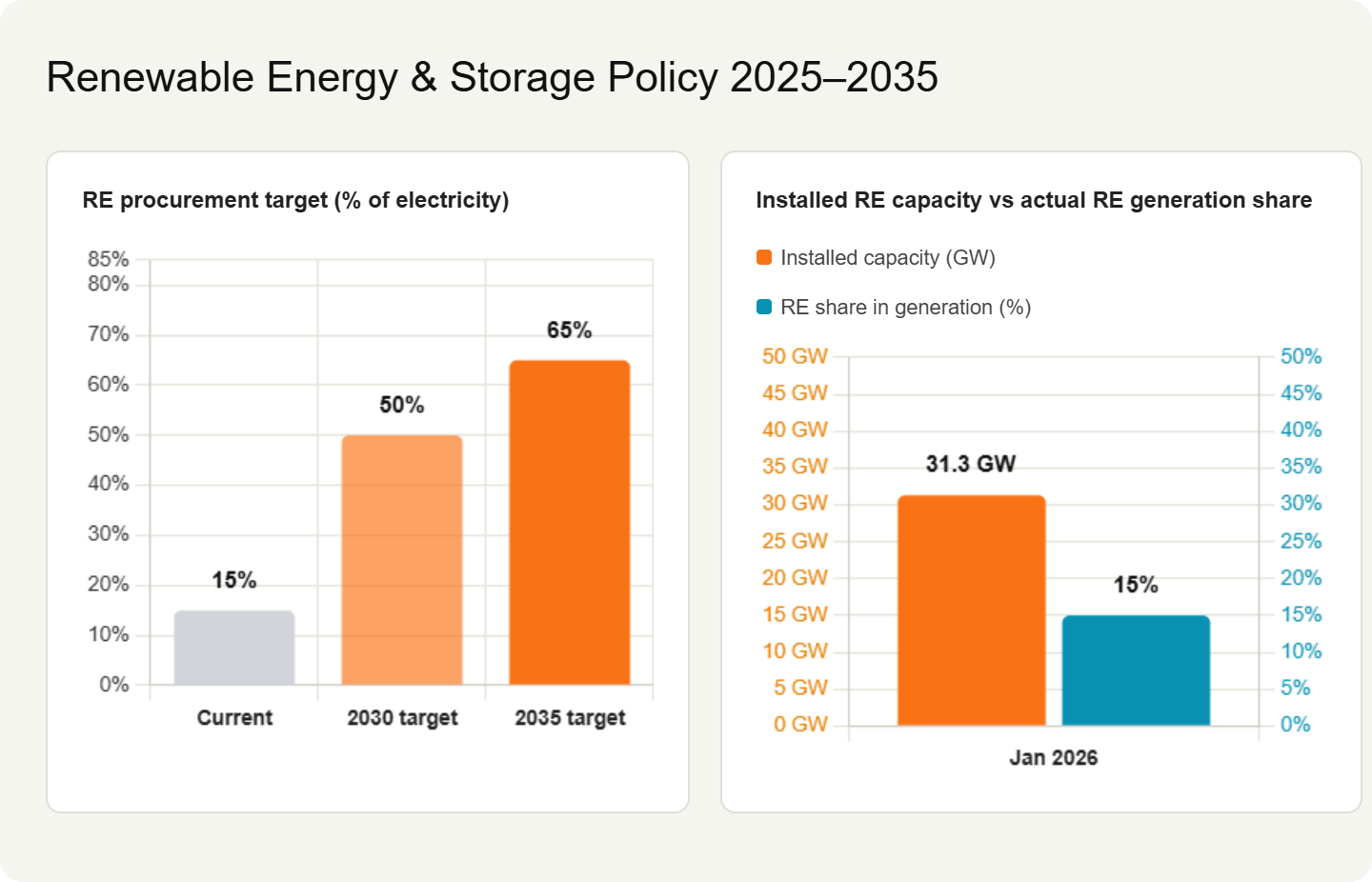
The Development: Maharashtra has approved the Renewable Energy and Energy Storage Policy, 2025–2035, targeting 100 GW renewable capacity and 100 GWh storage, with a goal of 50% renewable procurement by 2030 and 65% by 2035, supported by ₹ 1,650 crore state backing to mobilise ₹ 3.12 lakh crore in private investment and the creation of “Renewable Energy Industrial Zones.”
Key Takeaway: The power demand has risen to 30.7 GW, while 2.3 TWh of solar power is already being curtailed due to grid limits, exposing the limits of capacity-only expansion. This shifts the focus from capacity addition to storage-led grid integration, positioning energy storage as the core enabler for reliable, industrial-scale renewable power.
V. Gujarat: Implementing A Uniform Civil Code
Source: Click Here
The Development: Gujarat has passed the Uniform Civil Code (UCC) Bill, 2026, creating a common legal framework for marriage, divorce, succession, and live-in relationships. The law mandates registration, enforces monogamy, regulates divorce, and introduces penalties for non-compliance, while exempting Scheduled Tribes.
Key Takeaway: This shifts personal law from a community-governed system to a state-standardised civil regime, formalising informal relationships like live-ins under enforceable legal rights and obligations.
VI. Karnataka: Capping Private Healthcare Costs
Source: Click Here
The Development: Karnataka has proposed the Draft Karnataka Private Medical Establishments (Amendment) Bill, 2026, to cap prices for commonly performed procedures in private hospitals, introducing a state-led framework to standardise treatment rates for basic services such as diagnostics and routine care, while excluding high-end procedures.
Key Takeaway: Given that 74.3% of healthcare spending is out-of-pocket and up to 87% of hospitalisations occur in private facilities, the state is moving into the role of a price-setter in a private-dominated system. This corrects cost asymmetry where patients have near-zero bargaining power.
VII. Telangana: Regulating Hate Speech And Digital Harm
Source: Click Here
The Development: Telangana has approved the Hate Speech and Hate Crime Prevention Bill, 2026, creating a statutory framework to define, penalise, and enable real-time removal of hate speech across physical and digital platforms, with penalties ranging from 1 to 10 years and provisions for blocking online content.
Key Takeaway: Rising AI-driven deepfakes and weak conviction rates have eroded deterrence. This introduces real-time takedown powers and the introduction of enhanced penalties, essentially pre-empt violence. However, broad triggers like “ill-will” and the absence of independent oversight concentrate significant discretionary power in enforcement.
VIII. Himachal Pradesh: Strengthening Dairy-Led Rural Economy
Source: Click Here
The Development: Himachal Pradesh has signed an MoU with the National Dairy Development Board (NDDB) to strengthen the dairy sector, introduce the “HIM” brand for local products, and improve farmer incomes through better productivity and market access.
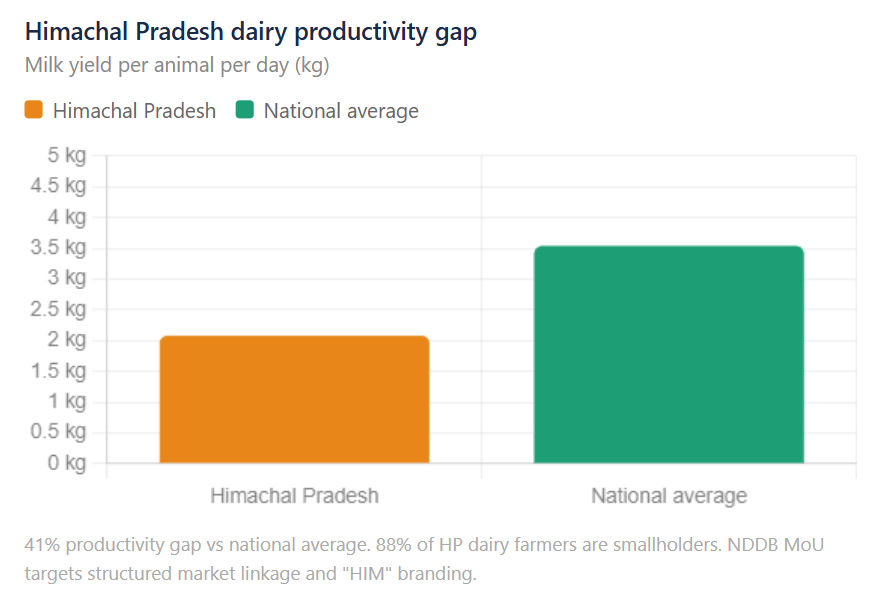
Key Takeaway: The milk productivity stands at just 2.08 kg/animal/day versus the 3.54 kg national average, with 88% smallholders, limiting income potential. This shifts dairy from a subsistence activity to a structured rural enterprise, using branding and higher procurement at ₹ 51/litre to stabilise incomes and improve price realisation.
IX. Uttar Pradesh: Introducing Egg Traceability Standards
Source: Click Here
The Development: Uttar Pradesh has mandated that from 1st April, 2026, all eggs must be stamped with the date of laying and expiry before sale, with non-compliant stock liable for destruction and enforcement led by food safety and animal husbandry departments.
Key Takeaway: Eggs are typically sold loose with no freshness information, leaving consumers exposed to spoilage and contamination risks. This introduces point-of-sale traceability in a largely informal supply chain, enabling batch-level accountability while forcing traders to adapt despite limited cold storage and compliance infrastructure.
Taken together, these developments point to a clear pattern: states are no longer just policy implementers but active designers of regulatory architecture across sectors. Whether in law, energy, healthcare, or digital governance, the emphasis is on reducing ambiguity, strengthening enforcement, and building frameworks that align with evolving economic and social realities.
The full edition breaks down each of these developments in detail, with data, legislative context, and state-specific implications to help readers understand not just what is changing, but how these shifts are likely to shape governance outcomes across India.
Access the complete newsletter here: Click Here