

State governments across India are transitioning from broad-based welfare towards structural, data-driven interventions. This fortnight’s roundup examines Bihar’s pedagogical triage, Andhra Pradesh’s demographic gamble, and the emergence of state-level industrial strategies for deep-tech and maritime sovereignty.
I. Bihar: Grading Learning Outcomes At Scale
Source: Click Here
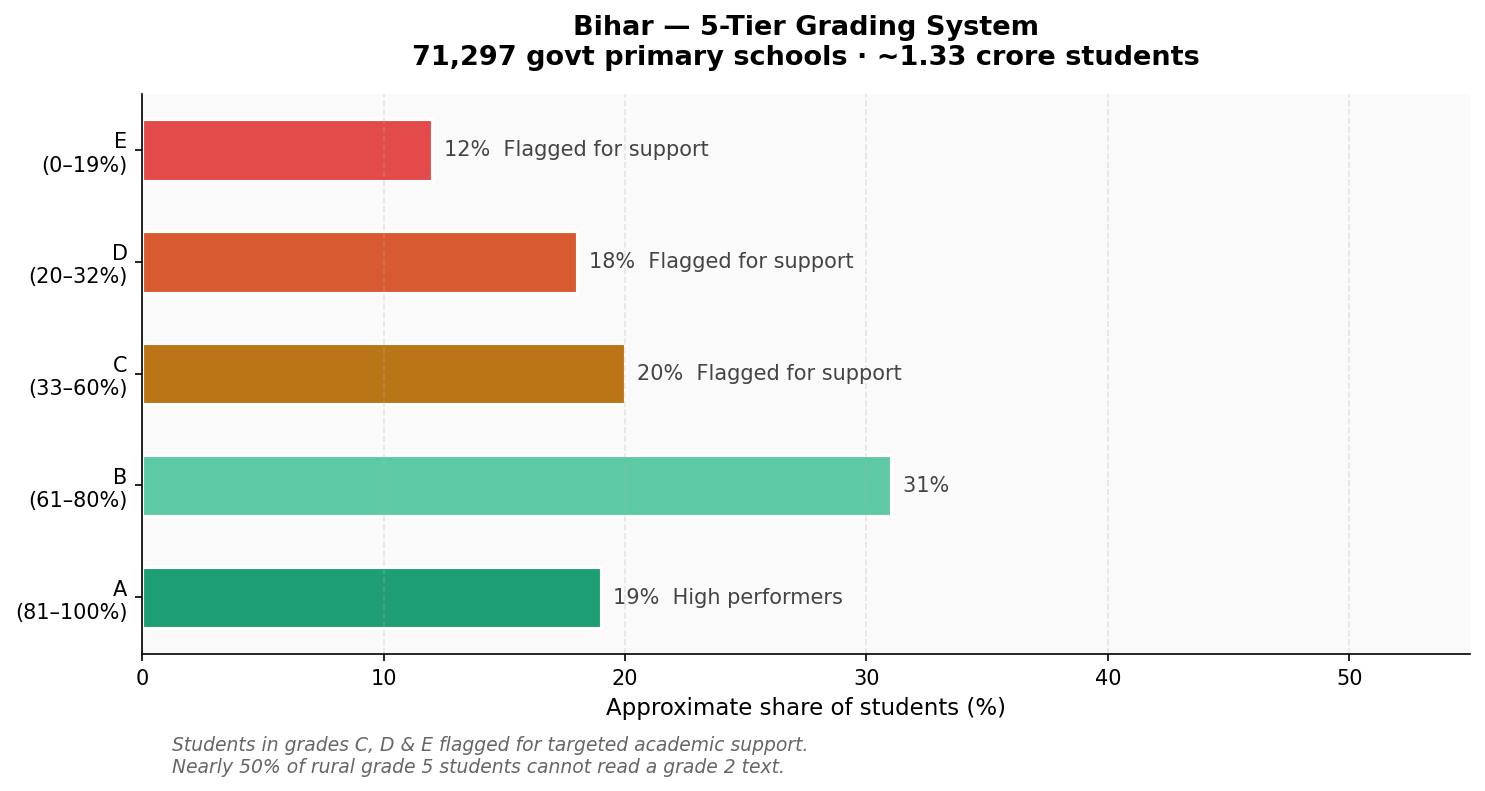
The Development: In Bihar, classrooms are being quietly reorganised around data. A new five-tier grading system, covering over 1.33 crore students across 71,000+ schools, replaces the blunt pass–fail model with a more granular lens. Students are now grouped from A to E, allowing teachers to clearly identify those falling behind. The focus shifts from merely evaluating performance to actively flagging and supporting students in grades C, D, and E.
Key Takeaway: At a time when nearly half of grade 5 students in rural India struggle to read grade 2 texts, this reform works as a triage system, making learning deficits visible and actionable at scale.
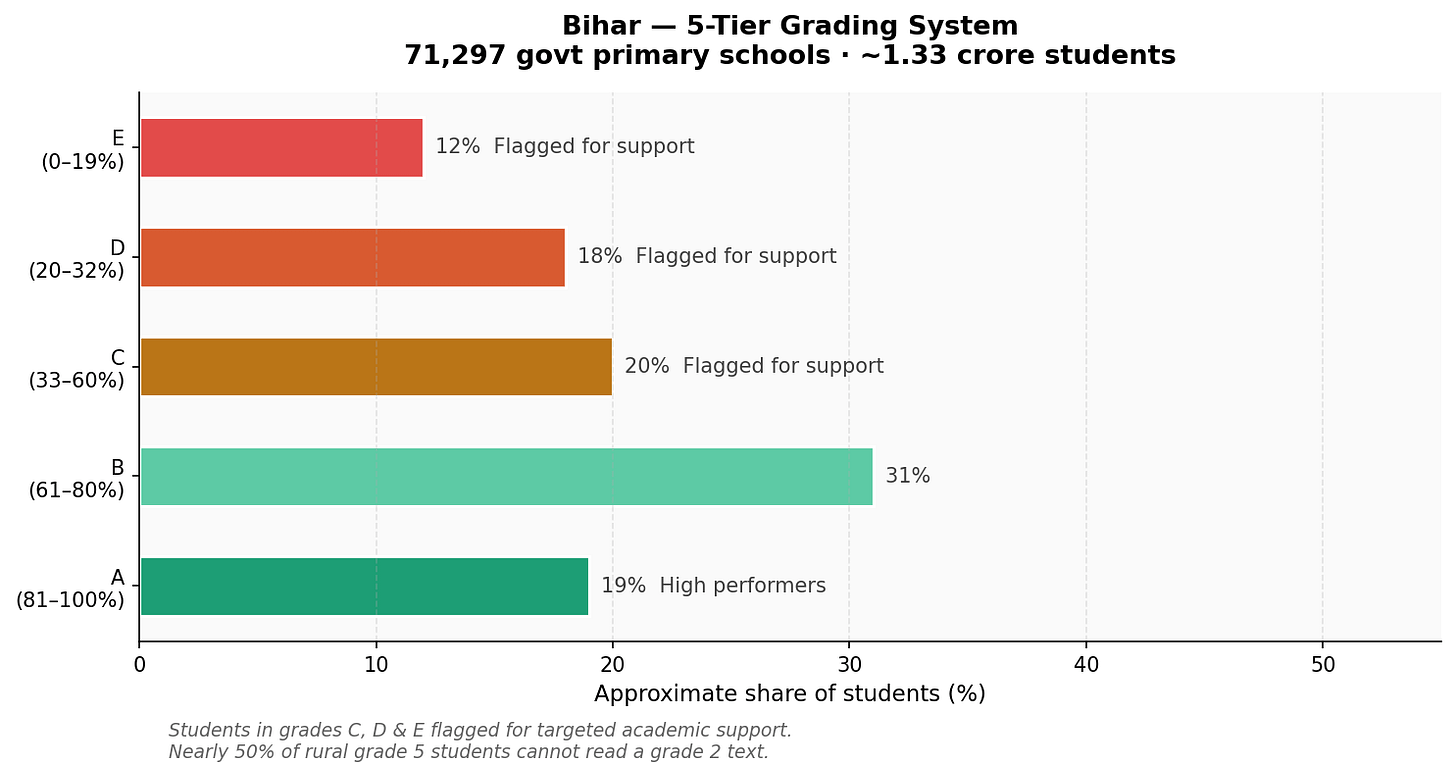
Image 1: Tiered Bars Representing Score Ranges Within The New Framework
II. Maharashtra: Regulating Religious Conversions
Source: Click Here
The Development: Maharashtra has tabled the Freedom of Religion Bill, 2026, joining 12 other states in regulating the mechanics of religious conversion. The Bill mandates a 60-day prior notice to district authorities and shifts the burden of proof onto the facilitator. By defining unlawful conversion through the lens of allurement or marriage-related inducement, it prescribes penalties of up to seven years.
The Takeaway: The legislation treats social cohesion as a site of active governance. While framed as a public order measure, its success depends on balancing state oversight with the constitutional “risk premium” associated with individual choice.
III. Tamil Nadu: Building India’s Premier Animation, Visual Effects, Gaming, Comics, and Extended Reality (AVGC-XR) Hub
Source: Click Here
The Development: Tamil Nadu’s AVGC-XR Policy 2026, is not just about animation, rather it is about credit innovation. The policy introduces IP-collateralised loans, allowing creative startups to use their digital intellectual property as leverage for bank financing, a first for the sector in India.
The Takeaway: With a higher education GER of 50%, the state is pivoting its talent pool toward a $ 300 billion (₹ 24.90 lakh crore) global market. By fixing the financing gap, the state is treating creative code with the same fiscal maturity as physical manufacturing.
IV. Gujarat: A ₹ 1,000 Crore Bet On Indigenous R&D
Source: Click Here
The Development: Gujarat’s Science, Technology and Innovation (STI) Policy, 2026–2031 creates a ₹ 1,000 crore Swadeshi Anusandhan Fund. It moves away from broad research toward 100 high-impact, market-ready projects in semiconductors and biotech, supported by dedicated IP Facilitation Centres.
The Takeaway: While national R&D spend remains below 1% of GDP, Gujarat is using this fund to compress the transition time between a laboratory prototype and a commercially viable product.
V. Punjab: The ₹ 75,000 Crore Industrial Policy
Source: Click Here
The Development: Punjab is attempting to break the industrial gravity of the Ludhiana–Mohali–Jalandhar belt with its Punjab Industrial and Business Development Policy, 2026. The policy introduces a high-flexibility incentive model, allowing investors to recoup up to 100% of fixed capital investment over 15 years.
The Takeaway: By offering a 25% top-up incentive for border and Kandi regions, the state is actively pushing investment into under-industrialised zones. The extended 15-year horizon is specifically designed to attract capital-intensive sectors, like semiconductors, which require long-term fiscal stability to reach profitability.
VI. Andhra Pradesh: Building India’s Shipbuilding Industrial Base
Source: Click Here
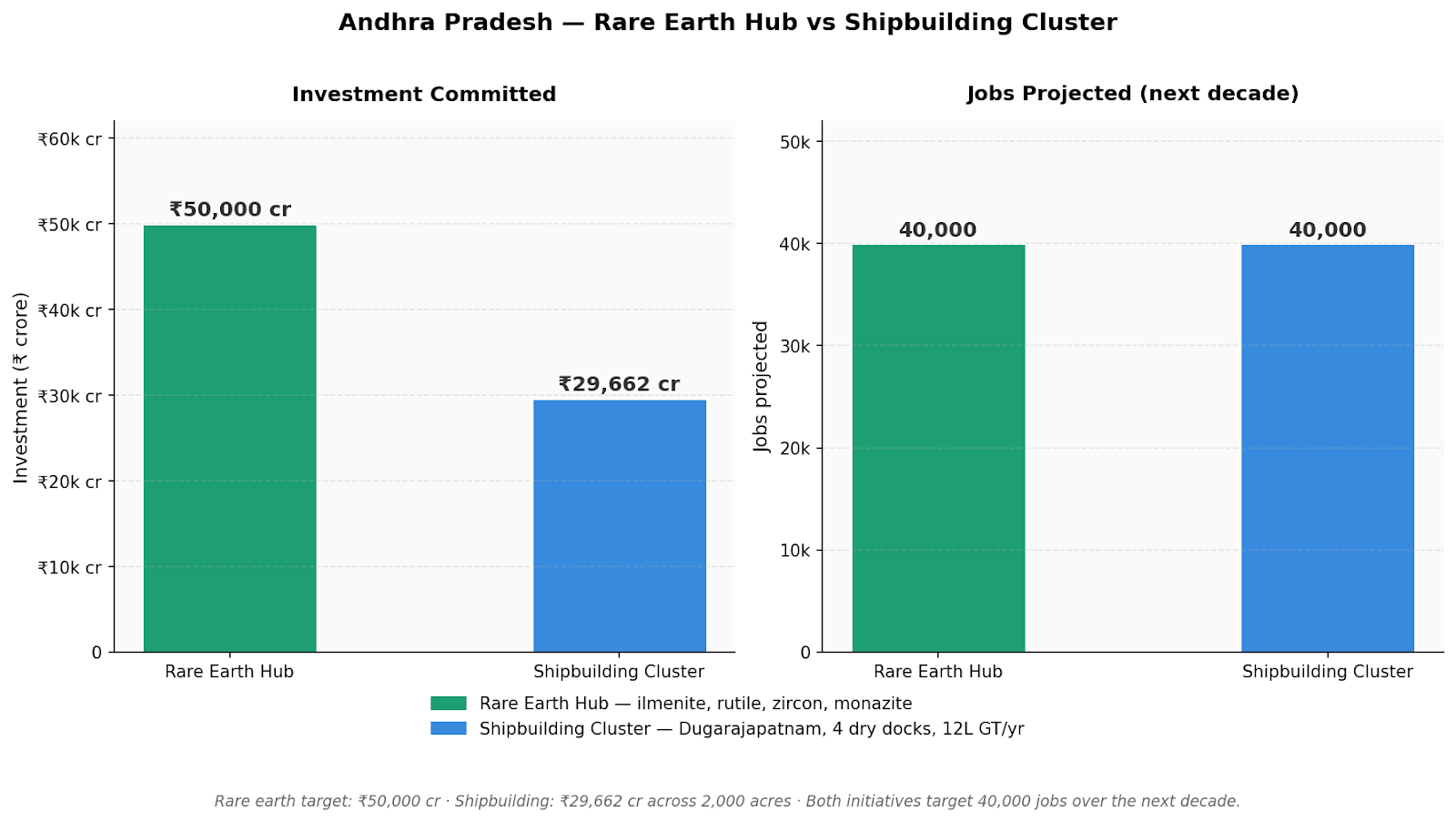
The Development: The state has approved a Special Purpose Vehicle (SPV) to develop a mega shipbuilding cluster at Dugarajapatnam. Spanning 2,000 acres with an investment of nearly ₹ 30,000 crore, the facility aims for an annual capacity of 12 lakh gross tonnage.
The Takeaway: India has 7,500+ km of coastline and 200+ ports. Shipbuilding in essence carries a massive employment multiplier. This cluster is designed to reduce domestic dependence on foreign ship repair, turning the coastline into an industrial fortress capable of capturing a share of the 40 lakh jobs projected under the Sagarmala Programme.
VII. Andhra Pradesh: Securing India’s Rare Earth Supply Chain
Source: Click Here
The Development: Andhra Pradesh is moving to leverage the second-largest Beach Sand Mineral reserves in India. By opening Monazite and Zircon extraction to private participation, the state is targeting a ₹ 50,000 crore investment to become a global hub for titanium and rare earth elements.
The Takeaway: This is a strategic “de-risking” move. By securing a domestic supply chain for EV motors and defense hardware, the state is directly addressing India’s vulnerability to global processing monopolies.
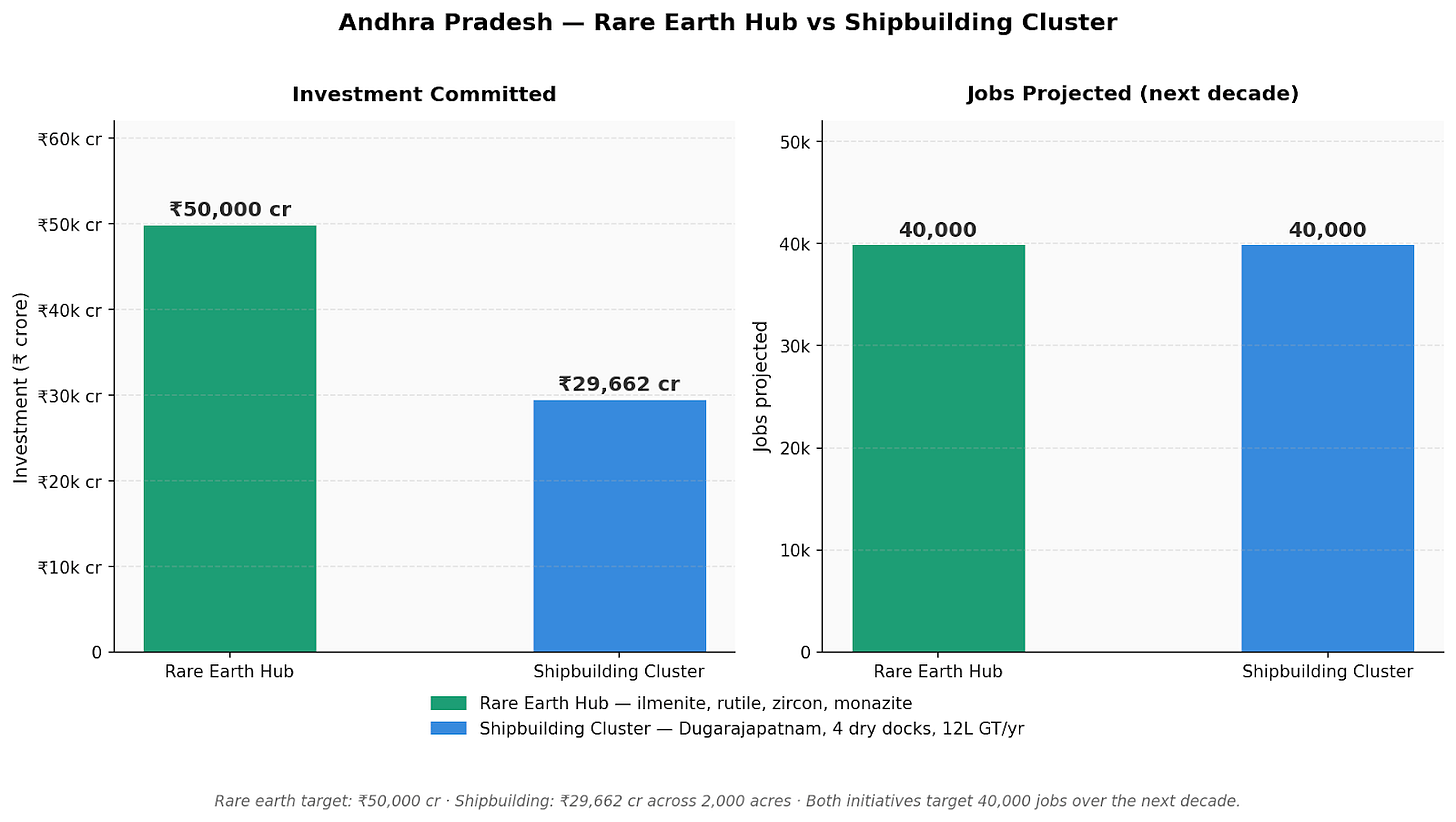
Image 2: Side-By-Side Representation Of Rare Earth And Shipbuilding Sectors
IX. Andhra Pradesh: India’s First Pro-Natalist Population Policy
Source: Click Here
The Development: Facing a median age of 32.5 (older than the national average), Andhra Pradesh has unveiled a Population Management Policy, 2026 to raise its fertility rate back to the 2.1 replacement level. It offers a ₹ 25,000 payment for a third child, subsidised IVF, and an 18-year free education commitment.
The Takeaway: The Policy is a demographic hedge against a shrinking future labor force. It recognises that an aging population is a fiscal liability, choosing to invest in human capital now to avoid economic stagnation later.
X. Uttar Pradesh: Bus Connectivity For 12,200 Unserved Villages
Source: Click Here
The Development: The Mukhyamantri Gram Parivahan Yojana targets 12,200 unserved villages using a private-operator model. By exempting 28-seater buses from certain taxes, the state is ensuring at least two daily services per gram panchayat with regulated fares.
The Takeaway: With rural transport costs rising to 7.5% of household budgets, this policy treats connectivity as an economic enabler, allowing rural workers to access urban markets without the poverty trap of high commuting costs.
Further, the detailed state-wise measures underpinning these developments can be accessed here.